FameEX Today’s Crypto News Recap | October 20, 2026
2026-10-20 06:57:49

Cardano unveils a new language while corporate Bitcoin purchases cool. RWA tokenized stocks hit $3.7B, and SkyAI liquidates SOL. Today’s BTC trades near $82K in Greed. The cryptocurrency market remains range-bound, with Bitcoin (BTC) trading near $82,000 and Ethereum (ETH) hovering around $2,410. Both assets are still consolidating following recent price corrections. According to CoinGecko, Bitcoin has traded between approximately $81,155 and $83,035 over the past 24 hours, while Ethereum has fluctuated between $2,375 and $2,444. These ranges indicate that short-term price volatility remains present across the market. Market sentiment has weakened slightly, with the Crypto Fear & Greed Index falling from 59 yesterday to 55 today. Although the index remains in the Greed zone, the decline suggests that optimism has moderated. In the derivatives market, Coinglass data shows approximately USD 188 million in liquidations over the past 24 hours. Long positions accounted for around USD 104 million, while short positions represented approximately USD 84.1245 million. These figures indicate that recent price movements have affected leveraged traders on both sides of the market. Institutional capital flows also showed a notable divergence on October 19. U.S. spot Bitcoin ETFs recorded approximately USD 527 million in net inflows, while spot Ethereum ETFs saw around USD 103 million in net outflows. Bitcoin ETF inflows were largely concentrated in BlackRock's IBIT, while several other products continued to experience outflows of varying sizes. This suggests that institutional demand has not recovered uniformly across the market. Meanwhile, capital flows in U.S. technology stocks and corporate financing conditions remain under scrutiny. With some Bitcoin treasury companies reducing their purchases, corporate asset allocation and ETF flows have become important indicators of broader market structure. Overall, the cryptocurrency market continues to exhibit range-bound price action, diverging institutional flows, and ongoing adjustments in leveraged positions. Market participants remain highly sensitive to short-term price movements and changes in capital flows.
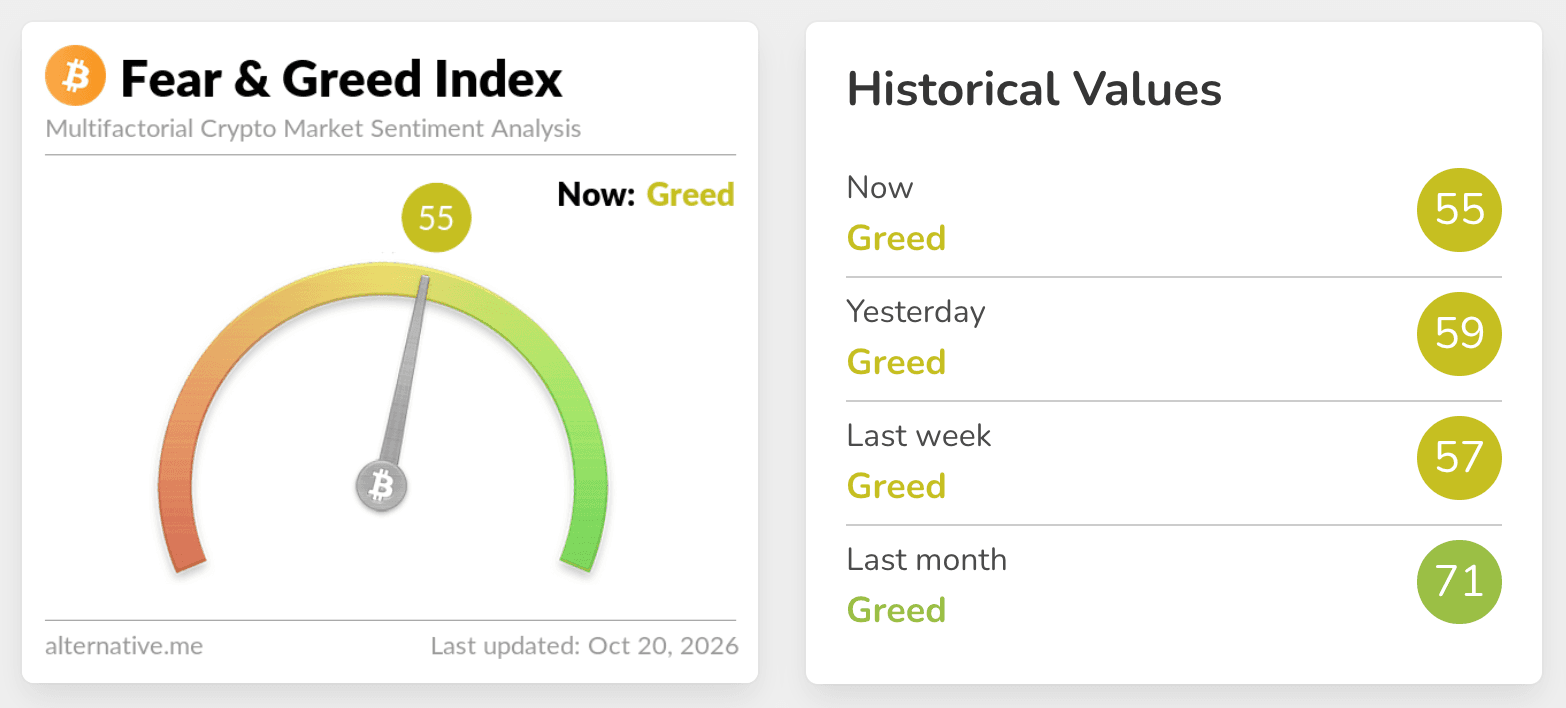
Source: Alternative
Key News Highlights:
Cardano Founder Develops New Programming Language Integrating Transaction Intents and Cryptographic Proofs
Cardano founder Charles Hoskinson has announced that he is personally developing a new programming language for the Cardano blockchain in collaboration with Lucas Rosa, a software engineer at Input Output Global. Rosa previously contributed to the development of Aiken, one of Cardano's existing smart contract languages. This new project aims to combine three technologies: transaction intents, proof-carrying data, and Groth16 cryptographic proofs. This approach would provide developers with an alternative method for processing transactions beyond the capabilities of existing smart contract languages. Transaction intents allow users to specify their desired outcomes without manually defining every step of the execution process. For example, a user could request a token swap that proceeds only when predefined price conditions are met. Proof-carrying data enables information to include verifiable cryptographic evidence, allowing other applications to confirm compliance with specific rules without repeating the entire computational process. Groth16 is a zero-knowledge proof system that generates compact proofs that can be verified efficiently. It can demonstrate that certain conditions have been satisfied without disclosing the underlying private information. By combining these technologies, the proposed language aims to reduce redundant computation and verification when applications coordinate transactions, validate conditions, and exchange information. Cardano developers currently use Plutus and Aiken to build smart contracts, while Midnight, a privacy-focused blockchain within the Input Output Global ecosystem, uses the Compact programming language for applications involving confidential data. Hoskinson has not yet disclosed the language's official name, complete technical specifications, public source code, or expected release date. The project therefore remains in an early stage of publicly disclosed development.
Bitcoin Treasury Buying Slows in Q3 as Corporate Financing Conditions Draw Attention
According to Bitwise Head of Research Ryan Rasmussen and derivatives market specialists, corporate Bitcoin treasury purchases slowed significantly during the third quarter of 2026. Publicly listed companies that previously relied on capital raising to expand their Bitcoin holdings are now facing a more challenging financing environment. Corporate filings show that Strategy increased its Bitcoin holdings by a net 1,666 BTC in Q3, down sharply from 83,901 BTC in Q2. Other publicly traded companies collectively added 5,617 BTC during the third quarter, compared with 45,725 BTC in the previous quarter. These figures reflect a substantial decline in new corporate Bitcoin purchases. Rasmussen noted that changing financing conditions have contributed to slower accumulation among some companies. Any return to larger-scale purchases would also depend on share price performance and broader capital market conditions. During the rapid expansion of Bitcoin treasury companies in 2025, some publicly listed firms issued new shares when their equity valuations traded at premiums to the net asset value of their Bitcoin holdings. The proceeds were then used to purchase additional Bitcoin. As those premiums narrowed or disappeared, equity issuance became less attractive and companies faced greater constraints on expanding their holdings. Bitwise research also found that several smaller Bitcoin treasury companies abandoned their strategies during the third quarter. Approximately 12 companies that entered the sector in 2025 sold their entire Bitcoin holdings, primarily to repay debt or return cash to shareholders. Market specialists noted that investors are increasingly evaluating these businesses based on financing costs, balance sheet management, share liquidity, and Bitcoin holdings per share rather than the size of announced purchases alone. Meanwhile, some companies continue to accumulate Bitcoin using cash generated from existing operations instead of repeatedly issuing new shares. This distinction highlights the growing differences in funding sources and financial strategies among publicly listed Bitcoin treasury companies.
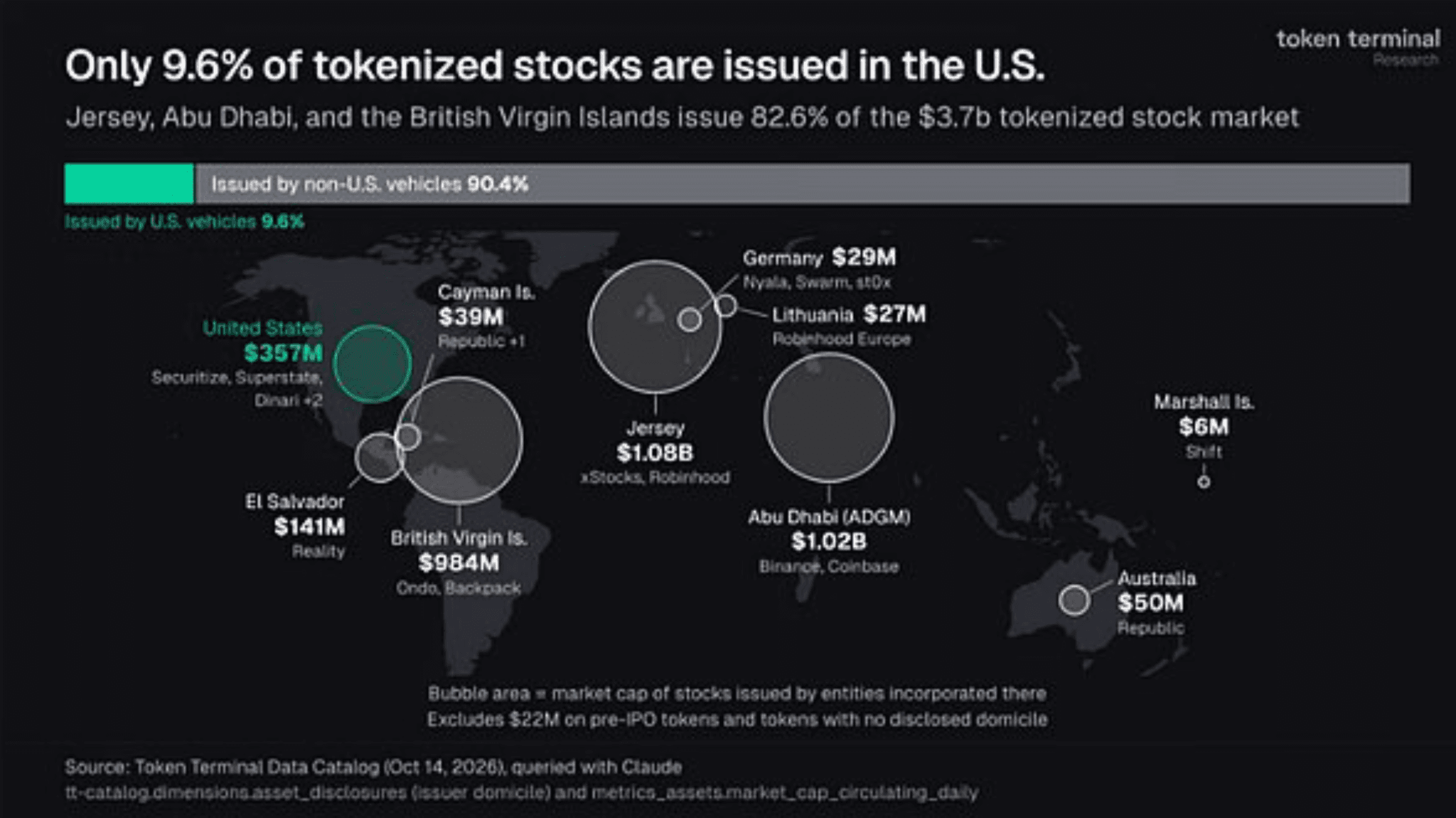
RWA Tokenized Stock Market Exceeds USD 3.7 Billion With Over 90% Issued by Offshore Entities
Research published by Token Terminal shows that the tokenized stock market has exceeded USD 3.7 billion in total market capitalization. Approximately 95% of these assets track U.S.-listed equities and ETFs, although most issuance takes place outside the United States. According to Token Terminal's data on issuer jurisdictions, offshore entities account for approximately 90.4% of the total tokenized stock market capitalization. Jersey represents 28.9% of the market, followed by Abu Dhabi at 27.4% and the British Virgin Islands at 26.3%. These figures show that tokenized stock issuance is distributed across multiple jurisdictions rather than concentrated in the United States. RWA tokenized stocks are financial products that use blockchain-based tokens to represent rights or interests associated with equities. Their legal rights, underlying asset arrangements, and trading restrictions may differ depending on the issuer and applicable jurisdiction. The research identifies approximately 5 million tokenized stockholders, with 97.8% holding products issued outside the United States. Products issued by U.S.-registered entities account for the remaining 2.2% of holders. Within decentralized finance, approximately USD 271.7 million worth of tokenized stocks has been deposited into lending protocols, vaults, and decentralized exchange liquidity pools. Offshore-issued products account for 90.4% of these assets. Token Terminal also reports approximately USD 14.4 billion in on-chain tokenized stock trading volume over the past 30 days, with offshore-issued products representing 99.3% of the total. This indicates that most on-chain trading activity takes place within offshore issuance structures. In terms of underlying asset custody, U.S. brokerage firm Alpaca provides stock custody services for several major tokenized stock issuers. The underlying equities held through Alpaca represent approximately 83.5% of the total tokenized stock market capitalization, making the firm a significant infrastructure provider within the sector. Overall, the research highlights a cross-border market structure in which tokenized products primarily track U.S. financial assets, while issuance, ownership, and on-chain trading remain concentrated outside the United States. Custody of the underlying equities continues to maintain close connections with the traditional U.S. securities market.
SkyAI Liquidates Entire Solana Treasury and Launches USD 201.3 Million Share and Warrant Buyback
U.S.-listed company SkyAI has announced the sale of its entire Solana (SOL) holdings and launched a cash tender offer to repurchase up to approximately USD 201.3 million in shares and warrants. The decision marks the end of its previous strategy of accumulating SOL as a primary treasury asset. According to the company's filing with the U.S. Securities and Exchange Commission (SEC), SkyAI held approximately USD 223.8 million in cash as of October 16 after completing the liquidation of its SOL holdings. As a result, the tender offer is no longer subject to conditions tied to SOL's market price. The company plans to repurchase up to 95% of each applicable class of outstanding shares and warrants at a cash price of $3.00 per share or warrant. If the offer is fully subscribed, the total payment is expected to reach approximately USD 201.3 million. SkyAI, formerly known as medical device company Sharps Technology, launched its Solana treasury strategy in August 2025. It raised more than USD 400 million through a private placement to establish a substantial SOL position. The company subsequently acquired more than 2 million SOL in September of that year. By the end of 2025, its holdings had reached approximately 2.08 million SOL with an aggregate cost basis of USD 403.1 million, equivalent to an average acquisition price of around $194 per token. Previous financial disclosures showed that these holdings were valued at approximately USD 250.1 million at the end of 2025, representing around USD 153 million in unrealized losses. This indicated that the market value of the company's SOL holdings had fallen significantly below their acquisition cost. SkyAI intends to fund the share and warrant repurchases entirely through its existing cash reserves. The tender offer is scheduled to expire on October 29, New York time, subject to the conditions outlined in the company's announcement. Although SkyAI has exited its SOL treasury strategy, the company plans to continue developing a financial platform that combines Solana-based stablecoin infrastructure with artificial intelligence technology. The asset sale therefore represents a change in its treasury allocation and capital management strategy rather than a complete withdrawal from Solana-related business development.
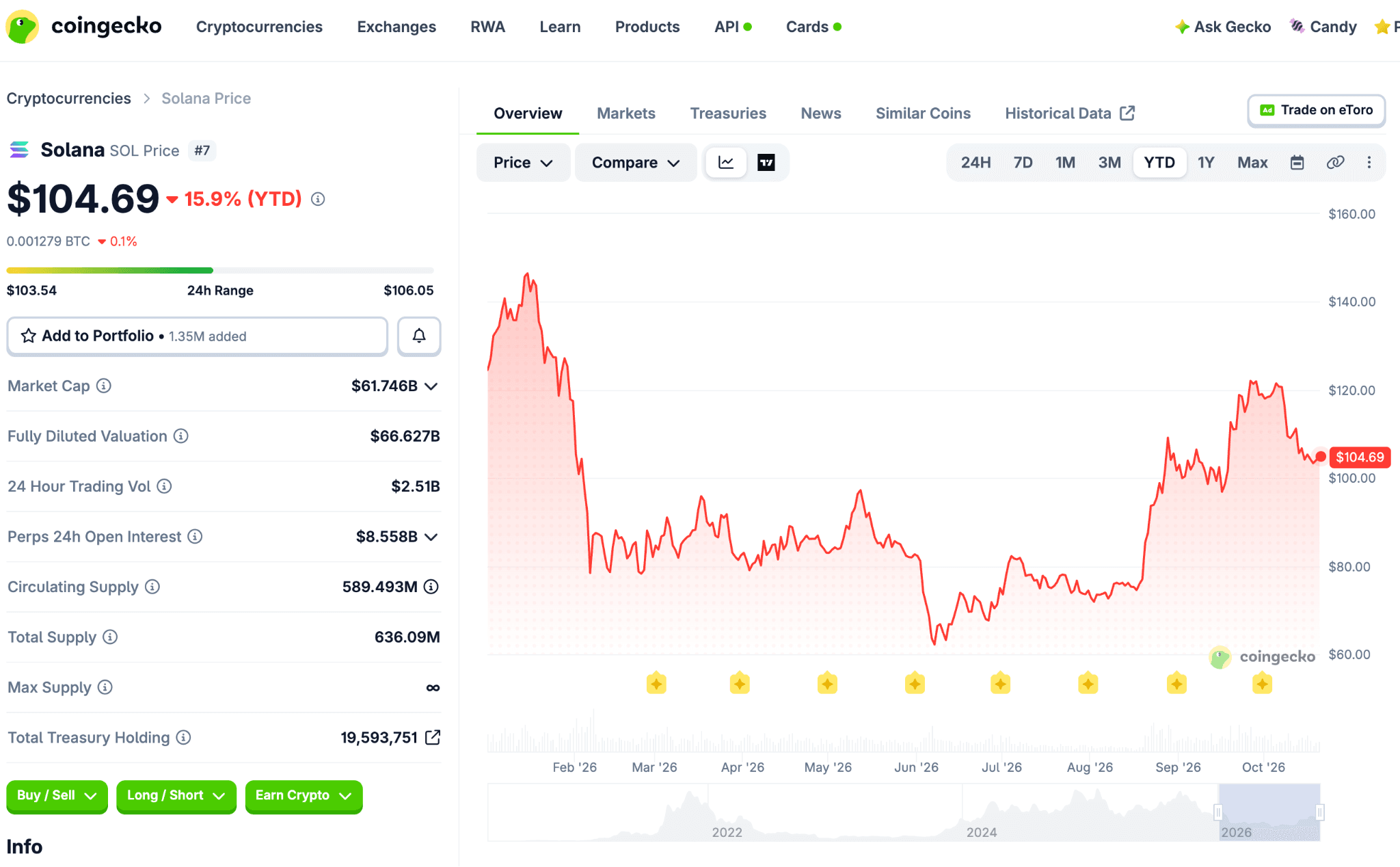
SOL Price Performance Over the Past Year | Source: CoinGecko
Disclaimer: The information provided in this section is for informational purposes only and doesn't represent any investment advice or FameEX's official view.