FameEX Today’s Crypto News Recap | May 21, 2026
2026-05-21 06:59:02

SpaceX discloses BTC holdings, Hyperliquid ETFs surge, and BTC breaks $77K despite outflows; today the crypto market rebounds with BTC and ETH gains. Strong earnings from major technology companies and sharp volatility in commodity markets jointly shaped market risk appetite. Traditional chip leader NVIDIA reported another record result, with quarterly revenue reaching USD 81.6 billion and next-quarter guidance rising to USD 91 billion. CEO Jensen Huang also stated that the new Vera CPU, which is designed for agentic AI, has already generated USD 20 billion in sales this year and opened a new potential market worth up to USD 200 billion. This shows that traditional global capital remains highly committed to expanding AI infrastructure investment. At the same time, precious metals rallied sharply as global macro hedging demand and liquidity needs increased. Gold surged past the $4,500 level, while silver also broke above $76. This drove trading volume and open interest in traditional contracts and multi-asset trading platforms to leading global levels. In addition, traditional giants and top-tier venture investors continue to build early positions in prediction markets. Kalshi raised an additional USD 200 million from Baillie Gifford and Layer Global, extending its previous USD 1 billion financing round led by Coatue Management. Against this backdrop of macro capital rotation, the digital asset market saw a broad rebound today. The decentralized finance sector delivered the strongest performance, rising by more than 8.37% overall and helping the wider market post mild gains. Asset prices generally moved modestly higher. Although the market climbed in a volatile pattern as specific buy-side demand absorbed selling pressure, overall risk appetite remained relatively restrained, and trading sentiment continued to stay within a cautious framework.
Crypto Markets Overview
According to the latest crypto market data, the Crypto Fear & Greed Index stood at 29 today, which means market sentiment remains in the Fear zone. Although the reading showed a mild defensive rebound from yesterday’s 27, it still remained below last week’s 34 and last month’s 33. This indicates that risk appetite and trading willingness across broader risk assets remain clearly suppressed. In terms of token performance, Bitcoin (BTC) rose moderately by +1.61% over the past 24 hours and successfully reclaimed the $77,000 level, while Ethereum (ETH) followed with a +1.59% daily gain and moved back above $2,100. From the perspective of fund flows and market structure, US spot Bitcoin ETFs recorded another total net outflow of USD 70.4655 million yesterday, extending the outflow streak to four consecutive trading days. The most notable pressure came from IBIT under major issuer BlackRock, which posted a net outflow of USD 61.4516 million. Similarly, spot Ethereum ETFs recorded USD 28.1395 million in single-day net outflows, extending their weak outflow cycle to the eighth consecutive trading day. Despite the outflow pattern in spot markets, Coinglass data shows that if BTC falls below $74,211, cumulative long liquidation intensity on major CEXs could reach USD 1.344 billion. Conversely, a move above $81,251 could trigger up to USD 1.121 billion in short liquidations. In the Ethereum market, a drop below $2,040 could push cumulative long liquidation intensity on major CEXs to USD 869 million, while a breakout above $2,243 could bring potential short liquidation pressure of USD 737 million. This shows that the derivatives market is in a highly compressed liquidity battle. Any break of a key price level could trigger a chain reaction of liquidations.
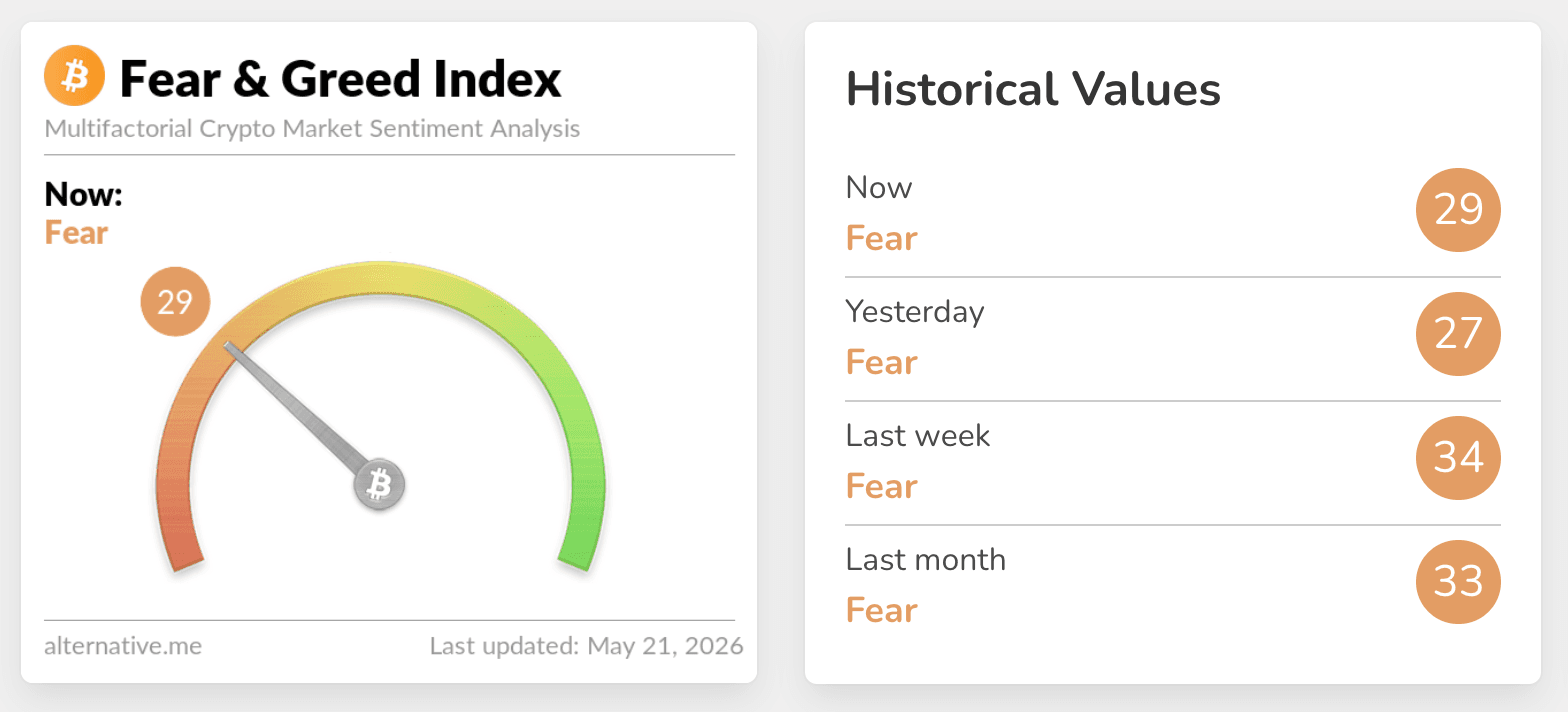
Source: Alternative
Key News Highlights:
SpaceX Discloses Larger Than Expected Bitcoin Holdings In IPO Filing
According to the latest S-1 registration statement filed by SpaceX, the aerospace manufacturing and space services company led by Elon Musk currently holds 18,712 Bitcoin, with a total value of up to USD 1.45 billion. This disclosed figure is far higher than previous estimates from blockchain data tracking firms. The filing is an important preparatory step for SpaceX’s planned initial public offering on June 12. It also shows that the company purchased Bitcoin at an average historical cost of $35,320 per coin. This sizable digital asset reserve would place SpaceX directly in seventh place among all public companies by Bitcoin holdings. Looking back at its accumulation history, SpaceX began purchasing Bitcoin in early 2021, closely matching the timing of Tesla’s decision to add cryptocurrency to its balance sheet. The latest official SEC filing further confirms that SpaceX now holds significantly more Bitcoin than Tesla, which holds 11,509 BTC. As one of the most closely watched mega IPOs in global capital markets in 2026, SpaceX plans to raise about USD 75 billion through the listing. Its market valuation is expected to fall between USD 1.75 trillion and USD 2 trillion. This means traditional financial investors may gain indirect exposure to Bitcoin by purchasing SpaceX shares, while also accessing the company’s core aerospace and artificial intelligence businesses. In addition, SpaceX stated in the filing that it is targeting what it views as the largest addressable market in human history. The company estimates a USD 28.5 trillion commercial opportunity across AI, space infrastructure, and global satellite communication networks. This long-term development vision has made the company’s Bitcoin allocation on its balance sheet a continued focus for global institutional investors.
Hyperliquid Spot ETFs See A 50% Volume Surge After A Slow Launch
Two newly launched US spot exchange-traded funds linked to the Hyperliquid (HYPE) token saw an unusually strong trading volume breakout on Wednesday. Their daily trading volume increased by as much as 50% from previous levels, which is a rare and notably active market behavior among recently debuted crypto ETF products. According to the latest SoSoValue data, the two HYPE spot ETFs issued by Bitwise and 21Shares have recorded nearly USD 41 million in total traded value since their launch earlier this month. Their daily trading activity has also shown a steady upward trend after listing. CoinGecko data shows that the HYPE token has gained an impressive 120% year to date and rose another 18.5% over the past 24 hours, pushing its price close to $56. This performance attracted traders and institutional capital seeking exposure to emerging crypto assets. At launch, THYP from 21Shares, which debuted on May 12, attracted only USD 1.2 million in net inflows. Bitwise’s BHYP, which launched on May 14, recorded just USD 750,000 in initial inflows. By Wednesday, however, the two issuers’ funds saw combined single-day net inflows jump to USD 25.5 million. 21Shares captured USD 16.6 million, while Bitwise attracted another USD 8.8 million in net inflows. In addition, crypto asset management giant Grayscale filed for a Hyperliquid ETF in March, and the plan is currently under review by the US Securities and Exchange Commission. On-chain data provider Lookonchain also reported that two crypto wallets closely linked to Grayscale accumulated USD 25 million worth of HYPE in the secondary market over the past week and staked the tokens on-chain. This capital movement further intensified market expectations that traditional institutional funds are accelerating their positioning in the decentralized derivatives ecosystem.
Bitcoin Reclaims $77,000 Despite Spot ETF Outflows Exceeding USD 2 Billion
Bitcoin reclaimed the $77,000 level on Wednesday as Brent crude prices fell below $108 per barrel and broader risk markets saw a brief relief move. However, cumulative net outflows of up to USD 2 billion from US spot Bitcoin ETFs over the seven days through Tuesday still forced traders to reassess potential downside risks under macroeconomic pressure. Recent Bitcoin price action has moved closely in line with the US Russell 2000 small-cap index, which excludes large technology stocks. This suggests that macroeconomic factors are currently the main force driving digital asset volatility. Concerns over intensifying competition among major technology firms, including Amazon and Google, along with a broader technology-sector layoff cycle, have continued to weigh on market risk appetite. Recent examples include Meta cutting 10% of its global workforce, Cloudflare reducing staff by 20%, and Intuit announcing a 17% workforce reduction. This structural risk-off behavior is partly linked to elevated energy costs and rising US Treasury yields. The latter reflects investor concern over the Federal Reserve’s ability to prevent an economic recession without triggering major currency dilution, which also limits the central bank’s room for expansionary monetary policy. In derivatives and options markets, Bitcoin put option volume on Deribit exceeded equivalent call option volume by 42% on Tuesday. This fully reversed the previous week’s optimistic structure, when call options led by 56% as Bitcoin approached $82,000. The shift shows that derivatives traders are actively seeking downside protection. Although market sentiment remains dominated by macroeconomic uncertainty and high-stakes AI earnings expectations, research analysis noted that the roughly USD 2 billion in spot ETF outflows over the past week is essentially a backward-looking indicator. It does not necessarily represent a long-term structural bearish expectation. If upcoming earnings from major macro-linked technology leaders fail to meet expectations, the broader market may retest the key $75,000 support area, keeping both bulls and bears locked in a defensive high-volatility range in the short term.
Trending Tokens:
- $BTW (Bitway)
The financial infrastructure protocol sector has recently gained fresh momentum as market participants shift their attention toward deeper on-chain liquidity solutions and capital efficiency. Bitway, an internet capital gateway designed to connect on-chain liquidity with global opportunities, has seen an extreme surge in market attention. This sharp increase in visibility was triggered by the recent launch of $BTW perpetual trading on Aster DEX, which introduced a leveraged trading liquidity pool with deep market depth. The deployment of perpetual trading pairs allows market participants to express directional views and hedge risk more efficiently in a network-native environment. Backed by USD 5.94 million in total funding from notable institutions including Tron, YZi Labs, and HTX Ventures, the project is gradually strengthening its position as core Layer 1 infrastructure. As a result, the combination of strong capital backing and immediate access to decentralized derivatives trading has significantly increased the focus of speculative capital and institutional investors on the asset.
- $NEX (Nexus)
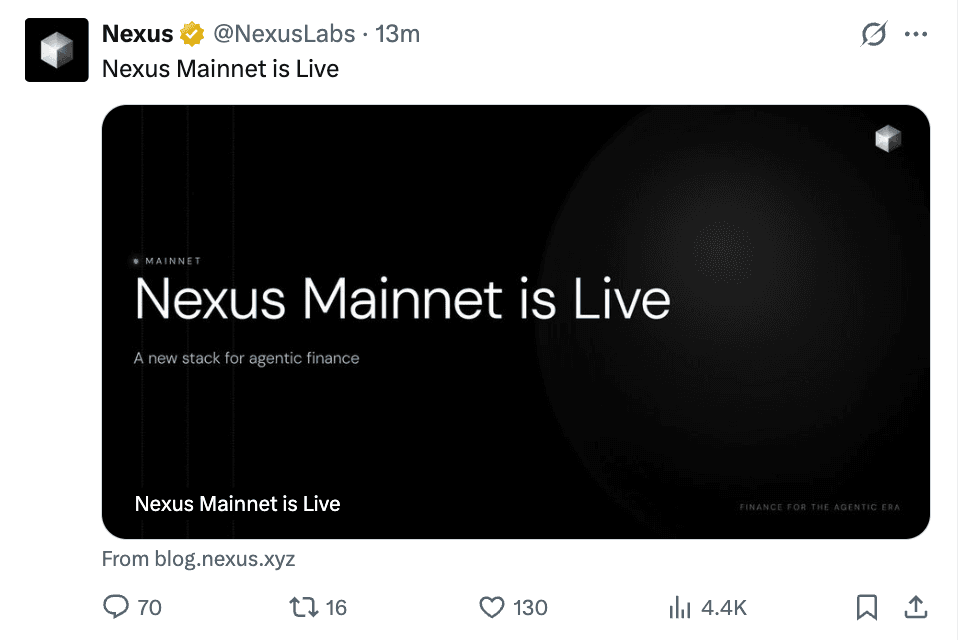
The zero-knowledge proof infrastructure sector is seeing a large inflow of speculative capital and compute-driven interest as projects work to scale verifiable processing performance. Nexus is a massively parallelized proof mining network and a world-class implementation of the modular Nexus zero-knowledge virtual machine. It quickly captured strong market attention after officially announcing that its mainnet is live. This structural milestone directly responds to the network’s development goal of running one trillion CPU cycles per second once sufficient computing power is connected. Market data fully reflects the launch effect of this key network, while its open-source architecture is written in Rust and clearly focuses on performance, modular security, verification optimization, and contributor-friendly design. With USD 27.2 million in venture backing from lead investors including Pantera Capital, Dragonfly, and Lightspeed Venture Partners, the protocol represents a highly funded strategic position within decentralized hardware and proof generation.
- $ZEST (Zest Protocol)
The Bitcoin decentralized finance narrative continues to expand rapidly as liquidity providers show increasing demand for native yield without giving up asset custody. As a mature Bitcoin lending platform operating within the Stacks ecosystem, Zest Protocol triggered a major market response after announcing non-custodial Bitcoin Collateral Vaults to unlock native lending directly on Bitcoin Layer 1. This operating milestone is supported by the team’s two years in production, more than USD 100 million in all-time high total value locked, and over 800 BTC deposited with zero bad debt. The protocol previously raised USD 3.5 million in a seed round led by Draper Associates, with participation from Binance Labs and Flow Traders, to redefine decentralized credit infrastructure. By allowing users to borrow stablecoins while their assets remain securely locked on the parent chain, the platform effectively combines institutional-grade credit mechanisms with a decentralized execution layer.
Disclaimer: The information provided in this section is for informational purposes only and doesn't represent any investment advice or FameEX's official view.