FameEX Today’s Crypto News Recap | May 8, 2026
2026-05-08 06:55:08

Today’s crypto market showed intense long and short competition, with Bitcoin consolidating around the $80K level while long-term holder accumulation continued to strengthen. Current market data shows that total liquidations across the network reached USD 334 million over the past 24 hours. Long liquidations dominated at around USD 246 million, while short liquidations stood at USD 87.845 million. This liquidation structure suggests that leveraged long positions faced greater pullback pressure during the price recovery. However, derivatives market data shows that Bitcoin’s estimated leverage ratio across major exchanges has climbed to around 0.26, marking a one-year high and reflecting strong trader confidence in further upside momentum. In the Bitcoin options market, current open interest shows that bulls are targeting $115,000 by year-end. Although the market still questions whether expectations have become overly optimistic, the broader structure is shifting toward a spot-demand-driven slow bull trend. On the Ethereum side, ETH fell toward the $2,282 area and attempted to stabilize near that level. Signs of short-end Gamma turning positive suggest that the market may be shifting from event hedging to upside chasing. Overall, the crypto market is entering a phase shaped by shrinking supply and sustained institutional capital inflows.
Crypto Markets Overview
Market sentiment is currently in a slow recovery phase. The Crypto Fear & Greed Index now stands at 38, which is in the "Fear" zone. Although sentiment remains cautious, Bitcoin has shown relative resilience after rebounding from its yearly low and attempting to hold the $80K range. It has now slipped below the $80K support area. Ethereum has also drawn close attention from derivatives traders. If ETH breaks above and holds $2,400, upside-chasing sentiment may be further triggered. From the perspective of liquidation intensity, if Bitcoin breaks above $83,455, cumulative short liquidation intensity on major exchanges may reach USD 1.454 billion. A downside move below $76,151 could trigger around USD 907 million in long liquidations. This shows that long and short positioning within the current price range is highly uneven. Short positions are heavily concentrated above the market, so a breakout could trigger a chain reaction. The current leverage ratio has recovered to around 0.26, indicating that speculative sentiment is returning. With ETF-driven capital flows continuing to support the market, short-term conditions are more likely to favor high-level range trading and a gradual upward grind.
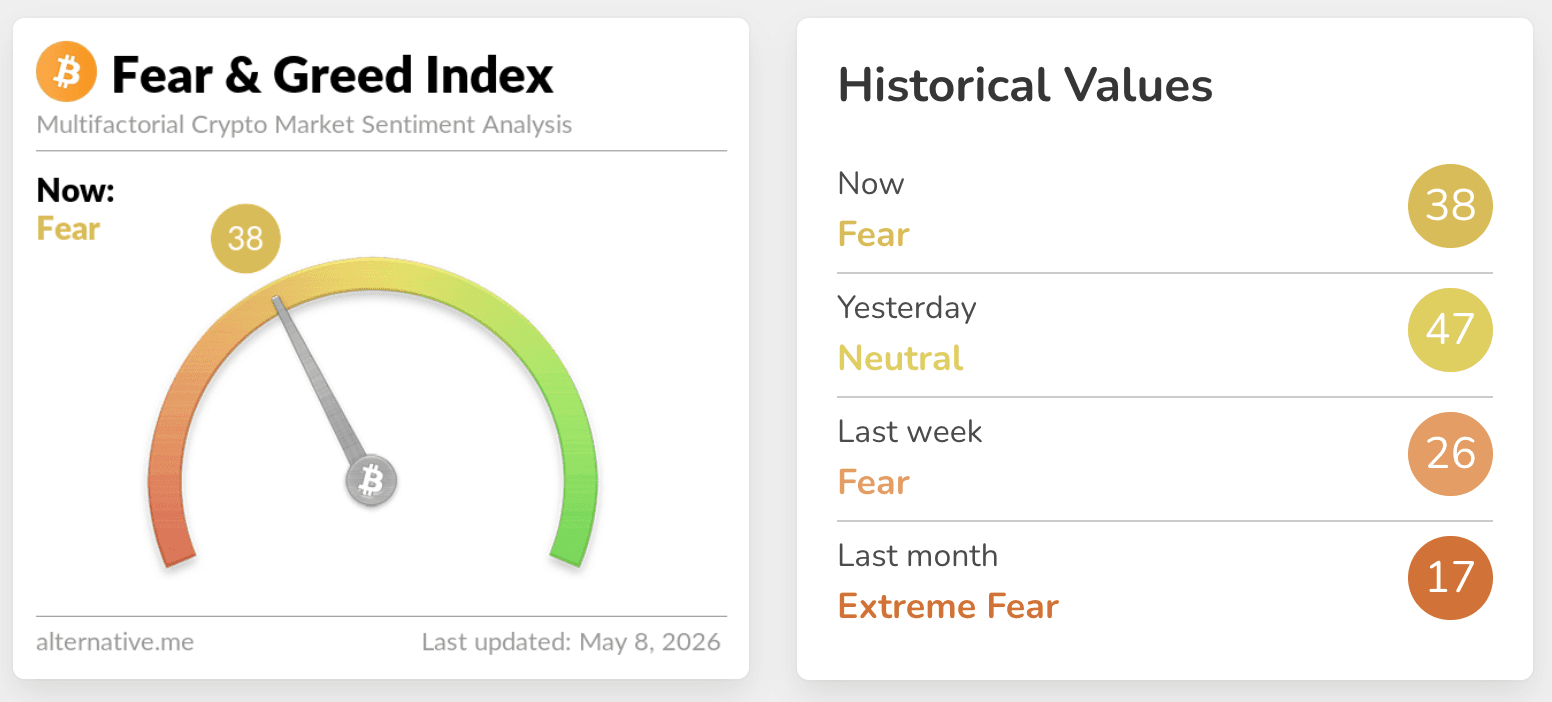
Source: Alternative
Key News Highlights:
Bitcoin Exchange Reserves Fall To Two-Year Low After USD 8 Billion Market Exodus
Bitcoin exchange reserves have recorded a sharp decline recently and have now fallen to their lowest level since 2023, indicating that circulating market supply is becoming extremely tight. Onchain data shows that nearly 100,000 BTC has been withdrawn from several major exchanges in less than three months. Based on current market prices, the outflow is valued at more than USD 8 billion. This large-scale outflow has occurred alongside strong demand from accumulator addresses. Data shows that Bitcoin held by these long-term holder addresses increased by 60.5% over the past two weeks. Market analysts noted that synchronized Bitcoin reserve declines across multiple major exchanges carry more signal value than changes on a single platform, because they suggest a broader reduction in spot supply across the market. If market buying demand reaccelerates, price reactions may become more pronounced. In addition, over-the-counter desk balances have also contracted, further limiting the available supply for large private transactions. As long-term participants continued to accumulate during Bitcoin’s recovery toward the $82,800 level, buyer strength in the derivatives market also improved. This suggests that the market structure is shifting from seller-dominated activity toward buyer-dominated activity.
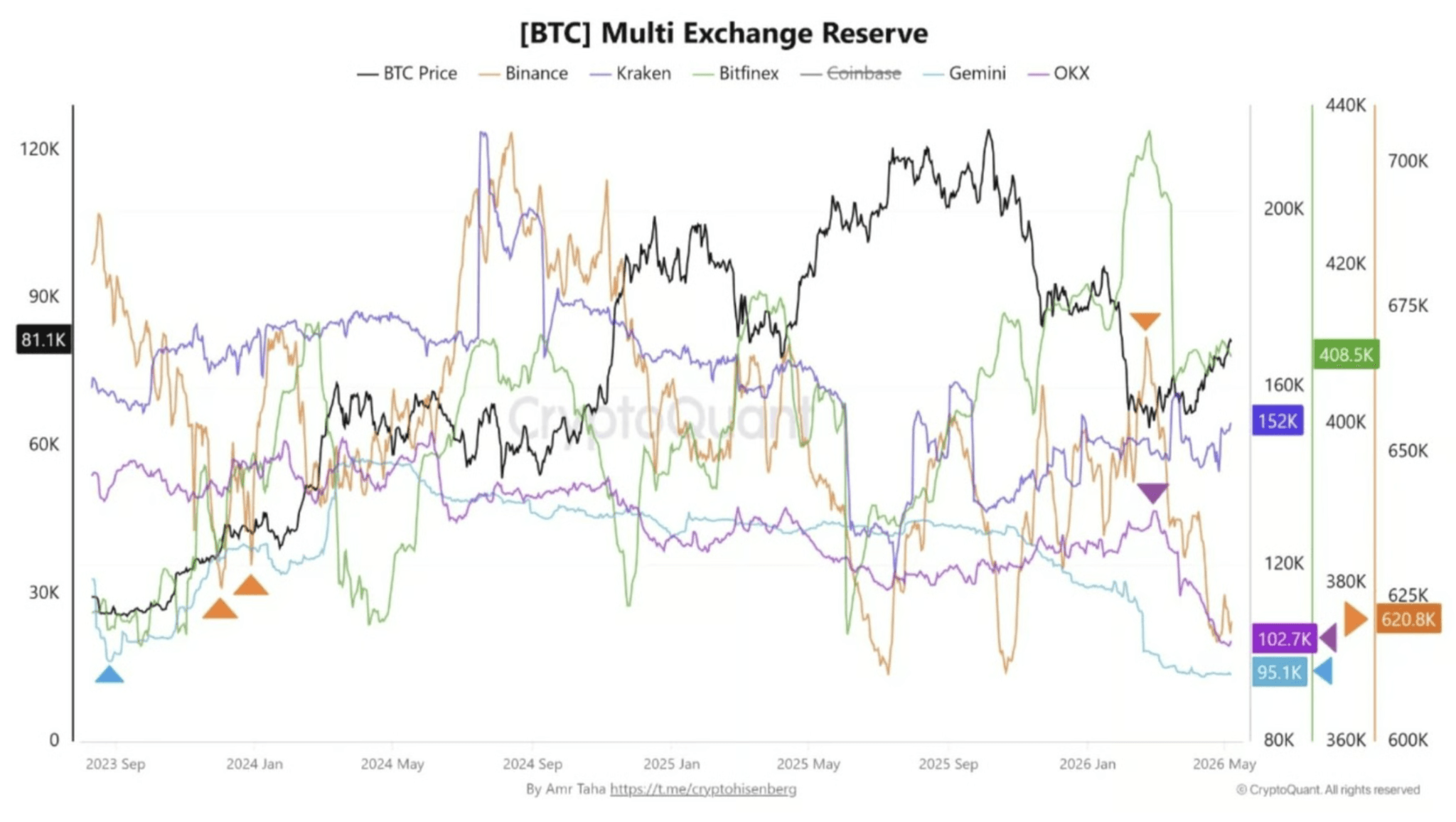
Crypto PACs Spend USD 7.2 Million To Support Candidates In Five U.S. States
As U.S. congressional elections approach, political action committees closely linked to the cryptocurrency industry are sharply increasing their political spending. According to the latest filings with the Federal Election Commission, Fairshake-affiliated groups backed by crypto companies reported around USD 7.2 million in spending this week to support specific candidates in Georgia, Alabama, Nebraska, Kentucky, and Texas. Protect Progress allocated about USD 1.6 million to Democratic candidates, while Defend American Jobs allocated about USD 5.6 million to Republican candidates. This shows that the industry is building influence across party lines. Among these expenditures, Andy Barr, a current House representative running for the U.S. Senate in Kentucky, received the highest level of support at more than USD 3.5 million. During his time in Congress, he has repeatedly made public statements in favor of crypto policy and voted for related legislation. For many industry leaders, the progress of digital asset market structure legislation, including the CLARITY Act, has become a key test for the 2026 midterm elections. Since 2024, Fairshake and its affiliates have spent more than USD 130 million to influence voters. Their goal is to shape the composition of Congress and support a more constructive legal framework for cryptocurrency.
Polygon Reduces Block Time To 1.75 Seconds As Payment Infrastructure Push Accelerates
Layer 2 scaling network Polygon recently reduced its average block production time by 250 milliseconds to 1.75 seconds, marking the first block-time optimization since the network’s genesis. The main purpose of this upgrade is to strengthen the network’s ability to support high-frequency applications, especially institutional-grade stablecoin payments and settlement infrastructure. According to technical contributors, the shorter block time increases Polygon’s payment processing capacity by around 14%, with a theoretical maximum throughput of 3,260 transactions per second. Faster block production helps clear transaction backlogs more quickly. It can also reduce the duration of network congestion and limit sharp fluctuations in transaction fees, which is important for decentralized finance trading and payment use cases. Polygon also recently introduced a new wallet feature that allows users to privately route stablecoin transfers through a shielded pool verified by zero-knowledge proofs. This feature is designed to attract more institutional users that prioritize privacy and compliance. Although the POL token has shown relatively muted price performance recently, Polygon’s integrations with major credit card providers and Visa’s expansion of its stablecoin pilot to the network both highlight its competitive position in real-world payment applications.
Trending Tokens:
- $KITE (Kite AI)
Kite AI recently launched its mainnet, becoming the first blockchain infrastructure built specifically for AI agent payments in the autonomous economy. Unlike traditional networks that prioritize total value locked, Kite focuses on the settlement layer and identity architecture required for high-frequency agent transactions. The newly introduced Kite Agent Passport allows users to delegate spending authority to agents under strictly defined programmable constraints, without exposing sensitive financial credentials. This development addresses a key friction point where agents still require human intervention when they encounter payment barriers. It also supports the shift of AI from simply answering questions to autonomously executing tasks. The project has raised USD 23 million from institutions including General Catalyst and PayPal Ventures to build infrastructure for an agent-first internet. Its mainnet integrates multiple payment protocol standards such as x402 and Google AP2, giving developers a unified hub for seamless access. As the platform moves from theoretical reasoning toward real-world autonomous commercial execution, the market has shown strong attention to its role within the Agent Economy. Users can now use the platform to run complex workflows such as automated shopping while maintaining full visibility and control over agent spending.
- $YOM (YOM)
YOM has entered a high-growth phase after launching its Season 2 engagement program, which offers global participants an 86-day series of quest challenges. As a decentralized cloud gaming infrastructure provider, the project uses a distributed network of gaming machines to deliver low-latency cloud services across different devices. The platform incentivizes participation by allowing node operators to monetize idle hardware cycles, while also offering competitive rewards to ecosystem participants. By adopting a DePIN model, YOM aims to reduce the high costs associated with traditional centralized cloud gaming providers such as Google or Sony. The project is backed by notable investors, including Avalanche Foundation and Borderless Capital, reflecting strong institutional interest in the decentralized hardware narrative. Current community activity is centered on the quest reward system and the platform's ability to maintain high-performance output across mobile and web environments. This narrative combines the current DePIN trend with practical application value in global gaming infrastructure, allowing the project to reach users across any channel. Its transition toward a deflationary token model further supports the long-term sustainability and economic stability of its gaming ecosystem.

- $AIGENSYN (Gensyn)
Gensyn has significantly expanded its ecosystem for autonomous market participation through the launch of the Delphi SDK and Agentic Trading Toolkit. This new infrastructure allows developers to integrate AI agents directly into the Delphi platform for automated portfolio management and complex data analysis. The project is positioned as a distributed computing network that uses blockchain technology to verify whether deep learning tasks have been correctly executed by distributed nodes. By offering an interface that allows agents to programmatically interact with markets through natural language, Gensyn bridges underlying compute resources with the financial application layer. The project has raised nearly USD 50 million from leading investors such as a16z, reinforcing its position as a core infrastructure provider in the AI sector. Market attention is now focused on the potential for agentic trading to transform decentralized finance through high-performance compute resources and verifiable execution. The SDK integration marks an important step toward an environment where agents become primary economic participants in the blockchain space. These newly released tools support full automation in market interactions and enable around-the-clock autonomous operation across the broader Gensyn ecosystem.
Disclaimer: The information provided in this section is for informational purposes only and doesn't represent any investment advice or FameEX's official view.