FameEX Today’s Crypto News Recap | May 6, 2026
2026-05-06 07:11:16

US crypto bill progress, BTC onchain activity hitting lows, and Iggy Azalea lawsuit lead today's highlights while Bitcoin breaks $81K showing strong price resilience. Today’s crypto market showed strong price resilience, with Bitcoin breaking above the $81,000 level and driving broad-based gains across the market. The SocialFi sector led the move with an increase of more than 13%. According to the latest market data, Bitcoin returned above $80,000 while onchain activity fell to its lowest level in nearly two years, with average daily active wallets at around 531,000. This divergence between price and network activity suggests that the current advance is mainly being driven by existing market participants and institutional spot demand, rather than a broad inflow of new retail capital. Over the past 24 hours, total market liquidations reached USD 389 million, with short liquidations accounting for the majority at USD 315 million. This reflects a clear short squeeze effect around key resistance levels. Ethereum remained comparatively stable and continued to trade near the $2,400 level, while its market structure sits near an important technical inflection point. At the same time, positive signals emerged from the US legislative front, as a crypto market structure bill may be reviewed next week. This has added longer-term policy expectations to the market. Although onchain indicators still point to weak participation, activity in the Meme and AI sectors remained strong, showing that speculative interest and localized market themes remain active against the backdrop of institutional accumulation.
Crypto Markets Overview
The current Crypto Fear & Greed Index stands at 46, which indicates that market sentiment is in a "Fear" zone and has pulled back from yesterday’s neutral reading of 50. Although Bitcoin briefly broke above $81,000, overall sentiment among market participants remains cautious. This is mainly due to rising macro inflation expectations and a low derivatives basis rate. From a market structure perspective, Bitcoin is attempting to hold above the $81,500 short-term holder cost basis after breaking through a descending trendline. If the price moves higher and breaks above $84,822, cumulative short liquidation intensity on major CEXs would reach USD 1.927 billion. Conversely, if the price falls below $76,832, the market would face USD 2.483 billion in long liquidation risk. For Ethereum, the current liquidation map shows that if the price breaks above $2,473, short liquidations would reach USD 1.055 billion, which indicates that short positions remain relatively concentrated above the market. At present, the monthly futures premium in the derivatives market is only around 1%, far below the neutral range of 4% to 8%. This means the market still lacks clear leveraged long optimism, and the current rally is mainly relying on spot market accumulation. Sustained inflows into Bitcoin spot ETFs from institutional investors stand in sharp contrast with shrinking retail activity onchain. This spot-driven structure appears relatively stable in the short term, but it also reflects a defensive market mindset toward macro uncertainty.
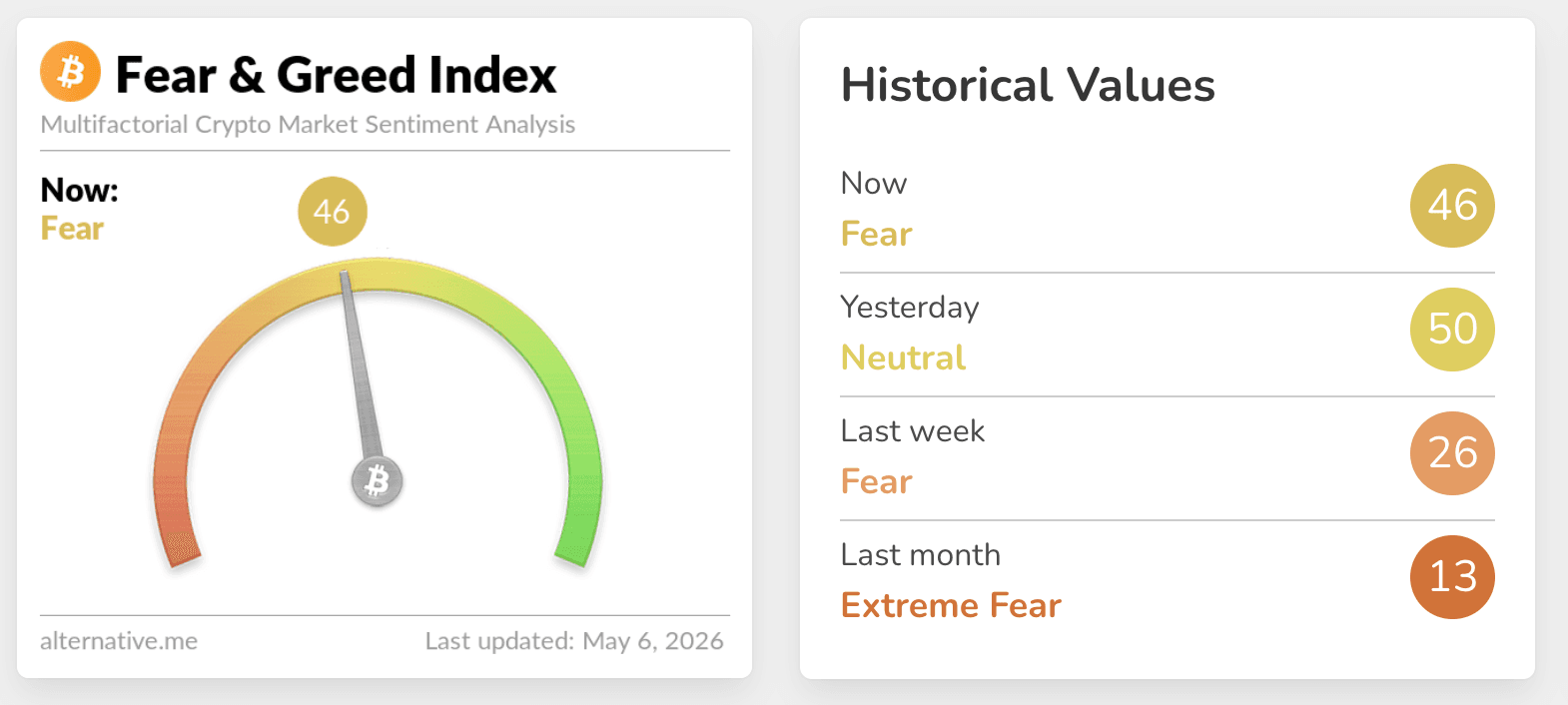
Source: Alternative
Key News Highlights:
Progress On The US Crypto Market Structure Bill And Ripple CEO’s Cautious Assessment
Regarding the closely watched US crypto market structure legislation known as the CLARITY Act, Senator Bernie Moreno said Congress will formally review the bill next week, with the possibility that it could be signed into law by the president before US Independence Day on July 4. This has been viewed as an important milestone for industry compliance. However, Ripple CEO Brad Garlinghouse expressed a more cautious view at the Consensus conference in Miami. He emphasized that although the Senate has reached a compromise on issues such as stablecoin yield, this does not guarantee that the legislation will ultimately succeed. Garlinghouse noted that the next two weeks will be a critical window. If the bill is not advanced in time, it could be delayed by political disruption related to the 2026 US midterm elections, as policy issues may become too sensitive during that period. Although he does not view the current version of the bill as perfect, he stressed that a clear legal framework is essential for the long-term health of the industry because legal clarity is better than the current regulatory uncertainty. The Senate Agriculture Committee already passed the bill in January, and it is now awaiting final review by the Senate Banking Committee. Senator Cynthia Lummis also publicly urged Congress to act, saying it has the power to resolve the existing legal uncertainty and that the Senate should move immediately to end the regulatory fog. The bill’s progress will directly affect future rules for custody, trading, and issuance of crypto assets in the United States, making it a core reference point for institutional investors assessing market risk.
Bitcoin’s Return Above $80,000 And Its Divergence From A Two-Year Low In Onchain Activity
Bitcoin performed strongly over the past week and successfully moved above the $81,000 level, but market data revealed a notable structural divergence. onchain activity has fallen to its lowest level in nearly two years. Current data shows that average daily active wallets stand at around 531,000, while new wallets are only around 203,000. This stands in clear contrast with Bitcoin reaching a three-month price high. Under normal conditions, a healthy price advance is usually accompanied by growth in network users and more frequent onchain interaction. The current market behavior shows that this move has been driven more by a smaller group of existing participants and institutional spot buying power, rather than a broad return of public users. Analysts noted that a price increase without onchain participation support can be structurally fragile. If large holders choose to take profits, the market may face the risk of insufficient new demand. Even so, historical data shows that bottoms in network activity often mark the end of a cold market period. Once retail interest returns, price movement may become more responsive. At the same time, derivatives data shows that investor confidence has stalled. The monthly futures basis rate remains below the neutral threshold, which indicates that professional traders are still taking a wait-and-see approach. Against a macro backdrop where inflation expectations are near a 10-year high, Bitcoin’s performance remains somewhat constrained, but its role as a defensive asset continues to attract institutional capital through spot ETFs.
Rapper Iggy Azalea Faces Class Lawsuit Over Alleged Investor Misrepresentation In MOTHER Token
Rapper Iggy Azalea and her Solana-based memecoin Mother Iggy, known as MOTHER, are facing a class-action lawsuit in Manhattan federal court. The plaintiff alleges that Azalea misled investors during the token’s promotion. According to the complaint, Azalea repeatedly claimed that the token had real-world use cases and multiple business integrations, including use as the native payment tool for a telecommunications company, an online casino, and a luxury marketplace under her control. However, most of these promises allegedly failed to materialize in actual operations. The plaintiff stated that although Azalea claimed MOTHER could be used to purchase mobile phone plans, no verifiable payment integration existed on the related platform. Her online casino, Motherland, also reportedly used USDT as its main settlement tool after launching in 2025. Since its launch in May 2024, the token’s market capitalization once exceeded USD 136 million, but later fell sharply to around USD 1.3 million. This led to significant losses for many investors who bought near relatively high levels. The lawsuit also claimed that Azalea did not fully disclose the cooperation terms and potential market risks related to major market makers involved with the token. This case shows that crypto assets driven by celebrity influence are facing stricter legal scrutiny. It also reflects rising investor expectations for real token utility. The incident has again triggered wider discussion around transparency and sustainability in the Celebrity Memecoin sector, especially regarding legal responsibility after liquidity dries up.
Trending Tokens:
- $RLS (Rayls)
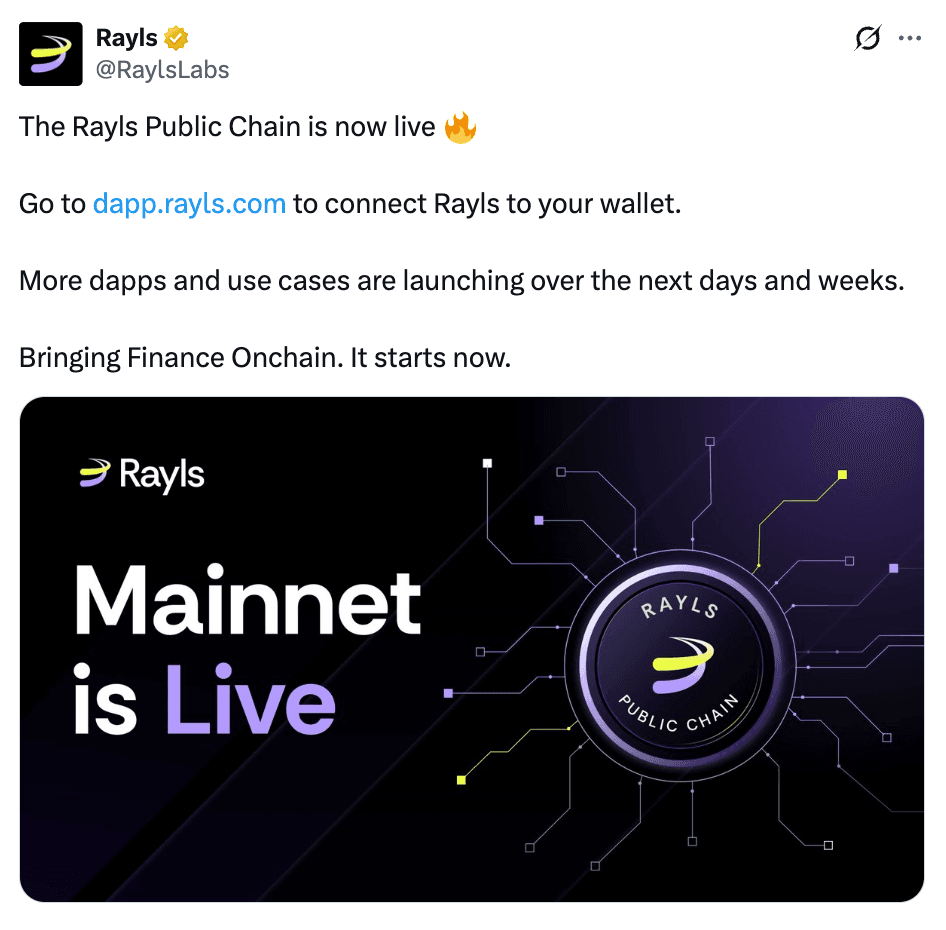
The official launch of the Rayls public chain mainnet marks an important milestone in the convergence of institutional finance and decentralized infrastructure. As an EVM-compatible ecosystem backed by $25 million in financing from leading investment firms such as Framework Ventures and ParaFi Capital, Rayls is designed to address the core privacy and scalability barriers faced by financial institutions. The protocol adopts a distinctive hybrid architecture that connects private banking subnets to a central hub, enabling the compliant tokenization of real-world assets and central bank digital currencies. Current market attention is mainly driven by the ecosystem’s opening to decentralized applications and its potential for large-scale cross-border foreign exchange and internal bank settlement. By building a bridge between regulated asset issuance and global DeFi liquidity, Rayls is positioning itself as a foundational infrastructure layer for the next generation of onchain finance. With the recent mainnet deployment and the expansion of institutional-grade privacy capabilities, the project has recorded a sharp increase across both its growth and heat indexes.
- $CHIP (USD.ai)
Following the official launch of $CHIP as the governance and utility token of the USDAI protocol, the project has become a central focus within the artificial intelligence infrastructure narrative. As a GPU-backed lending protocol, USDAI addresses a major liquidity gap in this sector by creating a tradable debt market for decentralized hardware assets such as computing resources and network nodes. This yield-bearing synthetic stablecoin model, supported by physical hardware assets, has attracted major backers including Coinbase Ventures and Framework Ventures. Market participants are closely watching the expansion of its omnichain fungible token functionality across Arbitrum, Base, and Ethereum. The protocol represents an innovative convergence between DeFi and AI hardware, creating a structure that links asset-backed stability with the growth of decentralized compute demand. This positioning has strengthened the market’s focus on $CHIP as a token tied to the financing layer of AI infrastructure.
- $SLX (Solstice)
Solstice has recently seen a surge in community participation after announcing the strategic reallocation of unclaimed token allocations from Flares Season 1. By redistributing these tokens to active registered users, the protocol highlights its community-centered approach within the Solana ecosystem, where it operates as a specialized DeFi optimization layer. Solstice was launched by Deus X Capital and is led by industry veteran Tim Grant, offering institutional-grade investment products designed to maximize yield and capital efficiency. Recent administrative updates, including the resolution of incorrect registration charges and the subsequent refund process, have strengthened user confidence and protocol transparency. As a yield aggregator on Solana, the project benefits from the underlying network’s high throughput while addressing growing demand for more sophisticated financial tools. This reallocation event triggered a sharp increase in the project’s growth and heat indexes, while participants continue to anticipate the official launch of the $SLX token.
Disclaimer: The information provided in this section is for informational purposes only and doesn't represent any investment advice or FameEX's official view.