FameEX Today’s Crypto News Recap | April 23, 2026
2026-04-23 06:32:35

Japan FSA shifts crypto legal status, Kalshi bans politician bets, and SBF drops retrial bid; Bitcoin leads today in the crypto market, challenging $78K resistance with strong resilience. Today’s crypto market showed strong resilience amid macroeconomic volatility and rising geopolitical tensions, with prices grinding higher through a choppy but constructive session. US equity futures sold off as conflict in the Middle East intensified, while spot gold and silver saw sharp swings. WTI crude oil also extended its gains and at one point rose as much as 4%. Even so, the crypto market absorbed the initial pressure from the broader macro backdrop and quickly demonstrated a notable degree of decoupling. It moved away from the weakness seen in traditional financial assets and built an independent recovery path of its own. The latest on-chain data and market action suggest that strong spot demand in Bitcoin and Ethereum not only erased the earlier losses caused by geopolitical uncertainty, but also pushed both assets through several key technical resistance levels with support from rising volume. This kind of upside move during a period of elevated risk aversion suggests that the capital structure of the crypto market is changing. The market is showing a much stronger ability to absorb downside risk, and investors appear to share a clear consensus on the strength of support beneath major tokens. At the same time, the battle between bulls and bears has become increasingly intense at current levels. The wave of large-scale liquidations across the market in a short period not only cleared out overly leveraged short positions, but also created room for further price repair and structural consolidation.
Crypto Markets Overview
Overall sentiment in the crypto market improved notably today. The latest Crypto Fear & Greed Index climbed quickly from 32 yesterday to 46. Although the market remains in Fear territory, it is gradually moving out of the Extreme Fear conditions seen over the past week and month. This suggests sentiment is shifting from deep pessimism toward a more cautious wait-and-see stance. In terms of price action, Bitcoin showed strong momentum during today’s session and continued to hover around the $77K level, posting a daily gain of 2.76%. Market structure indicates that bulls are trying to regain control of the trend. Ethereum followed closely behind, rising 2.09% to trade near $2,400. In the derivatives market, total liquidations across the network reached USD 463 million over the past 24 hours, with short liquidations accounting for the overwhelming majority at USD 353 million. Data also shows that if Bitcoin breaks above $81,508, cumulative short liquidation pressure across major exchanges could rise to USD 1.915 billion. If Ethereum moves above $2,455, short liquidations could also expand to USD 1.536 billion. Sector performance was also encouraging. The NFT segment has now extended its advance for three straight days, while tokens such as PENGU and BLUR each gained more than 8% in a single day. This suggests capital is gradually rotating into a broader range of token sectors.
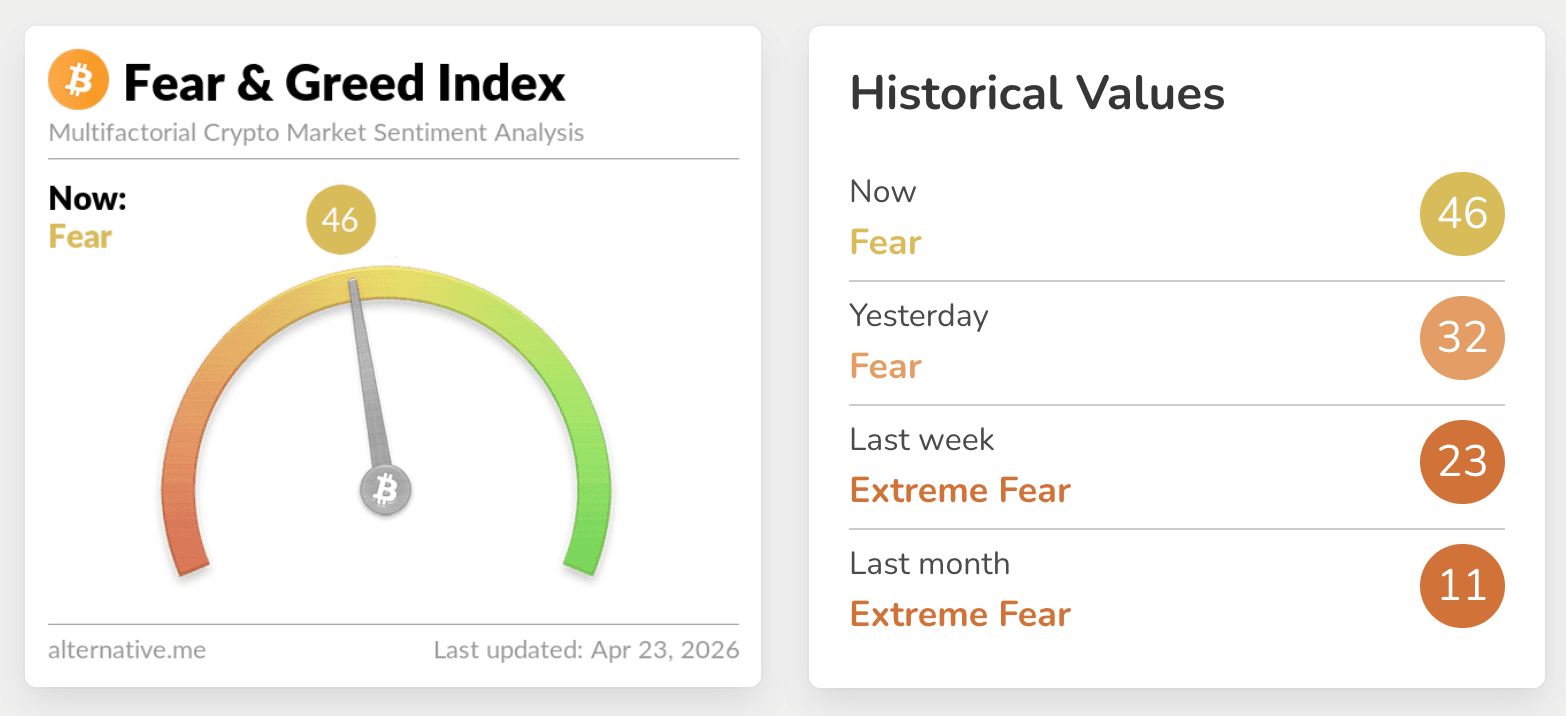
Source: Alternative
Key News Highlights:
Japan FSA Moves Forward With Crypto Reform
In a recent public policy speech, Japan’s Financial Services Agency provided a detailed update on major changes to the country’s domestic crypto regulatory framework. It confirmed plans to move crypto assets from the Payment Services Act into the more stringent Financial Instruments and Exchange Act. The core significance of this legislative shift is that crypto assets would be formally brought under the traditional financial regulatory framework and treated as financial instruments with strong liquidity and investment characteristics, rather than being viewed simply as payment tools. The proposed bill would introduce broad upgrades across four key areas, including disclosure requirements, a formal compliance classification for independent operators, stronger legal enforcement against unlicensed businesses, and measures to prevent insider trading. Meanwhile, the agency is also moving forward with its Payment Advancement Project, which is designed to use blockchain technology to improve the existing financial system. The initiative includes cross-border settlement trials using yen-denominated stablecoins with participation from three major banks, 24-hour on-chain trading experiments for government bonds and securities, and transfer tests for tokenized bank deposits between financial institutions. These pilot programs not only reflect the Japanese government’s support for the practical application of blockchain technology, but also lay a solid legal and technical foundation for the future large-scale use of stablecoins in the mainstream financial system.
Kalshi Cracks Down On Election Betting Violations
Prediction market platform Kalshi recently took strict enforcement action against three US political figures involved in conflicts of interest after they were found placing improper bets on election races in which they were personally participating. The case involved one sitting Minnesota state senator and two federal congressional candidates. They were fined amounts ranging from hundreds to thousands of dollars and were also banned from trading on the platform for up to five years. Kalshi’s enforcement team stated clearly that candidates have the ability to access insider information and may even influence the course of an election, which makes this type of conduct a serious threat to fair market competition. Although one of the individuals claimed that the wager was placed only to test whether the platform’s risk controls were effective, Kalshi stressed that it has zero tolerance for any insider activity that exploits a participant’s position, regardless of the size of the bet. The case also highlights the growing influence of prediction markets in global political analysis. It shows that preventing market manipulation by insiders with informational advantages has become a new challenge that platforms and regulators must now confront together.
SBF Drops New Trial Bid to Seek New Judge
Sam Bankman-Fried, the founder of FTX who is currently serving a 25-year prison sentence, recently made public a legal filing announcing that he is withdrawing his Rule 33 motion for a new trial in federal court. SBF said the decision was a strategic adjustment made after extensive consultations with his parents and legal counsel. According to his explanation, the goal was to reduce unnecessary use of judicial resources and focus more directly on the appeals process ahead. Even so, he has not abandoned his challenge to presiding Judge Lewis Kaplan and continues to pursue legal channels to seek reassignment to a different judge in future proceedings. SBF claims that the original trial was marked by what he described as extreme prejudice from the current judge. He also alleged that the Department of Justice pressured certain key witnesses and influenced changes in their testimony. While in prison, SBF has continued to speak publicly at a high frequency through media interviews and social platforms. He has even commented on US crypto policy and broader political issues. Many observers believe this is part of a broader effort to build a path toward a possible future pardon. Even so, his conviction remains in place, and the reality he faces is still a severe legal situation defined by a lengthy prison term.
Trending Tokens:
- $AI (Gensyn)
Gensyn recently introduced its Agent eXchange Layer, or AXL, for its decentralized AI compute network. This marks an important step forward in peer-to-peer infrastructure. The communication layer functions as a network node that allows AI agents and machine learning pipelines to exchange data directly without relying on a central server. Its architecture runs in userspace through the gVisor network stack, which allows nodes to operate without root access or complex port forwarding. By integrating support for the Model Context Protocol, or MCP, Gensyn enables structured communication between AI agents, which is essential for collaborative AI workflows. On the security side, the system uses a dual-layer encryption model, including TLS for direct links and end-to-end encryption across the full mesh path. This development strengthens Gensyn's position as a permissionless base layer for AI development by separating network transport from application logic. As the project closes the gap between raw compute power and functional agent coordination, market attention has accelerated sharply.
- $BILL (Billions)
Billions has attracted market interest after launching its Verified Agent Identity skill for the OpenClaw framework, addressing the critical issue of accountability in agent behavior. The infrastructure uses zero-knowledge proof technology to give AI agents a unique onchain identity that is linked to a verified human while preserving strict privacy standards. This initiative is designed to solve the attribution gap in automated activity, as most AI agents still lack persistent and verifiable identity traits. The project also announced the First AI Agent Rewards, or FAIAR, program, which is intended to encourage adoption of these verified identities through a future distribution mechanism. With a record of deploying identity solutions for major financial institutions such as HSBC, Billions is building on a large base of 2.3 million verified users. The broader narrative shift toward agent accountability is driving stronger engagement as market participants increasingly view identity as a prerequisite for the AI economy. This expansion into AI-specific DID services positions Billions as a key infrastructure provider for secure machine-to-machine interaction.
- $CHIP (USD.ai)
USD.ai recently launched its native governance and utility token $CHIP to support the expansion of its GPU-backed lending protocol and decentralized debt market. The platform operates as a specialized DeFi layer that provides liquidity for AI infrastructure assets, including high-performance GPUs and network nodes. With more than USD 225 million in executed loans and over USD 665 million in pipeline activity, the protocol is positioning itself as a benchmark for financing rates tied to AI-related hardware. $CHIP serves as the core mechanism for governing these credit markets and incentivizing participation across its synthetic stablecoin ecosystem. The token has been deployed as an omnichain fungible token across Arbitrum, Base, and Ethereum to support deep liquidity and cross-chain access. Market participants are watching the project closely for its ability to bridge traditional infrastructure finance with onchain capital formation. This distinct positioning at the intersection of real-world assets and AI infrastructure has made $CHIP a focal point in the current productive AI asset narrative.

Disclaimer: The information provided in this section is for informational purposes only and doesn't represent any investment advice or FameEX's official view.