FameEX Today’s Crypto News Recap | June 26, 2026
2026-06-26 06:45:25

XRP supply reduction, BTC hitting 2026 lows, and Polymarket volume exceeding $500 million are today's highlights; the crypto market remains in extreme fear, with BTC consolidating at $59K. The overall crypto market remains under pressure, with sentiment staying weak across major assets. The Fear and Greed Index has remained in the Extreme Fear zone at 13 for several consecutive days. This shows that investor confidence remains highly fragile. Bitcoin has continued to consolidate near $59K and is down 1.41% over the past 24 hours, reflecting heightened uncertainty around the macroeconomic outlook. Risk appetite has weakened further as U.S. and European equity index futures continue to decline, while Japan’s Nikkei 225 Index dropped sharply by 3%. Defensive sentiment has become the dominant market theme. Ethereum spot ETF data also shows that outflow pressure has not eased. Daily net outflows reached $81.8651 million, marking the sixth consecutive day of net outflows. This suggests that institutional capital remains cautious toward Ethereum allocation. In the derivatives market, Bitcoin’s average 8-hour funding rate across the network remains at 0.002%, while Ethereum’s funding rate stays slightly negative at -0.0001%. The muted funding rates indicate relatively weak leveraged participation. According to on-chain data monitoring, if Bitcoin breaks above $62,664, the cumulative short liquidation intensity on major CEXs could reach $1.867 billion. Conversely, if Bitcoin falls below $56,805, cumulative long liquidation intensity could reach $1.337 billion. This shows that key price levels may trigger significant liquidity volatility. The market is currently in a critical consolidation phase as traders wait for clearer direction.
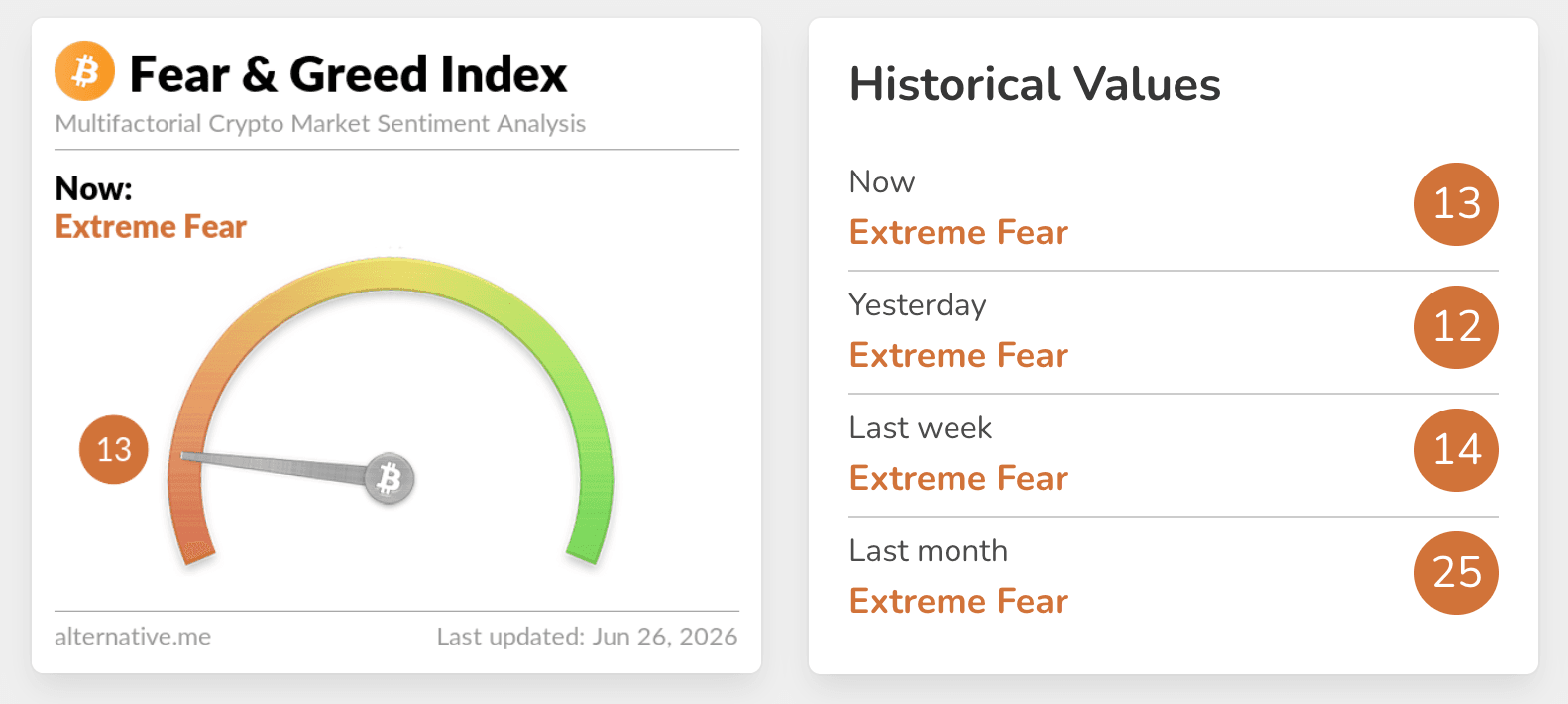
Source: Alternative
Key News Highlights:
XRP Approaches the $1 Level as On-chain Data Shows Continued Decline in Exchange Supply
Although XRP has seen weak price action recently and is now trading near its yearly low around $1, on-chain data shows a different structural picture. This may suggest that a potential market bottom is taking shape. Monitoring data shows that XRP reserves held on major CEXs have continued to decline. Withdrawal transactions on one major platform have exceeded deposit transactions for seven consecutive days. This marks the longest withdrawal-led period in nearly a year. It also shows that holders are more inclined to move assets off exchanges instead of selling them. In addition, whale flows remain positive on a 90-day moving average basis. This indicates that large wallets are still accumulating steadily rather than distributing. Institutional demand for spot XRP ETFs has also provided support. Cumulative net inflows have reached $243 million since April. From a market structure perspective, XRP is still attempting to find support as price volatility continues. While technical pressure remains to the downside, active on-chain activity and continued institutional inflows provide a stronger foundation for the asset’s long-term holding structure. Market attention remains focused on the strength of the $1 support level. Traders are also watching whether further buying interest appears around this price range. The divergence between on-chain data and price performance is often viewed as an early signal of potential structural change.
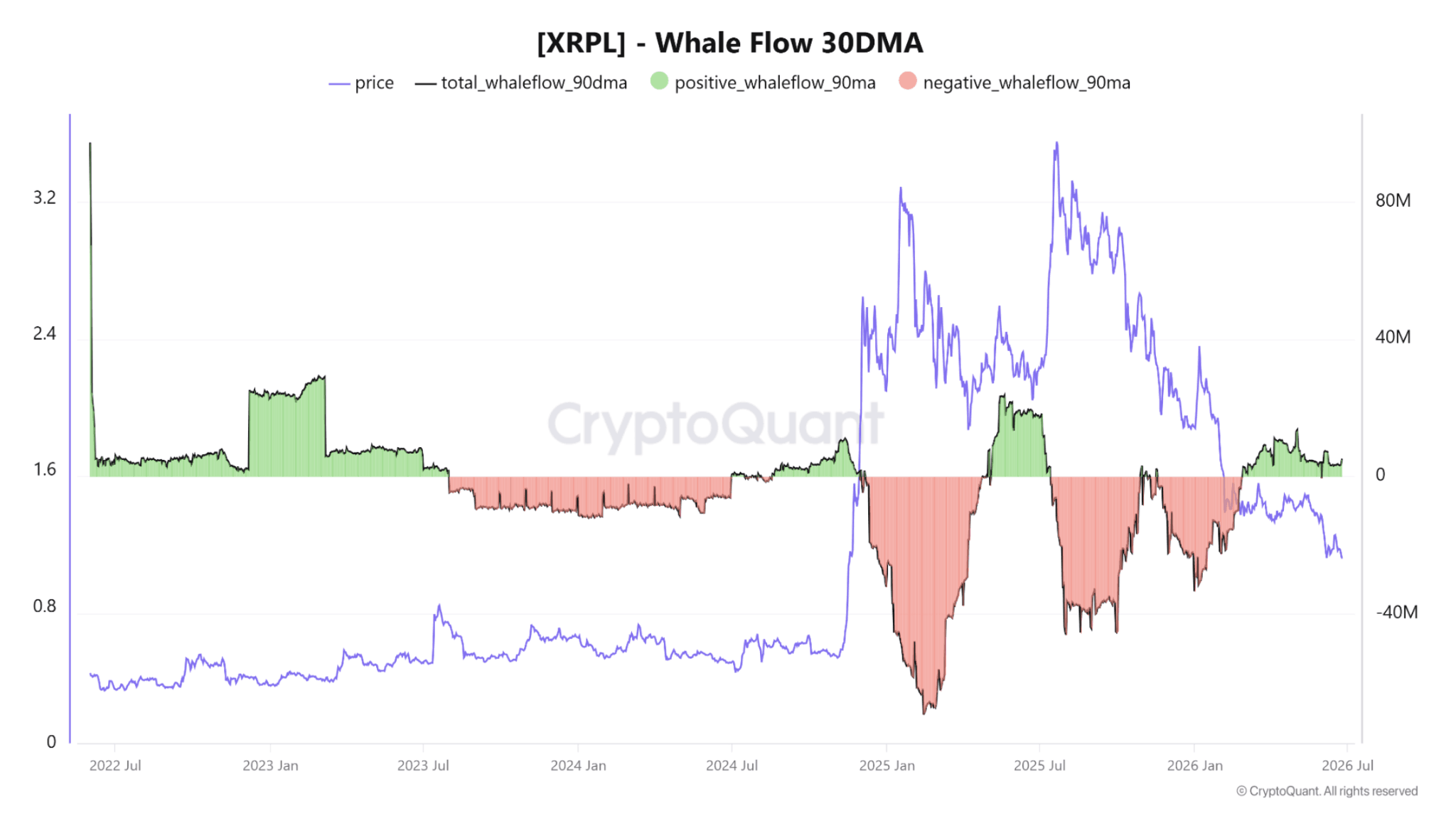
XRP Whale Flows
Bitcoin Rebounds After Falling to a New Low in 2026 as ETF Outflows and Options Expiry Take Focus
Bitcoin has continued to move lower in recent trading and briefly touched its lowest level since September 2024. The retest near $58,000 triggered more than $1 billion in leveraged long liquidations, highlighting the fragility of bullish positioning during sharp market swings. Although the price later recovered slightly to around $59,500, market sentiment remains fragile. The pressure mainly comes from accelerating spot Bitcoin ETF outflows and the added weight of month-end options expiry. Investors are now showing a stronger preference for technology stocks with more attractive risk-reward profiles. This has made it harder for crypto assets to compete for liquidity under the current macro environment. Confidence in the technology sector has improved after strong U.S. tech earnings and new budget proposals related to quantum computing investment. Data shows that spot Bitcoin ETFs recorded daily net outflows of up to $469 million, making ETF flow one of the key proxy indicators for weaker institutional demand. As market expectations for a Federal Reserve rate hike in December rise, traditional defensive assets and equity markets are becoming more attractive compared with non-yielding assets such as Bitcoin. Traders are now watching whether Bitcoin can break away from its correlation with equity market volatility. They are also looking for new catalysts that could reverse the current downturn. Without stronger buying support, the price may continue to face pressure from tightening liquidity conditions.
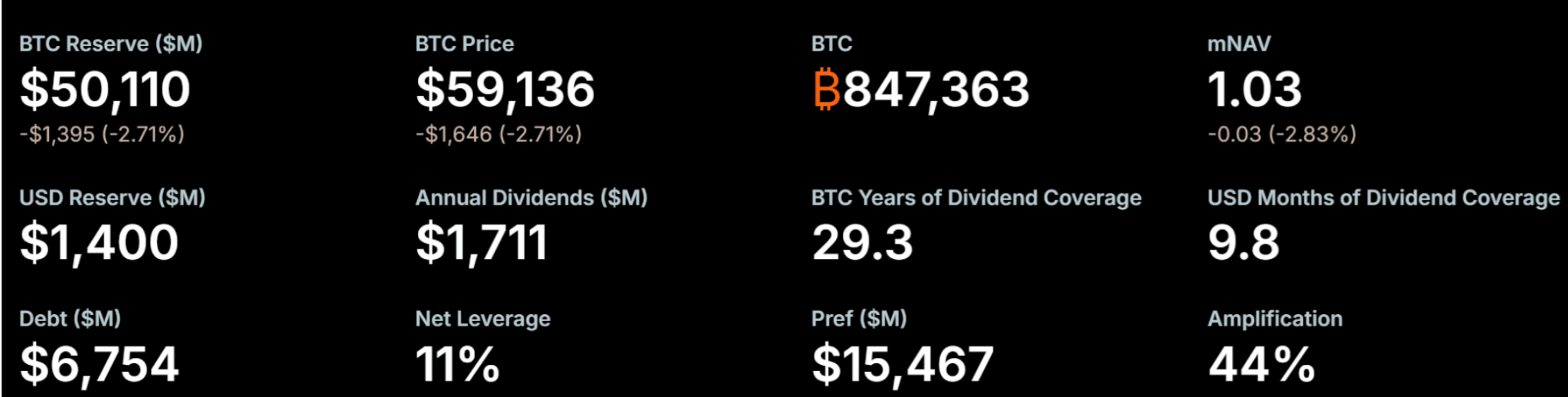
Strategy (MSTR) Bitcoin Reserves and Cash Position in USD, Source: Strategy
Polymarket pUSD Supply Surpasses $500 Million as Total Holders Exceed 1 Million
Polymarket, a leading decentralized prediction market, has seen its USDC-based cash balance token pUSD surpass $500 million in total supply. The total number of holders has also exceeded 1 million, showing that prediction markets are gaining broader adoption in the crypto sector. However, on-chain data also reveals a high level of concentration in platform balances. Only 0.06% of high-value addresses control more than 55.34% of the total pUSD balance. Addresses holding more than 1,000 pUSD account for just 2.76% of all holders, yet they collectively hold 90.34% of the platform’s total balance. By contrast, more than half of all holders, or 51.96% of users, hold less than 10 pUSD. This group accounts for only 0.19% of the total platform balance. This extreme wealth gap reflects a clear behavioral difference between large-capital participants and retail users in decentralized prediction markets. Although prediction market liquidity and user growth have expanded significantly, the high concentration of capital remains an important metric for assessing the sector’s development. It also shows that the platform has achieved strong penetration among certain high-net-worth user groups. At the same time, observers should consider how uneven capital distribution may affect market consensus and liquidity depth when analyzing data from such platforms.
Disclaimer: The information provided in this section is for informational purposes only and doesn't represent any investment advice or FameEX's official view.