FameEX Today’s Crypto News Recap | June 24, 2026
2026-06-24 06:42:23

Meta plans to launch the Arena prediction market app, UK prime ministerial contender Burnham supports Web3, and EthLabs debuts to reshape Ethereum development funding; BTC has slipped below $63K amid extreme market fear. In the U.S. market, total assets under management in leveraged ETFs have surged to a record high of USD 198 billion. This reflects investors’ record-level reliance on high-leverage instruments and highlights a more fragile capital allocation structure. BCA Research raised its year-end 2026 target for the S&P 500 to 8,100. This suggests that Wall Street still holds strong expectations for traditional equity markets. However, the Bank of Korea issued a clear warning in its Financial Stability Report for the first half of 2026. As the connection between crypto assets and traditional finance continues to deepen, sharp volatility in the crypto market may spill over into equity and foreign exchange markets. This could create potential risks for global financial stability. With the Federal Reserve’s hawkish stance still shaping market sentiment and summer liquidity expected to weaken, global investors are closely watching Thursday’s upcoming PCE inflation data for the next signal on monetary policy. The Fear and Greed Index has also fallen to 17, placing the market in the Extreme Fear zone. Without clear institutional buying support, markets remain highly sensitive to macro data and vulnerable to sudden volatility.
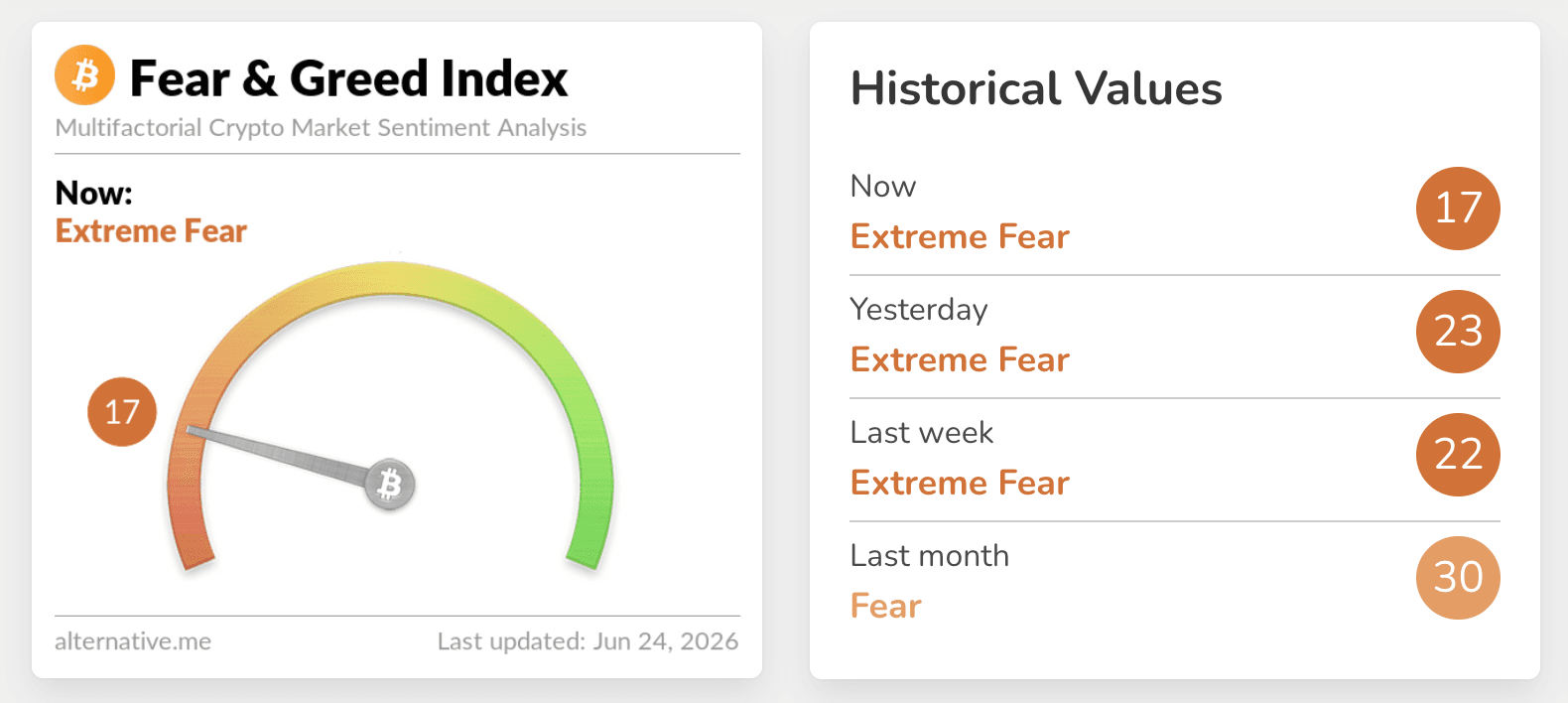
Source: Alternative
Key News Highlights:
Bitcoin and Ethereum Market Structure and Key Liquidation Zones
Bitcoin’s market performance remains weak as its price has fallen back below $63,000. On-chain data shows that the realized price of short-term holders is currently around $74,800. Bitcoin has traded below this cost basis for eight consecutive months, with short-term holders facing an average unrealized loss of 14.4%. This shows that short-term market confidence remains fragile. It also suggests that heavy breakeven selling pressure may continue to limit rebounds. From the perspective of options and futures market structure, Bitcoin is now in a sharp battle between long and short positions. If Bitcoin falls further below the key support level of $59,608, a major CEX could face up to USD 1.453 billion in cumulative long liquidation intensity. This level may become a key dividing line for whether the market enters a deeper systemic correction. On the other hand, if Bitcoin stabilizes around the options expiry period and challenges $65,812, it could trigger USD 1.364 billion in short liquidations. Ethereum is also facing weaker liquidity after falling below $1,700. If ETH breaks above $1,747, a major CEX could see around USD 896 million in short liquidation intensity. If ETH falls below $1,582, long liquidation pressure could reach USD 775 million. This shows that the $60,000 to $62,000 range still carries strong support within the options Gamma structure. The market is relying on this structure to search for a short-term bottoming process.
Meta Expands Into Prediction Markets With Arena as the Tech Giant Tests a Points-Based Economy
Social media giant Meta has reportedly been developing a mobile app under the codename Arena. The move signals the company’s entry into the fast-growing prediction market sector. Unlike traditional financial trading platforms, the app is expected to let users predict and wager on market event outcomes through a virtual points system rather than direct cash or crypto transactions. This design is seen by the market as a strategic attempt by Meta to avoid strict financial regulations while also reducing direct crypto compliance risks. Meta’s platforms have billions of daily active users worldwide. If Arena officially launches, it could bring major pressure to existing decentralized prediction market platforms and reshape how mainstream users participate in prediction-based activities. Meta’s earlier attempt to issue a stablecoin did not achieve its expected results. This new move toward an AI-driven prediction market shows that the company is still looking for new ways to compete in the Web3 landscape. By combining large-scale user retention with gamified interaction, Meta may try to enter and dominate an emerging decentralized application segment. This could create a structural impact on the current competitive landscape of prediction markets.

Digital Asset Policy Shifts Under the UK Political Transition as Andy Burnham’s Potential Leadership Draws Crypto Industry Attention
After UK Prime Minister Keir Starmer officially stepped down, the country entered a sensitive political transition period. Market attention quickly turned to Andy Burnham, the current Mayor of Greater Manchester and a leading potential successor. During his time as mayor, Burnham has shown consistent support for blockchain technology and the Web3 economy. He has repeatedly described digital innovation as a key engine for regional economic growth and job creation. This open stance toward emerging industries contrasts with the previous government’s cautious and regulation-focused approach to crypto policy. Industry observers believe that if Burnham enters Number 10, his “Manchesterism” model and public-private cooperation approach could create a more inclusive regulatory framework for the UK crypto industry. It may also offer a more supportive environment for digital asset development. However, the UK government remains highly cautious about the use of crypto assets in political donations. A new government would also need to balance inflation pressure and economic reform priorities. Because of this, it remains uncertain whether Burnham can turn his personal Web3 vision into concrete national policy. The UK crypto community is therefore watching the policy outlook with both optimism and caution.
EthLabs Launches as a Nonprofit Lab to Reshape Ethereum Development Funding and Governance Through a Market-Led Model
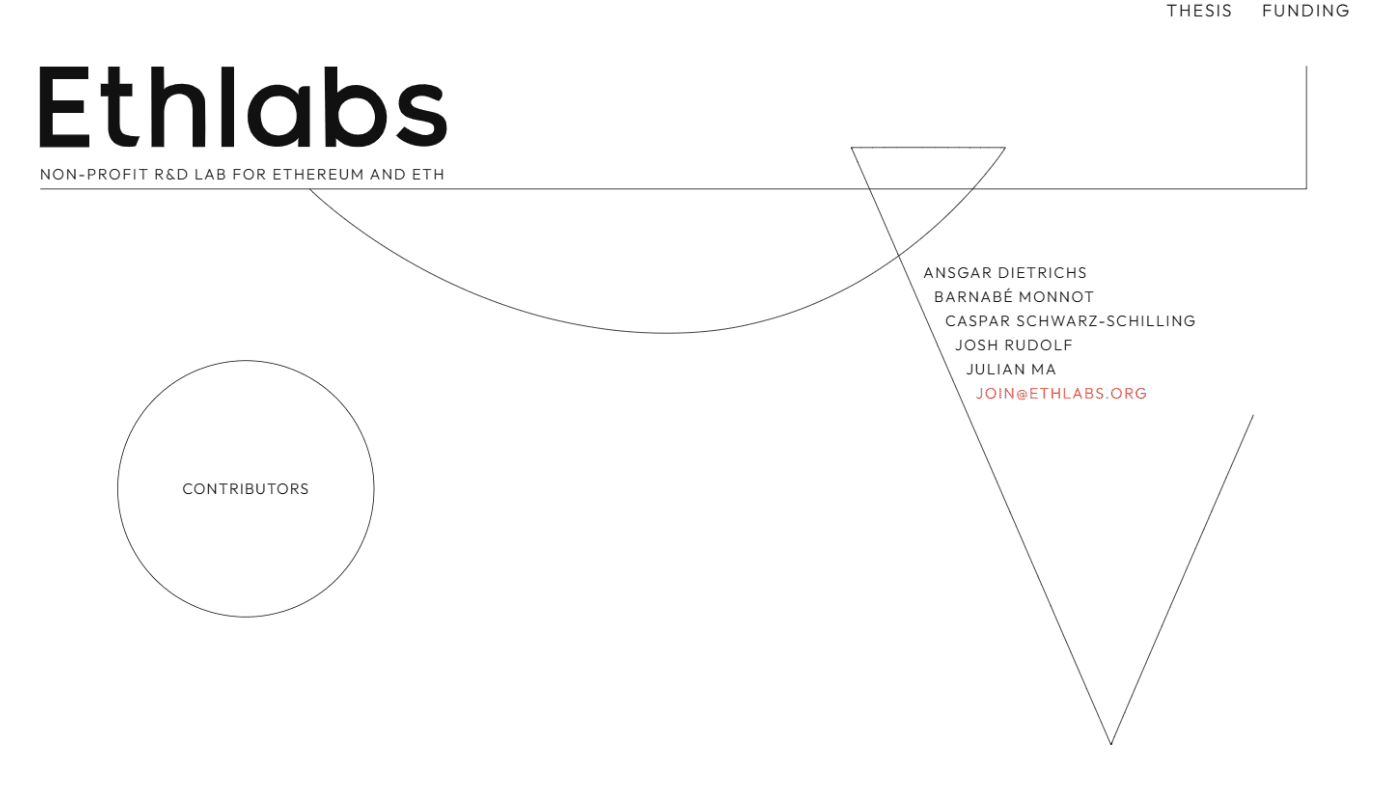
The launch of the nonprofit research lab EthLabs has offered a new solution to the recent debate over Ethereum’s so-called funding crisis. The organization was founded by several former core researchers from the Ethereum Foundation. It has also secured financial backing from major ecosystem supporters, a Bitcoin mining company, and leading blockchain technology firms. This funding model marks a shift in the Ethereum ecosystem from foundation-led support toward a structure shaped by both market forces and institutional participation. The move also responds to the heated community debate over whether protocol-level taxation on staking rewards should be used to fill the development funding gap. EthLabs helps ensure that Ethereum’s core protocol maintenance is not limited by the financial capacity of a single entity. Its emergence has also eased resistance toward the staking tax proposal. At the same time, it creates a more resilient and sustainable funding model for decentralized research and development. As Ethereum moves into a more mature stage, infrastructure development may increasingly rely on diversified institutional participation and market-based funding mechanisms. This could further strengthen Ethereum’s long-term strategic position as a foundational protocol for global digital finance.
Disclaimer: The information provided in this section is for informational purposes only and doesn't represent any investment advice or FameEX's official view.