FameEX Today’s Crypto News Recap | June 29, 2026
2026-06-29 06:48:16

The recent crypto market remains under extreme fear. Data shows that Bitcoin is currently trading near $60,000, while the overall Crypto Fear and Greed Index has dropped to 12. On the institutional funding side, the latest data shows that spot Bitcoin ETFs saw significant capital outflows last week. Total weekly net outflows reached $1.79 billion, marking the third-largest weekly net outflow on record. BlackRock’s IBIT recorded weekly outflows of $1.303 billion, while Fidelity’s FBTC saw outflows of $315 million. Spot Ethereum ETFs also faced funding pressure during the same period, with total weekly net outflows of $273 million. BlackRock’s ETHA saw outflows of $236 million, extending the segment’s net outflow streak to seven consecutive weeks. On the macroeconomic front, markets are currently pricing in a 69.5% probability that the Federal Reserve will keep interest rates unchanged in July, while expectations for a September rate hike have been rising. Meanwhile, Bitcoin’s average 8-hour funding rate across the market remains low at 0.0039%. This suggests that leveraged trading activity remains cautious. Investors are closely watching how this round of liquidity adjustment may continue to affect asset prices.
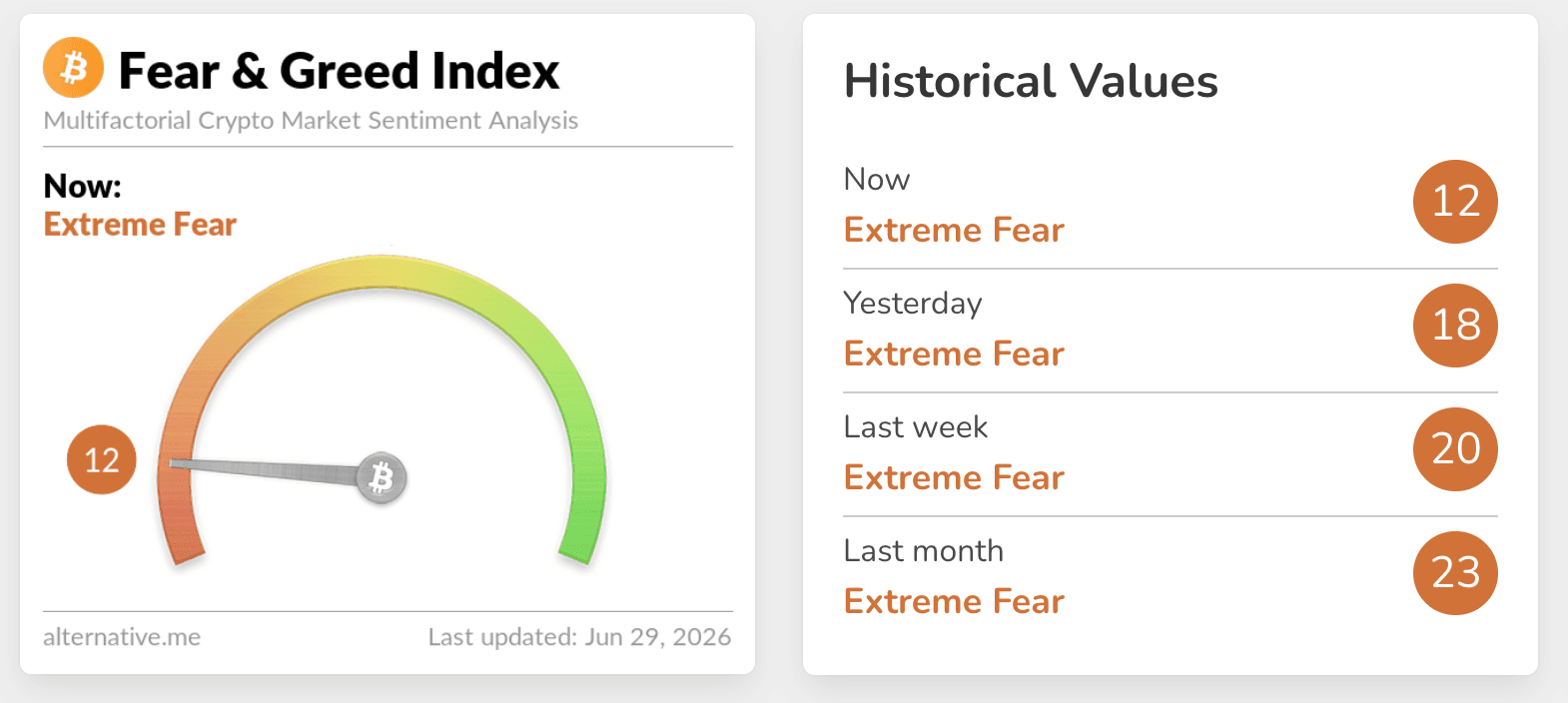
Source: Alternative
Key News Highlights:
Dubai VARA Issues Its 50th Crypto License as the Regulated Market Continues to Expand
Dubai’s Virtual Assets Regulatory Authority has officially issued the jurisdiction’s 50th virtual asset service provider license. The latest approval was granted to tokenized assets platform Tribe Tokenisation FZE. While this milestone highlights Dubai’s rapid expansion as a global digital asset hub, official data shows that only 39 licensed entities were fully operational by the end of 2025. This means that the number of licenses issued does not fully reflect the actual scale of commercial activity. As part of the regulatory framework, newly approved companies are subject to controlled operational assessments to ensure that their services meet local regulatory requirements. Compared with other regions, Dubai currently has more licensed firms than Hong Kong and Singapore. This is largely supported by its activity-based regulatory framework and its broader strategy to build a complete financial ecosystem. Going forward, regulators are expected to continue assessing market indicators such as trading volume, assets under management, and audited financial data to ensure market transparency and operational security.
Early Zk-Rollup Project Loopring Shuts Down DEX and Will Return User Assets in Batches
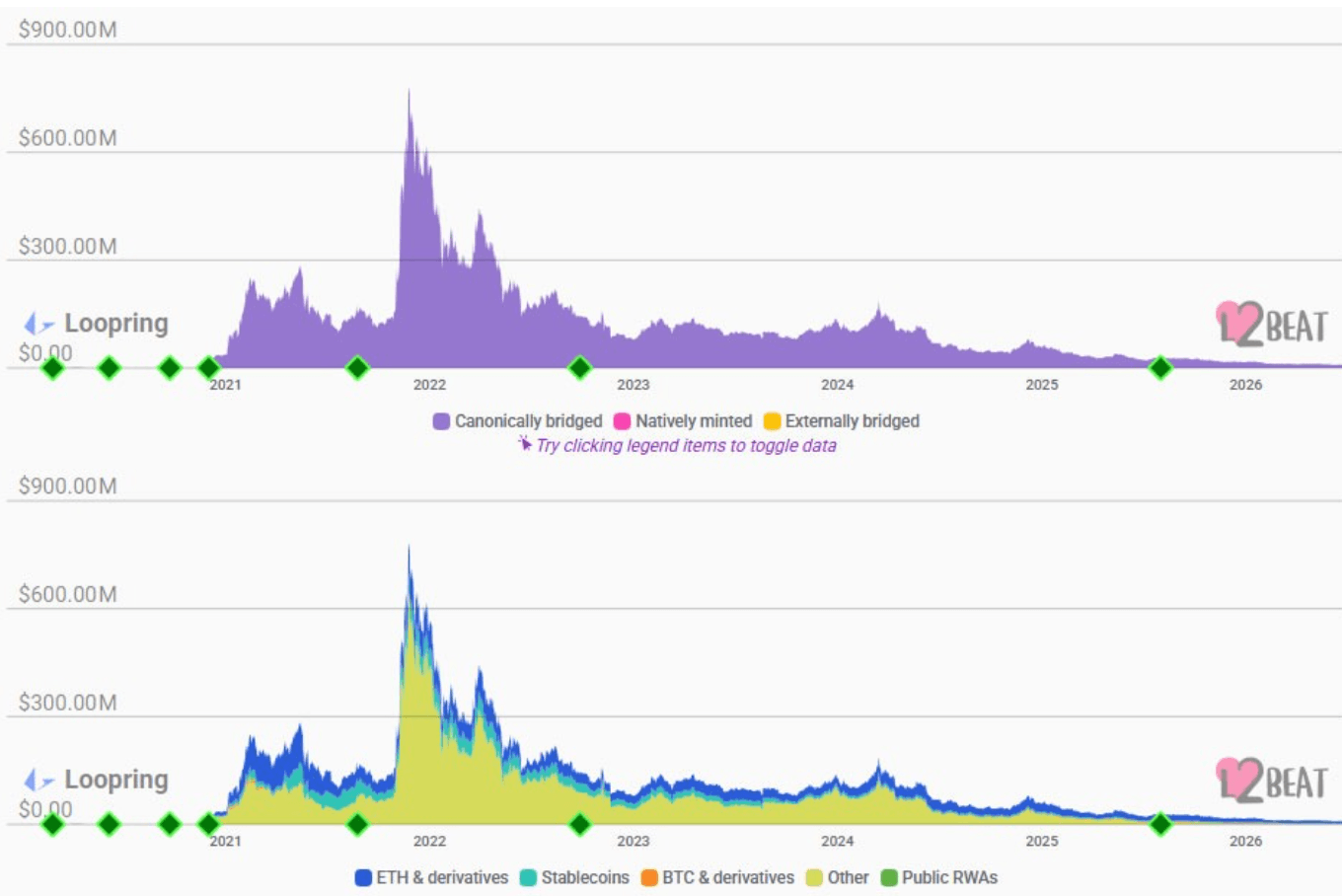
Loopring, Ethereum’s first zero-knowledge proof scaling solution, officially announced on Sunday that it will fully shut down its decentralized exchange and automated market maker services. All trading functions and relayer operations have been halted immediately. In its public statement, the team said the core reasons behind the closure were the project’s failure to achieve meaningful real-world adoption and the structural limitations created by the lack of a virtual machine and composability. These constraints made it difficult for Loopring to keep pace with rapidly evolving market demand. As technology advanced, Loopring’s specialized architecture was gradually surpassed by more modern solutions. The team also acknowledged that its limitations in business development and operations made it harder to respond to external competitive pressure, including the recent delisting of its token by major trading platforms. According to data analytics platforms, Loopring’s total value has fallen sharply from its 2021 peak and now stands at around $8 million. The team has pledged to calculate and publish final user balances before distributing assets directly to users’ Ethereum wallets. It will also cover the related transaction fees.
Bitcoin’s July Outlook Draws Attention as the Market Focuses on $60K Support and Upper Liquidation Zones
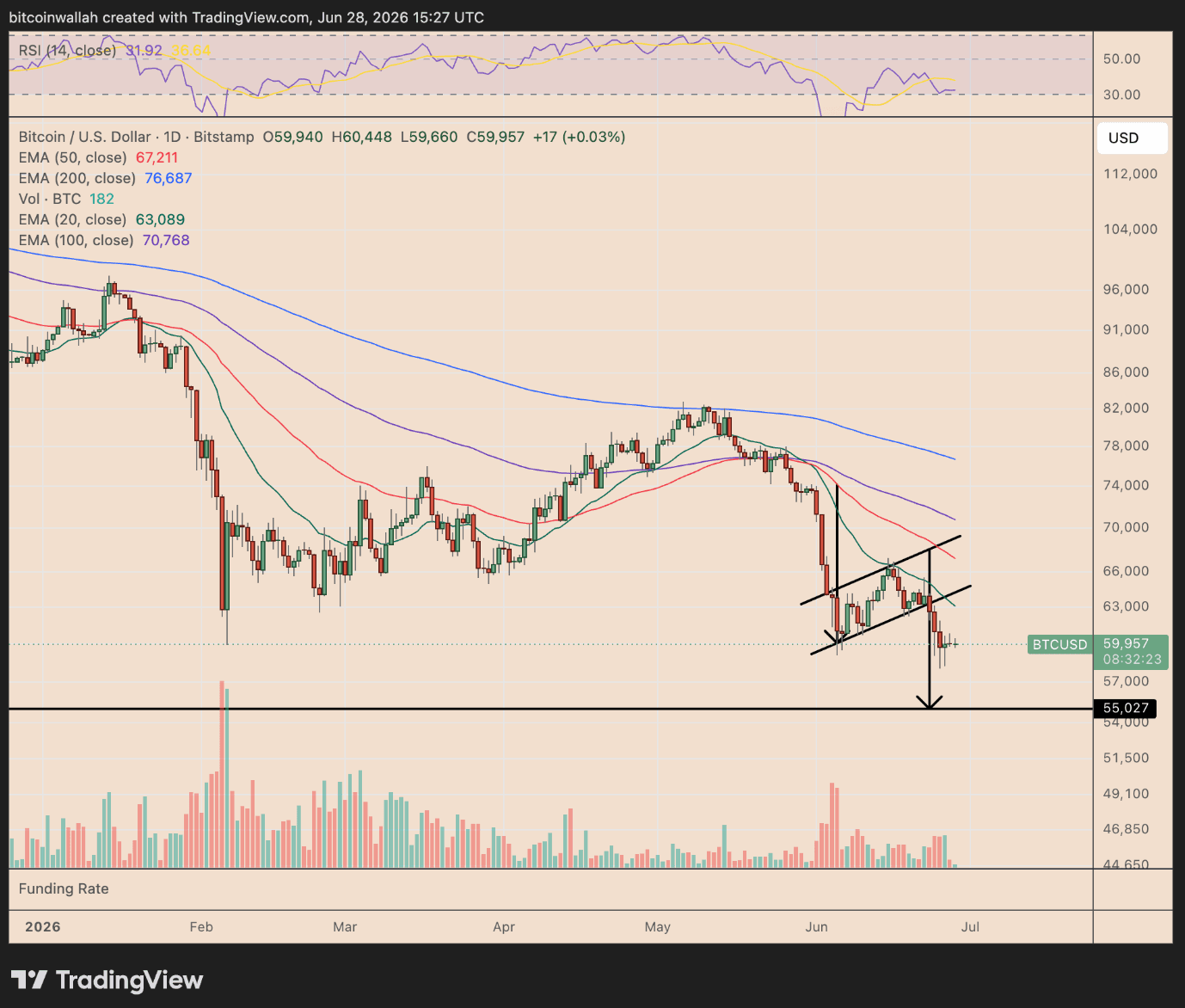
After a notable correction in June, Bitcoin’s potential price trajectory in July has become a key focus for the market. Market participants are weighing historical seasonality against leveraged liquidation data as bullish and bearish forces continue to compete. From a data perspective, Bitcoin has historically delivered an average return of around 7.6% in July. In midterm-year seasonality data, its average return has even reached 10.3%. These figures have provided some market analysts with a basis for a more optimistic view. However, technical risks remain. If Bitcoin fails to reclaim the area above its 200-week simple moving average, the risk of a further move toward $55,000 cannot be fully ruled out. In addition, exchange liquidation heatmaps show a large short liquidation liquidity zone near $67,600. This could become a short-term price magnet if market sentiment improves and short positions are forced to close. Such a move may trigger a short squeeze in the near term. Still, investors need to remain aware of volatility risks created by tighter macro liquidity conditions and ongoing spot market selling pressure.
India USDT Premium Rises Above 8.5% as Stablecoin Supply Tightens
India’s crypto market has recently seen a significant shortage of stablecoin supply, causing USDT to trade at a sharp local premium. The current premium has risen above 8.5%, far exceeding its usual range of 3% to 4%. This liquidity pressure mainly stems from a recent crackdown by India’s Enforcement Directorate on entities that used stablecoins to move funds across borders and bypass the traditional banking system. Therefore, stablecoin inflows have been disrupted and local supply has contracted sharply. Since India lacks sufficient compliant sources for stablecoin issuance and mining, the market relies heavily on overseas liquidity inflows. Under rising regulatory pressure and limited legal clarity, market participants have started pricing regulatory uncertainty into local transactions, pushing the premium higher. As domestic discussions around virtual digital asset regulation intensify and financial intelligence authorities strengthen scrutiny of over-the-counter transactions, the market now faces a dual challenge. It must seek a compliant operating path while also dealing with tighter liquidity. Before clearer rules are implemented, regulatory uncertainty has become a hidden cost that the local crypto market cannot ignore.
Disclaimer: The information provided in this section is for informational purposes only and doesn't represent any investment advice or FameEX's official view.