FameEX Today’s Crypto News Recap | July 1, 2026
2026-07-01 06:55:21

Financial giants launched OUSD, the SEC opened consultations on ETFs, Kalshi faced a lawsuit, and Strategy unveiled a capital overhaul, while BTC slipped below $59K. Recent market attention has turned to U.S. macroeconomic data. According to Glenmede, the U.S. unemployment rate for June is expected to remain unchanged at 4.3%. Nonfarm payroll growth may slow from the previous month, but the labor market remains resilient. This has added complexity to market expectations around the future path of interest rates. Against this macro backdrop, risk aversion in the crypto market has increased sharply. The Crypto Fear and Greed Index has dropped to 11, placing the market deep in the Extreme Fear zone. Bitcoin has fallen below the $59K level with a 1.89% daily decline. Ethereum has also weakened and lost the $1,600 level. On the institutional side, U.S. spot Bitcoin ETFs have recorded net outflows for 9 consecutive days. Total net outflows reached USD 223 million yesterday, showing that defensive positioning continues to dominate current capital allocation. The derivatives market is also facing significant liquidation pressure. If Bitcoin falls further below $56,231, cumulative long liquidation intensity on major CEXs could reach USD 1.384 billion. If Ethereum falls below $1,515, it could trigger USD 619 million in long liquidations. This shows that highly leveraged long positions remain vulnerable. Meanwhile, although crypto primary market financing fell to USD 898 million in June, capital continued to concentrate in infrastructure and DeFi. This reflects that institutional capital is still prioritizing projects with long-term value and stronger regulatory foundations during periods of market volatility.
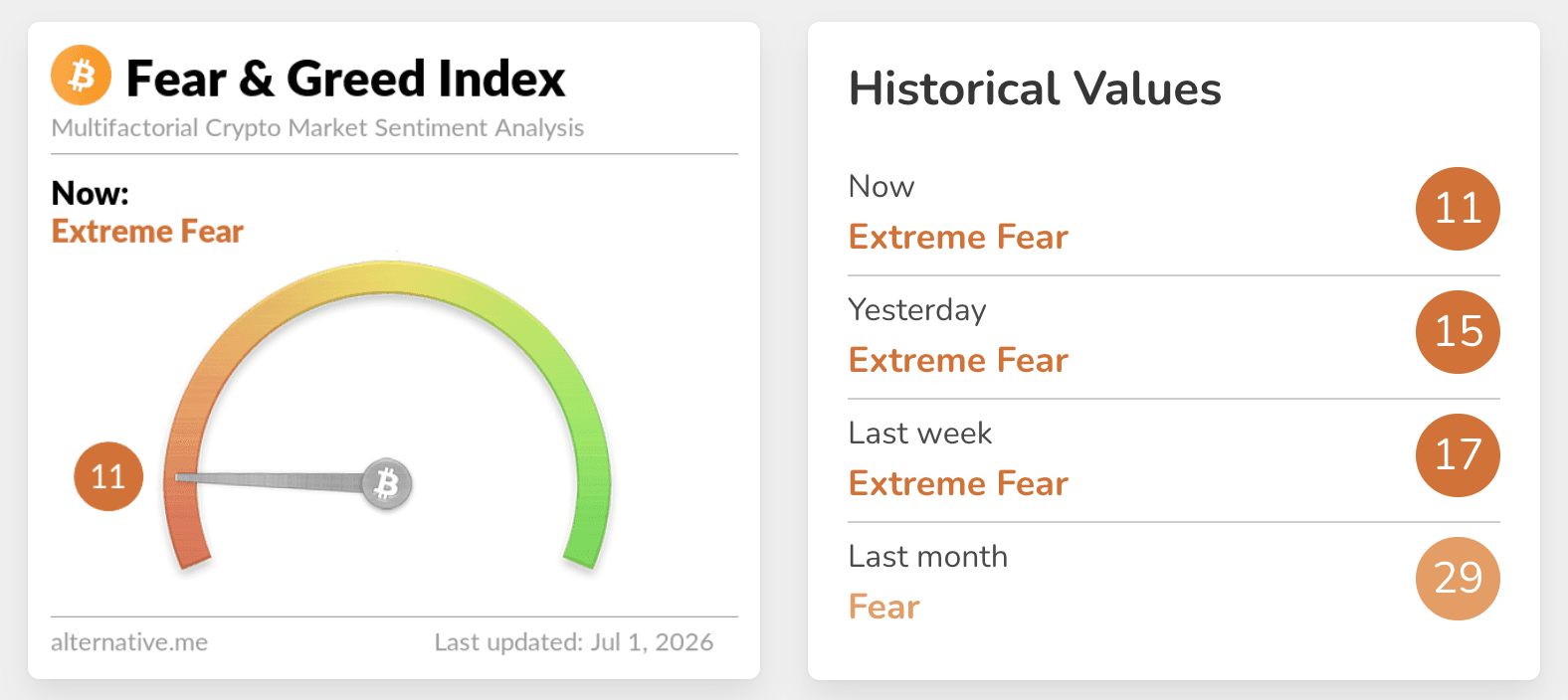
Source: Alternative
Key News Highlights:
Financial Giants and Crypto Firms Join Forces to Launch the OUSD Stablecoin Project
Open Standard recently announced the launch of OUSD, a stablecoin project backed by a group of major international financial and crypto companies. The project aims to challenge the two dominant stablecoins in the current market. It is supported by key industry players, including Visa, Mastercard, Coinbase, and Ripple. Its core mechanism allows enterprise users to mint OUSD without extra costs and without artificial limits on issuance volume. The most market-sensitive feature is that participating institutions can receive a share of the earnings generated by the reserves. This design is seen as a potential shift in the existing stablecoin market structure. Traditional stablecoin issuers usually retain reserve earnings as their own profit. By contrast, OUSD is designed to return this value to holders and participating businesses. Analysts noted that the project has both the technical foundation and commercial incentives to capture market share, given the broad influence of its backers across payments and crypto. However, the same incentive structure may also lead to further fragmentation in the stablecoin market. DefiLlama data shows that the stablecoin market has already exceeded USD 312 billion. It is also projected to grow to USD 4 trillion by 2030. This makes OUSD an important variable in the future competition for payment infrastructure.
The SEC Seeks Public Comment on Emerging ETF Structures
The U.S. Securities and Exchange Commission recently issued a notice seeking public comment on exchange-traded funds that invest in innovative asset classes or use specialized investment strategies. The goal is to assess whether current regulations are sufficient for increasingly complex financial products. ETF issuers have continued to roll out products involving staking, stablecoin reserves, and other derivative strategies. In response, regulators are seeking feedback on whether existing registration procedures and compliance frameworks need to be adjusted. The aim is to maintain investor protection and fair market operations as product structures evolve. The public comment period will remain open for 60 days. Market participants can use this window to provide feedback on the future regulation of ETF products. This move comes as ETF assets under management have grown from around USD 4 trillion in 2019 to more than USD 12 trillion by the end of 2025. Recently, issuers such as ProShares, Grayscale, and Franklin Templeton have launched or proposed crypto-related products involving Treasury assets, staking rewards, and dividend reinvestment strategies. The growing popularity of these products is pushing regulators to seek a balance between financial innovation and market stability. The outcome of this consultation may have a meaningful impact on the approval pace and structural design of future crypto ETFs.

BlackRock’s Bitcoin Premium Income ETF filing. Source: SEC.gov
Massachusetts Attorney General Files Amended Lawsuit Against Prediction Market Platform Kalshi
The legal dispute between prediction market platform Kalshi and U.S. state regulators has escalated. The Massachusetts Attorney General’s Office recently received court approval to file a 71-page amended complaint, expanding the scope of its allegations against the platform. In addition to earlier claims related to illegal sports betting, the amended complaint alleges that Kalshi used social media and university campus marketing to intentionally attract users under 21 to trade event contracts on its platform. This is viewed by state authorities as a potential violation of state restrictions on legal betting age. Since Kalshi was sued in September 2025, its operations have faced certain legal constraints. A court had also issued a preliminary injunction preventing the platform from offering sports event contracts. The complexity of the case lies in the conflict between federal and state jurisdiction. The U.S. Commodity Futures Trading Commission previously stated that prediction markets fall under federally regulated swaps and should not be restricted by state law. The Digital Asset Market Clarity Act currently under discussion in Congress may provide legal guidance for similar disputes. Until then, this legal tug-of-war over state attorney general authority and federal regulatory jurisdiction will continue to create significant uncertainty for prediction market platforms.
Strategy Announces Capital Overhaul to Address Liquidity Risk Concerns
After Bitcoin fell below $59K, market concerns grew around Strategy’s debt structure and potential liquidity risks. In response, Strategy recently announced a new capital framework aimed at easing fears that the company could face a liquidity crisis. The plan includes up to USD 1 billion in MSTR share buybacks and up to USD 1 billion in buybacks for STRC and related securities. It also raises the STRC dividend yield to about 12% and expands the company’s cash buffer to USD 2.55 billion. The most closely watched part of the announcement is that Strategy clearly stated it may sell up to USD 1.25 billion of its Bitcoin holdings if needed to meet dividend payments or debt obligations. This move is being interpreted as an attempt by management to use more transparent capital allocation and stronger cash flow defenses to address concerns over the reflexive risk of its leveraged Bitcoin accumulation strategy during extreme market conditions. Market views remain divided over whether the company’s structure could create a “death spiral” similar to the Terra/LUNA collapse. However, analysts noted that the larger capital buffer and clearer asset monetization path to improve confidence in the company’s short-term debt-servicing capacity to some extent. They may also reduce the pressure of forced asset sales if capital costs rise in the secondary market.

Disclaimer: The information provided in this section is for informational purposes only and doesn't represent any investment advice or FameEX's official view.