FameEX Today’s Crypto News Recap | July 6, 2026
2026-07-06 06:53:31

Central banks warn of AI financial risks, Asia accelerates crypto regulation, and Moonbeam shifts to Base network, while BTC hovers near $63K amid extreme fear. Bitcoin has recently been fluctuating near the $63,000 level, while the broader market remains in a state of extreme fear. The Fear and Greed Index stands at 24, showing that investors remain highly cautious about potential volatility ahead. Ethereum has followed a similar path and is actively testing the $1,800 level. Although spot Ethereum ETFs have recorded net outflows for eight consecutive weeks, with total net outflows reaching USD 13.67 million this week, institutional demand remains divided. BlackRock’s ETHA recorded USD 44.65 million in weekly net inflows, suggesting that long-term institutional allocation demand still provides a degree of support. In the derivatives market, liquidation data highlights the key battlegrounds between long and short positions. If Bitcoin breaks above $65,774, the cumulative short liquidation intensity on major CEXs will reach USD 825 million. If Bitcoin falls below $59,989, the cumulative long liquidation intensity will reach USD 750 million. Ethereum shows a similar structure. If ETH drops below $1,692, the cumulative long liquidation intensity will reach USD 549 million. If ETH breaks above $1,866, the cumulative short liquidation intensity will reach USD 463 million. This indicates that leveraged positions are highly concentrated around these key price levels.
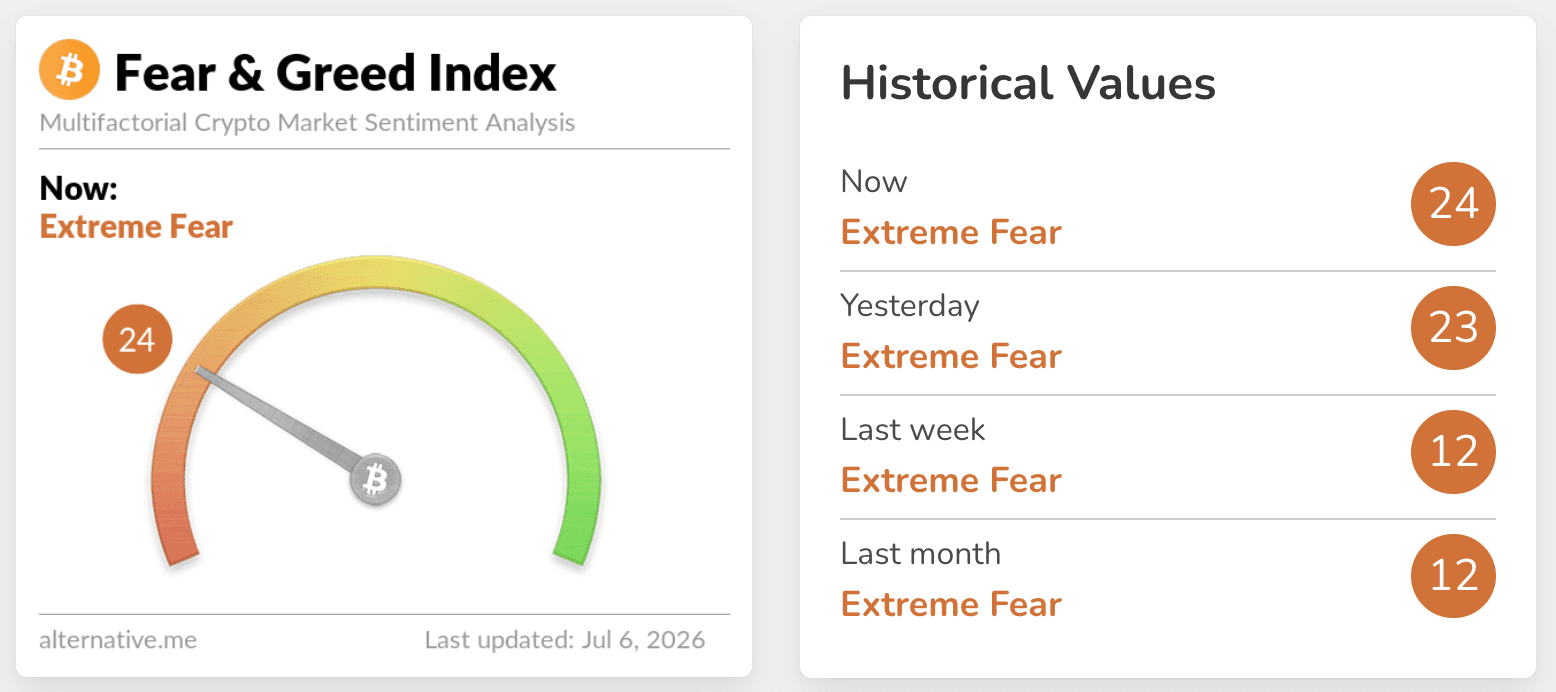
Source: Alternative
Key News Highlights:
Global Central Banks Focus on the Potential Impact of AI Agents on Financial Markets
The European Central Bank, the Bank of England, and the UK’s financial regulator have all recently raised concerns about the financial risks of AI agents. An AI agent generally refers to an AI system that can independently perform tasks, interact with other systems, make decisions, or execute trading processes. Bank of England Deputy Governor Sarah Breeden said that these systems could amplify volatility when markets are under stress. She noted that financial markets may need new safeguards. These could include mechanisms that limit or halt trading when faulty models trigger abnormal market activity. European Central Bank President Christine Lagarde also warned that AI-related risks are developing at a much faster pace. Traditional cybersecurity defenses may not be enough to address them. Nikhil Rathi, Chief Executive of the UK’s Financial Conduct Authority, said that traditional rulemaking processes are usually slow. AI technologies, however, can evolve within weeks or months. This means regulators may need a more flexible and collaborative approach to market oversight. The Bank for International Settlements has also warned that a sharp reversal in AI-related assets after a prolonged period of risk appetite could create spillover effects across financial markets. Overall, the discussion among central banks and regulators has moved beyond AI innovation itself. It now extends to financial stability, trading safety, and market governance.
Asian Markets Accelerate Crypto Asset and Tokenization Regulatory Frameworks
Asian crypto markets have recently seen a series of regulatory and infrastructure developments across India, Russia, Japan, Dubai, South Korea, and Taiwan. India’s central bank reportedly told the Parliamentary Standing Committee on Finance that crypto assets should be prevented from being used in payments and settlements. It also recommended limiting the banking sector’s exposure to crypto assets. At the same time, the central bank called for a clear distinction between speculative crypto assets and regulated tokenized financial instruments, such as government bonds and corporate bonds. Russia’s central bank confirmed that the digital ruble will launch on September 1 as planned. It will initially be accepted by financial and credit institutions. Japan’s SBI Crypto announced that it will shut down its Bitcoin mining pool on July 31. The company asked miners to keep submitting hashrate until the cutoff date so final payouts can be completed properly. In Dubai, the Virtual Assets Regulatory Authority has issued its 50th virtual asset service provider license, showing continued expansion of its crypto licensing regime. The Bank of Korea also discussed tokenized government bonds and a unified ledger framework at the European Central Bank Forum on Central Banking. The framework aims to integrate wholesale central bank digital currencies, tokenized commercial bank deposits, and tokenized bonds into the same infrastructure. Taiwan’s legislature has passed laws covering crypto assets and stablecoins. The new rules require virtual asset service providers to obtain regulatory approval. Stablecoin issuers must also maintain sufficient reserves, use trustee custody, and undergo regular audits. These developments show that Asian markets are moving from isolated regulatory measures toward more complete digital finance frameworks.
Moonbeam Shifts From Polkadot to Base to Focus on On-Chain AI Agent Collaboration
Moonbeam announced that it will shift its core focus from the Polkadot ecosystem to Base. It also plans to launch an on-chain communication and settlement framework for AI agents. The team said the new Moonbeam Protocol will support collaboration between autonomous AI agents. This would allow different AI agents to discover each other on-chain, negotiate tasks, complete work, and make payments. Moonbeam believes that AI-native on-chain coordination is a long-term development direction. For this reason, it has decided to concentrate its resources on this area. The protocol has not yet announced a specific launch timeline. Moonbeam has operated as a Polkadot parachain since January 2022. Its main role has been to help developers build EVM-compatible applications within the Polkadot ecosystem. This shift has been seen by some community members as an important change for the Polkadot ecosystem. According to Moonbeam, GLMR holders must bridge their tokens from the Polkadot parachain to Base before July 31, 2026. GLMR held in lending markets, staking contracts, or other DeFi protocols will also need to be migrated. Users who hold GLMR through centralized platforms do not need to take action. Moonbeam said it will continue to provide cross-chain interoperability services on the Polkadot parachain during the transition period. It also said it will continue supporting existing builders and infrastructure providers.

Nansen Data Shows Most TRUMP Token Buyers Are in Loss
Nansen analysis shows that about 988,905 buyer wallets for the TRUMP token were in loss as of the end of June. These wallets had accumulated losses of around USD 3.81 billion. The data includes buyers who still hold the token at an unrealized loss. By comparison, slightly fewer than 500,000 wallets recorded profits, with total gains of around USD 4 billion. Nansen noted that the token showed a structure where a small group of early buyers captured significant gains, while a broad group of retail buyers absorbed the losses. The TRUMP token was launched in January 2025 and quickly rose to more than $73 at its peak. Its price later dropped sharply. According to reports, the token is currently trading at around $1.70, far below its previous high. Nansen also analyzed the WLFI token. Among nearly 27,000 tracked wallets, around 85% recorded losses, with total losses of about USD 83 million. The remaining wallets recorded around USD 23 million in gains. The case has again brought market attention to crypto assets linked to political figures, meme coin trading, profit distribution, and the risks borne by retail participants.
Disclaimer: The information provided in this section is for informational purposes only and doesn't represent any investment advice or FameEX's official view.