FameEX Today’s Crypto News Recap | September 30, 2026
2026-09-30 06:58:21
Bitcoin’s bullish score reaches 90 as spot and futures demand cool, while the U.S. signs an AI safety accord; today’s BTC price is near $83.3K in Greed sentiment. Bitcoin is currently trading at $83,317.4 after pulling back from an eight-month high of around $87.4K reached earlier. The price has since returned to a consolidation range near $83K. Ethereum also showed a modest gain during the same period, rising by less than 1%. The broader market is gradually entering a high-level consolidation phase after its recent rapid advance. Market sentiment remains in Greed, with the Crypto Fear and Greed Index at 71. This is slightly lower than yesterday's 73 and unchanged from 71 last week. On the fund-flow side, U.S. spot Bitcoin ETFs recorded total net inflows of USD 66.1947 million yesterday. This marked the ninth consecutive trading day of net inflows. BlackRock's IBIT led the group with USD 51.0883 million in daily net inflows. By comparison, spot Ethereum ETFs posted total net outflows of USD 2.8086 million. This shows a divergence in ETF flows between the two largest crypto assets. In the derivatives market, total crypto liquidations reached about USD 241 million over the past 24 hours. Long liquidations accounted for roughly USD 144 million, while short liquidations totaled about USD 97.7191 million. A total of 73,229 traders were liquidated during the period. CoinGlass data also shows that a Bitcoin move above $87,687 could trigger around USD 1.371 billion in cumulative short liquidation intensity across major trading platforms. A drop below $79,509 could bring cumulative long liquidation intensity to around USD 1.282 billion. On the macro side, all three major U.S. stock indexes closed slightly lower in the latest session. Long-term U.S. Treasury yields also remain near multi-year highs. These conditions continue to keep risk assets sensitive to changes in interest rates and market liquidity.
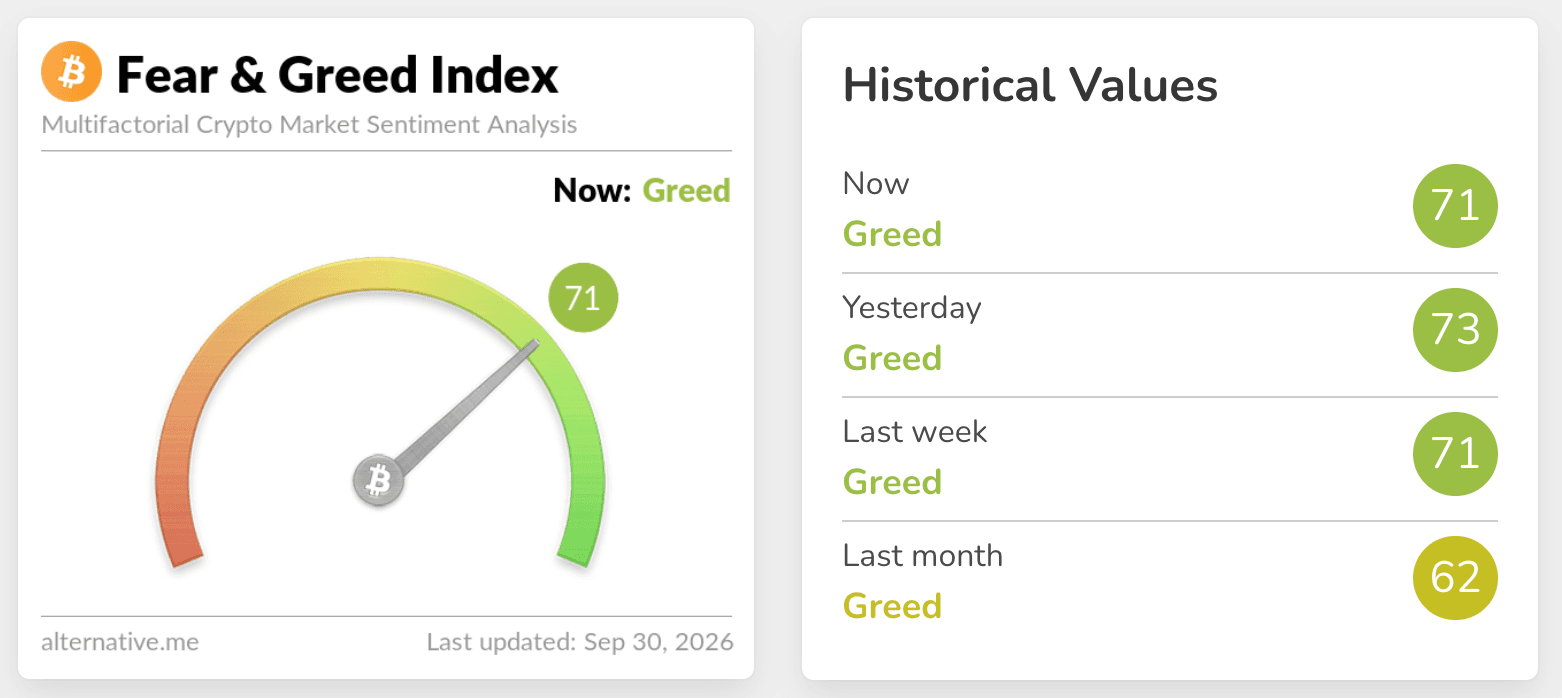
Source: Alternative
Key News Highlights:
Bitcoin Bullish Score Rises To 90 As Spot And Futures Demand Cool
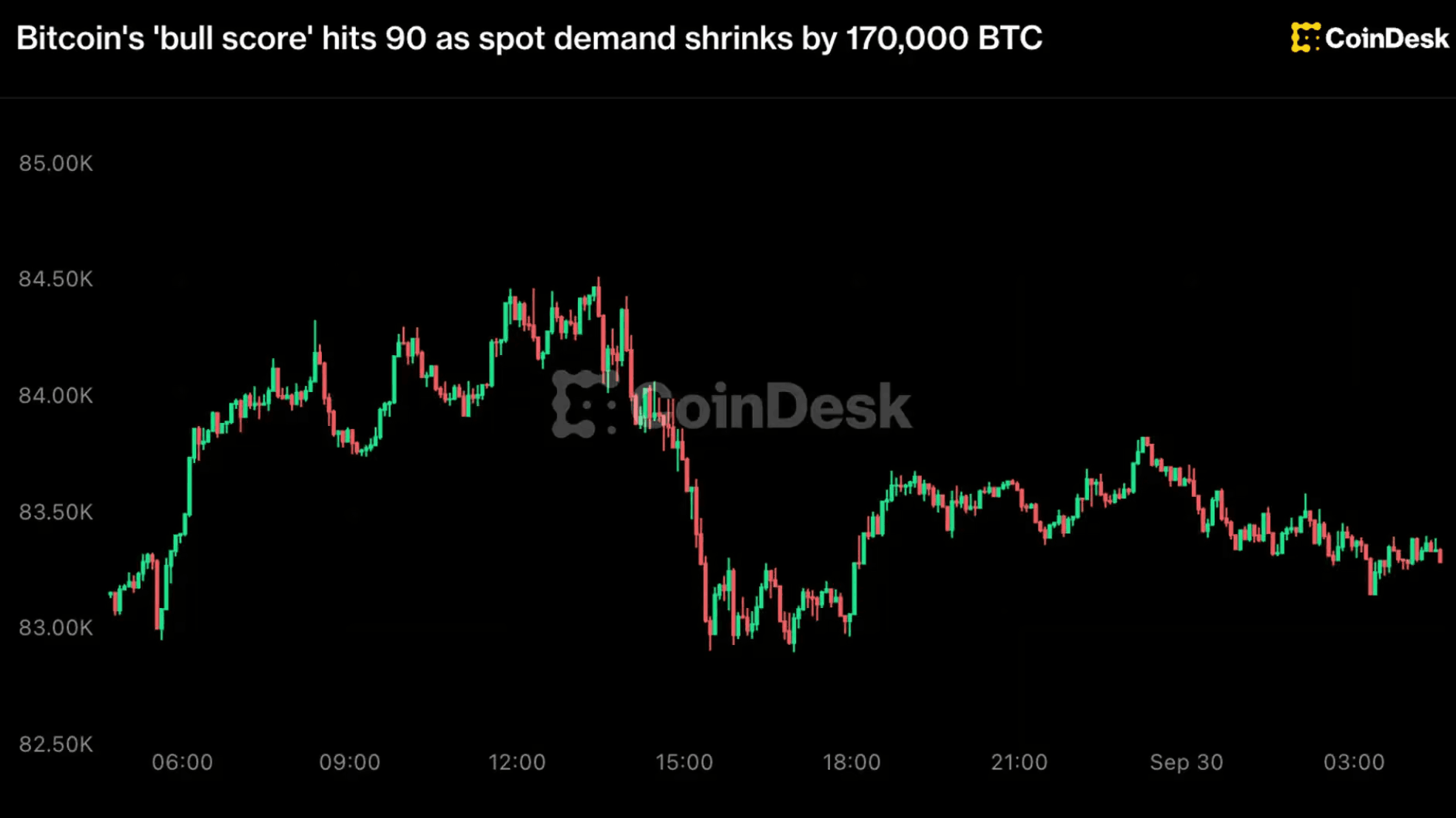
Latest data from CryptoQuant shows that Bitcoin's bullish score has climbed to 90 out of 100. The reading reflects a broad improvement across several on-chain and market indicators following Bitcoin's recent price advance. Bitcoin previously broke above its 365-day moving average and later reached an eight-month high of about $87.4K. CryptoQuant treats the break above the 365-day moving average as one of its market structure signals. The move therefore contributed to the rapid rise in the bullish score. However, new spot buying has started to slow as Bitcoin trades near recent highs. CryptoQuant estimates that Bitcoin's apparent spot demand contracted by about 170,000 BTC over the past 30 days. This suggests that the market is absorbing new supply at a slower pace than before. The slowdown is even more pronounced in the futures market. Growth in speculative futures demand fell from about 164,000 BTC on September 14 to around 16,000 BTC on September 29. This represents a decline of roughly 90% in 15 days. Recent Bitcoin buyers were also sitting on average unrealized gains of around 33% at one point. On September 22, the market recorded profit-taking of about 25,700 BTC, one of the largest single-day profit realization events of the year. CryptoQuant also recorded around 76,000 altcoin deposits to trading platforms over the past seven days. These deposits came from about 51,000 separate addresses. The data indicates that more assets have moved into environments where they can be sold or traded quickly. Overall, several Bitcoin market structure indicators remain elevated. However, the spot demand and new futures positioning that supported the earlier rally have declined significantly from mid-month levels.
U.S. And Tech Companies Sign Voluntary Frontier AI Safety Accord
U.S. President Donald Trump and senior executives from several major technology companies signed a voluntary safety accord focused on frontier artificial intelligence systems. The agreement centers on internal controls, independent reviews, and board-level oversight. The accord is called the Joint Commitment on Frontier Responsibilities. It asks participating companies to establish multiple layers of safety and risk management within their own organizations. The first layer includes internal controls during model training and deployment. Companies are also expected to continuously monitor model capabilities and potential safety risks. The second layer requires internal teams to verify that these controls and monitoring systems are working as intended. The third layer introduces independent external audits or assessments to review the effectiveness of those safeguards. The accord also calls for board-level oversight of both internal and external findings. Boards are expected to track how companies respond when safety issues are identified. Executives involved in the agreement include Google CEO Sundar Pichai, Anthropic CEO Dario Amodei, Meta CEO Mark Zuckerberg, OpenAI President Greg Brockman, Nvidia CEO Jensen Huang, and xAI founder Elon Musk. Trump said during the event that he had observed significant self-regulation among technology companies and that firms should take responsibility for the technologies they develop. The accord is currently voluntary. It also leaves open the possibility that some of these commitments could later be incorporated into formal laws or regulatory requirements. For now, the framework focuses on corporate governance, external review, and defined safety responsibilities.

Aztec Labs Relaunches zk.money With Privacy Payments For Ethereum Users
Aztec Labs has relaunched zk.money roughly three years after the original product was discontinued. The self-custodial wallet is once again focused on private payments. The new version runs on the Aztec Network and is designed to hide payment amounts, account balances, and transaction participants within the network. Users can send funds through readable names or payment links instead of entering a full wallet address each time. The product currently supports deposits of DAI, USDC, and USDT from Ethereum. USDC and USDT are converted into DAI when funds enter the system, which makes DAI the main payment asset used inside zk.money. Unlike Ethereum's public ledger, payment information can remain private once funds have moved onto the Aztec Network. However, the initial deposit from Ethereum still leaves a public record of the sender address and deposit amount. Aztec Labs says zk.money uses a self-custodial model. This means the operator cannot directly spend or freeze funds held by users. Each deposit, payment, and withdrawal is currently limited to less than $2,500. All users also share a daily deposit allowance of $50,000, which replenishes over time. Ethereum addresses used for deposits and withdrawals are screened under the platform's sanctions policy. Product documentation also notes that the Aztec Network remains in an early Alpha stage and has not yet undergone a complete security audit. The original zk.money launched in 2021. Before shutting down, it served more than 75,000 wallets and processed over USD 100 million in transactions. The relaunch continues the project's focus on self-custody and private on-chain payments.
Bitcoin Pulls Back As Supply Builds Around $85K
Bitcoin recently rebounded to around $84.5K but failed to extend the move above $85K. The price later returned to the $83K area, showing that notable supply remains above the current market level. Order-book data from trading platforms shows that sell-side liquidity has continued to build near $85K. Bitcoin has pulled back several times after approaching this area. Glassnode data also shows a large concentration of Bitcoin held by long-term holders between roughly $84K and $85K. These long-term holders are generally associated with UTXOs that have not moved for at least six months. As the market returns to this supply cluster, traders are watching for any increase in coin movement or profit-taking activity. On the macro side, long-term U.S. Treasury yields remain near multi-year highs. The 30-year yield recently moved above 5.60%, while the 10-year yield reached around 5.26%. Precious metals also experienced significant volatility as bond yields moved higher. Gold previously fell about 3.6% to $4,115 per ounce before recovering part of the decline. CoinGlass data shows sizable leveraged liquidation clusters on both sides of Bitcoin's current price. Short liquidation pressure is concentrated above the market, while larger long liquidation zones remain below. Over the past 24 hours, Bitcoin long liquidations reached about USD 27.2474 million. Short liquidations totaled around USD 16.8675 million. The figures show that recent volatility has affected leveraged traders on both sides of the market. The $84K to $85K range currently combines long-term holder supply, sell-side order-book liquidity, and leveraged positioning. This makes the area an important zone for monitoring changes in Bitcoin's near-term supply and demand structure.
Disclaimer: The information provided in this section is for informational purposes only and doesn't represent any investment advice or FameEX's official view.