FameEX Today’s Crypto News Recap | July 8, 2026
2026-07-08 06:28:59

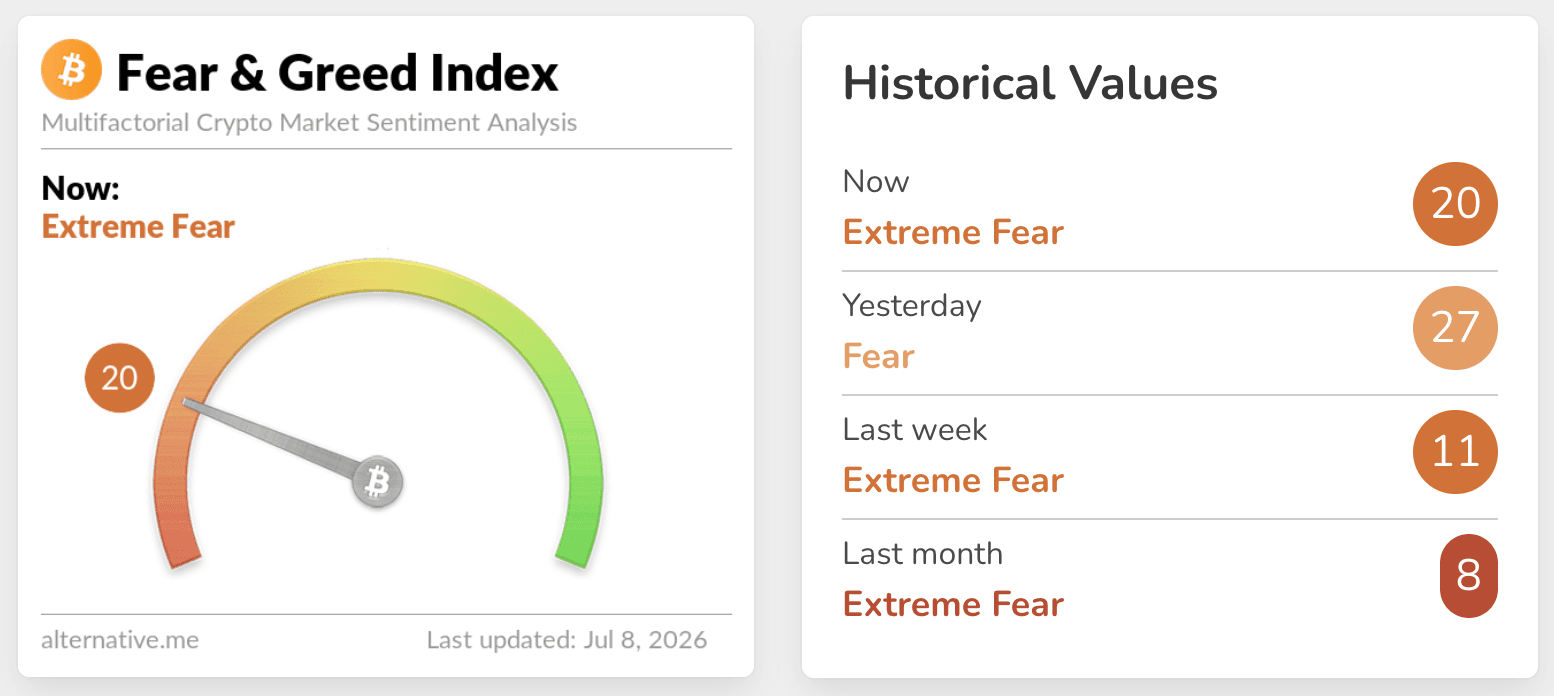
MiCA Euro stablecoins surged 128%, $2M DEX exploit occurred, and Robinhood launched its Chain; Bitcoin dropped to around $62K amid extreme market fear. Bitcoin is currently trading at $62,995, down around 1.32% over the past 24 hours. Market sentiment has been clearly shaped by macroeconomic uncertainty and geopolitical risk. Current data shows that spot Bitcoin ETFs recorded USD 21.43 million in net inflows yesterday. This suggests that institutional allocation remained active despite short-term price pressure. Spot Ethereum ETFs showed stronger inflow momentum, with USD 26.92 million in net inflows yesterday. This also marked the fourth consecutive day of net inflows. The Crypto Fear and Greed Index now stands at 20, placing the market in Extreme Fear. This shows that investors remain highly cautious toward the Federal Reserve’s policy path over the coming months, especially amid elevated expectations that rates may remain unchanged. At the same time, warnings from South Korea’s Ministry of Economy and Finance over rising stock market volatility, together with escalating tensions in the Middle East, have further deepened market concerns over liquidity conditions for risk assets. Investors are now looking for more systematic risk management strategies to navigate potential macroeconomic shocks.
Source: Alternative
Key News Highlights:
MiCA-Compliant Euro Stablecoins Grow 128% in One Year, but Dollar Stablecoins Still Dominate the Market
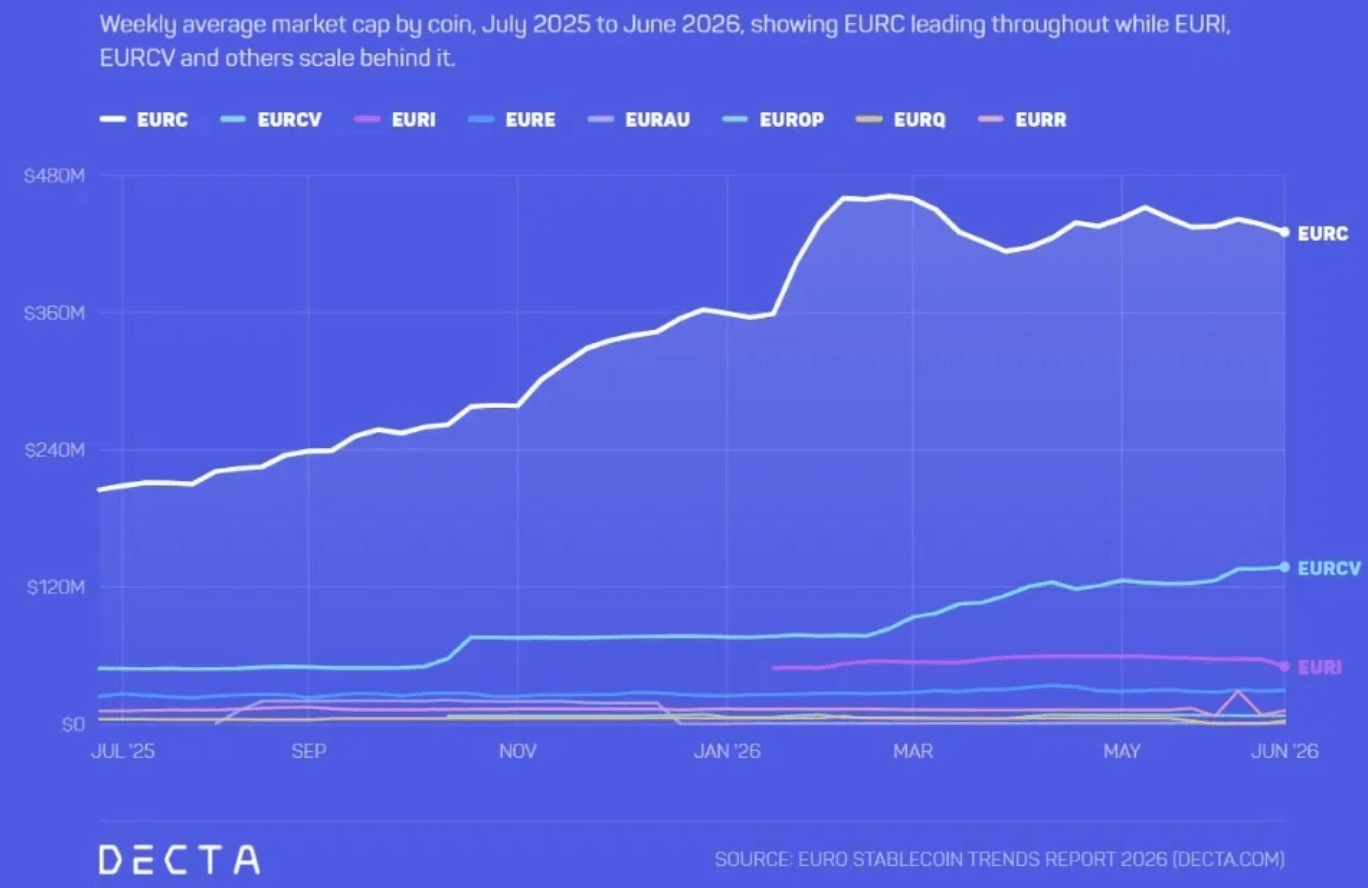
Payments infrastructure company Decta released a report showing that the market capitalization of MiCA-compliant euro stablecoins increased significantly in the year before the end of the European Union’s transition period for crypto-asset service providers. According to the report, the combined market capitalization of eight MiCA-compliant euro stablecoins rose from USD 295.6 million on June 30, 2025 to USD 673.9 million on June 28, 2026, representing a 128% increase. Trading volume also climbed from USD 47 million to USD 67.3 million over the same period, up 43.1%. Decta’s sample covered euro stablecoins that were still actively issued and had both market capitalization and trading volume. As a result, its scope does not fully match the interim MiCA register maintained by the European Securities and Markets Authority. Euro stablecoins are continuing to expand under the MiCA framework, but their overall scale remains small. Based on CoinGecko data, dollar-pegged stablecoins have a total market capitalization of around USD 300 billion. By comparison, the eight compliant euro stablecoins tracked by Decta account for only 0.22% of the dollar stablecoin market. Since July 1, companies offering crypto-asset services in the European Union have generally been required to obtain MiCA authorization. This has made compliance a key threshold for market participants. Discussion around MiCA also continues. Some industry participants believe stricter reserve and interest restrictions have improved safety, but may weaken the commercial competitiveness of euro stablecoins against dollar stablecoins.
Market capitalization of the top 8 euro-pegged stablecoins. Source: Decta
DEX Routing Error Causes Trader to Lose USD 2.01 Million, Bringing MEV Risks Back Into Focus
A trader who attempted to swap USD 2.01 million worth of ETH on a decentralized exchange ultimately received only about USD 14,500 worth of tokens. The incident has renewed market attention on trading routes and MEV risk. According to GoPlus Security, the case was a typical example of same-block backrun extraction rather than a traditional sandwich attack. The user originally swapped 1,126.44 ETH, but the route directed around 1,117 ETH into a low-liquidity AVAIL/WETH pool on Uniswap v3. This caused the trade to execute at a price that was far from normal market value. The related routing process then carried out an arbitrage trade in the same pool and paid Titan Builder around 1,018 ETH as a builder reward, worth about USD 1.8 million. GoPlus Security said the transaction was a real and highly imbalanced backrun arbitrage, with Titan Builder as the main beneficiary. The AVAIL tokens received by the trader were later converted into about USD 14,200 worth of LIT tokens. This resulted in an overall loss of 99.3%. The case once again reminds DeFi users to review transaction routes, liquidity pool depth, and estimated execution results before signing a transaction. Beyond hacks and scams, low liquidity, incorrect routing, and block builder arbitrage can also create major losses in decentralized trading.
Robinhood Chain Launches as Market Focus Returns to Ethereum’s Base Layer and TradFi Applications
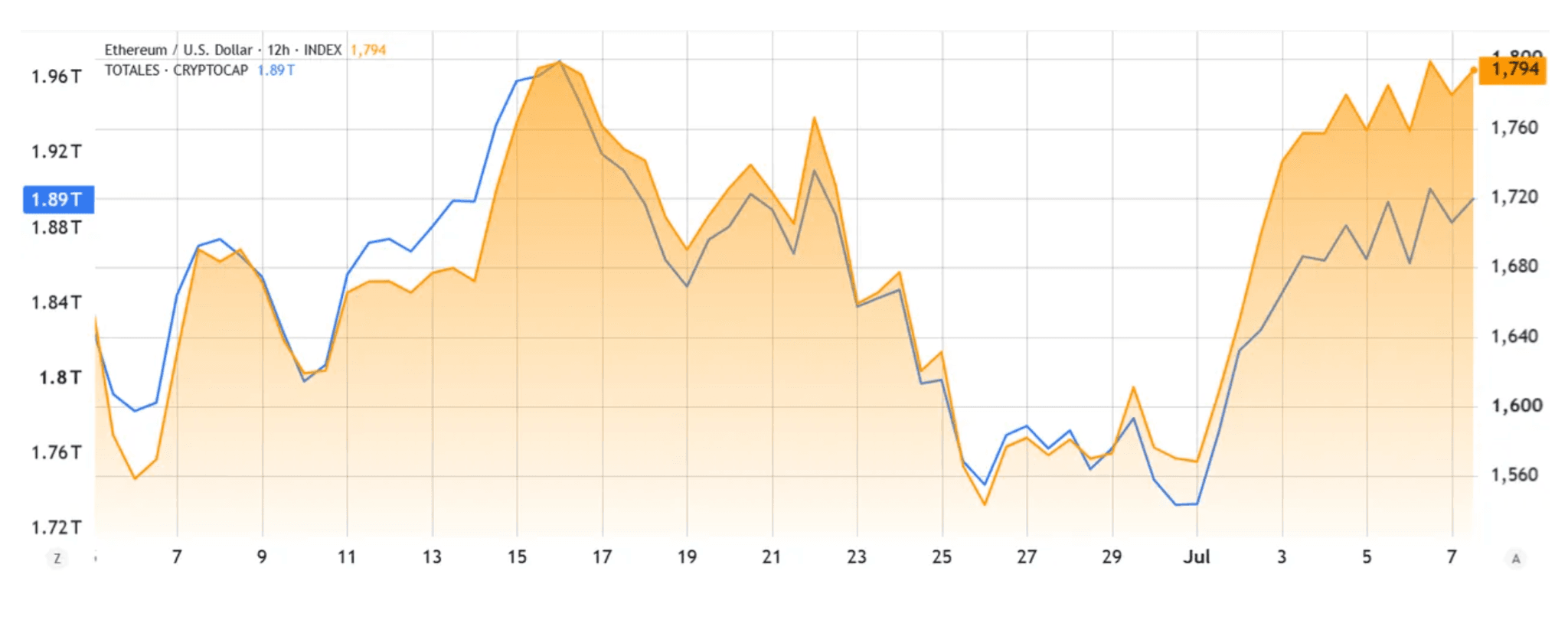
ETH recently rebounded by around 15% over five days and gradually moved away from the $1,500 low reached on June 26. Market attention has centered on Ethereum’s Glamsterdam upgrade tests and the launch of Robinhood Chain. The Ethereum Glamsterdam upgrade is currently in the testing phase. It aims to improve network processing speed later in 2026 and allow more transactions to be processed in parallel. The upgrade also plans to expand Ethereum’s ability to handle more data, reduce database bloat, and strengthen its position as financial application infrastructure. Robinhood Chain launched on July 2 as an EVM-compatible Ethereum Layer 2 network built with Arbitrum technology. Robinhood also launched tokenized stock trading in more than 120 countries and integrated DeFi applications such as Uniswap, 1inch, and Morpho. These developments have brought renewed attention to Ethereum’s role in traditional finance, RWA, Layer 2 infrastructure, and base-layer scaling. However, on-chain fees, options market confidence, and overall risk appetite remain key areas of focus for market observers.
Total Crypto Market Capitalization/USD (Left) and Ether/USD (Right). Source: TradingView
SEC Adds Crypto Rule Changes to Its 2026 Agenda as Market Watches U.S. Regulatory Framework
The U.S. Securities and Exchange Commission has added several crypto-related rule changes to its 2026 agenda. The proposed changes cover crypto broker-dealers, the treatment of digital assets on alternative trading systems and national securities exchanges, and potential exemptions and safe harbors for digital assets. SEC Chair Paul Atkins said the proposed rules are intended to further clarify the regulatory framework for crypto assets and provide greater certainty to the market. In one rule description related to the offer and sale of crypto assets, the SEC noted that the rules may help support capital formation while accommodating innovation in crypto asset markets. The agency also stated that investors should receive sufficient information to make informed investment decisions. These rule developments come as the U.S. Congress continues to discuss a crypto market structure bill. The bill could shift part of the industry’s oversight and enforcement authority from the SEC to the Commodity Futures Trading Commission. Atkins said in March that the SEC would move forward with an agency bridge to clarify crypto regulation, but would defer to legislation if Congress passes a related bill. U.S. crypto regulation remains divided. Supporters believe clearer rules could help the market develop under a more compliant framework. Some Democratic lawmakers have criticized the SEC’s softer enforcement stance toward certain crypto firms, arguing that it could weaken investor protection. Overall, the SEC’s 2026 crypto agenda will be an important point of focus for the U.S. digital asset regulatory framework. Future rule texts, congressional progress, and the division of regulatory responsibilities will remain closely watched by the market.
Disclaimer: The information provided in this section is for informational purposes only and doesn't represent any investment advice or FameEX's official view.