FameEX Today’s Crypto News Recap | June 30, 2026
2026-06-30 06:37:22

The crypto market remained broadly pessimistic today as the Crypto Fear & Greed Index fell to 15, placing market sentiment in the Extreme Fear zone. This shows that investors remain highly risk-averse. Bitcoin is currently trading in a narrow range around $60,000. The market has reached a key point of divergence, with continued selling pressure from retail investors while institutional investors largely remain on the sidelines. According to Coinglass data, if ETH falls below $1,508, the cumulative long liquidation intensity across major CEXs could reach $627 million. This indicates that liquidity below the current price remains highly fragile. Over the past 24 hours, total liquidations across the network reached $315 million, with long liquidations accounting for $218 million. This highlights the continued selling pressure during the market’s leverage unwind. Spot Bitcoin ETFs recorded $231 million in net outflows yesterday, marking the eighth consecutive day of capital outflows. Spot Ethereum ETFs also posted $30.043 million in net outflows, showing that capital continues to move away from crypto assets. On the macro front, the probability that the Fed will keep interest rates unchanged in July remains at 70.1%, while expectations for a rate hike in September have risen. The U.S. Dollar Index edged lower to 101.105. Risk assets and traditional financial markets remain volatile under policy uncertainty, while investors are closely watching the upcoming employment data.
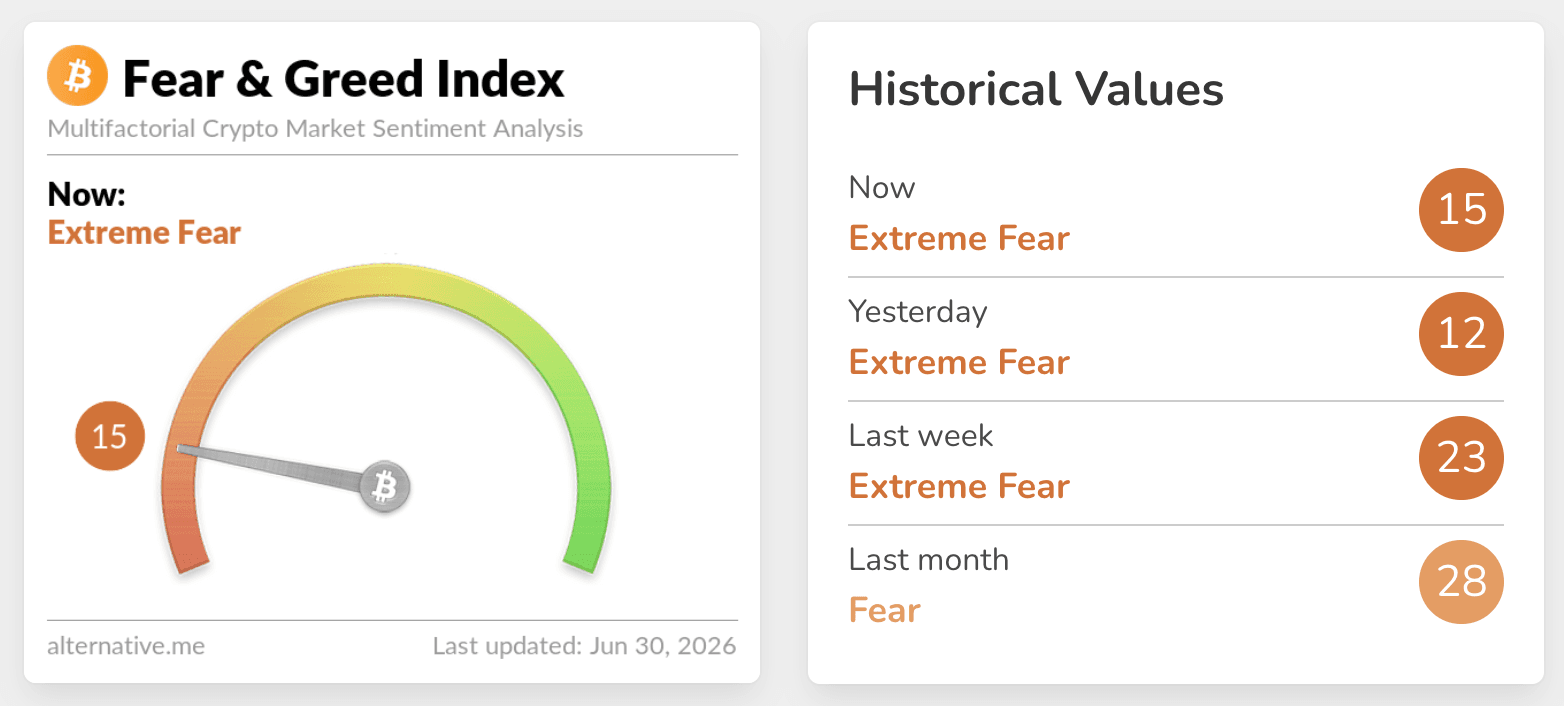
Source: Alternative
Key News Highlights:
Asia’s Regulatory Environment Tightens: Singapore and Indonesia Apply Stricter Controls on Crypto Trading and Influencer Marketing
The Monetary Authority of Singapore recently added decentralized perpetuals exchange Hyperliquid to its Investor Alert List. This is a consumer protection measure designed to warn investors that the entity is not licensed or regulated in Singapore. The warning does not amount to a ban, but it clearly reflects the regulator’s stance toward unauthorized offshore platforms. At the same time, Indonesia’s Financial Services Authority has introduced new regulatory rules requiring social media influencers who recommend crypto assets to obtain professional competency certification, unless they are already subject to another licensing regime. Under the new rules, influencers may only recommend digital assets listed on legally authorized exchanges. Marketing campaigns must also be led and supervised by regulated financial services companies to ensure compliance and transparency. These policies show that Asian regulators are raising their review standards for crypto-related financial marketing. The focus is especially strong on financial influencers across social media platforms. The goal is to reduce the chance that retail investors are exposed to high-risk and unauthorized products. This trend is also in line with recent investment promotion restrictions introduced in Australia and the United Kingdom.
EU Market Regulation Progress: Uneven License Distribution and Market Access Adjustments
According to the latest data from the European Securities and Markets Authority, 244 licenses have been issued under the Markets in Crypto-Assets regulatory framework across the European Union. However, license distribution remains highly uneven among member states. Germany has become a major regulatory hub, with 57 registered crypto companies. This accounts for about 23% of all licenses. France follows with 26 companies, which shows that major financial centers are taking the lead in implementing the regulatory framework. It is worth noting that Greece, Hungary, Poland, Portugal, and Romania have not issued any related operating licenses so far. Poland has yet to establish a crypto exchange licensing system that meets EU-wide standards, which highlights the major differences in regulatory implementation across member states. As MiCA becomes fully effective across the European Union, companies that fail to obtain authorization will be required to stop providing services within the bloc. This is driving a major restructuring of the market landscape. Large trading platforms are now seeking business adjustments in authorized jurisdictions such as France, in order to maintain their presence in the European market.
U.S. Housing Bill and CBDC Ban: Political Disputes and the Legislative Process
The U.S. House Speaker has officially sent the 21st Century ROAD to Housing Act to President Donald Trump. The bill includes a ban on central bank digital currencies and would prohibit the Federal Reserve from issuing or creating any substantially similar digital asset before the end of 2030. The bill has now entered a 10-day decision window. The legislation was initiated by Democrats and sponsored by Senator Elizabeth Warren. By adding the CBDC ban, lawmakers aimed to gain support from Republicans and the White House, helping advance the broader housing bill. This reflects the current bipartisan compromise around digital asset issues in the U.S. legislative process. However, political debate over the bill’s priority continues. Some lawmakers have urged the president to sign the housing bill first, but President Trump’s stance on digital currencies and his focus on other political priorities, including the SAVE America Act, leave the final outcome uncertain. The bill’s progress is not only relevant to the long-term direction of U.S. digital currency policy. It also serves as an important indicator of how digital asset regulation is being coordinated with traditional financial policy. Its implications may offer broader reference value for global digital finance regulation.

Sign executive orders on Monday. Source: The White House
Disclaimer: The information provided in this section is for informational purposes only and doesn't represent any investment advice or FameEX's official view.