SAMSUNG (Samsung Electronics Co., Ltd) Token Price & Latest Live Chart
2026-08-21 14:15:44
What is SAMSUNG (Samsung Electronics)?
Samsung Electronics is one of the world's largest technology companies. Headquartered in Suwon, South Korea, it is the flagship subsidiary of the Samsung Group. Founded in 1969, the company operates across semiconductors, smartphones, consumer electronics, display panels, home appliances, and automotive electronics. Its products and technologies are used by consumers and businesses around the world.
When people think of Samsung, they often think of Galaxy smartphones, TVs, or home appliances. However, within the global technology industry, Samsung plays an even more important role as a semiconductor manufacturer. The company is the world's leading producer of memory chips, including DRAM and NAND Flash. It is also a major supplier of OLED displays, image sensors, and other electronic components used by many of the world's largest technology brands. Today, Samsung Electronics operates through four main business divisions:
- Device Experience (DX): Consumer products including Galaxy smartphones, tablets, TVs, monitors, and smart home appliances.
- Device Solutions (DS): Memory chips, logic chips, and semiconductor manufacturing. This is one of Samsung's largest profit drivers.
- Samsung Display: OLED and other display panels supplied to both Samsung products and leading global technology companies.
- Harman: Automotive electronics, digital cockpit solutions, and premium audio products. It has become a key part of Samsung's smart mobility strategy.
Because Samsung operates across AI, semiconductors, smart devices, and consumer electronics, its business performance is widely viewed as a barometer for the global technology industry. Changes in AI server demand, smartphone sales, or semiconductor cycles often affect Samsung earlier than many other companies. Therefore, investors around the world closely monitor its financial performance and business outlook.
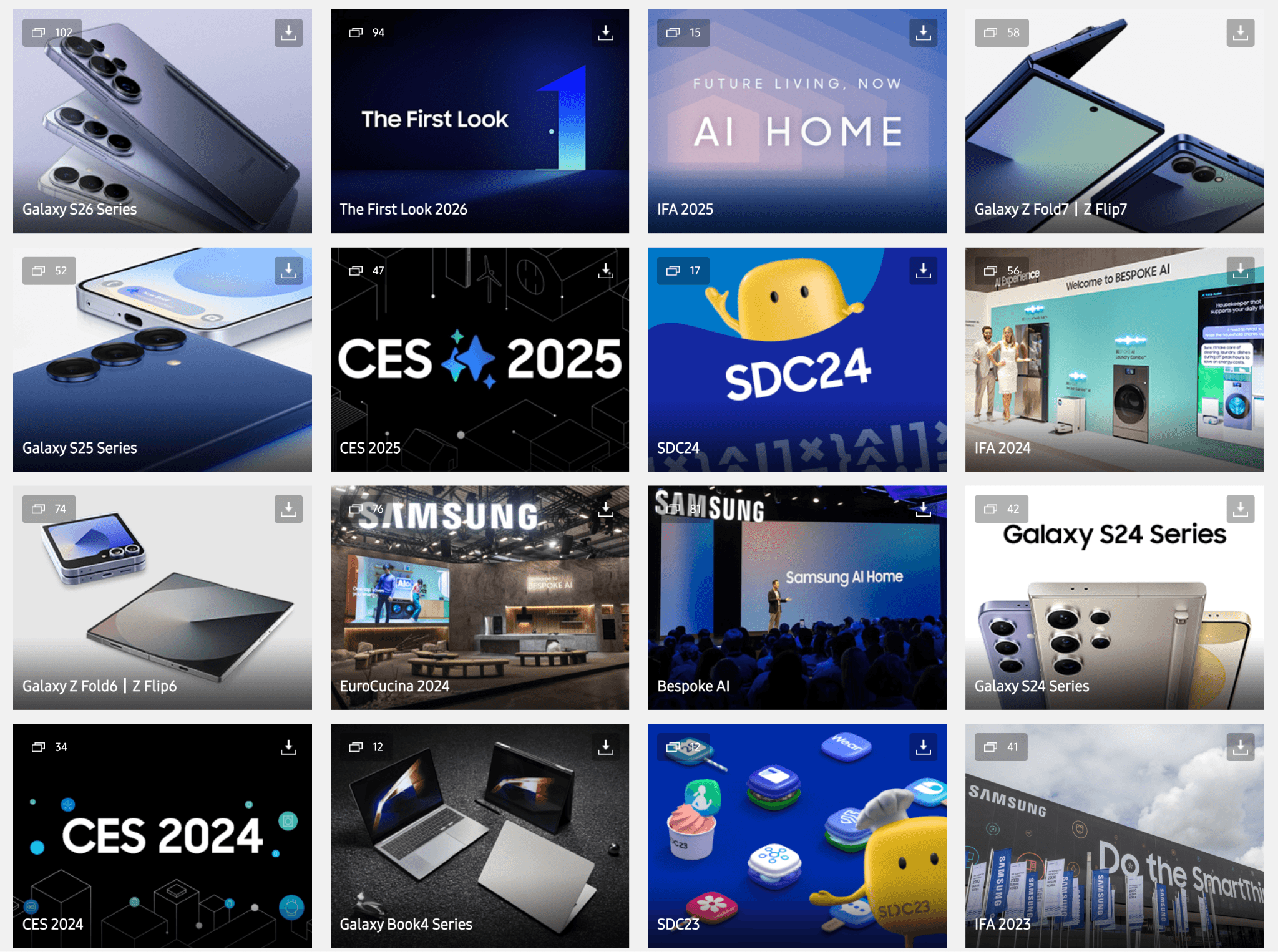
Source: https://news.samsung.com/medialibrary/global
How does SAMSUNG (Samsung Electronics) work?
Samsung Electronics does not rely on a single product for its revenue. Instead, it has built a complete technology ecosystem that spans chip manufacturing, electronic components, consumer devices, and a global supply chain. Its business model can be understood as upstream manufacturing, midstream components, and downstream branded products.
At the upstream level, Samsung is one of the world's largest manufacturers of memory semiconductors. Its portfolio includes DRAM, NAND Flash, and High Bandwidth Memory (HBM), which has become one of the fastest-growing products in the AI era. As generative AI continues to expand, AI servers require significantly more high-performance memory. This has made HBM a major growth driver for the semiconductor industry and positioned Samsung to benefit from rising investment in AI infrastructure. In the midstream segment, Samsung manufactures display panels, image sensors, batteries, and various electronic components. Besides supplying its own Galaxy devices, the company also provides components to many global technology brands. Even consumers who do not own a Samsung smartphone may still be using Samsung-made components in other electronic devices. At the downstream level, Samsung owns one of the world's largest consumer electronics portfolios. Its products include Galaxy smartphones, Galaxy Tab tablets, smartwatches, televisions, refrigerators, washing machines, and smart home appliances. Through hardware integration and platforms such as SmartThings, Samsung aims to build a connected ecosystem that encourages users to stay within its product network.
In recent years, investors have paid closer attention to how well Samsung balances the performance of its different business divisions. During the first quarter of 2026, the semiconductor business benefited significantly from strong AI memory demand. However, the smartphone and display businesses continued to face slowing demand and intense market competition. Although Samsung delivered strong overall earnings, investors remain focused on whether growth can become more balanced instead of depending primarily on the semiconductor cycle.
SAMSUNG (Samsung Electronics) market price & tokenomics
Samsung is not a cryptocurrency and does not have a native blockchain token. It does not have a traditional tokenomics model like most crypto projects. In the TradFi market, Samsung Electronics is listed on the Korea Exchange (KRX). Its share price reflects investor expectations for the company's future earnings, business performance, and the outlook for the global technology industry. As Real World Assets (RWA) and tokenized stocks continue to develop, some Web3 platforms have introduced blockchain-based products that track the prices of traditional equities. These products generally do not represent ownership of the underlying shares. Instead, they use synthetic assets, price indexes, or other financial mechanisms to provide exposure to stock price movements within the crypto ecosystem.
One example is the SAMSUNGUSDT Perpetual Contract, a TradFi perpetual product that tracks the price of Samsung Electronics shares. Trading this contract does not mean owning Samsung stock, nor does it provide shareholder rights such as voting rights or dividend payments. Instead, it allows users to gain exposure to Samsung's stock price movements through a crypto-native trading environment. This reflects one of the major trends in Web3. Through RWA and tokenization technologies, traditional financial assets are becoming accessible on blockchain-based trading platforms. Users can trade crypto assets alongside global equities without leaving the digital asset ecosystem, reducing the friction of moving capital between traditional finance and crypto markets.
According to Samsung's earnings guidance released on July 7, 2026, the company delivered another exceptionally strong quarter. Samsung expects second-quarter operating profit to reach 89.4 trillion won, representing an increase of approximately 1,800% year over year, or roughly 19 times higher than the same period in 2025. Revenue is also expected to grow 129% year over year to 171 trillion won. The record performance was largely driven by robust global demand for AI infrastructure, which has created shortages of High Bandwidth Memory (HBM), DRAM, and NAND memory chips while pushing memory prices higher.
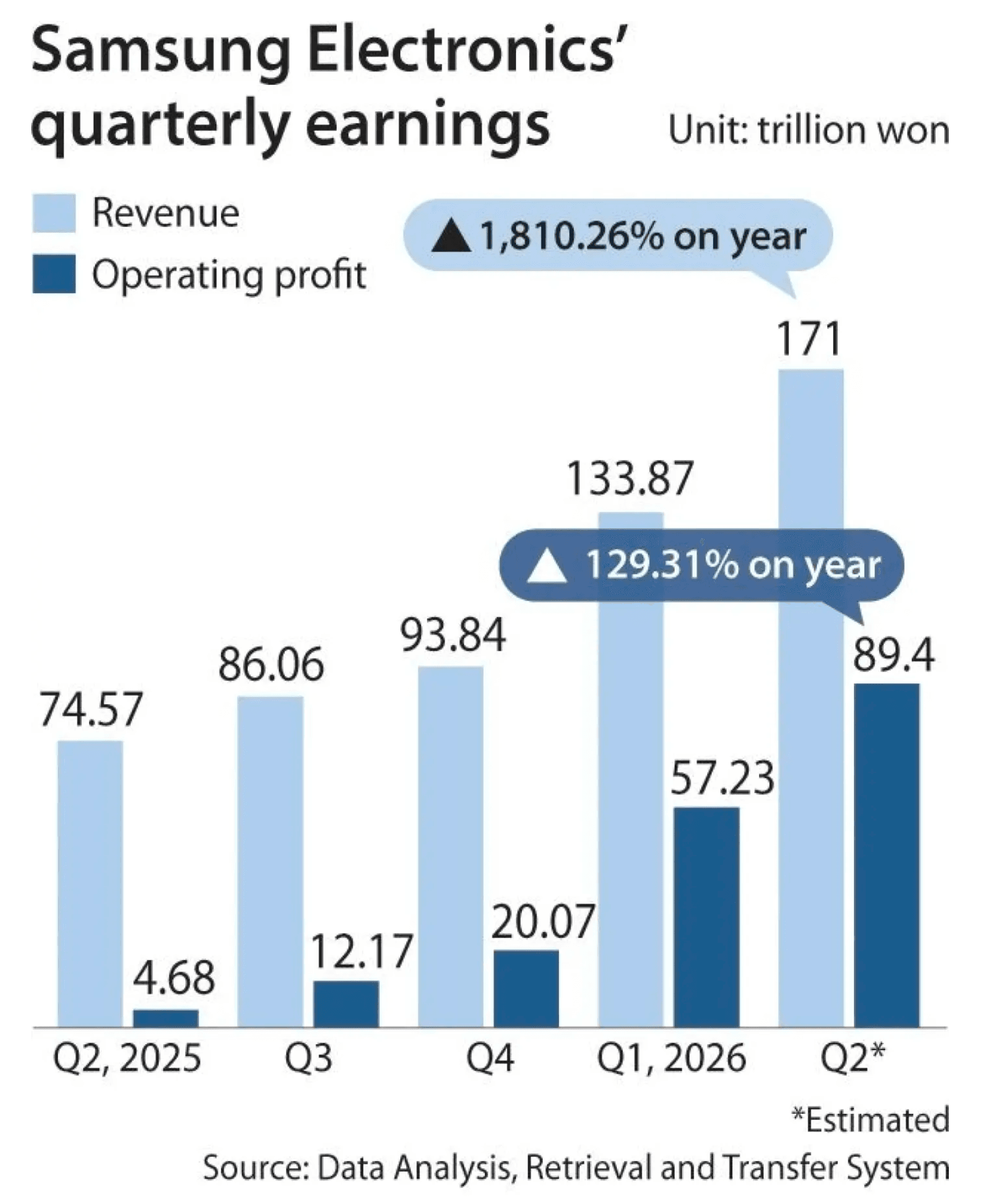
Samsung 2025–2026 Earnings Performance, Source: https://www.koreajoongangdaily.com/business/samsungs-blowout-quarter-fails-to-excite-investors-bracing-for-memory-slowdown/12758789
Despite these record earnings, the market reacted cautiously. On the day the earnings guidance was released, Samsung shares fell nearly 7% on the Seoul stock market. Analysts attributed the decline to a classic "priced-in" reaction, as investors had already expected exceptionally strong results. At the same time, concerns continue to grow over whether AI-driven investment can remain sustainable. Investors are also watching for potential slowdowns in infrastructure spending by major technology companies, as well as external risks including geopolitical tensions and rising labor costs. These factors have led the market to adopt a more cautious view of Samsung's future growth.
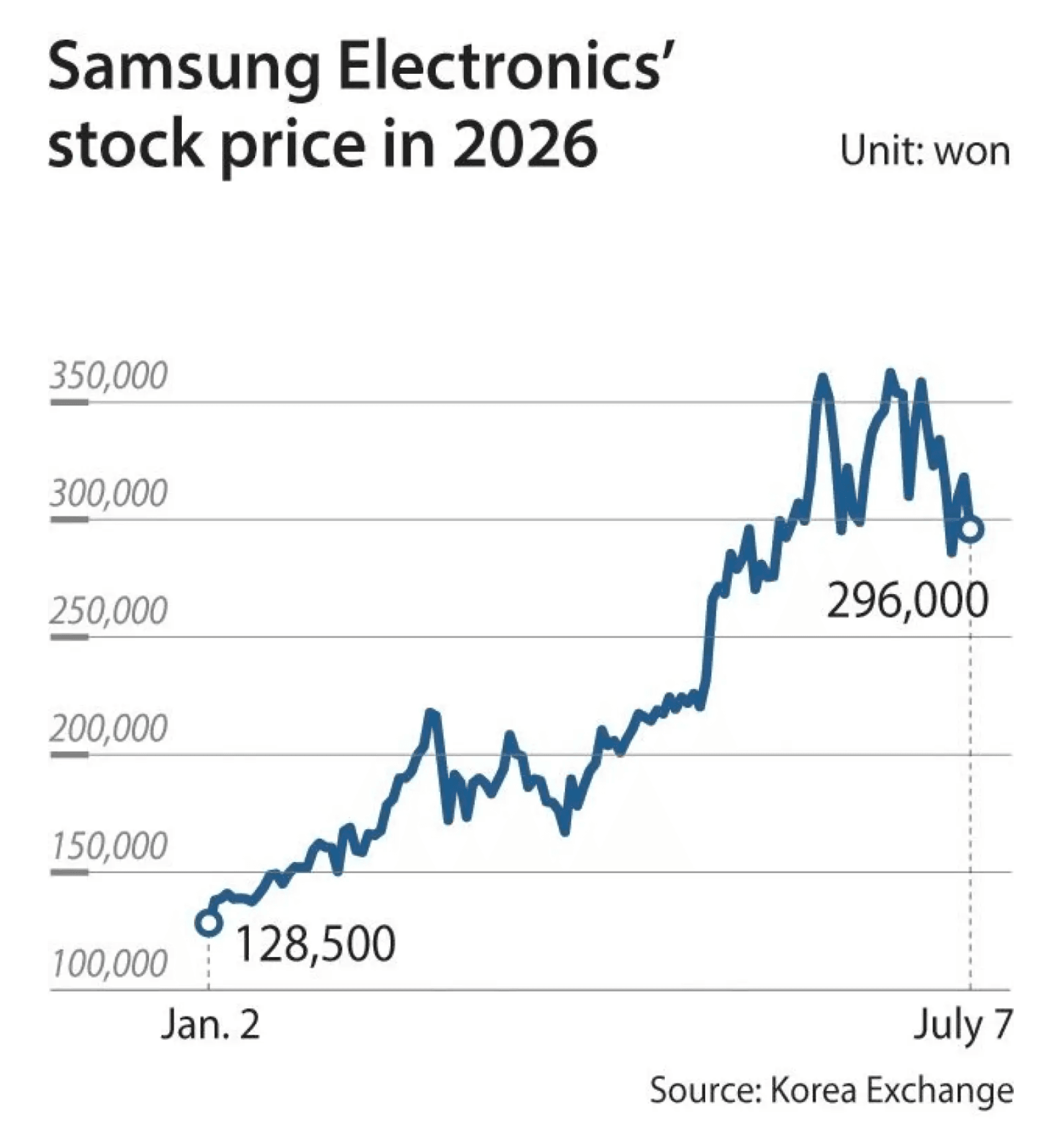
Samsung Share Price Performance in 2026, Source: https://www.koreajoongangdaily.com/business/samsungs-blowout-quarter-fails-to-excite-investors-bracing-for-memory-slowdown/12758789
Why do you invest in SAMSUNG (Samsung Electronics)?
Samsung Electronics has long been regarded as one of the world's most influential technology companies. Therefore, market attention extends well beyond the company itself to include AI, semiconductors, smartphones, and the global electronics supply chain. AI infrastructure has become one of Samsung's most important growth drivers. Rapid demand growth for High Bandwidth Memory (HBM) has made the semiconductor business the company's primary source of earnings. As large language models, AI data centers, and cloud computing continue to expand, investors are closely watching whether Samsung can maintain its leadership in advanced memory technology and whether the AI investment cycle will continue.
In addition, Samsung is also a critical part of the global technology supply chain. Geopolitical developments, international trade policies, semiconductor capacity expansion, and the performance of South Korea's capital markets can all influence investor sentiment toward the company. Even after reporting strong financial results in 2026, Samsung's share price can remain volatile if investors become concerned about slowing demand, weaker AI investment, or increasing supply chain risks.
For users who gain exposure to Samsung through TradFi or RWA products, understanding the company's business model is only the starting point. It is equally important to monitor semiconductor industry cycles, AI infrastructure spending, global technology demand, and macroeconomic conditions. These factors often have a greater influence on Samsung's long-term valuation than a single quarterly earnings report, and they are also likely to be reflected in the pricing of related TradFi and tokenized trading products.
Explore the latest SAMSUNG (Samsung Electronics) price and live chart, trade SAMSUNG on FameEX, and access real-time market data! Get started now with a seamless trading experience!
Disclaimer: The information provided in this article is intended only for educational and reference purposes and should not be considered investment advice. Conduct your own research and seek advice from a professional financial advisor before making any investment decisions. FameEX is not liable for any direct or indirect losses incurred from the use of or reliance on the information in this article.