PLAY (PlaysOut) Token Price & Latest Live Chart
2026-06-10 03:05:07
What is PLAY (PlaysOut)?
In the Web3 gaming market, many projects are trying to redefine the relationship between players and games through tokens, NFTs, or on-chain assets. However, the real barrier to mass adoption is often not the blockchain technology itself. It is the high entry barrier for users, inefficient game distribution, and the difficulty developers face when building sustainable business models across different platforms. PlaysOut addresses a core question: how can games be distributed more lightly, reach more users, and form a sustainable engagement economy between Web2 and Web3. Below are the key advantages PlaysOut can offer users:
- No need to rebuild the architecture: Developers do not need to rebuild an entire app structure just to add gaming features.
- Cross-platform compatibility: Built with Flutter and C++, PlaysOut ensures smooth performance across iOS, Android, and web environments.
- More than just games: Beyond traditional mini-games, the PlaysOut ecosystem has evolved to support interactive short dramas and live interactive content. This expands its content boundary from gaming into a broader digital entertainment layer.
PLAY is the native token of the PlaysOut ecosystem, while PlaysOut itself is a Web3 infrastructure platform centered on mini-games. Its main role is to help high-traffic applications embed mini-game content directly into their user experience. During this process, it creates new models for retention, monetization, and asset interaction. For a traditional app to add gaming features, it usually needs to develop games, build backend services, handle cross-platform compatibility, maintain content updates, and design ad, in-app purchase, or reward systems. The value of PlaysOut lies in packaging these capabilities into an accessible infrastructure layer. Through its SDK, app operators can quickly build a “mini-game center” without creating a full gaming system from scratch.
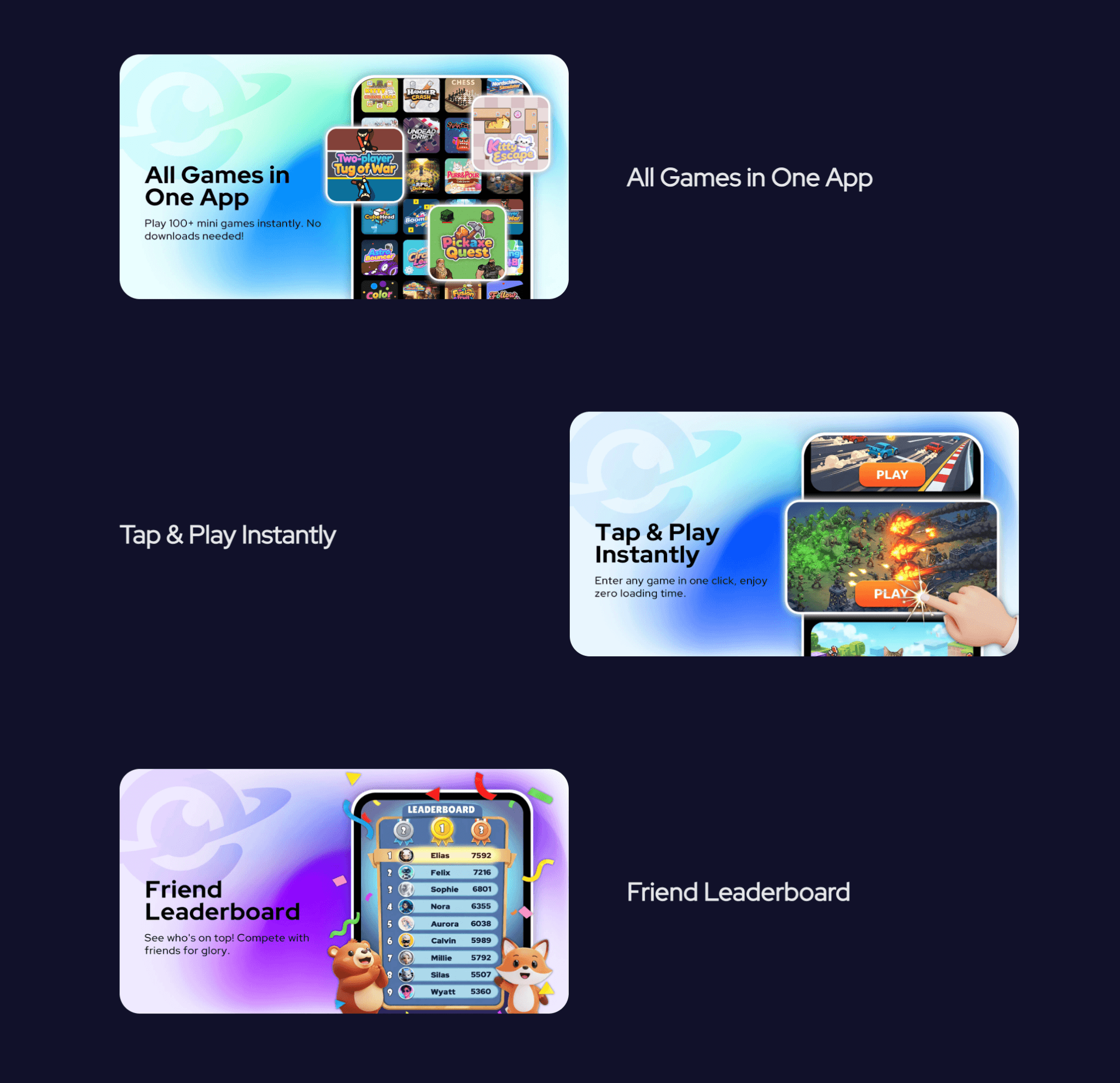
From the user’s perspective, PlaysOut focuses on a low-friction experience. Players do not necessarily need to download a new app, register an account, or connect a wallet at the very beginning. Instead, they can enter games directly inside the apps they already use. This model is closer to the user habits shaped by Web2 hyper-casual games or WeChat mini-games. Meanwhile, it preserves room for Web3 expansion at the infrastructure level, including token rewards, NFT assets, on-chain ownership, and cross-platform economic interoperability. Therefore, the core of PlaysOut is not simply to let users play games. It aims to turn games into a foundational tool that increases interaction frequency and session time within apps. In this sense, PlaysOut is trying to transform mini-games from standalone products into an embedded engagement layer that can be adopted at scale.
How does PLAY (PlaysOut) work?
The technical value of PlaysOut lies in how it narrows the distance between developers and players. Its operating logic can be broken down into three technical layers:
A. Full-Stack Container Technology
This is the backbone of PlaysOut. It includes a virtual machine (JSVM) and a sandbox mechanism, which means it can create an isolated environment inside an app. Games can run, update, and debug independently without affecting the security of the host app. This is also one of the key technologies that allows mini-program ecosystems such as WeChat to support a large number of applications.
B. AI-Driven Data Infrastructure
PlaysOut does not only provide technology. It also provides intelligence for traffic monetization. The platform includes built-in AI models that can analyze user gameplay behavior, preferences, and active time periods. Based on these signals, it can deliver personalized game recommendations to each user. This helps improve retention time and deepen user engagement.
C. Progressive Connection Between Web2 and Web3
This is the most important mechanism behind PlaysOut. The platform follows a “play first, own later” strategy.
In addition, through its deep collaboration with TON Play, PlaysOut is bringing thousands of games into Telegram. By leveraging Telegram’s ecosystem of more than 900 million users, PlaysOut can connect the native Telegram wallet with gaming reward systems in a more seamless way.
PLAY (PlaysOut) market price & tokenomics
PLAY is the native token of the PlaysOut ecosystem. It is mainly designed around gameplay participation, rewards, asset ownership, and on-chain interaction. PlaysOut has completed $7 million in funding, with investors including Kenetic Capital, and KBW Ventures. Founded in 2024, the project is positioned across Web3, mini-game SDKs, developer platforms, and gaming infrastructure.
From a token utility perspective, PLAY is not only a tradable token. It is designed to support the platform’s internal engagement economy. It may be used to incentivize player participation, support the circulation of in-game assets, represent NFT or on-chain item ownership, and connect different games and application scenarios within the platform. If the PlaysOut mini-game network continues to expand, the utility of PLAY will depend more heavily on real user interaction, game content supply, and the traffic brought in by partner platforms. As the project develops, its economic structure is also being refined in several ways:
- Cross-chain expansion on Base: The project has moved its token architecture to Base, an Ethereum Layer 2 network. This is intended to support the throughput demands created by large-scale gaming transactions. Base’s lower fees and higher scalability can make frequent in-game microtransactions more economically viable.
- Asset ownership: Items or rewards earned by players in games can be verified through PLAY tokens and NFTs. This means players are not simply spending money on games. They can become asset holders within the game economy.
- Liquidity integration: Through collaborations with decentralized exchanges such as STON.fi, PLAY can be exchanged more efficiently with external digital assets. This supports liquidity and strengthens its financial utility.
In general, token models for mini-game platforms often need to balance incentive inflation with user retention. If the reward design relies too heavily on token subsidies, it may bring traffic in the short term, but it may not retain real players over the long term. In contrast, if the game content itself is compelling enough, the token is more likely to become a tool that strengthens engagement and asset interaction, rather than simply serving as a user acquisition cost.
Why do you invest in PLAY (PlaysOut)?
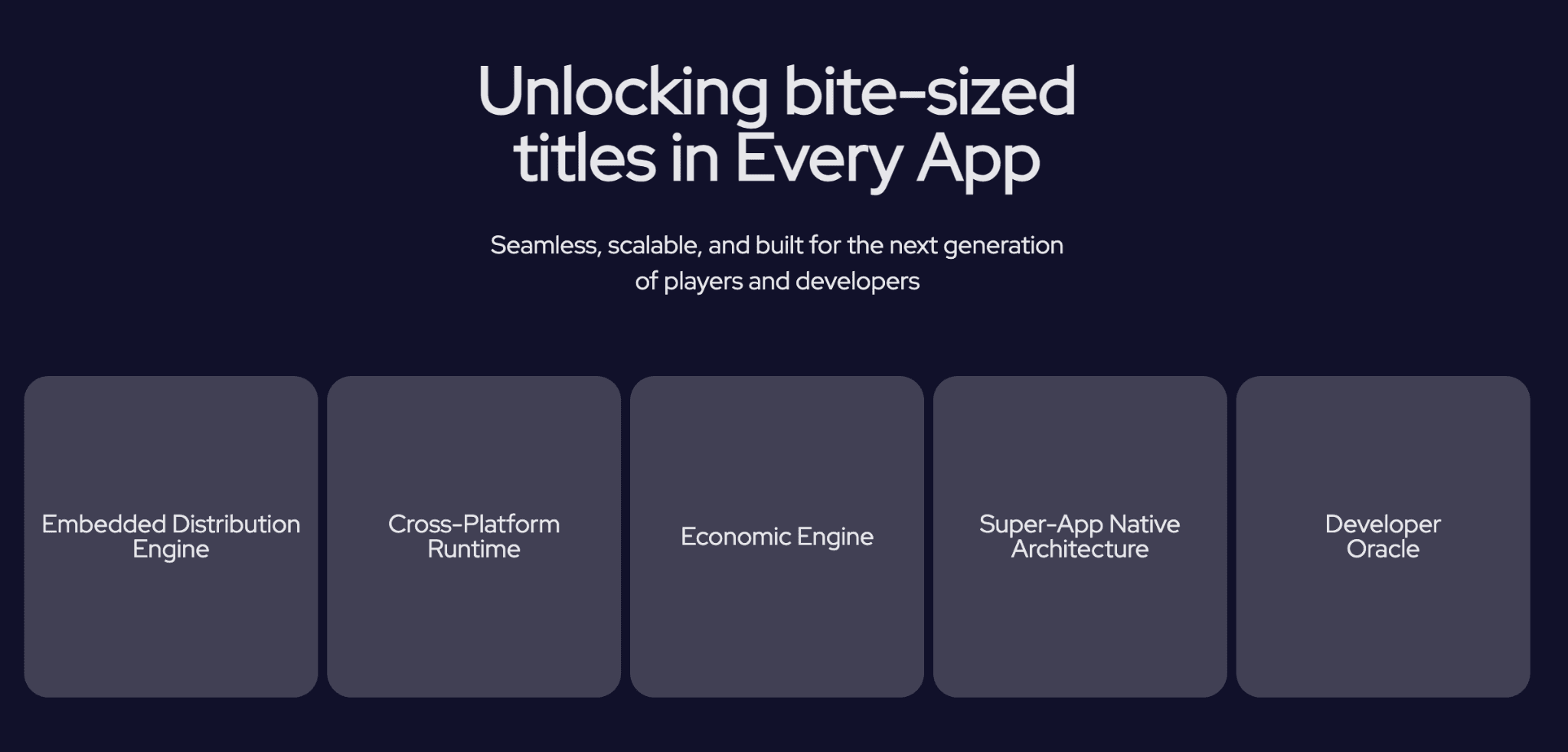
PlaysOut has attracted market attention because it targets a clear growth demand. High-traffic apps need more effective interactive content to improve user retention. Game developers need lower-cost distribution channels. The Web3 ecosystem also needs a more natural entry point for mainstream users. Through its SDK, cross-platform runtime, and mini-game content library, PlaysOut allows social, messaging, entertainment, and super-app platforms to embed game centers quickly. It turns fragmented game content into interactive modules that can be integrated at scale. This model does not require users to understand wallets, gas fees, or on-chain assets from the start. Instead, it lowers the entry barrier through an instant-play experience, then gradually introduces token rewards, NFT assets, and on-chain ownership. This gives Web2 users a more natural path into Web3.
From an investment perspective, the core value of PLAY is not tied to a single game or short-term market momentum. It depends on whether PlaysOut can become a foundational connection layer between app operators, developers, and players. If the platform can continue onboarding high-traffic partners and provide engaging mini-game content, PLAY may develop practical use cases across player rewards, in-game assets, NFT interactions, payments, and the developer economy. However, this type of project still requires close observation. Key factors include content quality, user retention, traffic contribution from partner platforms, and whether token incentives are sustainable. PLAY is better understood as a Web3 mini-game infrastructure project. Its long-term value depends on whether PlaysOut can truly make embedded game distribution work, rather than relying only on a token narrative.
Explore the latest PLAY (PlaysOut) price and live chart, trade PLAY on FameEX, and access real-time market data! Get started now with a seamless trading experience!
Disclaimer: The information provided in this article is intended only for educational and reference purposes and should not be considered investment advice. Conduct your own research and seek advice from a professional financial advisor before making any investment decisions. FameEX is not liable for any direct or indirect losses incurred from the use of or reliance on the information in this article.