FameEX Today’s Crypto News Recap | July 9, 2026
2026-07-09 06:18:11

As AI demand and tokenized stocks surge, Strategy BTC sales and macro headwinds trigger volatility, pulling BTC to $61K with $331M in liquidations. The crypto market saw notable downside pressure and sharp volatility over the past 24 hours. Bitcoin faced several negative catalysts and briefly tested the key $61,000 support level. The pressure mainly came from renewed tensions in the Middle East, which pushed Brent crude oil to $74 per barrel and raised inflation concerns. It was also driven by stronger global risk-off sentiment after Japan’s 10-year government bond yield reached a 30-year high. Meanwhile, Strategy announced another $216 million Bitcoin sale outside its core leveraged program. This raised market concerns over potential continued selling pressure and debt adjustments, which further limited the market’s rebound momentum. Across the broader market, total liquidations reached $331 million over the past 24 hours. Long liquidations accounted for $261 million, while short liquidations stood at $69.4852 million. Bitcoin long and short liquidations reached $57.3906 million and $18.2983 million, respectively. Overall market sentiment remained in Extreme Fear, with the index staying at 22. By comparison, Ethereum spot ETFs showed stronger funding resilience. They recorded another $70.4773 million in total net inflows yesterday and extended their net inflow streak to five consecutive days. Fidelity’s FETH saw $69.2086 million in single-day inflows, while VanEck’s ETHV recorded $1.2687 million in inflows. This brought cumulative net inflows for Ethereum spot ETFs to $11.007 billion, with total net assets reaching $9.339 billion. However, Ethereum was not immune to pressure in the derivatives market. Over the past 24 hours, Ethereum long liquidations reached $51.5561 million, while short liquidations reached $13.6441 million. The largest single liquidation also occurred on an ETH contract on a major CEX, with a value of $4.3798 million. This reflects a broader repricing of high-beta risk assets as the Federal Reserve’s probability of keeping rates unchanged in July stands at 69% and the macro policy outlook remains unclear. Overall, the crypto market is now caught in a deeper tug-of-war between macro repricing and tightening liquidity.
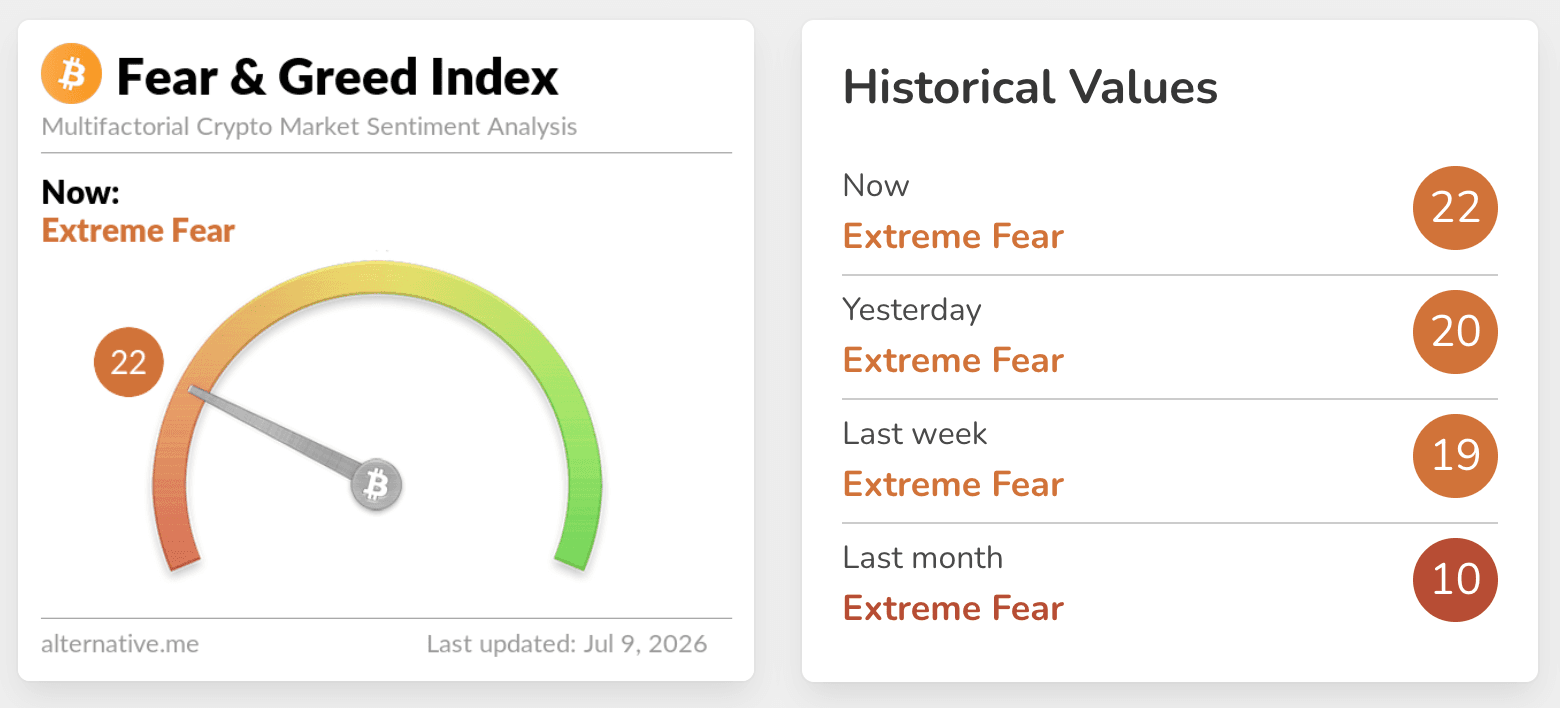
Source: Alternative
Key News Highlights:
Tokenized Stock Transfers Rise 105% in One Month as Onchain Equity Activity Accelerates
RWA.xyz data shows that tokenized stock transfer volume rose 105% over the past month to $8.41 billion. This reflects accelerating trading activity in the on-chain equity market. During the same period, the distributed value of tokenized stocks increased 43% to $2.16 billion, while the number of holders rose 17% to more than 409,000. By platform, several major tokenization platforms recorded strong growth. Figure saw a sharp increase in distributed value over the past 30 days, while Securitize and xStocks also posted notable gains. Ondo remains the largest tokenized stock platform by distributed value, with about $846 million. xStocks follows with roughly $708 million, while Securitize and Figure stand at around $306 million and $239 million, respectively. Compared with other RWA categories, tokenized stocks have grown at a faster pace. The distributed value of tokenized U.S. Treasurys remained broadly flat over the same period. The broader tokenized RWA market grew about 4% to $33.5 billion, which shows that equity-linked assets have become one of the faster-growing segments in recent on-chain financial activity. Over the past year, the tokenized stock market has expanded from about $378 million to $2.16 billion, marking an annual increase of roughly 471%. Crypto-native platforms and traditional financial institutions have both accelerated their tokenized equity initiatives. As a result, market participants are paying closer attention to on-chain securities trading, settlement efficiency, and around-the-clock trading infrastructure.
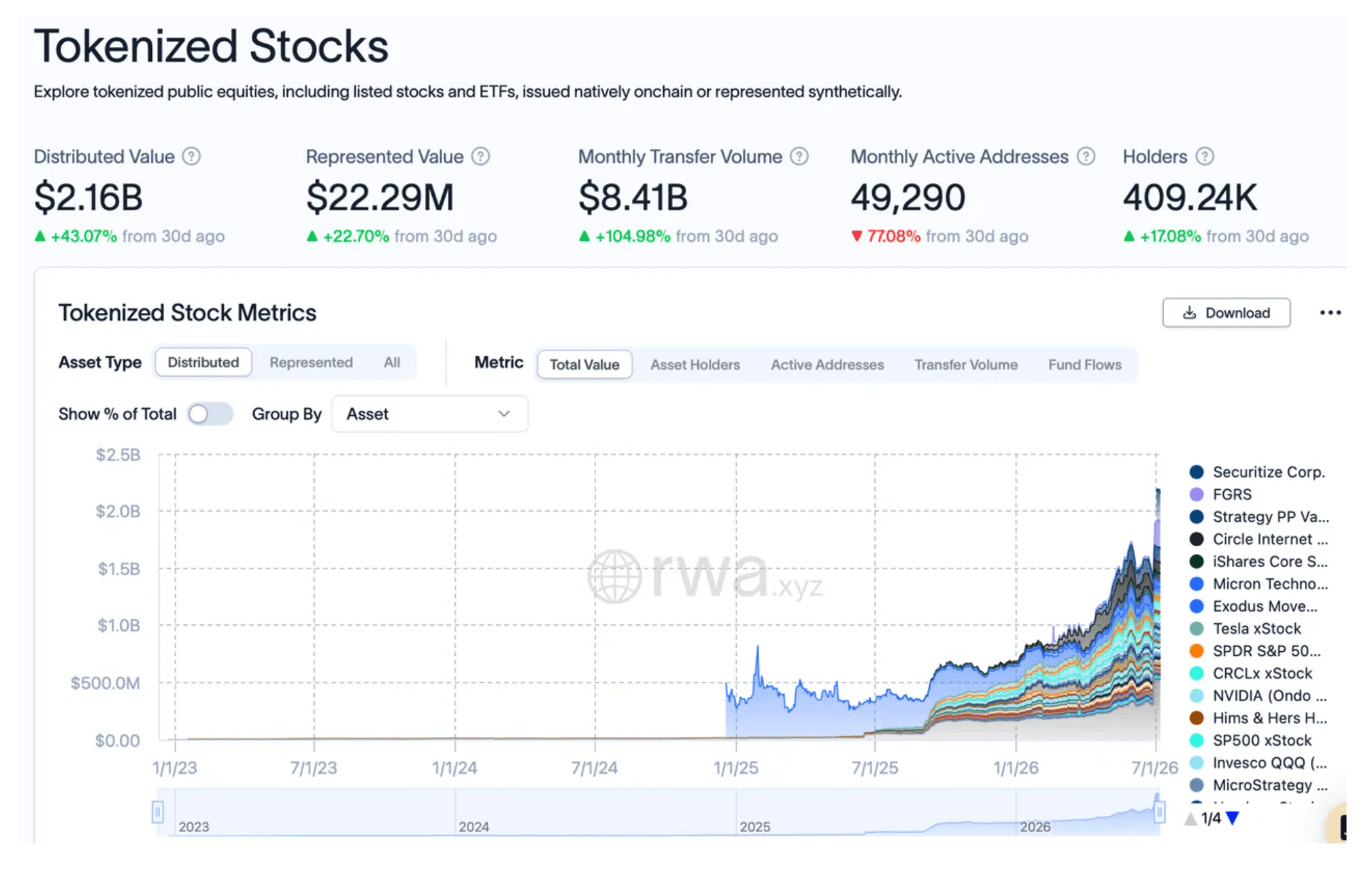
Tokenized Stocks. Source: RWA.xyz
BTC Pulls Back Toward Key $60K Support as Market Focuses on Sell Pressure
BTC fell by about 3.5% at one point and moved back toward the key support area. Market attention focused on several factors, including rising energy prices, weaker global risk appetite, and selling pressure from some large Bitcoin holders. Reports showed that developments related to U.S.-Iran tensions pushed oil prices higher, with Brent crude rising from $68 last week to $74. This prompted markets to reassess inflation pressure and the future path of interest rates. Higher energy prices usually increase costs for both businesses and consumers. They may also weaken expectations for near-term rate cuts or stimulus measures. After BTC failed to reclaim $64,500 this week, its performance diverged from broader tech-sector risk appetite. Nasdaq-related indicators recovered part of their losses, but BTC failed to rebound meaningfully from around $62K. Stress in Japan’s bond market also drew attention. Japan’s 10-year government bond yield rose to a multi-year high, prompting discussion around global capital flows and safe-haven demand. Strategy also recently disclosed a total of $216 million in BTC sales, which raised market concerns over its capital structure and future cash needs. The company still holds a large amount of convertible debt and carries annual dividend obligations, so its asset management decisions have become an important market focus. On the regulatory side, the Reserve Bank of India’s stance on restricting crypto activity has also entered market discussions. These policy signals add another layer of uncertainty to the global regulatory environment.
AI Infrastructure Demand Raises Inflation Concerns and Complicates the Fed’s Rate Decision
The latest Federal Reserve meeting minutes show that policymakers were divided last month on whether to raise interest rates or keep them unchanged. Rapid growth in AI infrastructure demand became an important part of the inflation risk discussion. Several members of the Federal Open Market Committee said strong demand for AI infrastructure could continue to push up prices for technology products and electricity. This phenomenon, often referred to as chipflation, is mainly driven by rising demand for semiconductors, server equipment, and energy resources from data centers. As competition in data center construction intensifies, prices for electronic goods, devices, and electricity may face spillover effects. This could extend the duration of inflationary pressure. The minutes noted that participants expected inflation to remain elevated in the near term. Although an easing of the Middle East conflict could help reduce some price pressure, risks to the inflation outlook were still tilted to the upside. AI investment is viewed as a driver of economic growth. At the same time, it may push demand above potential output and create more persistent price pressure. The Fed’s latest dot plot showed that 9 of 18 voting members expect at least one rate hike before the end of 2026, while 6 expect two possible 25-basis-point increases. The Fed kept rates unchanged at 3.5% to 3.75% at its June meeting. Markets are now watching inflation and employment data ahead of the next meeting on July 29. For the crypto market, the key point is that AI-driven investment is becoming a new variable in discussions around macro inflation and the interest rate path. It continues to shape the liquidity environment for risk assets.
Disclaimer: The information provided in this section is for informational purposes only and doesn't represent any investment advice or FameEX's official view.