Crypto Taxes in Spain Simplified for Investors
2025-10-29 08:18:26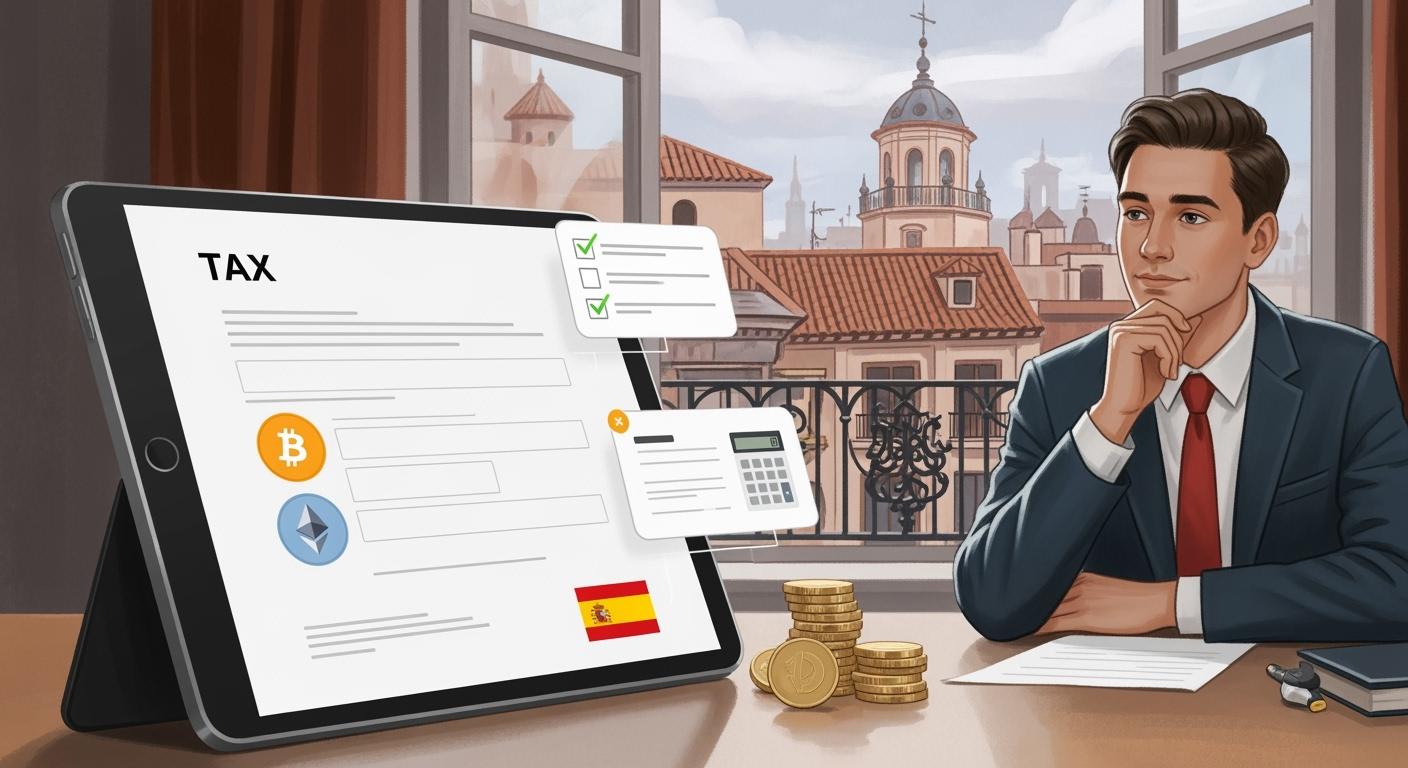
You pay taxes on crypto investments in Spain when you make a profit or earn income. If you are one of the many expats living here, you must understand the rules. You also need to declare crypto held in other countries. Good records help you avoid mistakes and can even help you find exemptions or deductions. Crypto taxes in spain can seem confusing, but you can manage them with the right information.
Key Takeaways
- You must pay taxes on crypto profits in Spain when you sell, swap, or use your digital assets.
- Always keep clear records of every crypto transaction. Write down the dates, amounts, and euro values. This will make tax reporting easier.
- Know that capital gains tax rates in Spain go from 19% to 28%. The rate depends on how much profit you make.
- You must report foreign crypto assets if their total value is over €50,000 on December 31. This helps you avoid penalties.
- You can use tax software like Koinly or CoinLedger. These tools help you track transactions and follow Spanish tax rules.
Crypto Taxes in Spain Overview

Legal Status of Crypto
Before you invest, you should know how Spain sees cryptocurrencies. Spanish law now says crypto-assets are legal property. You must follow rules when you buy, sell, or keep digital coins. Spain’s Congress made a new law that matches the EU’s DAC8 directive. This law helps tax authorities watch crypto transactions and stop fraud.
Here is a table that shows the main points about the legal status of crypto in Spain:
| Aspect | Details |
|---|---|
| Legislative Action | Spain’s Congress cleared a crypto oversight bill, aligning with the EU’s DAC8 directive. |
| Purpose | To enhance tax oversight, combat fraud, and support taxpayers. |
| Reporting Requirements | Crypto-asset service providers will face additional reporting obligations. |
| Definition of Crypto-assets | Crypto-assets will be legally recognized as seizeable property for the first time. |
| Impact on Tax Authorities | Improved data interchange among EU member states to facilitate tax collection and compliance. |
The CNMV is the main group that regulates crypto in Spain. New rules will match MiCA regulations in Europe. If you want to start a crypto business, you need a license. Getting a license takes about 6 to 8 months. You also need a minimum capital, from €50,000 to €150,000, based on your services. The law lets you exchange, store, transfer, and manage crypto assets in Europe. The usual income tax rate for these actions is 25%.
Taxable Events
You need to know when your crypto actions mean you owe taxes. In Spain, you pay taxes when you sell, swap, or spend crypto. These moments are called taxable events. You also report any income from mining, staking, or getting crypto as payment.
Here are the main taxable events for crypto investors in Spain:
- Selling crypto for euros or another currency
- Swapping one crypto for another
- Using crypto to buy goods or services
- Earning crypto through mining or staking
- Receiving crypto as payment for work or services
If you make money from selling or swapping crypto, you pay capital gains tax. If you earn crypto as income, you pay income tax. Your tax residency decides if you pay taxes in Spain on all your crypto gains. If you live in Spain for more than 183 days in a year, you are a tax resident. Tax residents must declare all their crypto, even those outside Spain. You also need to keep records of every transaction. Good records help you report your crypto taxes in spain correctly and avoid mistakes.
Tip: Always keep a record of your crypto transactions, including dates, amounts, and values in euros. This makes it easier to calculate your gains and losses when you file your taxes.
Crypto taxes in spain depend on your gains, your income, and your tax residency. Spanish tax rates for capital gains go from 19% to 28%. If you keep crypto outside Spain, you must declare it with special forms. Careful records and knowing your tax residency help you follow the rules and avoid penalties.
Tax Obligations in Spain for Crypto Investors
Capital Gains Tax
You pay capital gains tax when you sell, swap, or spend your crypto for a profit. Spain treats these profits as capital gains. You must report each transaction where you make money from your crypto. The tax rate for capital gains in Spain ranges from 19% to 28%. The exact rate depends on how much profit you make during the year.
Here is how the capital gains tax rates work:
| Profit Amount (€) | Tax Rate |
|---|---|
| Up to 6,000 | 19% |
| 6,001 to 50,000 | 21% |
| 50,001 to 200,000 | 23% |
| 200,001 and above | 28% |
You must keep records of every sale, swap, or purchase with crypto. These records help you calculate your capital gains and file your taxes correctly. If you do not keep good records, you may pay more tax or face penalties.
Tip: Record the date, amount, and euro value for each crypto transaction. This makes it easier to report your capital gains and follow crypto taxes in spain rules.
Income from Crypto
You may earn crypto income from mining, staking, or airdrops. Spain treats these earnings as regular income. You must report them on your annual tax return. The tax rate for crypto income can reach up to 47%, depending on your total income for the year.
Here is a table that shows how Spain taxes different crypto activities:
| Activity Type | Tax Rate |
|---|---|
| Capital Gains | 19% to 28% |
| Staking | Up to 47% |
| Mining | Up to 47% |
If you receive crypto as payment for work or services, you must also report it as income. You need to use the euro value at the time you receive the crypto. You must include all crypto income in your tax return, even if you keep the coins and do not sell them.
Note: Crypto income from mining or staking can push you into a higher tax bracket. Track your earnings and check your tax rate before you file.
Foreign Asset Reporting
You must report foreign digital assets if you hold crypto outside Spain. Spanish law requires you to declare these assets if the total balance abroad exceeds €50,000 on December 31. If your foreign digital assets are below this amount, you do not need to report them for now.
Here is a summary of the reporting requirements:
| Requirement | Condition |
|---|---|
| Declaration | Total balance abroad exceeds €50,000 on December 31 |
| Exemption | Below €50,000 (for now) |
You must use the official form to declare your foreign digital assets. This helps Spanish tax authorities track crypto held outside the country. You must follow these rules to meet your tax obligations in spain and avoid fines.
Alert: If you do not report your foreign digital assets, you may face large penalties. Always check your balances at the end of the year and file the correct forms.
Crypto taxes in spain cover capital gains, crypto income, and foreign asset reporting. You must understand each rule and keep good records. This helps you stay compliant and avoid problems with the tax office.
Reporting Crypto Taxes
Annual Tax Return
You must report your crypto activity every year in Spain. The annual tax return is called "Declaración de la Renta." You need to include all profits from selling, swapping, or spending crypto. You also report any income from mining, staking, or receiving crypto as payment. Use the euro value on the day of each transaction. Good records help you fill out your tax return correctly. If you miss reporting, you may face fines or extra taxes.
Tip: Keep a simple spreadsheet with dates, amounts, and euro values for each crypto transaction. This makes tax time much easier.
Form 720 for Foreign Crypto
If you hold crypto outside Spain, you may need to file Form 720. This form helps Spanish tax authorities track foreign assets, including crypto. You must file Form 720 if your foreign crypto assets are worth more than €50,000 on December 31.
- Form 720 is used by Spanish residents to report foreign assets.
- You must include foreign crypto assets if their value is above €50,000.
- You file Form 720 online, usually in the first quarter of the year.
Missing this form can lead to large penalties. Always check your balances at the end of the year.
Key Deadlines
You need to know the main deadlines for reporting crypto taxes in Spain. The annual tax return usually opens in April and closes at the end of June. Form 720 must be filed by March 31 if you need to report foreign crypto assets.
| Report Type | Deadline |
|---|---|
| Annual Tax Return | End of June |
| Form 720 | March 31 |
Mark these dates on your calendar. Filing on time helps you avoid fines and keeps you compliant with Spanish tax rules.
Calculating Crypto Taxes
Calculating Gains and Losses
You need to know how much profit or loss you make from each crypto transaction. Spain uses the FIFO (First-In, First-Out) method. This means you sell your oldest coins first. To find your gain, subtract the purchase price from the sale price. If you sell Bitcoin that you bought for €10,000 and sell it for €15,000, your gain is €5,000. If you sell at a loss, you can use that loss to reduce your taxable gains.
Tip: Always write down the date, amount, and euro value for every crypto buy and sell. This helps you track gains and losses with ease.
Declaring on Tax Return
You must report your crypto gains and losses on your annual tax return. Use the euro value on the day of each transaction. List each sale, swap, or use of crypto. If you have losses, you can offset them against your gains. This can lower your tax bill. Make sure you include all crypto income, such as mining or staking rewards, as regular income.
Some tools can help you calculate your crypto taxes and fill out the right forms. Here is a table with two popular options:
| Tool | Coverage | Notes |
|---|---|---|
| Divly | Spain | Generates official country-specific tax forms |
| Waltio | France, Belgium, Spain | Limited coverage; not useful if moving to other countries |
These tools can save you time and help you avoid mistakes.
Example Calculation
Let’s look at a simple example. You bought 1 Ethereum for €2,000. Later, you sold it for €3,000. Your capital gain is €1,000. If you also sold another coin at a €200 loss, you subtract that loss from your gain. Your total taxable gain is €800. You report this amount on your tax return.
Note: If you use a crypto tax tool, you can upload your transaction history and get a report with your gains, losses, and income. This makes tax filing much easier.
Tax Planning and Compliance Tips
Record-Keeping Best Practices
You need to keep good records for taxes. Good records help you report crypto taxes in Spain. They also help you avoid mistakes. You should save every transaction you make. This means buys, sells, swaps, and income from mining or staking. Spanish law says you must keep these records for at least six years. This rule is for everyone, even expats.
- Write down the date, amount, and euro value for each transaction.
- Save receipts and statements from exchanges and wallets.
- Keep all records for at least six years.
Keeping things organized makes tax planning easier. It also helps you find exemptions or deductions. Expats may have crypto in other countries. Clear records help you report foreign crypto the right way.
Common Mistakes to Avoid
Many people make mistakes with crypto taxes. You can avoid these mistakes if you plan ahead. Missing deadlines or not reporting foreign assets can cause problems. Using the wrong euro value can also lead to penalties. Good tax software helps you follow the rules and make fewer mistakes.
| Name | Key Pros | Price | Rating |
|---|---|---|---|
| Koinly | Works with 800+ exchanges and wallets; Auto-imports data; Makes accurate reports; Free plan and flexible prices | $49 - $199 | 4.9/5 |
| CoinLedger | Easy to use; Supports DeFi, NFT, staking, and mining; Exports to TurboTax; 14-day money-back guarantee | $49 - $199 | 4.9/5 |
| CoinTracker | Shows taxes and portfolio in one place; Real-time values; Flexible accounting; Helps with tax-loss | $59 - $599 | 4.8/5 |
Check your records before you file your taxes. Use tools that fit Spanish tax rules. This helps you plan better and avoid common mistakes.
When to Seek Professional Help
Sometimes, taxes get hard to handle. You might need help if you have lots of crypto or tricky trades. If you have crypto in different countries, it can be confusing. Expats often need expert advice for exemptions or deductions. A tax advisor can explain Spanish rules and help you follow them.
Tip: If you are not sure about your crypto taxes, ask a professional. This can save you time and money.
Good tax planning means you stay organized and avoid mistakes. You also get help when you need it. This protects you from penalties and helps you get exemptions or deductions.
Now you know how crypto taxes work in Spain. If you report everything correctly, you will not get fined. Expats need to watch the rules for foreign assets. You should write down every crypto transaction you make. If things get too hard, ask a tax expert for help. Expats who do these things can handle their crypto taxes well.
Tip: If you keep your records neat, tax time is less stressful and you make fewer mistakes.
FAQ
Do you pay taxes on crypto if you do not sell?
You do not pay taxes if you only hold crypto. Taxes apply when you sell, swap, or spend your coins. You must report income from mining or staking, even if you do not sell.
What happens if you forget to report foreign crypto assets?
You may face large fines if you miss reporting foreign crypto assets. Spanish tax authorities check Form 720 for compliance. Always check your balances and file on time.
Can you offset crypto losses against gains in Spain?
Yes, you can offset your crypto losses against your gains. This lowers your taxable amount. You must keep clear records of each transaction to use this benefit.
Which crypto tax software works best for Spain?
You can use Koinly, Divly, or CoinLedger for Spanish crypto taxes. These tools help you track transactions, calculate gains, and generate reports. Choose one that supports Spanish tax forms.