FameEX Today’s Crypto News Recap | July 7, 2026
2026-07-07 07:02:11

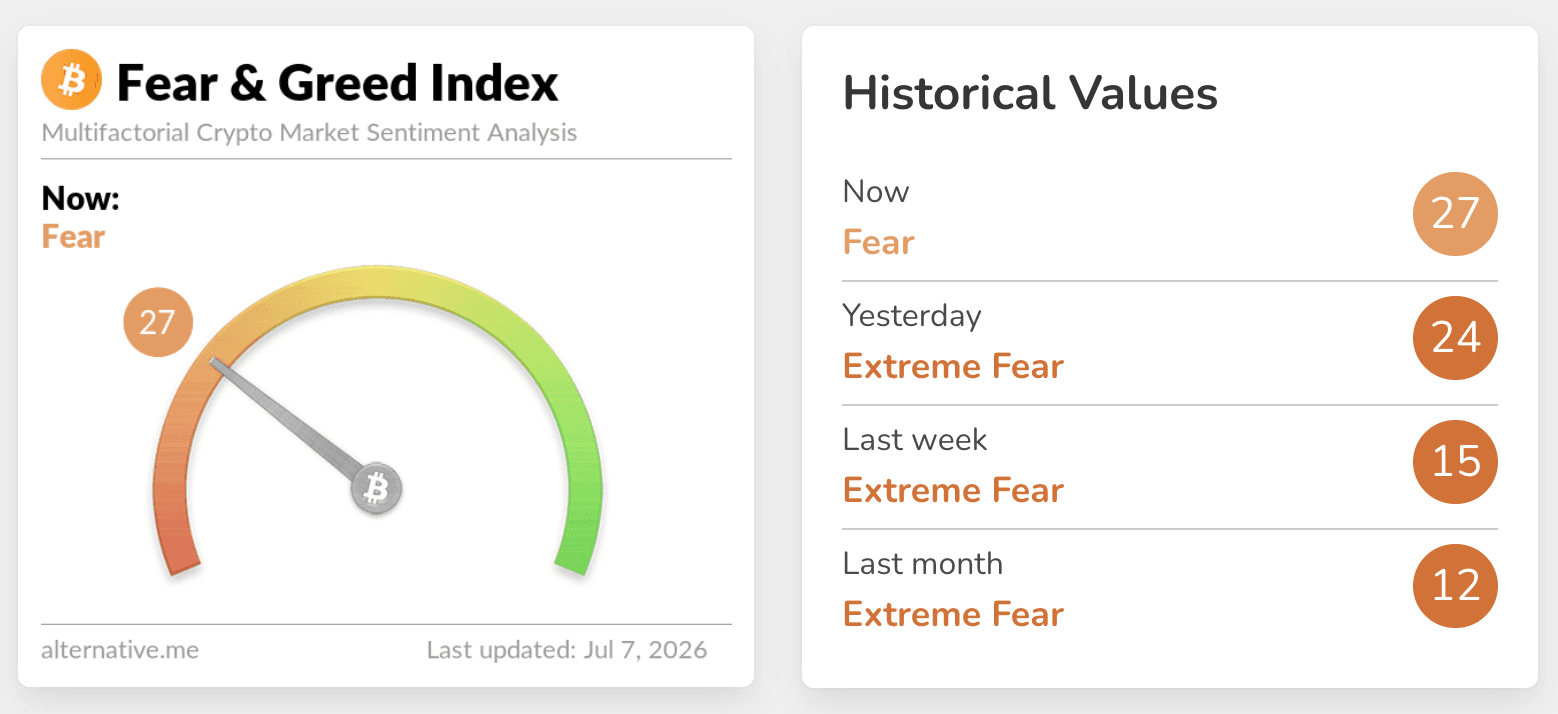
Bitcoin has recently shown signs of a rebound. According to market observations, Bitcoin has reclaimed its 200-week moving average and continues to consolidate within the $63,000 to $66,000 range. Ethereum spot ETFs have also extended their net inflow streak for three consecutive days, with daily net inflows reaching USD 29.08 million. This suggests that market participation is expanding as prices recover. However, despite the improvement in market sentiment, analysts note that Bitcoin may still face the risk of retesting lower levels if it fails to break above $66,000 with conviction. Related data also shows that if Bitcoin falls below $60,000, major CEXs could face up to USD 1.612 billion in long liquidation pressure. This indicates that short-term leveraged long positions remain relatively crowded. At the same time, the U.S. 10-year Treasury yield has risen to 4.497%. With markets assigning a high probability to the Federal Reserve keeping interest rates unchanged in July, the broader macroeconomic backdrop continues to affect liquidity conditions for crypto assets. Traders should continue to monitor ETF fund flows and the tug-of-war around key technical levels. Under the current market structure, the effectiveness of capital flows remains an important factor in assessing how the next phase of the trend may develop.
Source: Alternative
Key News Highlights:
Former Tether CIO Seeks to Sell Part of His Stake, Drawing Attention to the Stablecoin Issuer’s Ownership Structure
Former Tether Chief Investment Officer Richard Heathcote is seeking to sell part of his stake in Tether. Heathcote originally held about 1.26% of the company, and the planned sale involves only a portion of that stake. He stepped down as Tether’s chief investment officer in March this year and moved into an advisory role. Before that, he oversaw the stablecoin issuer’s investment portfolio. Tether remains the issuer of USDT, the world’s largest stablecoin. USDT has a circulating supply of about USD 184 billion and accounts for roughly 59% of the overall stablecoin market. Since Tether is still privately held, the public rarely gets a clear view of its ownership structure or secondary market share transactions. This potential sale is therefore seen as a rare window into changes among Tether shareholders. Tether currently has no plans to go public. CEO Paolo Ardoino has previously stated that the company does not need to pursue a public listing. At the same time, some crypto companies are still evaluating IPO plans or delaying their listing schedules. This shows that different companies are taking different approaches to capital markets. Tether also continues to face compliance pressure under Europe’s MiCA regulatory framework. Some MiCA-authorized platforms have already delisted USDT or are planning to remove it. This event mainly reflects updates around equity liquidity and corporate governance. Market attention is focused on the transparency of the leading stablecoin issuer, its regulatory environment, and changes in private equity valuation.

Strategy Sells 3,588 BTC as the Market Absorbs Corporate Treasury Selling Pressure
Strategy recently disclosed that it sold 3,588 BTC for about USD 216 million. The proceeds will be used to pay preferred stock dividends and strengthen its cash reserves. This is one of the more notable selling actions by the company since it became a major corporate Bitcoin holder. After the news was disclosed, BTC briefly fell from near $64K to around $62K. The market’s initial reaction focused on whether the company’s treasury could continue selling more of its holdings. According to related filings, Strategy still holds 843,775 BTC and retains additional capital flexibility. Market data shows that Sunday’s price increase was mainly driven by futures buying, while spot flows did not strengthen at the same pace. After Monday morning’s decline, the futures market saw clear net selling and triggered liquidations on both sides. BTC later recovered, and this rebound was not driven only by futures buying. It was also supported by some spot market participation. This suggests that short-term trading structure shifted after the market digested the corporate selling event. Even so, futures funding rates remained positive. This indicates that leveraged bullish sentiment has not fully faded. Since open interest remains high, future price swings may continue to be affected by changes in leveraged positioning. The key market focus is whether Strategy is entering a longer selling phase and whether its unused capital authorization could add supply pressure during future rebounds.
U.S. Strategic Bitcoin Reserve Plan Faces Coordination Issues Over Agency Authority
The U.S. government’s plan to establish a Strategic Bitcoin Reserve is currently facing coordination issues related to agency authority and legal authorization. An executive order signed by U.S. President Donald Trump in March 2025 originally required the reserve to be housed under the Treasury Department. Other government agencies would assist in building the reserve through asset seizures and related mechanisms. However, relevant agencies are now discussing whether the Treasury has the legal authority to manage BTC holdings. The U.S. Commerce Department is also being viewed as a possible agency to oversee the reserve. The Department of Justice is reportedly working with related departments to assess available legal options. The White House has stated that the government is still evaluating the best structure for the Strategic Bitcoin Reserve and the U.S. Digital Asset Stockpile. The United States currently holds 328,372 BTC, worth about USD 21.1 billion. This makes it one of the largest national Bitcoin holders in the world. Most of these BTC holdings are related to assets seized in past law enforcement actions, and some have been sold over the years under court orders. At the congressional level, some bills are also seeking to codify the Bitcoin reserve. These include proposals to acquire 1 million BTC over five years through budget-neutral strategies. Related proposals have also discussed long-term holding rules, such as requiring BTC to be held for at least 20 years unless sold to reduce national debt. The issue remains at the stage of policy design and interagency coordination. Market attention is focused on how the U.S. government defines BTC as a strategic asset and whether the reserve can be supported by a clear legal and management framework.

Layer 1 Blockchains Face a Tug-of-War Between Decentralization and Scalability
Injective CEO Eric Chen said that as blockchain adoption grows, Layer 1 blockchains will face greater pressure to balance speed, efficiency, and decentralization. He noted that users increasingly want faster transactions and more block space. This demand may push some networks to sacrifice decentralization in exchange for higher throughput. One of the core ideas behind blockchain is to create a trustless financial system that does not depend on traditional intermediaries. If a network becomes too centralized, such as relying on a single data warehouse or allowing a small group of validators to make key decisions, it may create a single point of failure. Chen said that if one server or centralized node fails, the entire chain could be affected. For interoperable Layer 1 networks designed for DeFi applications, such as Injective, the focus is on optimizing the full chain rather than simply reducing block time. He also mentioned that dedicated zones and Layer 2 scaling solutions could help process high-demand transactions without weakening core blockchain principles. The blockchain trilemma remains a long-term industry challenge. Security, decentralization, and scalability are difficult to maximize at the same time. Security means the network can resist attacks, fraud, and manipulation. Decentralization means there is no single point of control. Scalability refers to the ability to process large transaction volumes quickly. This issue is gaining renewed attention as institutional adoption and AI-driven finance continue to grow. Market focus is now on how public blockchains can maintain infrastructure stability as real-world demand increases.
Disclaimer: The information provided in this section is for informational purposes only and doesn't represent any investment advice or FameEX's official view.