FameEX Today’s Crypto News Recap | July 17, 2026
2026-07-17 07:08:36

Injective seeks SEC registration for on-chain securities, a Trump aide faces insider trading probes, Polygon cuts jobs, while Bitcoin hovers near $64K. The global crypto market is facing significant volatility as macroeconomic uncertainty and geopolitical tensions intensify. Bitcoin continues to fluctuate around $64K. The market sentiment index remains at 27, which falls within the Fear category and reflects a cautious response to the current consolidation. Traditional financial markets are also showing weakness. S&P 500 futures and Nasdaq futures fell by 0.85% and 1.45%, respectively. This indicates that capital is moving away from higher-risk assets. On-chain data shows that total crypto market liquidations reached USD 328 million over the past 24 hours. Bitcoin long liquidations totaled USD 42.2684 million, while Ethereum long liquidations reached USD 63.2902 million. These figures highlight the vulnerability of leveraged positions during periods of sharp volatility. The probability that the Federal Reserve will keep interest rates unchanged in July currently stands at 88.8%. Market participants continue to assess the longer-term impact of restrictive monetary policy. Russia's proposed restrictions on foreign stablecoin purchases by non-professional investors have added another layer of uncertainty to overall market liquidity. Investors are also closely monitoring the key support level at $61,183 for further signs of market direction.
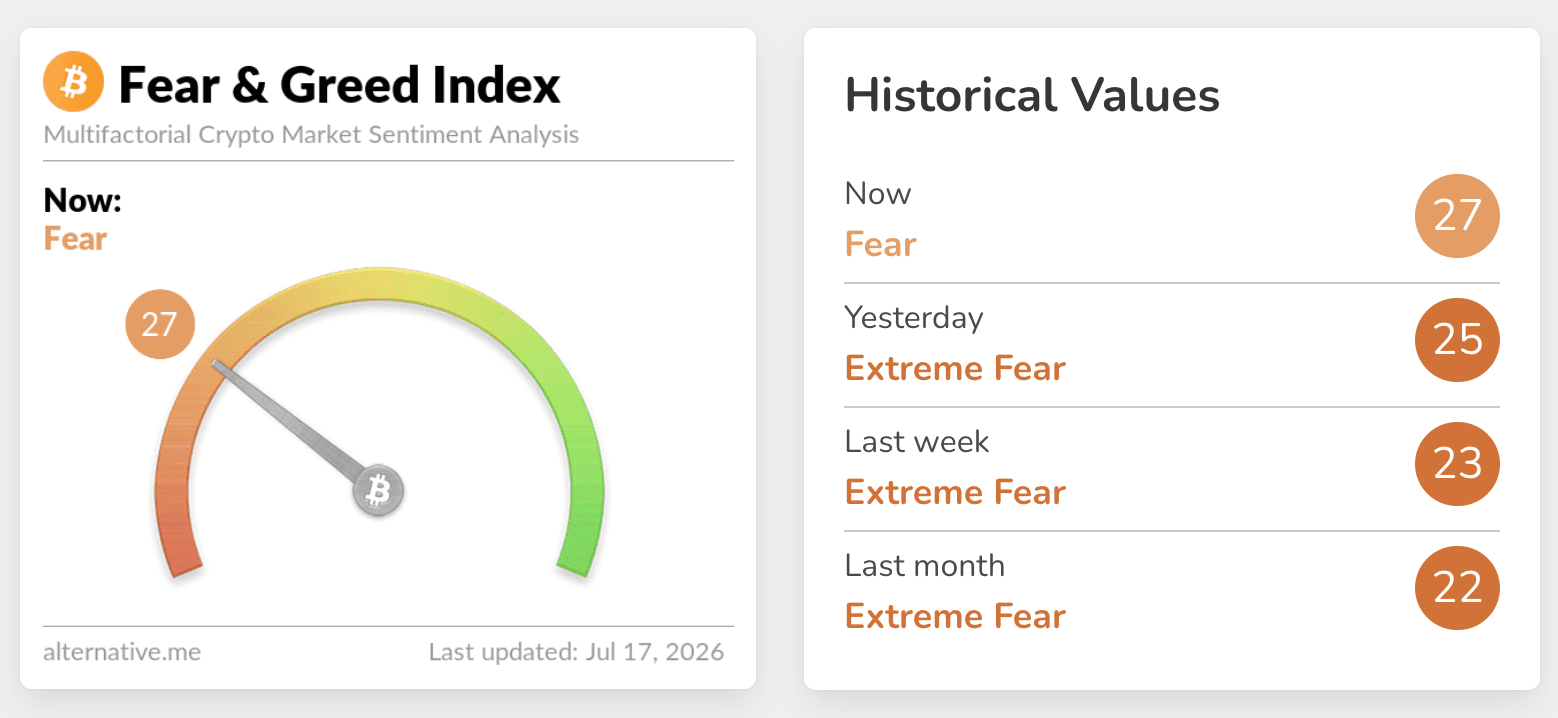
Source: Alternative
Key News Highlights:
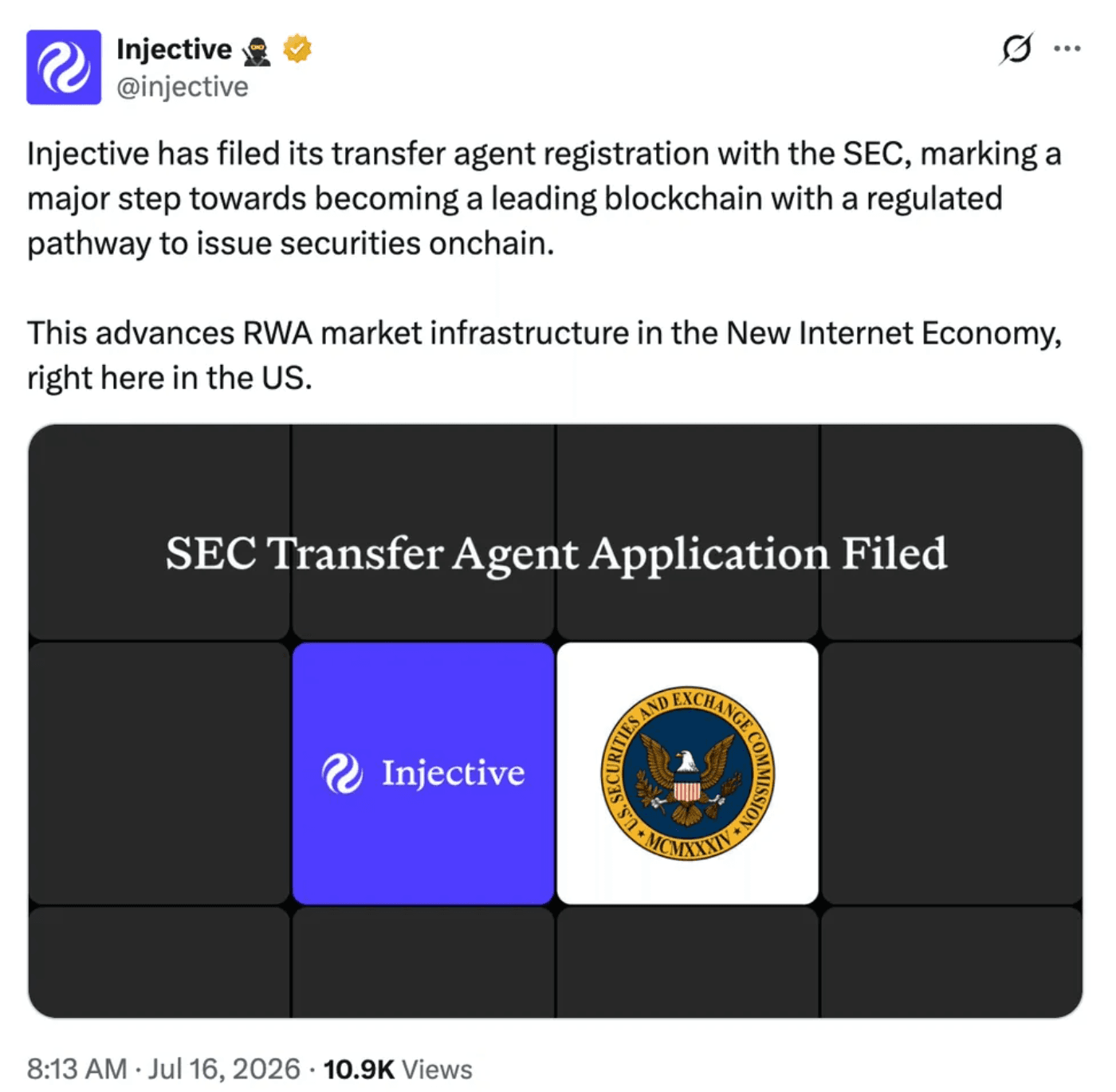
Injective Files for SEC Transfer Agent Registration to Move Ownership Records Onchain
Injective said it has filed for transfer agent registration with the U.S. Securities and Exchange Commission. The company aims to bring a key securities ownership recordkeeping function onto blockchain infrastructure. Transfer agents play an important role in U.S. capital markets. They maintain shareholder registers, record information about securities holders, and track changes in securities ownership. Through this application, Injective hopes to establish a regulated framework for issuing, recording, and managing tokenized securities and real-world assets. If the application is approved, Injective would move beyond providing blockchain infrastructure for tokenized assets. It would also enter the regulated market systems responsible for confirming the legal ownership of securities. Injective said that maintaining ownership records on-chain could reduce the need for reconciliation between different intermediaries. It could also shorten the time required for asset issuance, transfers, and settlement. The company stated that tokenized securities require both compliant ownership records and fast settlement capabilities. It plans to offer these services at scale in the U.S. market. However, Injective had not disclosed the legal entity responsible for the application at the time of publication. It had also not released a public SEC filing that could be independently reviewed. Traditional financial institutions have increasingly adopted blockchain technology for market data distribution, securities issuance, post-trade settlement, and collateral management. Nasdaq recently partnered with an on-chain data network to make some of its proprietary market data available to blockchain applications. It has also worked with a major CEX and a tokenization company to connect traditional equities with blockchain networks. The parent company of the New York Stock Exchange and the Depository Trust & Clearing Corporation are also developing projects related to on-chain stocks, ETFs, collateral management, and automated settlement. These developments show that blockchain adoption in capital markets is expanding beyond asset tokenization and into core market infrastructure.
White House Teleprompter Operator Accused of Using Nonpublic Information to Bet on Trump Speeches
According to ABC News, U.S. federal regulators are investigating whether a longtime White House technical employee used nonpublic information to trade prediction markets linked to President Trump's speeches. Gabriel Perez has operated Trump's teleprompter and provided technical support during speeches since 2016. The report alleged that he opened positions in more than a dozen markets related to the content of Trump's speeches. He reportedly generated more than USD 100,000 in total profits. The contracts were part of Kalshi's speech mention markets. These markets allow participants to trade on whether specific words, people, or topics will appear in a public speech. Kalshi detected unusual activity through its internal market surveillance systems. The platform then referred the relevant trading data to the U.S. Commodity Futures Trading Commission. Sources said Perez sometimes closed his positions while a speech was still in progress. This reportedly happened when Trump skipped prepared sections that contained words Perez had expected him to mention. Regulators reportedly identified trades linked to more than a dozen speeches over a period of approximately three months. These included the State of the Union address and remarks delivered at the World Economic Forum. Following the report, the White House placed Perez on unpaid administrative leave while the matter is reviewed. As prediction market volumes increase, the potential use of professional access, political information, or unreleased event details has attracted greater attention from regulators and lawmakers. Members of the U.S. Congress have also introduced legislation that would restrict lawmakers and their immediate families from trading prediction market contracts linked to public policy and political outcomes.
Polygon Begins Another Round of Layoffs as It Completes Acquisition Strategy
Polygon Labs CEO Marc Boiron announced that the company will conduct another round of workforce reductions as it completes the integration of a crypto payments acquisition. In January, Polygon announced a transaction worth USD 250 million. The company planned to acquire a U.S. crypto trading and cash conversion provider, along with wallet infrastructure platform Sequence. Boiron said the organizational changes are part of Polygon's transition from a blockchain foundation model to a blockchain-enabled payments company. The company plans to direct more resources toward payment products, wallet infrastructure, and blockchain-powered financial services. Boiron stressed that the layoffs were not related to the performance or abilities of the employees leaving the company. Instead, they reflect changes in Polygon's operating model, organizational structure, and talent requirements. He explained that a blockchain foundation and a blockchain-enabled payments company require different operating systems and workforce structures. Polygon must therefore reorganize its teams and functions in addition to changing its product direction. These adjustments are intended to support the company's business structure after the acquisitions are completed. Polygon has not disclosed the number of employees affected, the departments involved, or the expected completion date of the restructuring. The company has conducted several rounds of workforce reductions over the past three years. More than 200 employees have been affected during that period.

Bitcoin Futures Flows and Liquidation Heatmaps Become a Short-Term Market Focus
Recent market data shows that Bitcoin's short-term price movements are becoming more closely linked to futures market activity and the distribution of leveraged positions. At the time of the report, BTC was attempting to hold near $64,000. Liquidation heatmap data showed several high-density leverage zones above and below the current market price. Short-side liquidity was mainly concentrated between $65,500 and $66,000. This range was approximately 3% above the market price at the time. The heatmap identified $65,600 as a notable concentration zone for short positions. Additional liquidity extended toward $67,000. Below the current price, the nearest liquidity and support area was located between $63,500 and $63,750. Larger pools of long-side liquidity were also found between $63,000 and $63,250. Another concentration was located between $62,500 and $62,750. During the tracked period, liquidity tied to long positions was nearly twice the amount associated with short positions. This suggests that some leveraged long positions accumulated over the past month have not yet been fully closed. The one-month liquidation heatmap also showed a broad liquidity zone near $55,000. However, this area remained well below the current market price. The report also noted that BTC had traded mainly between $60,000 and $67,000 in recent weeks. Changes in open interest and funding rates also reflected a range-bound market structure. BTC open interest had fallen by more than 3% from Tuesday's peak, while the price showed relatively limited movement over the same period. Funding rates gradually moved back toward neutral levels. Cumulative spot and futures flows leaned toward the buy side over the past week. Even so, the overall distribution of leverage continues to make the price sensitive to densely concentrated liquidation zones.
Disclaimer: The information provided in this section is for informational purposes only and doesn't represent any investment advice or FameEX's official view.