FameEX Today’s Crypto News Recap | April 16, 2026
2026-04-16 13:06:40

White House’s crypto bill push, Adam Back’s quantum call, and an $11M PAC funding drive policy focus as easing tensions lift BTC to hover near $74K. Today’s crypto market showed a broad rebound, supported mainly by expectations of easing geopolitical tensions, which helped improve overall risk appetite. Bitcoin and Ether continued to trade in a narrow range above key psychological support levels, with Bitcoin quoted at around $74,984 and Ether holding firmly above $2,300. The latest market data showed that the GameFi sector led the day’s gains, rising more than 5%, which suggests that capital began rotating back into higher-beta altcoin sectors as defensive sentiment softened. However, on-chain indicators also warned that the market may be approaching a short-term ceiling, especially as Bitcoin faces visible resistance while testing its realized price level. Liquidation data from the past 24 hours showed that short positions were hit hard during the price recovery, yet the transfer of large amounts of assets to centralized exchanges suggested that profit-taking incentives are also increasing. Although market sentiment remains extremely fearful overall, the continued trend of net exchange outflows indicates that long-term holders are still in an accumulation phase. This leaves the broader market structure caught between short-term resistance and longer-term support.
Crypto Markets Overview
The Crypto Fear & Greed Index stands at 23 today, keeping overall sentiment in Extreme Fear. From a market structure perspective, Bitcoin is showing a mild upward bias and is now fluctuating near $74,984. However, CryptoQuant data suggests that short-term selling pressure is rising noticeably as price approaches the $76,800 realized price resistance level. The data shows that hourly Bitcoin inflows to exchanges recently surged to 11,000 BTC, while the share of large transactions climbed rapidly from 10% to 40%. This is often seen as a sign that holders may be preparing for possible profit-taking. Over the past 24 hours, total liquidations across the market reached USD 217 million. Short liquidations accounted for USD 137 million, while long liquidations came in at USD 79.2256 million. Although Bitcoin has recorded net exchange outflows for nearly two months, which points to a longer-term accumulation trend, the CME gap near $84,000 and a whale’s recent closure of a USD 10.42 million short position both reflect the current market’s hesitation and volatility near local highs. Ether has remained relatively steady above $2,300, helping drive a recovery in altcoin sectors such as Layer 2 and GameFi, though overall risk appetite is still constrained by technical resistance and macro policy uncertainty.
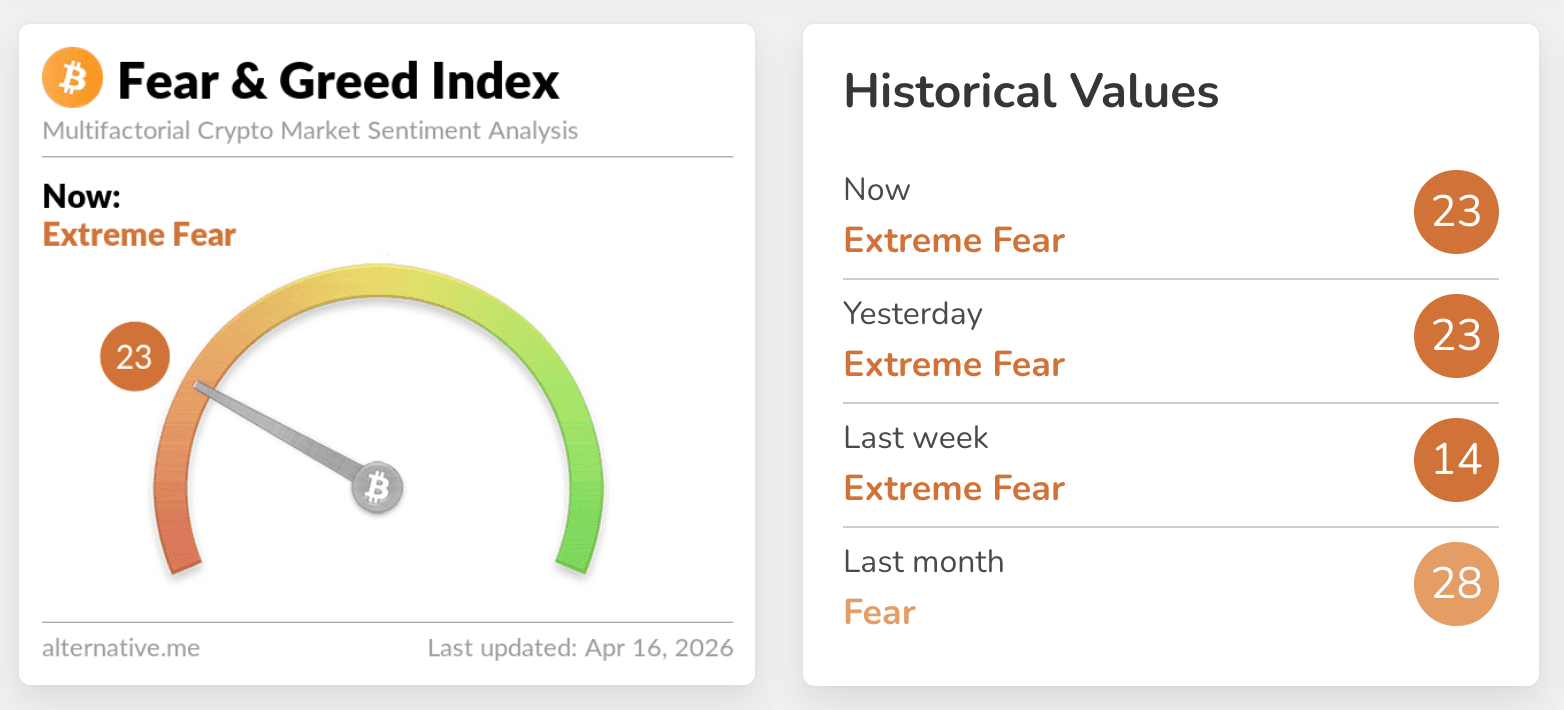
Source: Alternative
Key News Highlights:
The White House Pushes A Crypto Market Structure Bill As The US Midterms Approach
As the US midterm elections draw closer, the White House is increasing pressure on Congress to pass a landmark crypto market structure bill. The Trump administration is working within a narrowing pre-election window to resolve the long-running dispute between the banking sector and the crypto industry, which has slowed Senate negotiations for months. Key officials, including Treasury Secretary Scott Bessent, have recently stepped up their public calls for clearer legal boundaries on whether digital assets should be treated as securities or commodities. The bill is widely viewed by the industry as the crown jewel of its policy agenda, as it would build on the stablecoin framework established under last year’s GENIUS Act. The Council of Economic Advisers later released a report pushing back against concerns raised by the traditional banking sector and argued that the US risks losing its leadership in global financial innovation if it fails to establish clear rules. With Congress returning from a two-week recess, the current moment is seen as a critical window for advancing the legislation. Analysts believe this may be the best remaining chance to move the bill forward before election politics begin to dominate the calendar and stall the broader institutionalization of the crypto market.
Adam Back Says Bitcoin Should Begin Building Quantum-Resistant Defenses Early
At Paris Blockchain Week, Blockstream CEO Adam Back said that even though the threat from quantum computing may still be 20 to 40 years away, the Bitcoin ecosystem should start preparing a migration path to quantum-resistant cryptography now. He argued that current quantum systems remain in the experimental stage and are still less capable than basic calculators, but that precautionary planning is far safer than trying to respond during a crisis. Back said Taproot could support alternative signature schemes, which would allow the network to introduce upgrades without disrupting the current user experience. At the same time, the market has grown more concerned after Google suggested that quantum systems could one day break cryptographic protections in as little as nine minutes, which has fueled debate around proposals to freeze vulnerable Bitcoin. However, BIP-361, a proposal from developer Jameson Lopp to freeze Satoshi Nakamoto’s USD 81.9 billion stash and other exposed coins to prevent theft, drew strong backlash from the community. Critics argued that such a move would be authoritarian and confiscatory, and would run against Bitcoin’s core principles of decentralization and immutability. The debate highlights a deep divide within the developer community between technical defense and ideological preservation.
Crypto PAC Fellowship Discloses USD 11 Million In Institutional Backing
According to the latest filing with the US Federal Election Commission, the crypto political action committee Fellowship, led by the head of government affairs at a stablecoin issuer, disclosed a total of USD 11 million in institutional contributions. Of that amount, Cantor Fitzgerald contributed USD 10 million, while Anchor Labs, the company behind crypto bank Anchorage Digital, contributed USD 1 million. The funds have been used mainly for issue advocacy advertising in key races in states such as Nebraska and Kentucky, with roughly USD 3 million already spent to support candidates viewed as favorable to crypto. Fellowship previously claimed to have more than USD 100 million in industry backing, which suggests that the crypto sector is trying to replicate the playbook that proved effective in 2024 by using major media spending to influence control of Congress. In addition, Cantor Fitzgerald’s director of digital asset strategy, Mitchell Nobel, is also serving as the PAC’s treasurer, which further deepens the connection between traditional Wall Street institutions and crypto-aligned political lobbying efforts. This scale of political spending suggests that the crypto industry is shifting toward a more direct strategy, using deeper involvement in the legislative process to secure a more favorable regulatory environment.
Trending Tokens:
- $BIO (BIO Protocol)
The decentralized science sector has had a notable recovery in recent weeks, and BIO Protocol has secured a central position as the financial layer designed to accelerate the flow of onchain capital into scientific research. The protocol uses dedicated auction contracts that allow bioDAOs to raise funding and direct it straight into intellectual property assets and biotechnology projects, which helps bypass the barriers of traditional fundraising channels. With the project’s growth index surging by 567%, the market is showing strong confidence in the tokenized R&D ecosystem proposed by the founding team. Backing from leading institutions such as Maelstrom Capital and Big Brain Holdings further highlights BIO Protocol’s role as a liquidity catalyst within the emerging DeSci narrative. Recent attention around the protocol also reflects a broader shift in DeFi models toward utility-driven structures that prioritize long-term scientific progress over short-term speculative cycles. As the narrative around decentralized intellectual property continues to mature, BIO Protocol remains at the forefront of making global scientific breakthroughs more accessible through a transparent blockchain framework.

- $MON (Monad)
Monad currently holds a leading position in the infrastructure narrative, supported by its mission to build a high-performance Layer 1 blockchain that can deliver throughput up to 1,000 times faster than existing competitors. The market is now focused on the Monad Foundation’s newly introduced dedicated device subsidy program, which provides hardware support to protocol teams with at least USD 2.5 million in total value locked. The initiative is designed to address a critical security gap by encouraging teams to separate signing operations from their everyday development environment, which helps foster a more resilient ecosystem. With total funding of USD 432 million and backing from major industry names such as Paradigm and Coinbase Ventures, Monad is widely seen as a strong candidate for the next generation of decentralized applications. As the network moves into its next phase, its emphasis on security-first growth continues to strengthen its reputation as a sophisticated and dependable base layer.
- $KAT (Katana)
Katana has become a focal point in the Ethereum Layer 2 space, positioning itself as a specialized chain built for deep liquidity and structural yield. The project recently reached a major milestone with the launch of Katana Perps and the strategic acquisition of the IDEX team and its underlying exchange technology. Unlike conventional perpetual exchanges that rely heavily on unsustainable token emissions, Katana uses its VaultBridge and vKAT architecture to generate real yield and support more durable market growth. This transition has been reinforced by the appointment of a new CEO and by the project’s successful graduation from the Polygon Labs Agglayer Breakout Program. Because the protocol can integrate trading infrastructure directly into its ecosystem flywheel, it creates a more cohesive environment for DeFi participants and helps keep investor sentiment elevated. With support from well-known backers such as GSR and Polygon Labs, Katana is effectively challenging the traditional model of acquiring liquidity through incentives alone by placing greater emphasis on infrastructure durability.
Disclaimer: The information provided in this section is for informational purposes only and doesn't represent any investment advice or FameEX's official view.