FameEX Today’s Crypto News Recap | August 25, 2026
2026-08-25 07:18:58

Bitcoin reclaims its 50-week EMA as ETF inflows return, CFTC prediction-market tensions rise, and Asia advances crypto rules; today’s BTC reached $81K in Greed sentiment. Bitcoin has shown strong upward momentum in recent sessions and successfully broke above the $81K level. BTC also closed above its 50-week EMA on the weekly chart last week for the first time since November 2025. This moving average has often served as an important dividing line for medium- to long-term market structure during previous bear markets. Meanwhile, the average cost basis of new capital has continued to move higher. On-chain data shows that part of the recent capital inflow is concentrated between $68K and $73K. This has made the range an important cost-basis zone following the latest rebound. According to market data from a major CEX, BTC reached $81,034 with a 24-hour gain of 4.56%. The latest rally has been supported mainly by improving expectations around macro liquidity and the U.S. Treasury’s expansion of its debt buyback program. At the same time, a Reuters/Ipsos poll released on August 24 showed that U.S. public support for the war with Iran had fallen to its lowest level since the conflict began. Only 31% of Americans supported U.S. military action. President Donald Trump’s approval rating also remained near a record low. Around 83% of respondents expected the conflict between the two countries to continue for a long time.
According to CoinGlass liquidation data, if ETH falls below $2,356, cumulative long liquidation intensity across major CEXs could reach USD 1.274 billion. If BTC falls below $74,858, cumulative long liquidation intensity could reach USD 2.208 billion. These levels highlight the concentration of leveraged positions and potential liquidation pressure near key support zones. On the upside, if BTC rises above $82,648, cumulative short liquidation intensity across major CEXs could reach USD 1.366 billion. A move back below $74,858 could expose up to USD 2.208 billion in cumulative long liquidation intensity. This shows that long leverage has also built up rapidly during the recent rebound. The Crypto Fear & Greed Index has risen to 74, which reflects a sharp shift from the previous fear-driven environment toward stronger risk appetite. As a result, the focus is moving beyond the size of the rebound itself. Attention is increasingly turning to whether spot-market demand can support the elevated price structure formed after the rapid short squeeze.
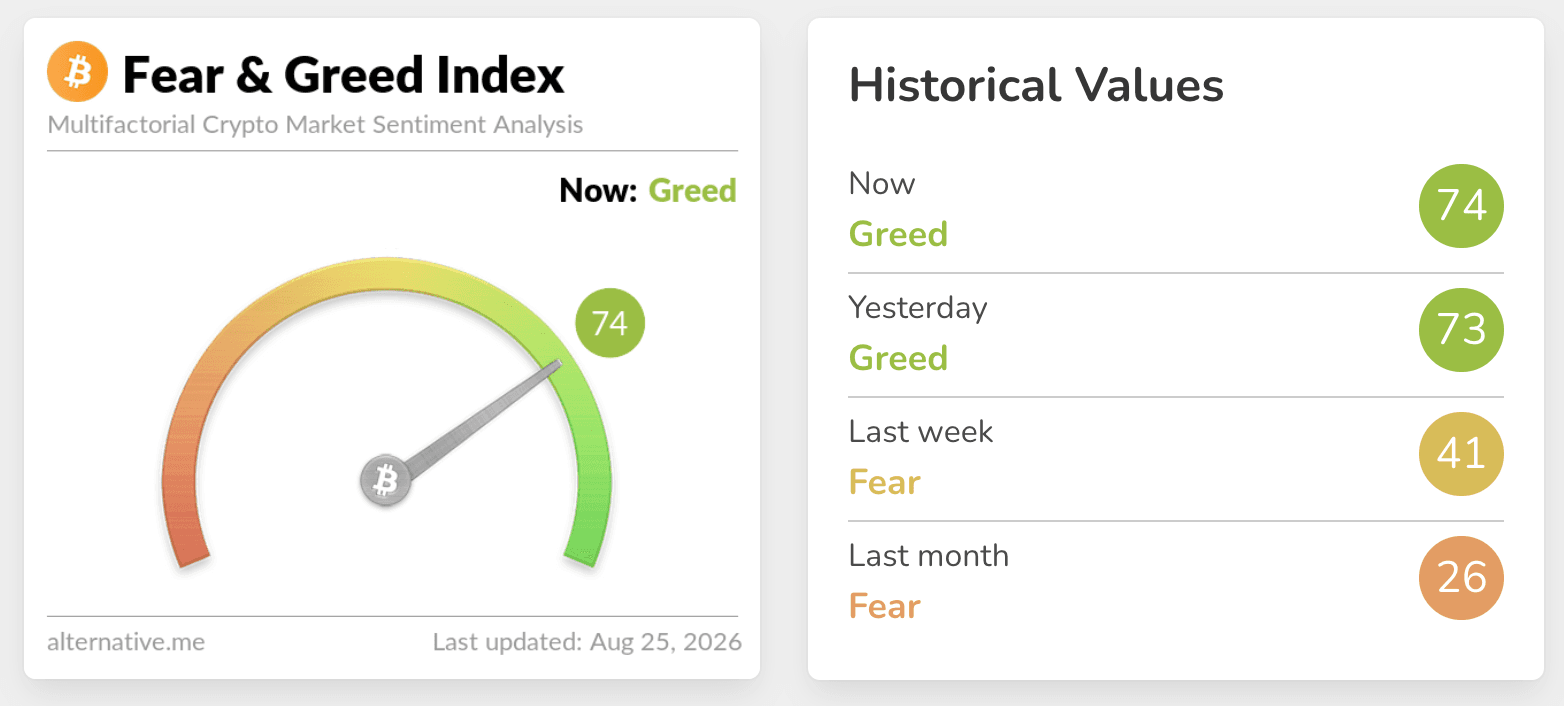
Source: Alternative
Key News Highlights:
Bitcoin Reclaims 50-Week EMA as U.S. ETFs Record About USD 1.9 Billion in Weekly Net Inflows
Bitcoin entered a new technical phase in the final week of August after closing above its 50-week EMA last week. This marked the first weekly reclaim of the indicator since November 2025. BTC reached $79,550 last week, its highest level since early May, after gaining as much as 27% over five days. Bitcoin’s August gain has also exceeded 20%, making it one of its strongest August performances in recent years. The rebound brought several investor groups back into unrealized profit. Short-term holders saw prices move back above their aggregate cost basis. On-chain data shows that the breakeven level for new capital has risen to around $73K. A broader concentration of recent cost bases is now located between $68K and $73K. On the fund-flow side, U.S. spot Bitcoin ETFs recorded about USD 1.9 billion in net inflows over five trading days last week. This was one of the strongest weekly inflow totals in roughly ten months. The result contrasted sharply with the large outflows seen in June and showed a clear shift in ETF flows during the latest price rebound. Markets are also awaiting the Jackson Hole symposium and upcoming U.S. PCE inflation data. Both events remain key macro developments for traditional financial markets and digital assets.
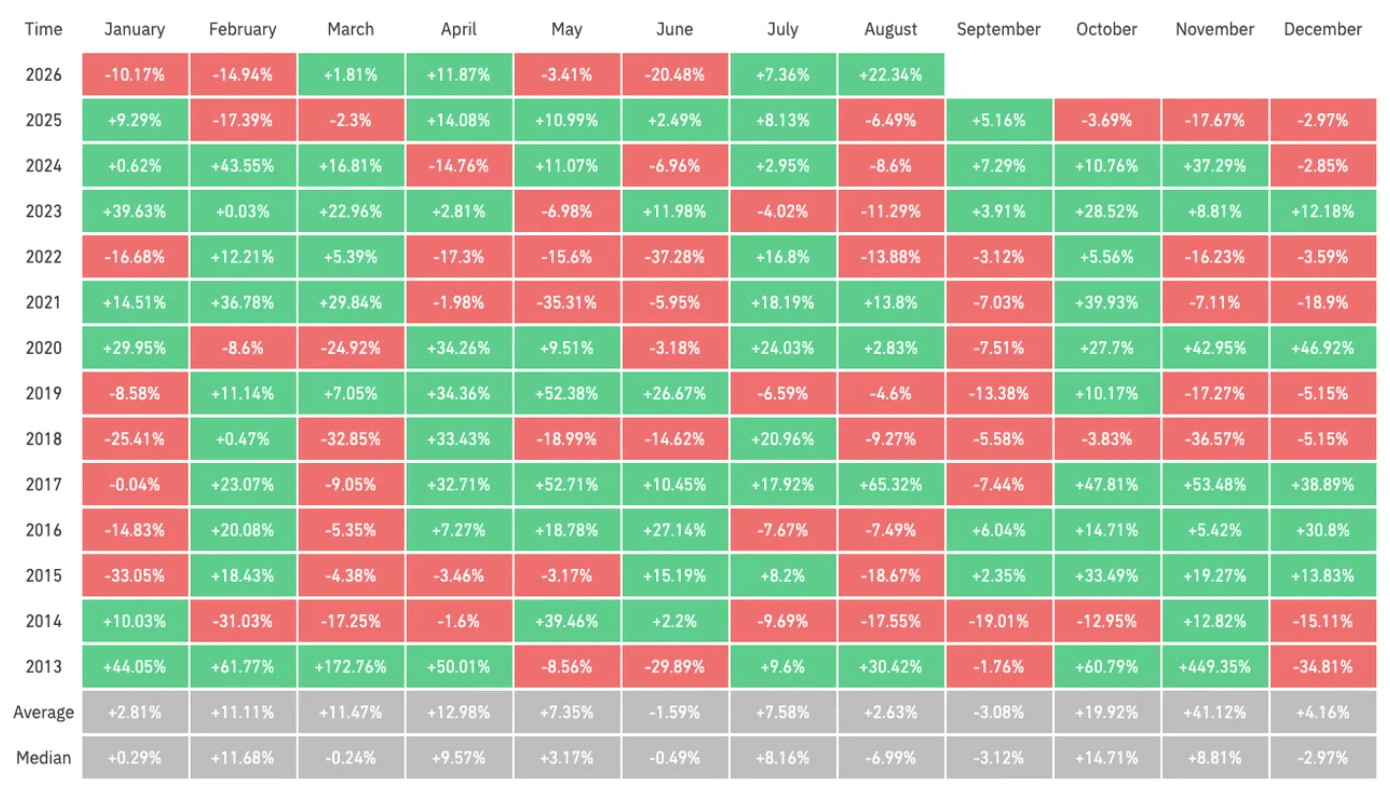
BTC/USD Monthly Returns, Source: CoinGlass
CFTC and Prediction Market Defendant Dispute Regulatory Scope of Event Contracts
A U.S. criminal case involving prediction market event contracts is raising new legal questions over the scope of CFTC oversight. U.S. soldier Gannon Ken Van Dyke is accused of using nonpublic information to trade event contracts on a prediction market platform. He allegedly earned more than USD 400,000 from the trades. U.S. authorities previously filed fraud-related charges against him in April. The case involves a prediction event tied to the removal of Venezuelan President Nicolás Maduro. Van Dyke has pleaded not guilty to the charges, and the criminal case remains pending. The CFTC also brought a separate civil case related to the matter. A federal court has stayed that proceeding until the criminal case is resolved. More recently, the CFTC sought permission to submit an amicus brief in the criminal case to present its views on several legal issues. One of the key questions is whether prediction market event contracts qualify as “swaps” under U.S. commodities law. Van Dyke’s lawyers opposed the CFTC’s involvement and argued that the regulator should not use an amicus filing to advance its own regulatory position indirectly. The case has not yet produced a final judicial ruling. However, the legal classification of event contracts and the scope of regulatory jurisdiction have become central issues in the proceedings.
South Korean Bank Taps Ripple for Cross-Border Payments as Pakistan Opens Virtual Asset Licensing
Several Asian markets are continuing to advance regulatory frameworks and financial applications for digital assets and blockchain services. South Korea’s Jeonbuk Bank has partnered with Ripple to introduce blockchain-based cross-border payment services for business customers. The service will primarily target import-export companies, technology startups, and online content creators. According to the companies, the system is designed to improve cross-border payment processes and reduce the time and costs associated with traditional transfers through multiple intermediary banks. At the same time, South Korean lawmakers are considering expanded investigative powers for the Financial Intelligence Unit over unregistered virtual asset businesses. If enacted, the proposal would allow the FIU to investigate and analyze suspected violations of virtual asset regulations. It could also provide information to law enforcement agencies or request criminal investigations. Meanwhile, Pakistan’s Virtual Assets Regulatory Authority has officially opened its licensing portal for crypto exchanges and other virtual asset service providers operating in the country. Under the current rules, companies that were already providing virtual asset services before the specified cutoff date must apply for a no-objection certificate by September 5 or cease operations. The regulator said the new licensing framework will include requirements covering consumer protection, corporate governance, regulatory compliance, and market integrity. It will also establish a formal process for virtual asset businesses to enter Pakistan’s regulated market.
Disclaimer: The information provided in this section is for informational purposes only and doesn't represent any investment advice or FameEX's official view.