FameEX Today’s Crypto News Recap | September 15, 2026
2026-09-15 07:19:13

Trump signals the Iran war could end as oil falls, Solana launches Transaction V1 and the CLARITY Act nears a key vote; today’s BTC price is near $77.5K in Greed sentiment. Bitcoin is consolidating near $77.5K with little change over the past 24 hours. Ethereum is trading near $2,492 after falling about 0.9% over the same period. BTC briefly moved back above $79K on Monday before giving up part of the advance. It has since returned toward the 50-week EMA near $77,430, keeping price action close to an important longer-term technical level. ETH has fallen back below $2,500 and has underperformed BTC in the short term. Derivatives activity remains elevated despite the softer spot price. The Crypto Fear and Greed Index rose to 69 from 57 a day earlier and remains in Greed territory. Total crypto liquidations reached about USD 342 million over the past 24 hours. Short liquidations accounted for around USD 232 million, while long liquidations totaled about USD 110 million. This reflects the pressure placed on leveraged short positions during the recent rebound. On the institutional side, U.S. spot Bitcoin ETFs recorded about USD 160 million in daily net inflows. Spot Ethereum ETFs also posted approximately USD 121 million in net inflows. In derivatives markets, around USD 16.6 billion in BTC and ETH options positions are scheduled to expire in the third quarter. Call open interest exceeds put open interest in both markets. Bitcoin's maximum pain level stands at $72K, while sizable upside open interest is concentrated around $85K, $90K and $100K. Ethereum's maximum pain level is around $2,200. Overall, BTC and ETH are consolidating after the previous sharp rebound. ETF flows, options expiries, liquidation clusters, energy prices, and interest-rate expectations remain key factors shaping the current market structure.
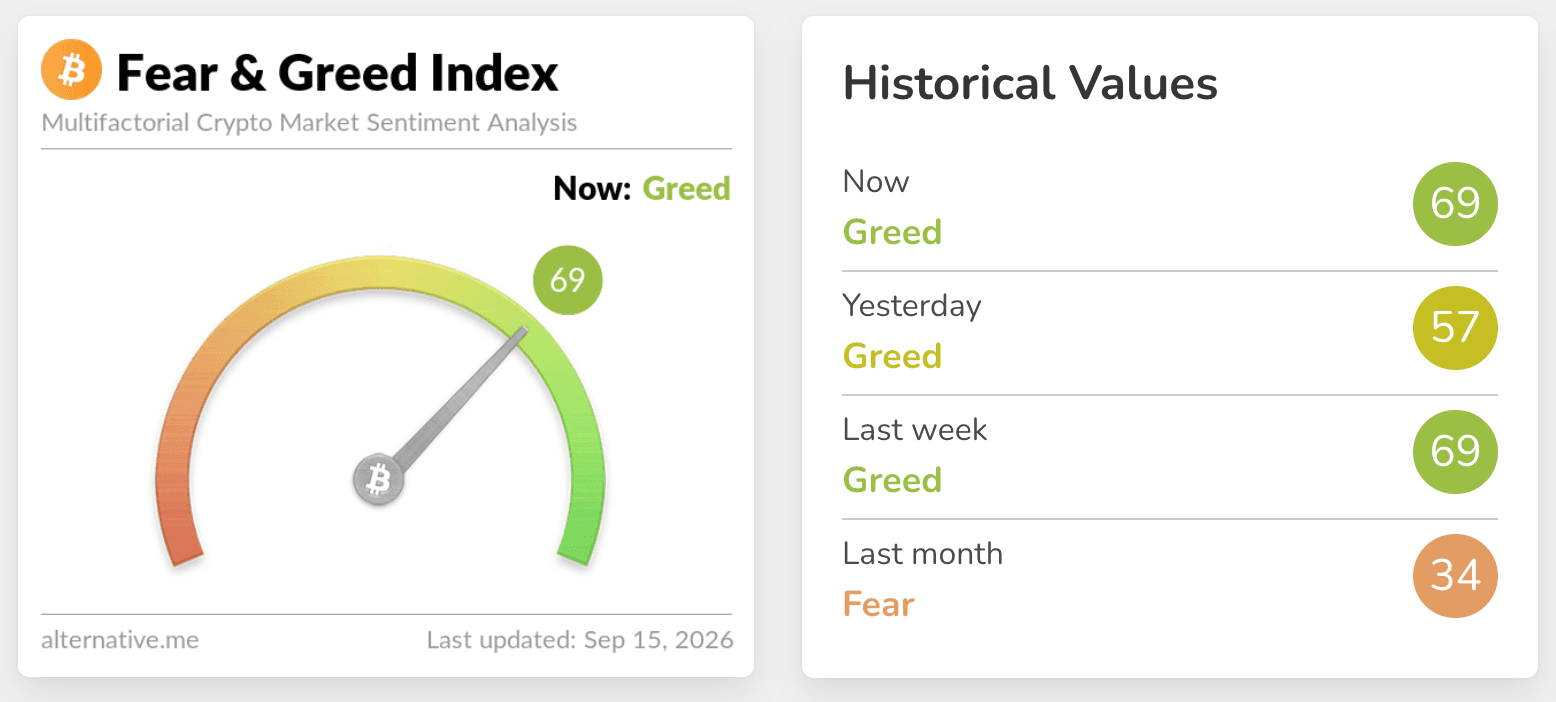
Source: Alternative
Key News Highlights:
Bitcoin Briefly Returns Above $79K as U.S.-Iran Developments and Oil Prices Move Markets
Bitcoin briefly climbed back above $79K after Monday's Wall Street open and recovered part of its weekend losses. Its daily gain reached nearly 3% at one point. The move came after U.S. President Donald Trump said the United States remained open to reaching an agreement with Iran. His comments drew renewed attention to whether the U.S.-Iran military conflict could move toward de-escalation. Trump later said oil prices could fall sharply once the military conflict with Iran ends. Crude prices moved lower following the remarks. The conflict in the Middle East had previously kept uncertainty elevated around major energy transit routes. These include the Strait of Hormuz, Saudi Arabia's East-West pipeline and the Bab el-Mandeb Strait. WTI crude had remained above $100 per barrel, while Brent crude traded around $105 per barrel at one point. High energy prices have kept inflation risks and the broader economic outlook in focus. At the same time, expectations for Federal Reserve policy shifted further. CME FedWatch data showed the implied probability of a 25-basis-point rate hike rising to 92.7% from 59.4% one week earlier. Attention has therefore moved beyond the rate decision itself toward how the Fed describes the policy path ahead. Energy costs and inflation pressures remain important parts of that discussion. BTC reclaimed its 50-week EMA near $77,430 during the rebound. It later retreated from above $79K to around $77.5K and is now consolidating near this longer-term technical level.
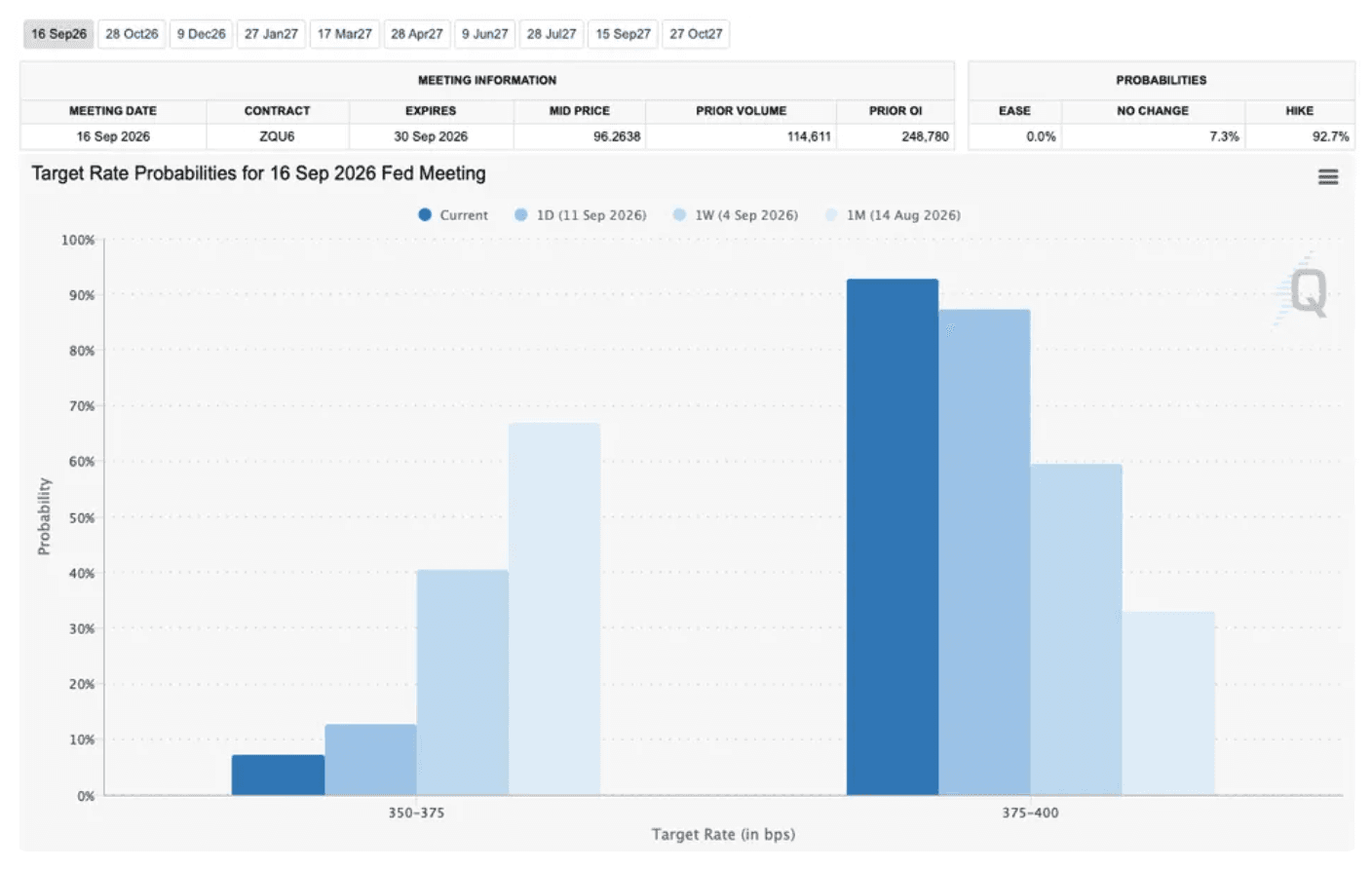
Fed target rate probability comparison for the Sept. 16 FOMC meeting. Source: CME Group
Solana Launches Transaction V1 as Maximum Transaction Size More Than Triples
Solana has officially activated its new Transaction V1 format. The upgrade raises the maximum amount of data that a single transaction can carry from 1,232 bytes to 4,096 bytes. This increases the available capacity by more than three times. The change expands the amount of instructions, signatures and other transaction data that can be included in one operation. It does not directly increase the number of transactions the network can process per second. Under the previous 1,232-byte limit, developers often had to compress complex operations into a small transaction or split them across multiple transactions. Transaction V1 gives developers more room to include several steps within a single transaction. This is particularly useful for multi-step trades, corporate wallets that require multiple approvals and zero-knowledge proofs that carry larger amounts of data. The new format also allows more steps to be executed as a single atomic transaction. If one step fails, the entire transaction can be rolled back. This reduces the risk of inconsistent outcomes that can occur when a complex operation is divided across several separate transactions. Ethereum does not have the same type of fixed transaction-size limit and can accommodate larger data-heavy operations when users pay higher transaction fees. The upgrade therefore addresses one of Solana's previous structural limitations for complex transactions. The Solana Foundation has also warned wallets, trading applications, analytics platforms and other services that read blockchain data to update their systems for Transaction V1. Older transaction formats remain supported. However, infrastructure providers still need to recognize V1 transactions even if their applications continue to send transactions using older formats. Otherwise, they may face compatibility issues when retrieving individual V1 transactions or blocks that contain them.
U.S. Democrats Submit CLARITY Act Counterproposal Ahead of Senate Procedural Vote
U.S. Senate Democrats submitted a counterproposal to Republican negotiators ahead of a key procedural vote on the CLARITY Act. The move keeps negotiations over the digital asset market structure bill active immediately before the Senate vote. Republicans had already begun circulating a revised draft of the Digital Asset Market Clarity Act. The Senate is expected to hold its first procedural vote on Tuesday afternoon to determine whether the legislation can move forward. Reports indicate that Democratic concerns remain focused in part on the revised government ethics provisions. One issue involves the authority of state attorneys general to bring lawsuits or enforcement actions in cases involving the U.S. president. Lawmakers are also discussing how the legislation would address crypto-related business interests held by senior government officials. Democratic negotiators met to discuss these issues before sending the counterproposal, although the full details of the proposal have not yet been made public. Republican negotiators have argued that the bill has already undergone several rounds of revisions and is ready to move into the voting process. The procedural vote requires support from at least 60 senators. If that threshold is reached, the legislation will proceed to further debate and additional votes. Other industry groups and government bodies have also raised concerns about provisions covering prediction markets, state enforcement authority and stablecoin yields and rewards. These competing positions mean that several parts of the final legislation remain under negotiation. The CLARITY Act is intended to establish a clearer regulatory framework for the U.S. digital asset market. The upcoming procedural vote therefore represents an important stage in the broader legislative process.
U.S. House Panel Releases Digital Asset Tax Bill Covering Small Transactions and Staking
The U.S. House Ways and Means Committee has released a 114-page digital asset tax bill and plans to review the legislation on Wednesday. The measure is called the Digital Asset Tax Certainty Act. It addresses several areas of digital asset taxation, including de minimis transactions, gain and loss accounting, asset transfers, wash sale rules, mining, staking and broker reporting requirements. One provision would provide tax relief for certain network or transaction fees below $10. Individuals who completed more than 5,000 transfers during the previous year would not qualify for that treatment. Under the current U.S. system, users may still need to calculate and report capital gains or losses even when digital assets are used for relatively small transactions. The tax treatment of small-value crypto payments has therefore remained an important issue for the industry. The bill also includes several provisions related to tokenized assets. It seeks to provide greater clarity on ownership and tax treatment when digital assets are transferred or disposed of. Some provisions would direct the U.S. Treasury Department and the Internal Revenue Service to develop and publish additional implementing rules. The House Ways and Means Committee is scheduled to hold its markup at 10:00 a.m. ET on Sept. 16. Lawmakers will discuss the provisions and vote on whether the bill should advance. The House is expected to leave Washington later this week and remain in recess until after the November election. This leaves limited time for the legislation to complete the full process this year. Even so, the markup would move digital asset tax policy into a more formal stage of congressional consideration.
Disclaimer: The information provided in this section is for informational purposes only and doesn't represent any investment advice or FameEX's official view.