FameEX Today’s Crypto News Recap | June 17, 2026
2026-06-17 07:35:39

The US-Iran truce, senators' GENIUS Act push, and ATH record in Hyperliquid and Kalshi volumes spark market interest. Today BTC briefly reached $67K, though derivatives indicators show bulls remain cautious. Bitcoin (BTC) briefly broke above the $67,000 mark after the U.S. government announced a ceasefire agreement with Iran. However, the derivatives market did not show strong follow-through from bullish traders. The annualized futures basis remained low at 2%, while the put option premium rose to 16%. This shows that traders remain highly cautious about whether the short-term rebound could be a bull trap. At the same time, Ethereum (ETH) market sentiment is also hovering near a key long-short turning point. The Crypto Fear and Greed Index has fallen to 22, placing the market in an Extreme Fear state. From the liquidation intensity data, leverage washout pressure across major CEXs remains significant. If BTC moves higher and breaks above $69,068, cumulative short liquidation intensity on major CEXs is expected to reach $1.085 billion. If BTC falls below $62,858, cumulative long liquidation intensity will reach $928 million. For Ethereum, if the price drops below $1,705, cumulative long liquidation intensity on major CEXs will reach $857 million. Conversely, if ETH breaks above $1,881, short liquidation intensity will reach $739 million. In terms of fund flows, U.S. spot Bitcoin ETFs and spot Ethereum ETFs both recorded slight net inflows on June 16, Eastern Time. They posted net inflows of $10.0643 million and $9.5876 million, respectively. BlackRock’s IBIT and ETHA ranked first in inflows among their respective categories, offering a degree of support to the spot market. Still, the cautious tone in derivatives continues to reflect the pressure from tighter macro liquidity and unresolved geopolitical details on trading behavior.
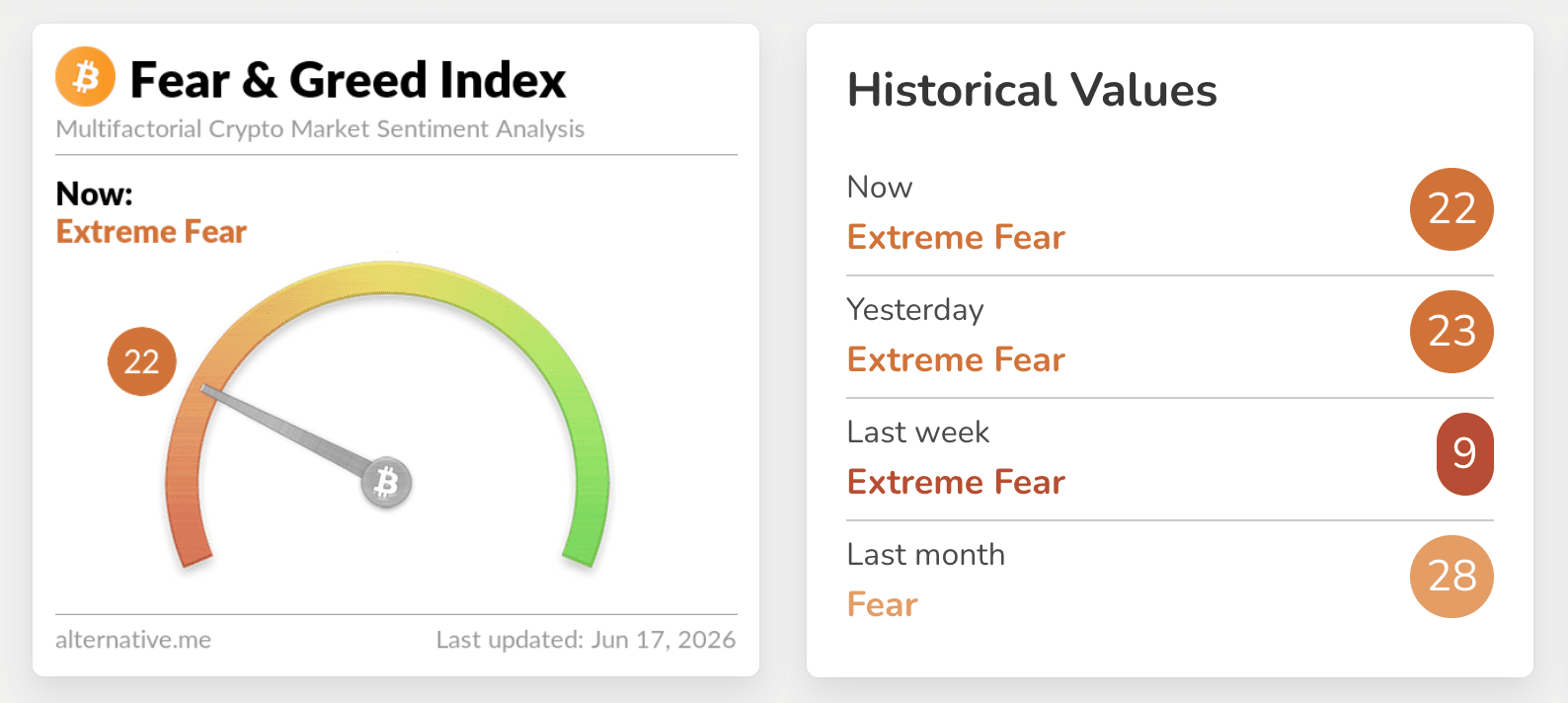
Source: Alternative
Key News Highlights:
U.S.-Iran Ceasefire Sends Bitcoin Above $67K, but Derivatives Indicators Show Bulls Remain Cautious
Bitcoin quickly surged above the $67,000 mark after U.S. President Donald Trump announced a ceasefire agreement with Iran on Sunday evening. The move was driven by improved sentiment following a visible easing in international geopolitical tensions. Although the spot market saw a short-term bullish push, key derivatives data showed that traders still questioned the durability of this rebound. The market did not show strong demand for additional leveraged long exposure. Data showed that Bitcoin’s two-month annualized futures basis remained low at 2%. This indicator has failed to break above the neutral 4% threshold for more than three months. It also reflects the heavy psychological pressure created by Bitcoin’s 24% decline so far this year. The unexpected 4% single-day rally caught short sellers off guard and triggered $210 million in short liquidations across the market. However, capital positioning in the options market remained defensive. Put options traded at a 16% premium over call options. This cautious tone stood out even more as the Nasdaq 100 Index rallied 3% and moved close to its all-time high. It highlights the independent fear and caution still present inside the crypto market. Apart from $86 million in spot ETF inflows and continued accumulation by Strategy, traders are still focused on the operational details and final timeline of the U.S.-Iran ceasefire agreement, especially around future shipping tolls related to Iran. This remains a key reason why major derivatives traders are showing limited willingness to follow the move near the $60,000 support zone.
Bipartisan U.S. Senators Urge Treasury to Protect State Authority in GENIUS Act Implementation
A bipartisan group of U.S. senators led by Republican Senator Cynthia Lummis has sent a formal letter to the Treasury Department. The lawmakers urged the department to ensure that state regulators have sufficient legal authority to supervise stablecoin issuers during the review and implementation of the GENIUS Act. The letter to Treasury Secretary Scott Bessent stated that the GENIUS Act clearly creates a dual banking framework. It allows stablecoin issuers with a market capitalization of $10 billion or less to be regulated at the state level, provided that the state has rules that are substantially similar to federal law. Based on current crypto market data, only three stablecoins have market caps above $10 billion: Tether (USDT), USDC, and USDS, which was formerly Dai. This means that nearly all other stablecoin issuers could theoretically register under state-level legal frameworks. The senators emphasized that Congress clearly intended to preserve the traditional U.S. dual banking system. They also stressed the important role of state financial regulators in managing market risks. The Treasury’s earlier request for public comments did not clearly explain the timeline or procedural requirements for state certification. This raised concerns among state legislatures that the federal government could create a one-time certification window and limit future state participation. As a result, the bipartisan group called on the Treasury to establish a flexible certification framework. This would allow states to participate in stablecoin regulation according to their own legislative progress.
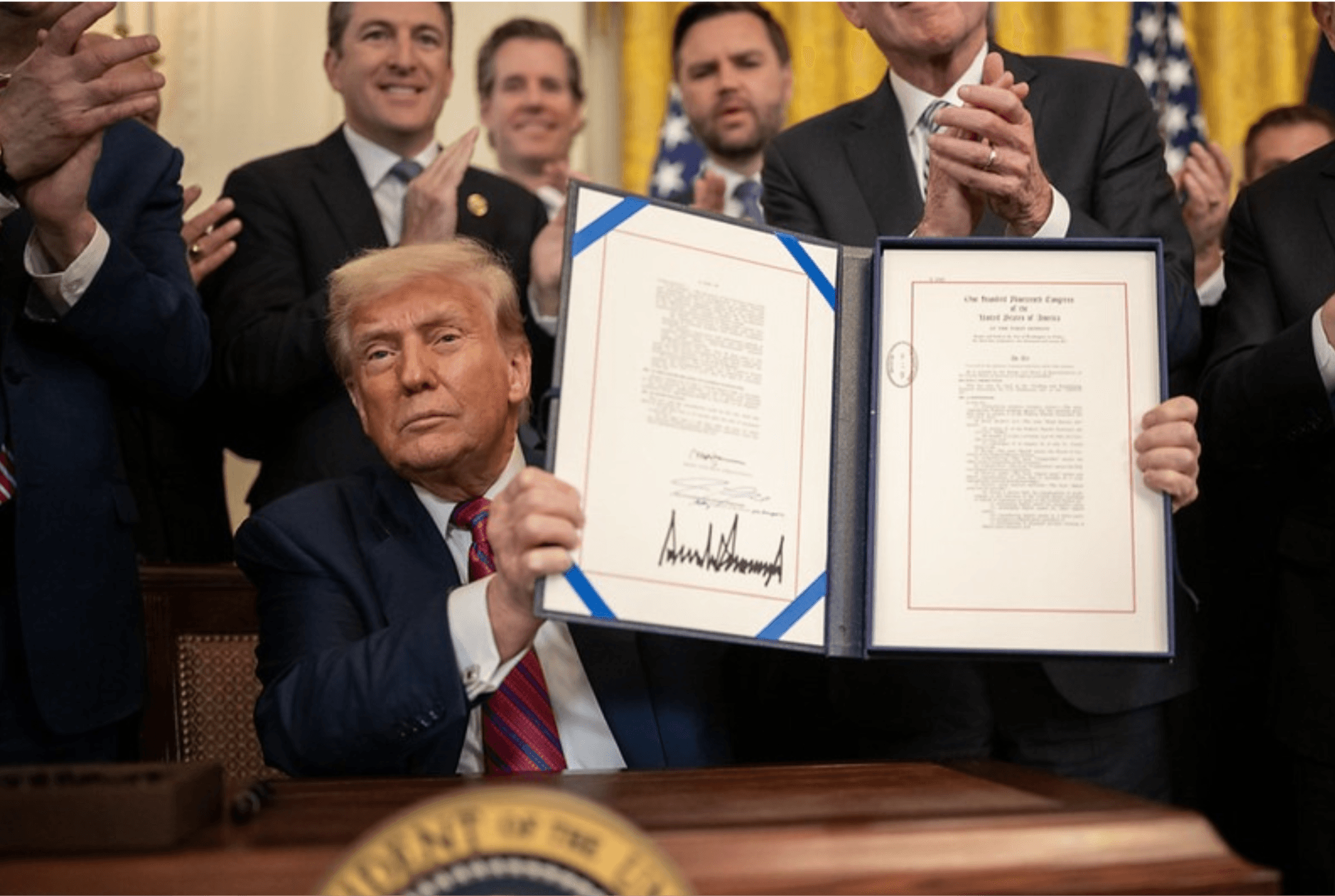
Trump Signed the GENIUS Act in July 2025. Source: The White House
Hyperliquid DEX Token Futures Open Interest Surges in One Week and Hits a New Record High
While the broader crypto spot market remains relatively weak, Hyperliquid’s native token HYPE has delivered a strong independent rally. The token rose 44% in five days and reached an all-time high of $76.90 during Tuesday’s session. Alongside the sharp price move, total open interest in HYPE futures jumped 32% in just one week and reached a historic high of $3 billion. This shows that institutional capital and leveraged traders are allocating more heavily to this segment. From a market structure perspective, Hyperliquid has captured a dominant 53% market share in decentralized perpetual trading. This makes it the clear leader in the sector. Despite the explosive growth in open interest, the annualized funding rate for HYPE perpetual contracts has remained below the neutral 6% threshold over the past week. This suggests that the rally was not simply driven by aggressive retail long leverage. It may also indicate that some core contributors or holders with locked allocations have been partially hedging through the derivatives market. The market still has concerns about HYPE’s fully diluted valuation of $71.3 billion, especially when compared with major traditional financial companies. Even so, the platform has continued to stand out while total decentralized exchange volumes fell 57% over the past six months. By introducing perpetual contracts tied to traditional real-world assets such as the S&P 500, Nasdaq 100, crude oil, gold, and SpaceX pre-IPO shares, Hyperliquid generated $9.6 billion in weekly trading activity. Its compliant ETF products have also attracted $208 million in assets since launch. These factors have strengthened market expectations that HYPE could challenge the $80 level.
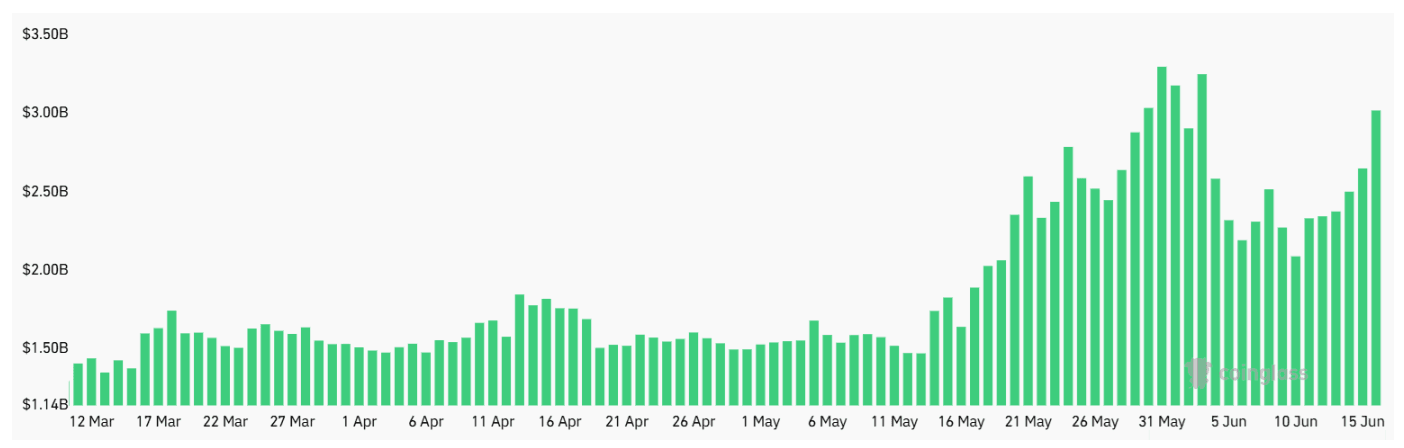
HYPE Futures Aggregate Open Interest (USD)
Kalshi’s Regulated Perpetual Futures Volume Tops $5.5B in Two Weeks, Setting a New Adoption Record for Financial Derivatives
Regulated prediction market leader Kalshi has created a major trading wave after entering the perpetual futures market. According to the latest data reported by Bloomberg, Kalshi’s perpetual futures products surpassed $5.5 billion in cumulative trading volume within just two weeks of launch. For a regulated platform traditionally centered on binary event prediction, this marks one of the most representative business expansion cases in the history of derivatives product launches. What drew even more attention from the derivatives market was its daily activity. Kalshi recorded more than $1 billion in daily trading volume for three consecutive days during the trading boom. This confirmed that its liquidity base has strong depth and execution capacity. Kalshi currently offers 11 regulated perpetual contracts, all linked to crypto assets. This places the platform directly into a derivatives market that has long been dominated by crypto-native trading venues. Analysts noted that the volume surge was driven not only by the platform’s structural advantages, but also by major global sporting events such as the FIFA World Cup and the NBA Finals. These events created a strong overlap between event prediction users, sports betting participants, and crypto derivatives traders. Kalshi’s co-founder stated that the recent data is only a strategic starting point. The platform is currently in regular compliance discussions with federal regulators to add more perpetual futures products in the future.
Disclaimer: The information provided in this section is for informational purposes only and doesn't represent any investment advice or FameEX's official view.