FameEX Today’s Crypto News Recap | July 22, 2026
2026-07-22 08:45:39

CLARITY advances prediction market oversight as Telegram plans a Gram wallet and Movement Labs enters bankruptcy; BTC fluctuated around $66K while ETH rises to $1,900. Overall market sentiment has begun to recover after a relatively quiet trading period. Implied volatility for both Bitcoin and Ethereum has risen, mainly due to accelerating demand for call options. This indicates that more active market sentiment is gradually returning. Traditional financial markets have remained volatile amid rising geopolitical risks and changes in the competitive landscape of artificial intelligence. The crypto market has continued to show a more structural recovery. Bitcoin briefly approached $67K, while Ethereum moved above $1,900. Spot Bitcoin and Ethereum ETFs also maintained net inflows. In terms of regulation and real-world adoption, a major Japanese convenience store operator is advancing a stablecoin payment pilot. South Korea continues to explore the tokenization of government bonds and state-owned assets. Meanwhile, the monthly onchain transfer volume of tokenized stocks rose significantly to USD 9.22 billion in June. This suggests that the integration of traditional finance and blockchain technology is continuing to deepen. Liquidation data showed that total liquidations across the crypto market reached USD 207 million over the past 24 hours. Short liquidations accounted for most of the total, highlighting the interaction between long and short positions during the latest price movements. US lawmakers are also advancing bipartisan digital asset legislation, while market expectations for the Federal Reserve’s interest rate path are becoming clearer. If Bitcoin continues to hold key support levels, the broader digital asset ecosystem may gradually move toward a more mature and diversified stage.
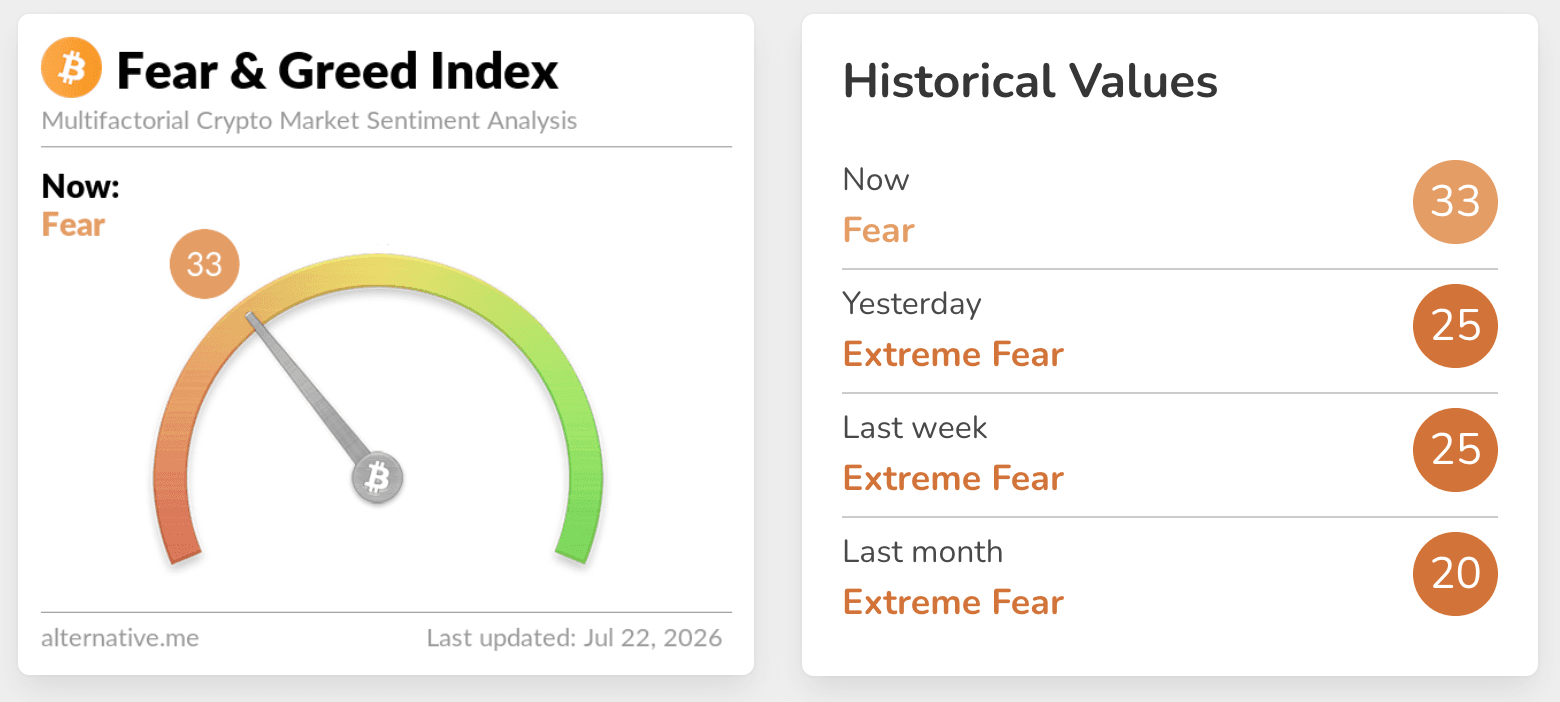
Source: Alternative
Key News Highlights:
CLARITY Act May Expand CFTC Authority Over Prediction Markets
A subcommittee under the US House Committee on Agriculture recently held a hearing focused on how the Commodity Futures Trading Commission could strengthen oversight and customer protection for prediction market companies. Prediction market platforms have experienced rapid growth, creating new regulatory and enforcement demands. Carl Kennedy, a partner at a New York law firm, told lawmakers that the regulator may currently lack sufficient staff to fully address emerging asset classes across cash markets and the crypto sector. He added that the Digital Asset Market Clarity Act currently under consideration in the US Senate could provide the commodities regulator with additional authority and resources. These measures could help the agency respond more effectively to the rapid expansion of prediction markets. The CFTC chair has recently claimed exclusive federal jurisdiction over these platforms. This position has created tension between federal and state regulators. Several US states have filed lawsuits involving specific prediction market operators. Republican senators are now pushing for a vote on the legislation before Congress begins its August recess. Lawmakers are expected to release the detailed text of the bill soon. The upcoming provisions may provide greater clarity on how regulatory responsibilities should be divided between federal agencies and state authorities.
Telegram Plans to Launch a Native Non-Custodial Gram Wallet
Telegram founder Pavel Durov recently announced that the messaging platform plans to launch a native non-custodial Gram wallet within its app this summer. The wallet is expected to provide convenient self-custody crypto payment services to Telegram’s more than one billion monthly active users. According to Durov, users will be able to send cryptocurrencies instantly without transaction fees. He described the initiative as one of the largest deployments of a non-custodial crypto wallet in history. The announcement follows a recent decision by the closely integrated blockchain ecosystem to rename its native token Gram. The new name revives the original branding used in the project’s 2018 white paper and represents a return to its early crypto roots. Telegram abandoned its original blockchain project after reaching a settlement with the US Securities and Exchange Commission in 2020. Since then, the company has continued to deepen its technical support and resource commitments to the related blockchain ecosystem. By integrating the wallet directly into its messaging app, Telegram aims to expand its Web3 services across the internet. The built-in wallet could also lower the barriers that prevent mainstream users from accessing self-custody crypto payments and decentralized financial services.

Progress on US Crypto Legislation and Cooling AI Trades Spark Capital Rotation Discussions
Bitcoin recently climbed above $67,000 as US crypto legislation moved forward and investors began reassessing their exposure to artificial intelligence-related stocks. The move also supported broad gains across several crypto-related equities. US Treasury Secretary Scott Bessent previously said lawmakers were approaching the final stage of the long-running legislative process. The proposed legislation is expected to clarify the respective regulatory responsibilities of the Securities and Exchange Commission and the Commodity Futures Trading Commission in the digital asset market. Some financial market analysts have noted that Bitcoin remains near the upper end of its recent trading range. They believe the direction of least resistance may be shifting higher as the AI trade loses momentum and investors become more comfortable with the expected interest rate path. Semiconductor stocks benefited significantly from the artificial intelligence boom over the past year. However, the sector has recently come under pressure because of concerns about high valuations and possible overcapacity in AI infrastructure. A major semiconductor index has already fallen from its recent record high. This changing macro environment has led investors to discuss whether some capital may rotate into other risk assets. Crypto assets are one of the markets attracting renewed attention. However, the extent of any actual capital rotation remains subject to further market data and confirmation.
Movement Labs Files for Chapter 11 Bankruptcy Protection in the US
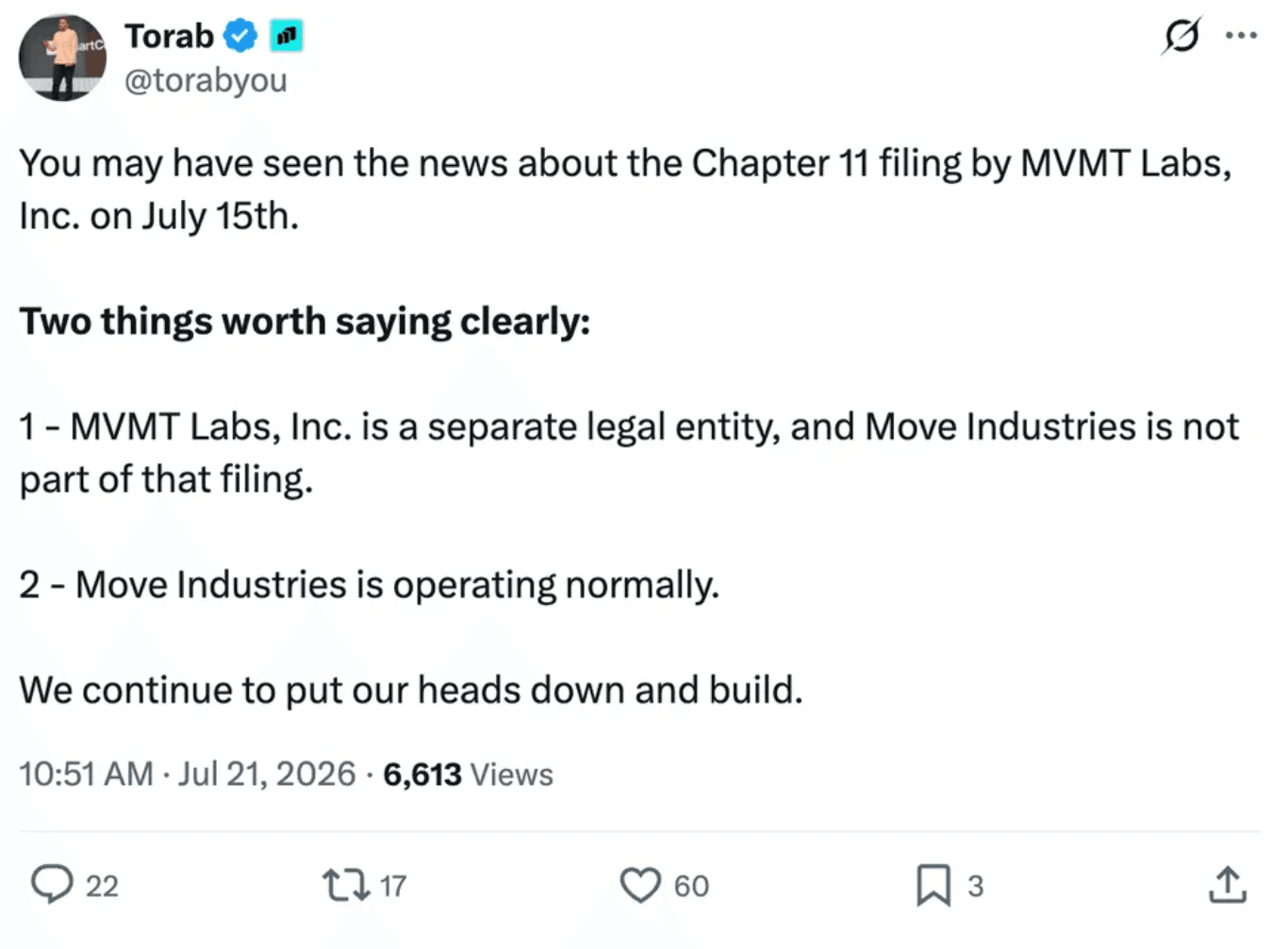
Movement Labs, the blockchain developer behind a layer-2 network, has formally filed for Chapter 11 bankruptcy protection in the US Bankruptcy Court for the District of Delaware. Court records show that the company filed under a streamlined reorganization process designed for qualifying small businesses. The procedure allows the company to continue operating while restructuring its business and debt under court supervision. The court has approved interim requests that allow the developer to maintain its existing bank accounts and cash management systems. Movement Labs may also obtain debtor-in-possession financing to support daily operations during the restructuring process. Creditors must submit their claims by September 14. The company’s financial difficulties followed a series of market controversies surrounding the launch of the MOVE token. These issues included a disputed market-making agreement that resulted in substantial token selling and downward price pressure. Despite the bankruptcy filing, representatives of another entity that has taken over the ecosystem’s development and operations said the proceedings apply only to Movement Labs. They stated that other parts of the ecosystem continue to operate normally. The MOVE token has experienced a prolonged decline over the past year and is now trading near a relatively low level.
Disclaimer: The information provided in this section is for informational purposes only and doesn't represent any investment advice or FameEX's official view.