FameEX Today’s Crypto News Recap | August 4, 2026
2026-08-04 07:02:19

The crypto market entered early August with a cautious trading environment. Bitcoin continued to fluctuate near $63K as market structure showed clear signs of shrinking liquidity and changing on-chain activity. Ethereum traded near $1,624 and remained in a low-range consolidation phase. The Crypto Fear and Greed Index fell to 25 and returned to the Extreme Fear zone. This was below yesterday’s reading of 28 and last week’s reading of 29. Trading activity also continued to cool. Average daily spot trading volume across 44 platforms fell to approximately USD 15 billion last week, down around 70% from its January peak and marking the lowest level of the year. Spot liquidity remained highly concentrated, with the six largest platforms accounting for more than 60% of total trading activity. Meanwhile, on-chain trading continued to gain market share. Decentralized exchanges accounted for 24% of spot trading volume in July. Over the same period, monthly spot volume on centralized exchanges fell from an annual peak of USD 2.23 trillion to approximately USD 670 billion. Institutional fund flows also diverged between the two largest crypto assets. Spot Bitcoin ETFs recorded USD 170 million in daily net inflows, while spot Ethereum ETFs posted USD 11.4178 million in net outflows. Leverage remained concentrated around several key price levels. If BTC approaches $60,594 on the downside, cumulative long liquidation exposure across major centralized exchanges could increase significantly. A larger concentration of short liquidation positions remains above $66,600. Overall, prices recovered from their intraday lows, but spot volume, sentiment indicators, and liquidity data continued to show that market participants remained cautious.
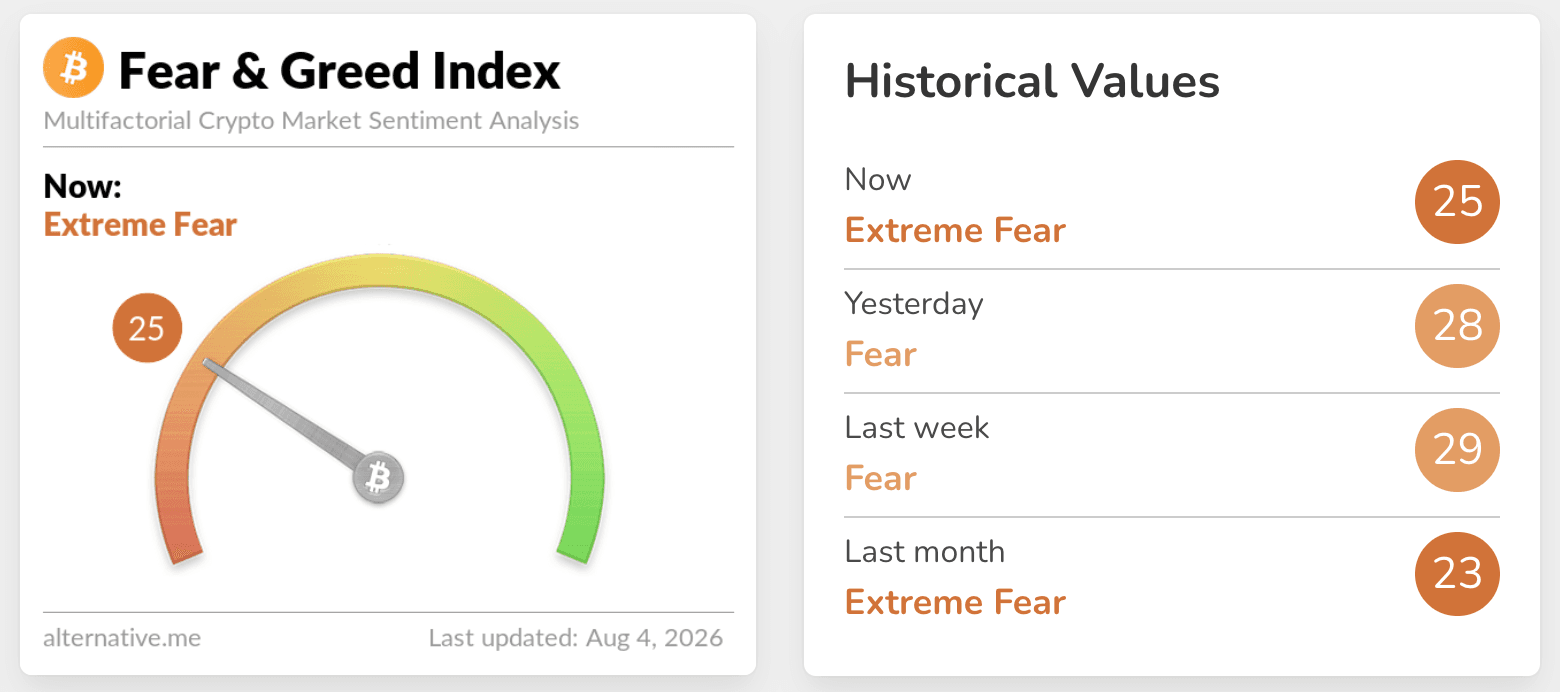
Source: Alternative
Key News Highlights:
Mastercard Completes USD 1.8 Billion BVNK Acquisition to Expand Stablecoin Payment Infrastructure
Mastercard has completed its acquisition of stablecoin infrastructure company BVNK in a deal valued at up to USD 1.8 billion. The total includes as much as USD 300 million in contingent payments. The transaction combines Mastercard’s global payment network with BVNK’s on-chain payment technology. It also strengthens the connection between fiat currencies and digital currencies. BVNK provides infrastructure that allows financial institutions, fintech companies, and enterprises to hold, transfer, manage, and convert both fiat and on-chain funds. Following the integration, the combined services will support stablecoin use cases across cross-border business payments, payouts, transaction settlement, and treasury management. Banks will be able to connect customer accounts with digital wallets and offer stablecoin payment services. Payment providers can also use the infrastructure to support round-the-clock merchant settlement and reduce operational barriers between different payment networks. BVNK said existing customers can continue working with the same teams, products, and technical integrations. No additional action will be required following the completion of the acquisition. Mastercard said the deal will improve interoperability between fiat currencies, stablecoins, tokenized deposits, and other forms of value. It will also expand the role of digital assets in practical payment processes.
BlackRock Launches Two Tokenized Money Market Funds for Stablecoin Reserves
BlackRock has launched two tokenized money market products known as BSTBL OnChain Shares and the BRSRV stablecoin reserve vehicle. BSTBL is a tokenized share class of the existing BlackRock Select Treasury Based Liquidity Fund. The shares are issued on the Ethereum blockchain. Eligible investors can transfer fund shares between approved digital wallets, although all transactions remain subject to applicable laws and investment restrictions. BNY serves as the transfer agent and tokenization service provider for BSTBL’s on-chain shares. BRSRV is a newly established tokenized money market fund designed primarily for institutional investors that use digital asset infrastructure. The fund supports multiple blockchains and automatically reinvests daily dividends. It can be used for stablecoin reserve management and other digital asset applications. Securitize serves as the transfer agent and tokenization provider for BRSRV. Both products primarily invest in cash, short-term U.S. Treasurys, and overnight repurchase agreements backed by U.S. government securities. BlackRock said the investment structures of both funds are intended to meet the requirements for eligible stablecoin reserve assets under the U.S. GENIUS Act.
Kenya Moves National Academic Records to Avalanche for On-chain Credential Verification
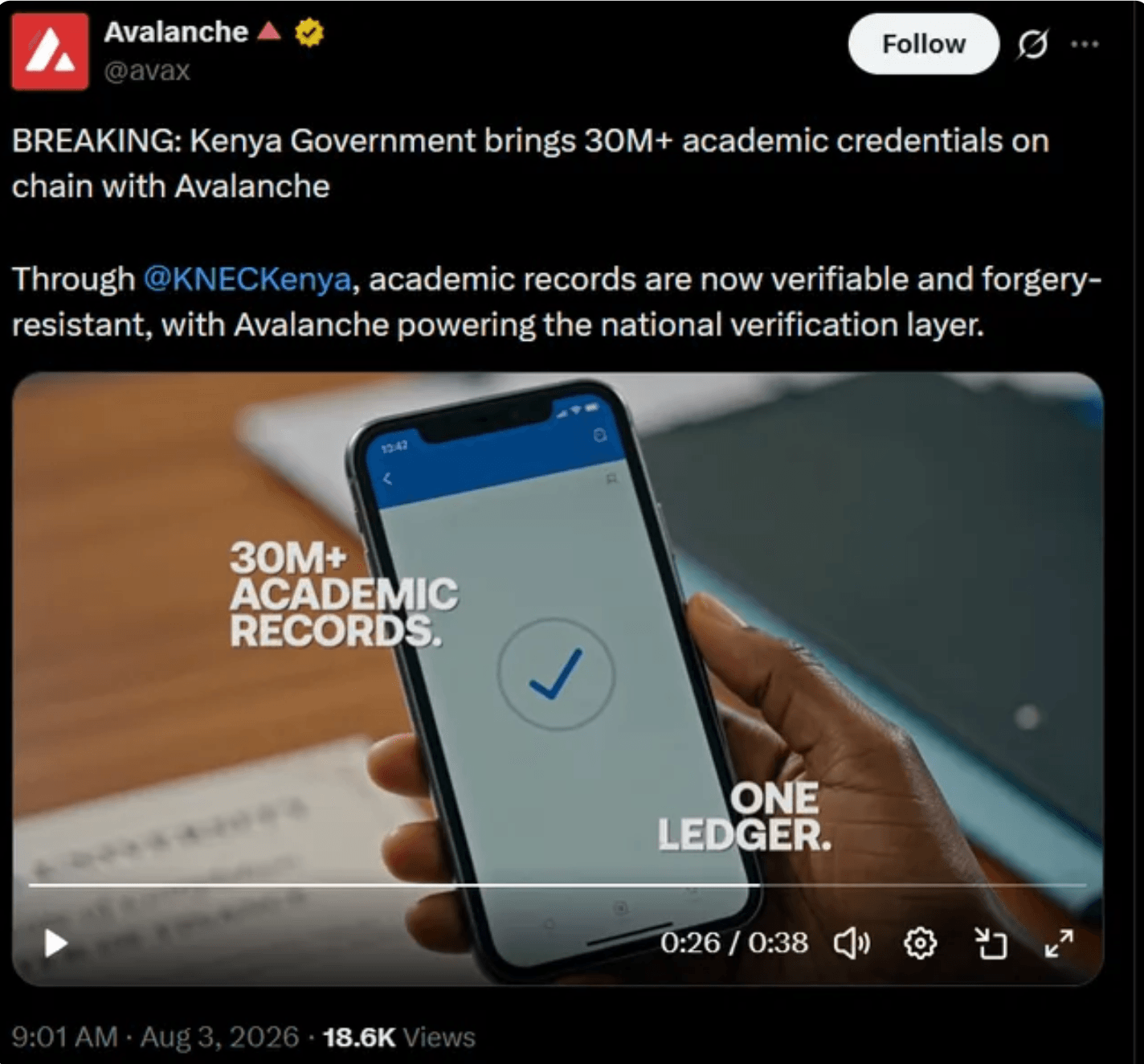
The Kenya National Examinations Council has officially launched a blockchain-based platform for verifying academic credentials. The initiative will move more than 30 million historical academic records onto the Avalanche blockchain. Its purpose is to address the growing problem of forged academic certificates while improving the efficiency and security of credential verification. The Kenya National Examinations Council and the Avalanche development team announced the partnership on Monday. The project is intended to tackle the thousands of fraudulent academic certificates reported in the country each year. The newly launched platform allows employers, universities, and authorized institutions to verify the academic qualifications of job applicants and students directly on-chain. This makes the records far more difficult to alter or counterfeit. Although the platform is now operational, neither the relevant authorities nor the development team has disclosed detailed adoption figures among students, employers, or educational institutions. Avalanche said the project introduces tamper-resistant electronic certification services to Kenya. For Avalanche, the deployment marks a major expansion beyond decentralized finance and digital assets. Its technology is now being used for government-level official record verification. However, the announcement did not clarify whether this type of public-sector deployment would directly increase demand for Avalanche’s native token. The token recorded a slight decline on Monday and remained significantly below its level from a year earlier.
U.S. and Japan Intervene to Support the Yen as Macro Data and Wallet Security Shape Bitcoin’s Week
The United States and Japan recently carried out a coordinated foreign exchange intervention after the yen fell to an approximately 40-year low against the U.S. dollar and experienced disorderly price movements. It was the first joint effort by the two countries to support the yen in around 15 years. The currency recovered from nearly 163.99 yen per dollar to approximately 155.20. U.S. Treasury Secretary Scott Bessent said the United States would remain in close contact with Japan’s Ministry of Finance and the Bank of Japan. He also said further joint intervention remained possible if market conditions required it. Bessent proposed expanding the Federal Reserve’s Foreign and International Monetary Authorities Repo Facility. This would allow foreign institutions holding U.S. Treasurys to obtain short-term dollar liquidity during periods of market stress. In energy markets, progress in U.S.-Iran negotiations and the possible reopening of the Strait of Hormuz caused international oil prices to fall by more than 8% in a single day. Markets are also watching this week’s U.S. nonfarm payroll data. The economy added only 57,000 jobs in June, well below the previous market expectation of 114,000. The crypto market continued to respond to the Coldcard hardware wallet vulnerability. The related attacks resulted in nearly USD 90 million in BTC losses, and some users were advised to create new seed phrases and transfer their assets. The number of BTC deposits to trading platforms briefly increased after the incident, but declined noticeably over the weekend. On-chain data also showed that Bitcoin’s long-term holder supply inflow reached approximately 220,400 BTC over the past 30 days. BTC entered the new month after gaining 7.4% in July.
Disclaimer: The information provided in this section is for informational purposes only and doesn't represent any investment advice or FameEX's official view.