FameEX Today’s Crypto News Recap | September 21, 2026
2026-09-21 07:10:35

Hana Bank issues a $100M Euroclear digital bond as CLARITY stalls and tokenized asset rules advance, while NEAR gains 23% as ZEC swap activity rises. Today’s BTC price is near $81.4K in Greed sentiment. Bitcoin has extended its recovery from the weekend and is now trading near $81.4K. It is up about 1.3% over the past 24 hours. Ethereum is trading near $2,657 after gaining around 3.3% over the same period. The broader crypto market continues to show relatively firm momentum. Market sentiment remains elevated, with the Crypto Fear and Greed Index at 70. This is slightly below yesterday’s reading of 71 but still firmly within the Greed zone. The reading suggests that risk appetite remains relatively strong following the recent price recovery. Position adjustments have also been notable across the derivatives market. Total crypto liquidations reached about USD 401 million over the past 24 hours. Long liquidations accounted for roughly USD 160 million, while short liquidations reached about USD 241 million. The heavier short-side liquidations indicate that part of the leveraged bearish positioning was forced out as prices recovered. Liquidation activity remained active across both BTC and ETH. ETH short liquidations were particularly notable as derivatives positions were readjusted during the rapid price rebound. ETF flows showed a different pattern. U.S. spot Bitcoin ETFs recorded a combined weekly net inflow of USD 6.2137 million, while spot Ethereum ETFs posted a net outflow of USD 140 million over the same period. This highlights continued differences in institutional allocation between the two largest crypto assets. Although Bitcoin ETFs remained in positive territory on a weekly basis, flows varied significantly across individual funds. Some major products attracted fresh capital, while others saw sizable redemptions. From a price and derivatives perspective, BTC’s return above $81K has triggered another round of short-term leveraged position rebalancing. ETH also outperformed BTC on the day, which helped support broader momentum across major crypto assets. ETF flows, global equity performance, interest rate conditions and regulatory developments continue to shape the market. The recent price recovery has not removed the structural differences across assets and capital channels.
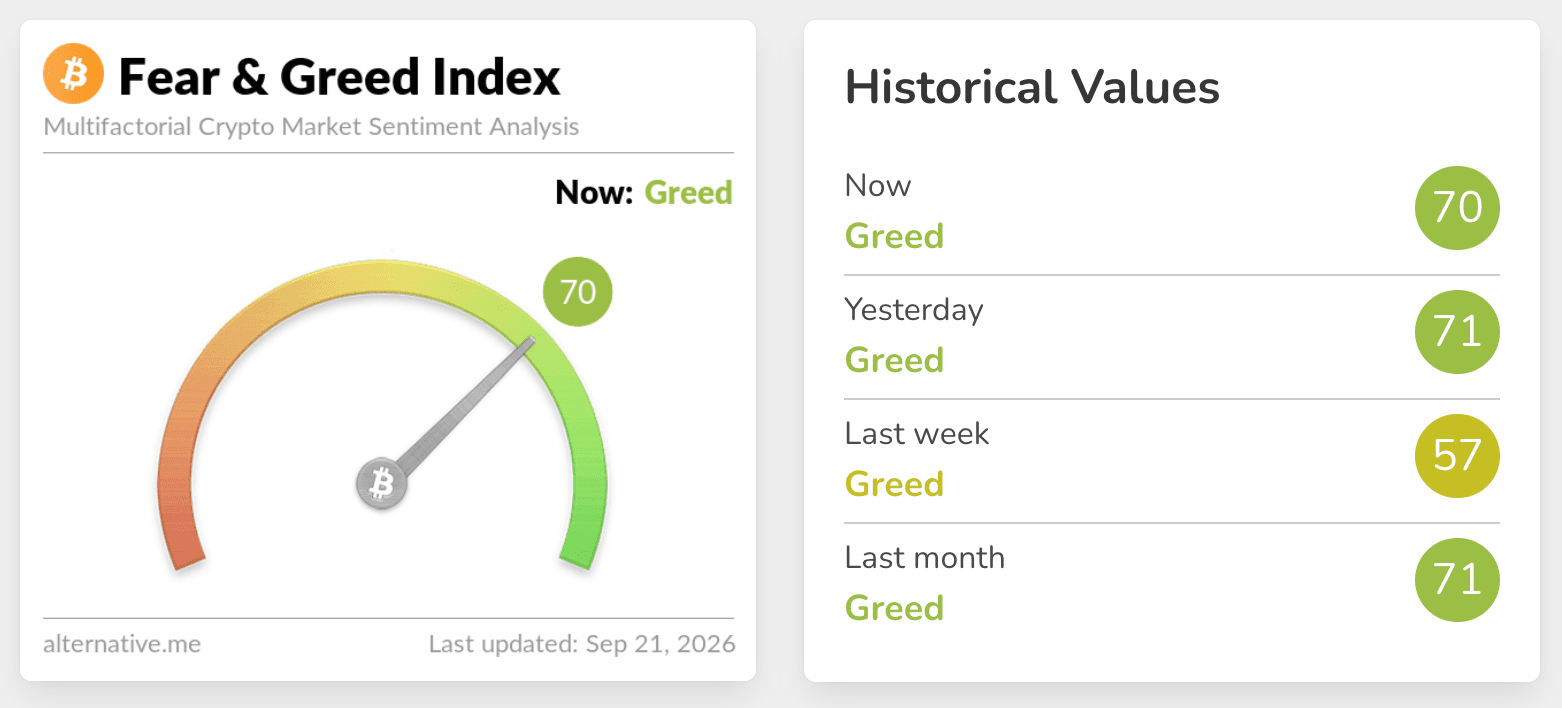
Source: Alternative
Key News Highlights:
Hana Bank Issues USD 100 Million Digital Bond Through Euroclear Blockchain
South Korea’s Hana Bank has issued a five-year foreign-currency digital bond worth USD 100 million through Euroclear’s blockchain infrastructure. The transaction brings distributed ledger technology further into traditional bond issuance and settlement. The bond was issued using Euroclear’s Digital Financial Market Infrastructure, or D-FMI, platform. Bond issuance, registration and settlement were all processed through a distributed ledger network. Yonhap News Agency reported that this was the first digital bond issuance in South Korea to directly use Euroclear’s own blockchain infrastructure. Traditional bond allocation and payment settlement can take three to five business days. The use of distributed ledger technology shortened the process to same-day settlement. The digital bond is also connected to Euroclear’s existing global settlement network. This allows investors to continue using their existing accounts and trading systems without replacing their current financial infrastructure. Euroclear has previously used its digital securities infrastructure for live bond issuance. Its Digital Securities Issuance service began operating in 2023. At the time, the International Bank for Reconstruction and Development, part of the World Bank Group, issued a EUR 100 million digital bond through the service. The bond was listed on the Luxembourg Stock Exchange. Hana Bank’s issuance extends a similar blockchain-based settlement structure to a South Korean financial institution. It also adds another example of distributed ledger infrastructure being integrated into the traditional cross-border bond market.
Bitcoin Returns Above $81K As NEAR Gains About 23% On Cross-Chain Swap Activity
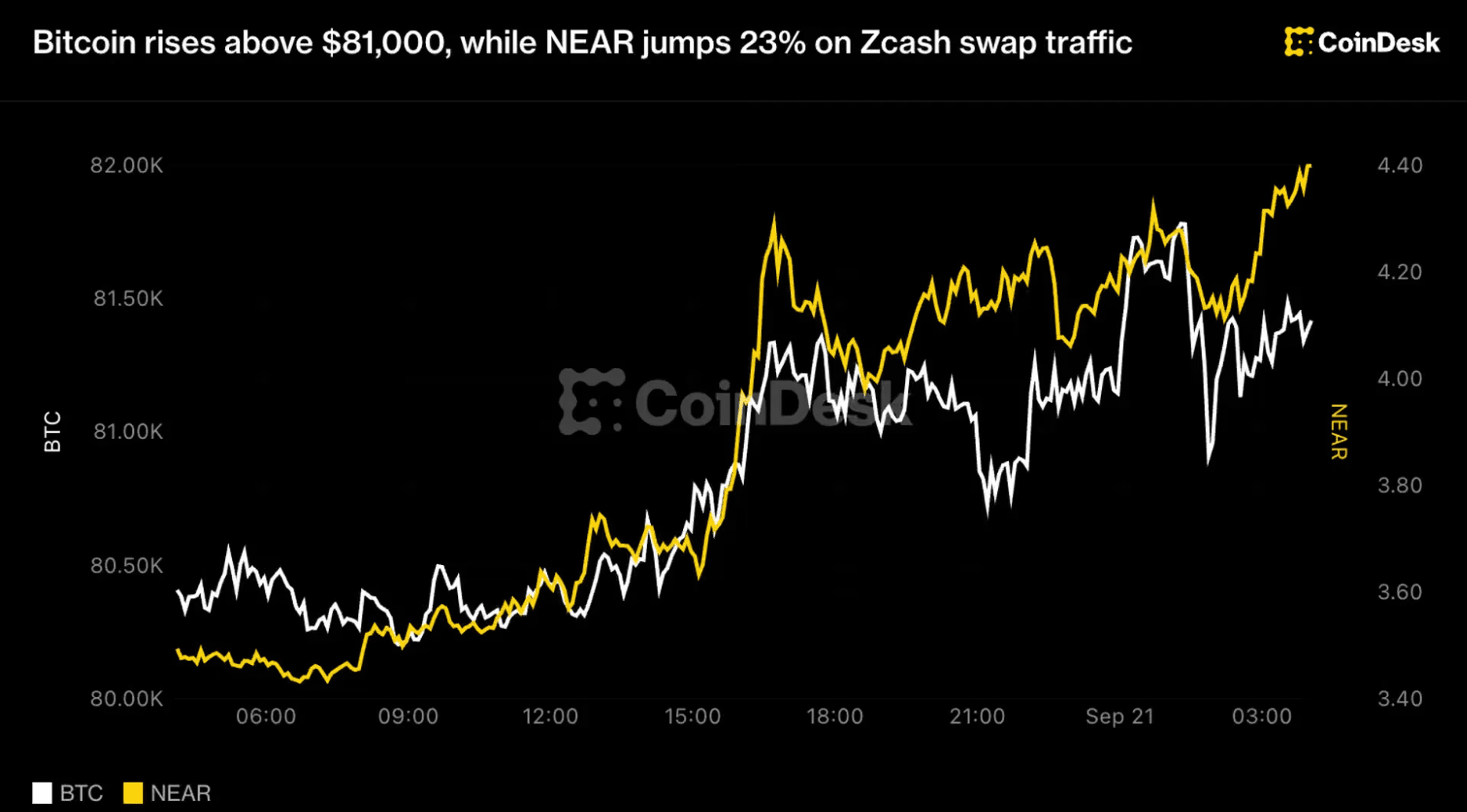
Bitcoin extended its recent rebound and moved back above $81K. Major crypto assets also remained broadly higher, while NEAR recorded one of the strongest moves among large-cap tokens. BTC traded above $81K with a gain of less than 1% over the past 24 hours. The move continued its gradual recovery from recent lower levels. NEAR rose about 23% over the same period and moved above $4. Trading activity was closely linked to cross-chain token swaps processed through NEAR Intents. NEAR Intents is a swap service within the NEAR ecosystem that allows wallet users to exchange tokens across different blockchains without manually moving assets from one network to another first. Several wallets have recently integrated the service for ZEC swaps. As a result, daily ZEC volume routed through NEAR Intents increased by around six times at one point over the past week. The rise in activity has made NEAR an increasingly important routing layer for some ZEC cross-chain transactions. Trading activity and price volatility in the NEAR token also increased alongside that usage. Other major tokens moved higher as well. ZEC climbed above $1,500 and BNB traded near $777. ETH, HYPE, XRP, DOGE, SOL and TRX also posted gains of varying sizes. Asian equities and U.S. stock index futures moved higher during the same period. Oil prices declined, which provided a supportive backdrop for risk assets across global markets during the Asian session.
CLARITY Act Fails To Advance As U.S. Regulators Move Forward With Tokenized Asset Rules
The U.S. Senate recently voted on a procedural motion for the Digital Asset Market Clarity Act, or CLARITY Act. The motion received 49 votes in favor and 50 against. It therefore failed to reach the 60-vote threshold required to advance the bill. This left the digital asset market structure legislation unable to move to the next stage for now. The vote concerned a cloture motion rather than final passage or rejection of the bill itself. The legislation could therefore return to the congressional agenda at a later stage. The CLARITY Act focuses on the federal regulatory framework for the U.S. digital asset market. It also addresses how responsibilities would be divided between securities and commodities regulators across different digital assets and market activities. Following the failed vote, existing U.S. regulators continued to introduce digital asset measures under their current statutory authority. The U.S. Securities and Exchange Commission later announced an Innovation Exemption for eligible Tokenized Securities Venues. The measure provides temporary and conditional regulatory relief for certain venues that trade tokenized U.S. NMS stocks through specified automated market-making and liquidity-pool mechanisms. The exemption includes requirements related to trading size, shareholder rights, smart contract transparency and trading suspension mechanisms. Only tokenized shares that provide holders with the same rights and interests as the corresponding traditional shares can meet the relevant conditions. The exemption is expected to remain in effect for five years after publication. The SEC is also seeking market feedback as it considers whether the broader regulatory framework should be adjusted further. Separately, the U.S. Commodity Futures Trading Commission issued a no-action position for certain qualifying passive software providers. The measure gives eligible providers limited enforcement relief from introducing broker registration requirements when they help users connect with regulated derivatives markets.
Trump Announces AI Force And Plans To Appoint AI Czar
U.S. President Donald Trump said he plans to establish a new initiative called the AI Force and appoint an AI Czar to oversee artificial intelligence policy and related matters. Trump announced the proposal on Truth Social. He said the initiative would create a new framework for managing the rapidly expanding AI industry while avoiding additional regulations that could slow technological development. Few details have been released so far. Trump has not said whether the AI Force would operate as a military command, a civilian government body or another form of administrative organization. The plan also does not yet include a formal launch date, defined powers, a budget or the name of the future AI Czar. The announcement comes as the U.S. technology sector continues to debate AI regulation, model safety and the pace of technological development. Anthropic CEO Dario Amodei recently proposed a three-stage framework aimed at expanding external evaluation mechanisms and reducing risks associated with rapidly advancing AI capabilities. Anthropic later announced that Accenture would serve as its first embedded evaluator to support the external evaluation process. Technology executives continue to hold different views on how quickly AI should develop and how the industry should be regulated. Trump’s proposed AI Force remains at an early announcement stage. Its final structure and practical responsibilities will depend on further details from the U.S. government.
Disclaimer: The information provided in this section is for informational purposes only and doesn't represent any investment advice or FameEX's official view.