FameEX Today’s Crypto News Recap | September 25, 2026
2026-09-25 01:46:06

As nine APAC countries enter crypto adoption's top 20, the Fed advances stablecoin rules, and New York sues Polymarket; today’s BTC is near $84.3K in Greed sentiment. BTC price is currently near $84,262, down about 0.12% over the past 24 hours. After a sharp pullback from recent highs, price action has stabilized around the $84K area. ETH price is near $2,684.85, up about 0.37% over the same period. Its price remains close to $2,700, while short-term volatility has eased from the earlier phase of rapid market adjustment. The Fear and Greed Index stands at 71 and remains in Greed territory. This suggests that overall risk appetite has yet to cool significantly. Around USD 400 million in leveraged positions were liquidated across the crypto market over the past 24 hours. Long liquidations accounted for about USD 298 million, while short liquidations totaled around USD 102 million. More than 92,000 traders were affected. The heavier concentration of long liquidations reflects stronger forced-selling pressure on leveraged bullish positions during BTC's recent pullback from local highs. Liquidation data also shows that if BTC rises above $88,267, cumulative short liquidation intensity across major centralized trading platforms could reach about USD 1.401 billion. If BTC falls below $80,259, cumulative long liquidation intensity could reach around USD 1.345 billion. The similar scale on both sides suggests that leveraged positions are distributed across both ends of the recent trading range rather than concentrated in a single direction. This leaves the short-term market sensitive to rapid price moves. BTC and ETH are currently showing relatively limited spot price changes, but the derivatives market is still working through previously accumulated leverage. Changes in market sentiment, realized liquidations and potential liquidation zones therefore remain important indicators of short-term market structure.
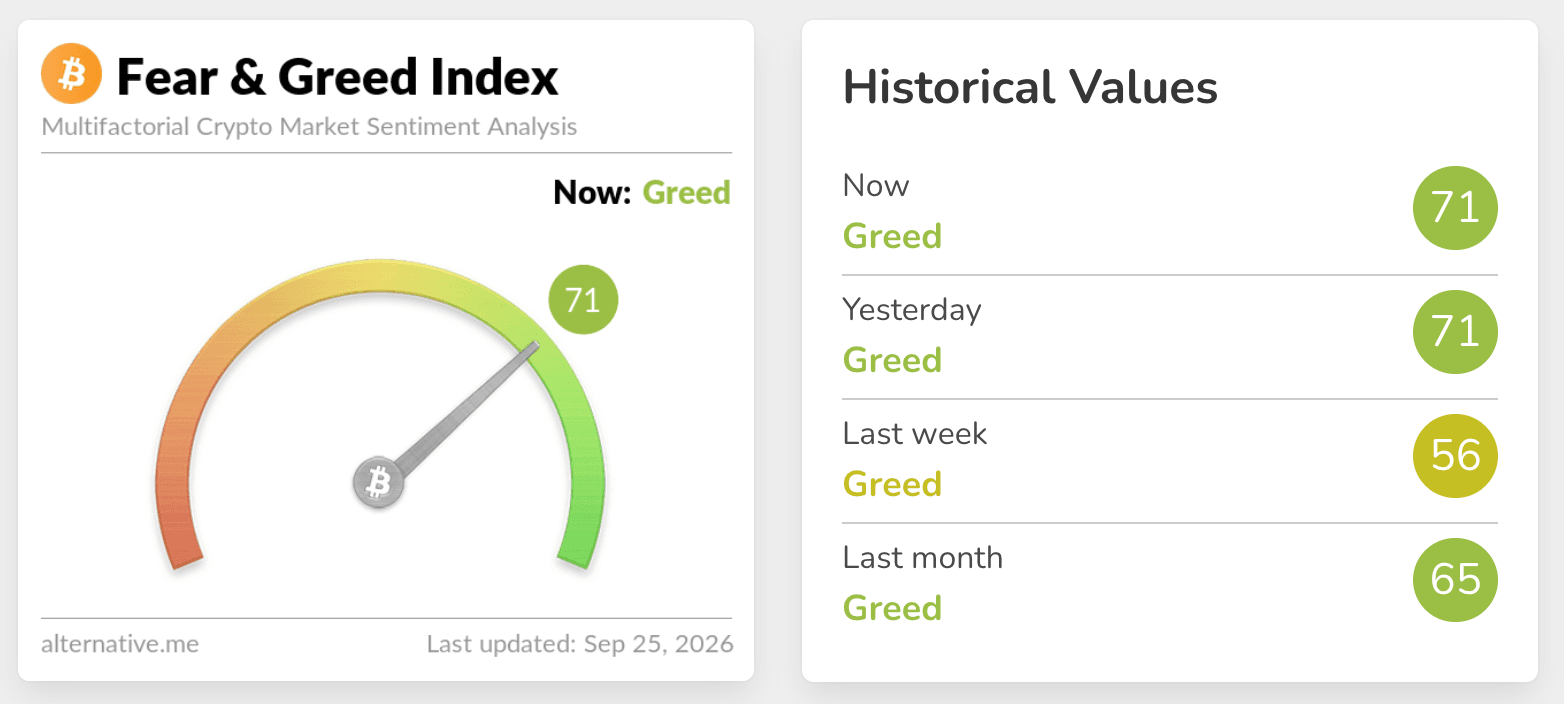
Source: Alternative
Key News Highlights:
2026 Global Crypto Adoption Index Places Nine APAC Countries in Top 20
The latest 2026 Global Crypto Adoption Index shows that the Asia-Pacific region continues to play a major role in grassroots cryptocurrency adoption and real-world digital asset use. Nine APAC countries rank among the global top 20. Japan ranks fourth, South Korea fifth and India sixth, placing three major Asian markets inside the top 10. Thailand ranks eighth, while China and Indonesia take the 12th and 14th positions respectively. Australia ranks 15th, followed by Vietnam at 18th and the Philippines at 19th. The results show that crypto activity across APAC is not concentrated in a single economy. Adoption spans developed financial markets, emerging economies and some of the region's most populous countries. Cross-border stablecoin transfers have also become an important part of crypto use across the region. This is particularly relevant in markets where multiple currencies and fragmented payment systems operate side by side. Industry participants have noted that some businesses and individuals are increasingly using stablecoins for cross-border payments and settlement. These systems can also be integrated into existing payment services, which reduces the need for end users to interact directly with complex blockchain infrastructure. The latest index therefore highlights a broader range of crypto use cases across APAC, including asset trading, cross-border transfers, stablecoin settlement and selected everyday payment applications.
Fed Proposes New Capital, Redemption and Reserve Disclosure Rules for Stablecoin Issuers
The U.S. Federal Reserve has proposed two regulatory frameworks for payment stablecoins. The proposals cover issuer capital requirements, reserve management, redemption procedures and the approval process for banks seeking to issue stablecoins. They form part of the implementation framework for the GENIUS Act. Fed-supervised issuers would be required to fully back outstanding payment stablecoins with eligible high-quality liquid assets. Permitted reserves would include short-term U.S. Treasury and other assets that meet regulatory standards. Issuers would also face more specific risk-management and capital requirements. Under the current proposal, the operational-risk capital charge would be 2% on the first USD 20 billion of stablecoins outstanding. The rate would fall to 1.5% on the next USD 30 billion and to 1% on amounts above USD 50 billion. Issuers would generally be required to process stablecoin redemptions within two business days. The measure would establish a more consistent timeline for holders seeking to redeem tokens at par. If reserves fall below the required one-to-one backing level, the issuer would need to notify the Federal Reserve. It would then have to restore the shortfall under a remediation plan or liquidate reserve assets to redeem outstanding stablecoins. Issuers would also need to publish monthly reports covering the amount of stablecoins outstanding as well as the value and composition of their reserves. These disclosures would be examined by a registered public accounting firm and certified by company management. A separate Federal Reserve proposal would establish an application process for supervised banks seeking to issue payment stablecoins through subsidiaries. Applicants would need to provide business plans and financial information. Both proposals are currently open for public comment.
New York Sues Polymarket Over Alleged Unlicensed Gambling Operations
New York Attorney General Letitia James and Governor Kathy Hochul have announced a lawsuit against QCX LLC, the U.S. business operating as Polymarket. The lawsuit alleges that the prediction market platform offered services to users in New York without obtaining the gambling license required by the state. New York officials said their investigation found that some prediction markets allow users to put money on uncertain outcomes such as sporting events. The state argues that these products therefore fall within the definition of gambling under New York law. Polymarket launched its U.S. platform in December 2025. Its initial markets focused mainly on sporting event outcomes, with plans to expand into additional event categories. New York argues that platforms offering such products to residents must comply with the same state licensing requirements that apply to other regulated gambling operators. The state has also raised concerns about age restrictions. Polymarket allows users between the ages of 18 and 20 to use the platform, while New York requires participants in mobile sports betting to be at least 21 years old. The lawsuit asks the court to prevent Polymarket from continuing these operations in New York without the required license. It also seeks disgorgement of what the state describes as unlawfully obtained proceeds, restitution for affected customers and additional financial penalties. Prediction market operators and some industry participants have argued that event contracts are financial products regulated at the federal level by the U.S. Commodity Futures Trading Commission. Whether states have additional authority over these products has therefore become a central legal issue in several related cases. As litigation between prediction market platforms and state regulators continues to expand, the New York case will now proceed through the courts. The state's allegations and requested remedies remain subject to judicial review.
Disclaimer: The information provided in this section is for informational purposes only and doesn't represent any investment advice or FameEX's official view.