FameEX Today’s Crypto News Recap | October 2, 2026
2026-10-02 07:02:38

South Korea advances its RWA tokenized securities rules as Ethereum zkAPI goes live and the SEC proposes crypto custody rules; today’s BTC rises near $86.1K in Greed sentiment. Bitcoin has rebounded to around $86.1K and is extending its recent upward move. Ethereum remains above $2.7K, with both major crypto assets trading near recent highs at the start of the fourth quarter. Market sentiment remains in Greed. The latest Fear and Greed Index stands at 72, slightly below yesterday’s 74 but still above last month’s 63. As BTC moves higher, leverage activity in the derivatives market has also increased. Total BTC futures open interest rose 5.9% over the past 24 hours and currently stands at around USD 56.226 billion. Total crypto liquidations reached approximately USD 191 million over the same period. Long liquidations accounted for around USD 107 million, while short liquidations totaled about USD 83.3806 million. A total of 66,942 traders were liquidated. Short-term liquidation activity has shifted sharply. Over the past hour, total liquidations surged to around USD 122 million, with roughly USD 119 million coming from short positions. This indicates that a large number of leveraged short positions were forced out as BTC accelerated higher. BTC liquidations during the period reached around USD 88.327 million. ETH liquidations totaled about USD 18.2665 million, while SOL liquidations reached approximately USD 5.1455 million. On the macro side, U.S. Treasury yields retreated from their intraday highs. Markets also reduced expectations for another near-term Federal Reserve rate hike. However, the latest manufacturing data still showed that the U.S. economy remains in expansion, while price pressures at the corporate level increased. Overall, the market is currently showing a combination of rapidly rising BTC prices, higher futures open interest, and concentrated short liquidations. Changes in derivatives leverage therefore remain an important indicator of the current market structure.
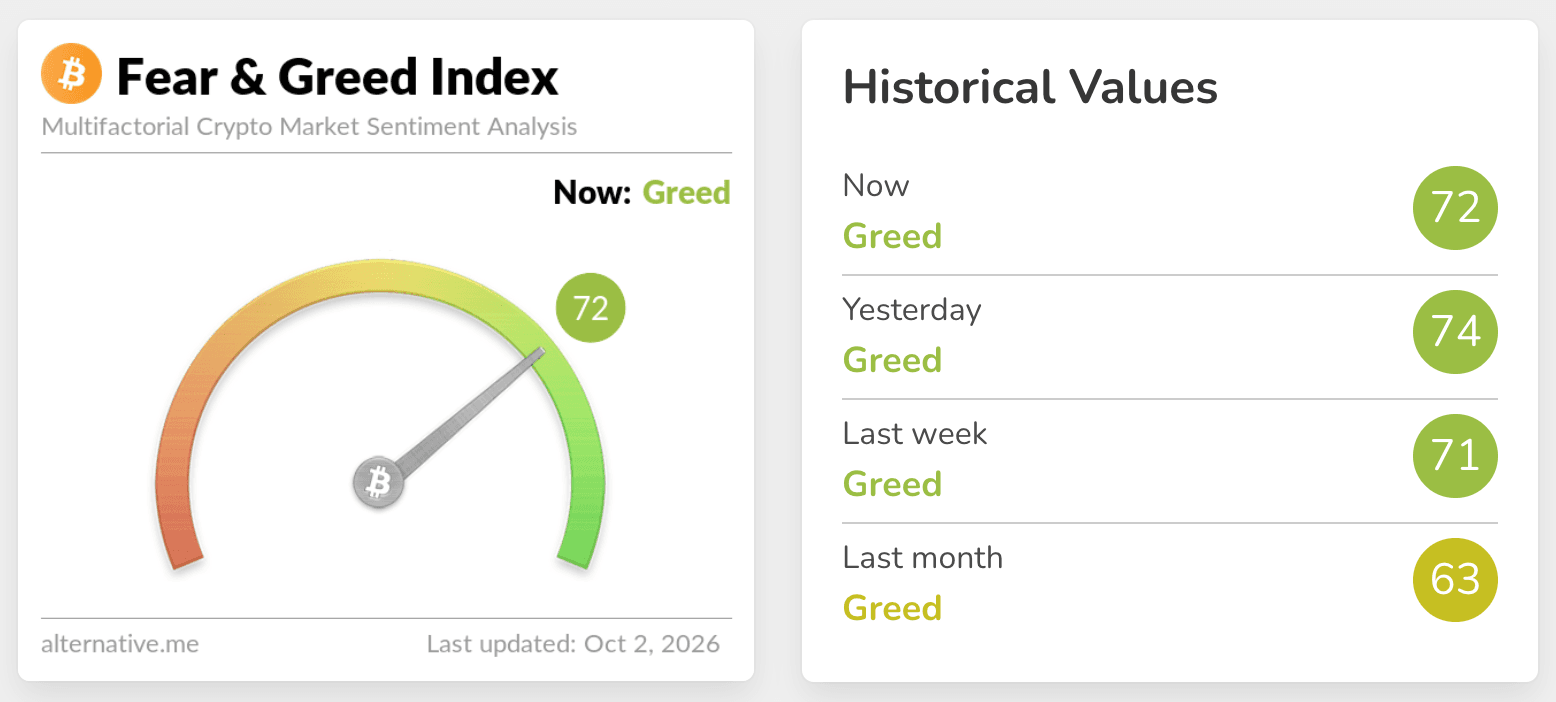
Source: Alternative
Key News Highlights:
South Korea Advances Tokenized Securities Framework to Cover Stocks and Bonds
South Korea’s Financial Services Commission has released further regulations for tokenized securities as the country prepares to introduce a more comprehensive issuance and trading framework in 2027. Under the current proposal, stocks, bonds, funds, and certain fractional investment securities could all be issued and circulated in tokenized form. The plan would bring a wider range of traditional securities onto distributed ledger infrastructure instead of limiting the framework to a small number of specialized investment products. The new rules also introduce capital, compliance, and technology requirements for companies providing tokenized securities services. An issuer that directly manages customer accounts would need to maintain at least 4 billion Korean won in equity capital. It would also be required to establish dedicated compliance and technology teams. Regulators are also preparing to introduce a new over-the-counter trading license so eligible tokenized securities can be traded on regulated platforms. Retail investors would face an annual net purchase limit of 100 million won on each relevant OTC platform. The proposal builds on the three-phase roadmap South Korea announced in September. Its goal is to gradually establish a complete framework covering securities issuance and secondary-market trading. The draft will remain open for public consultation until November 11. If the approval process proceeds as planned, the rules are expected to take effect on February 4, 2027.
Ethereum zkAPI Goes Live on Mainnet With Zero-Knowledge API Payments
zkAPI, developed by the Ethereum Foundation and the Open Anonymity Project, is now live on Ethereum mainnet. The system brings zero-knowledge technology into API credit and payment flows. It is designed mainly for AI services and other usage-based APIs. Users can deposit funds in advance and pay according to actual usage. After depositing funds into an Ethereum-based vault, users can use zero-knowledge proofs to show that they have enough credit without revealing which specific deposit belongs to them. The system generates short-lived API keys with predefined spending limits. Services can then process requests within those limits. AI prompts are still sent directly to the AI service provider. Payment and usage settlement are handled separately through the payment layer. The development team has also released a local client, a software development kit, and a browser-based AI chat interface. These tools allow developers to test and integrate the system more easily. zkAPI is based on an earlier proposal for zero-knowledge API usage credits. The concept was designed to reduce the need to directly link a user’s payment identity with every API request. The mainnet launch turns that earlier design into a working implementation. However, zkAPI protects payment identity and credit information rather than prompt content or network metadata. Service providers may still be able to link activity across sessions through IP addresses, timing, or information contained in requests.
U.S. SEC Advances Crypto Custody Rules With Limited Adviser Self-Custody
The U.S. Securities and Exchange Commission has proposed new crypto asset custody rules for investment advisers and regulated funds. The proposal is intended to provide a clearer legal framework for how firms hold digital assets on behalf of clients. It would clarify which types of companies can qualify as custodians. It would also define the recordkeeping and federal disclosure requirements that investment firms must follow when holding crypto assets. The regulator also plans to address auditing standards and operating practices for digital asset custody. These provisions are intended to supplement existing rules that were largely designed around traditional financial assets. Under certain circumstances, the proposal would allow investment advisers to hold client crypto assets directly. This form of self-custody refers to an asset management firm acting as the custodian of client assets. It is different from the common crypto definition of individuals directly controlling their own private keys. An adviser would first need to determine that no suitable qualified custodian is available and willing to hold the asset. The firm would also need the expertise, technology, and internal controls required to manage crypto assets. It would then need to reassess every quarter whether a suitable external custodian has become available. The proposal would also allow eligible state-chartered trust companies to act as crypto asset custodians. This would expand the range of institutions that could provide regulated custody services. The proposal remains under review. The SEC has opened a 60-day public comment period, and the final rules may change before adoption.
Fed Officials Seek More Time on Rate Hikes as Treasury Yields Retreat
The U.S. Treasury market saw significant volatility during the latest trading session. Yields across major maturities pulled back from intraday highs, while traders reduced bets on another near-term Federal Reserve rate hike. Federal Reserve Vice Chair Philip Jefferson said Treasury yields across different maturities have risen further since the September policy meeting. He said the move suggests investors are reassessing the current macroeconomic environment. Jefferson also said policymakers need more time to form their views on the next policy decision. As a result, there is still no clear conclusion on whether rates will be raised again. Market pricing for a move at the October 28 meeting has fallen from around 70% earlier this week to roughly 30%. Expectations for at least one more rate hike before year-end have also declined from about 95% a week ago to around 80%. The U.S. 10-year Treasury yield rose to around 5.36% during the session before falling about 9.4 basis points to 5.217%. The 2-year Treasury yield declined about 12.3 basis points to 4.764%. Shorter-term yields are more sensitive to changes in Federal Reserve policy, so the move also reflects reduced positioning for additional rate hikes. Meanwhile, the U.S. ISM Manufacturing PMI came in at 54.5 for September. The reading remained above the 50 level that indicates expansion. The Prices Paid Index rose from 71.1 to 77.9. The next major macroeconomic release will be the September U.S. nonfarm payrolls report. Current market expectations point to around 90,000 new jobs, while the unemployment rate is expected to remain at 4.1%.
Disclaimer: The information provided in this section is for informational purposes only and doesn't represent any investment advice or FameEX's official view.