FameEX Today’s Crypto News Recap | October 5, 2026
2026-10-05 07:05:47

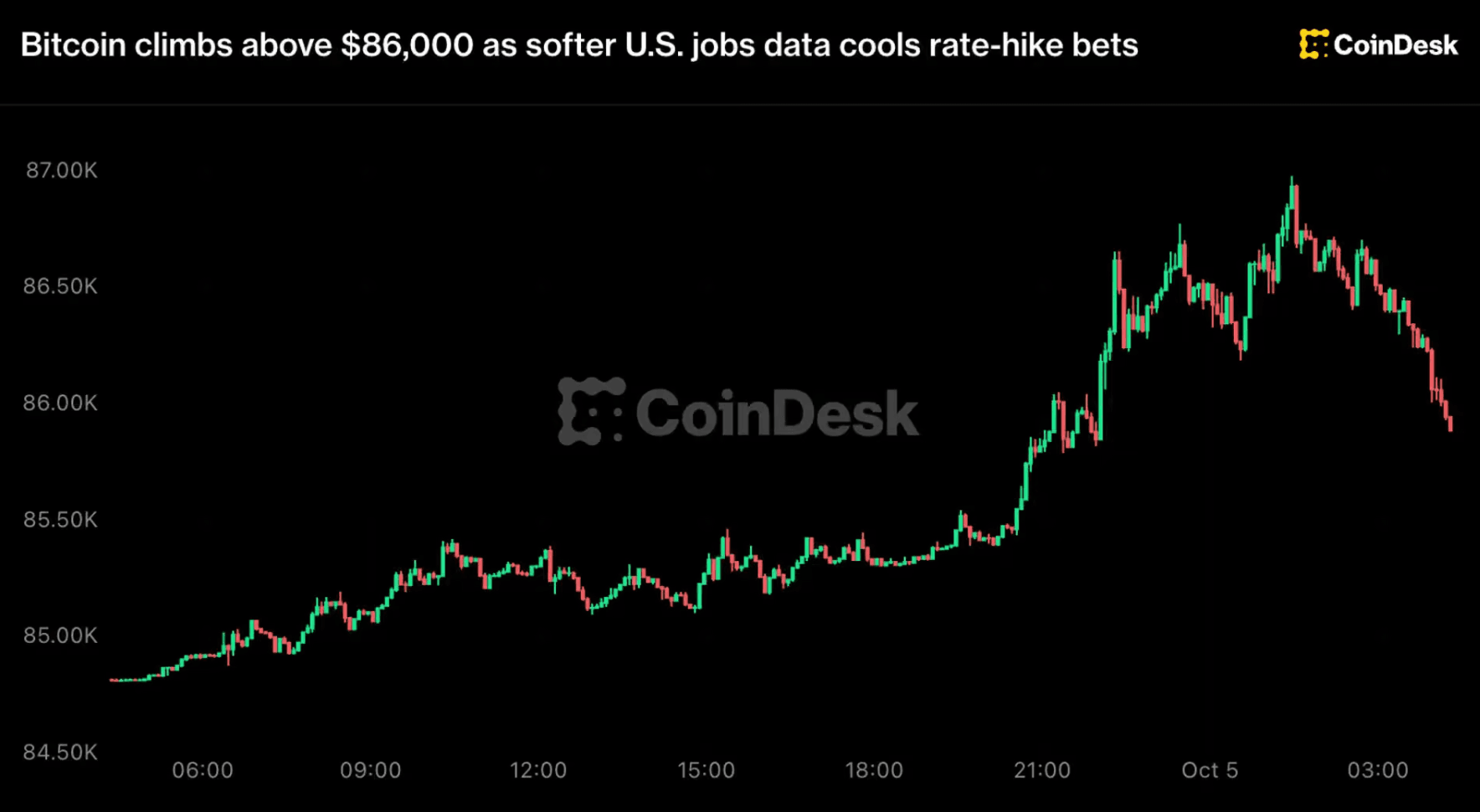
El Salvador receives $138M from IMF as Zcash launches NU7 testnet and Ether market depth falls compared to Bitcoin; BTC price is near $85.5K in Greed sentiment today. Bitcoin remained volatile at elevated levels today. The price briefly climbed to around $86,949 before pulling back and is now near $85,479.8. Ether is trading around $2,700 with relatively limited intraday volatility. Recent softness in U.S. labor data pushed Treasury yields lower. Expectations for further Federal Reserve rate hikes also eased, providing some support for Bitcoin and other risk assets. Looking at leverage, total crypto liquidations reached about USD 138 million over the past 24 hours. Short liquidations accounted for roughly USD 113 million, far above USD 25.1648 million in long liquidations. The imbalance shows that many short positions were forced to close during the rapid price increase. BTC recorded about USD 57.0736 million in short liquidations and USD 3.2453 million in long liquidations. ETH saw approximately USD 24.0363 million in short liquidations and USD 2.5137 million in long liquidations. This gives the recent move a clear element of short-side deleveraging. Meanwhile, total BTC futures open interest increased by about 5% over the past 24 hours to around USD 55.947 billion. The increase suggests that new leveraged positions continued to enter the market as prices moved higher. For general users, the concentration of short liquidations means the rally was not driven entirely by new spot buying. Part of the momentum came from forced short covering. A rapid price increase therefore does not necessarily mean that spot demand strengthened at the same pace. Market sentiment also improved, with the Fear and Greed Index rising from 65 yesterday to 70 today. The index remains in the Greed range and points to stronger risk appetite across the market.
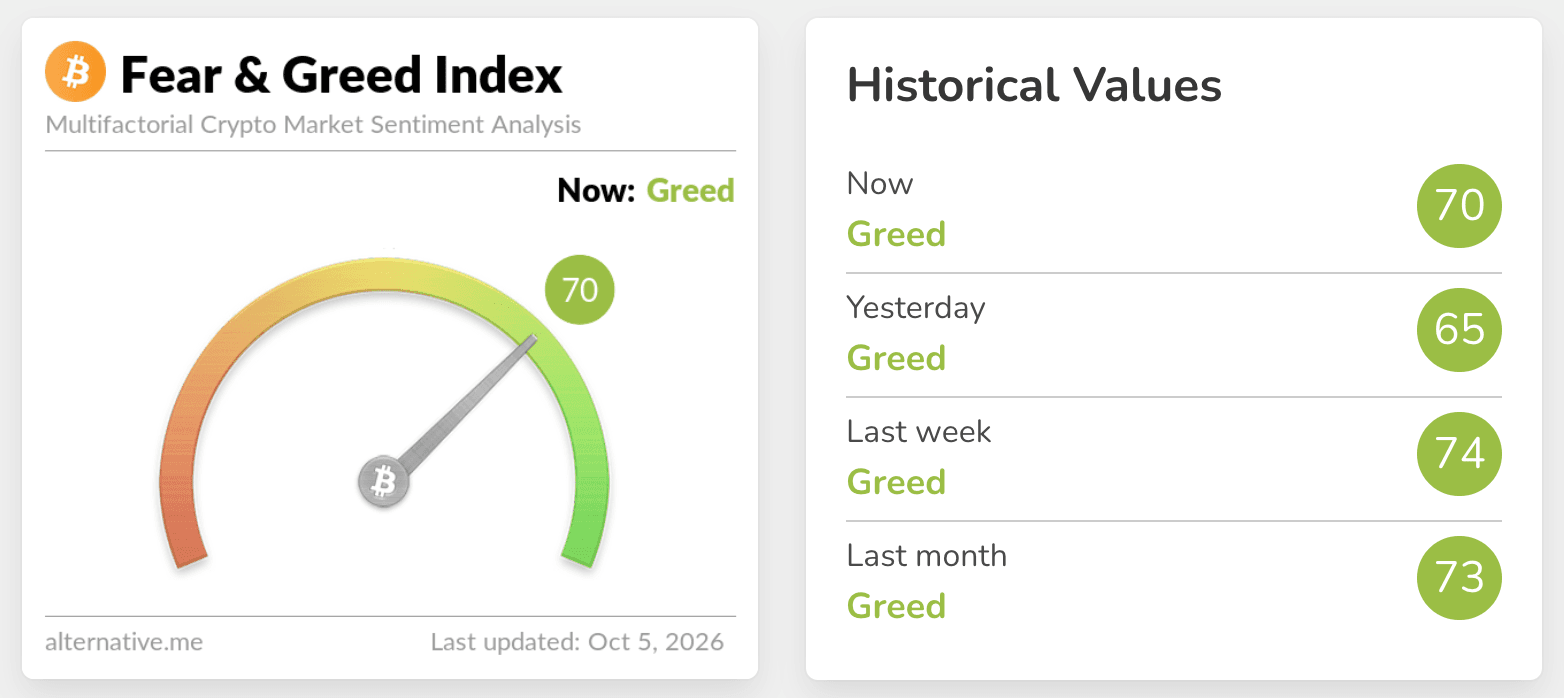
Source: Alternative
Key News Highlights:
El Salvador Receives USD 138 Million From IMF As Bitcoin Policy Continues To Shift
The International Monetary Fund has completed the second and third reviews of El Salvador’s Extended Fund Facility arrangement. The decision allows an immediate disbursement of about USD 138 million. The funding forms part of a 40-month program worth approximately USD 1.4 billion that was originally approved in 2025. El Salvador did not meet all of the program’s performance criteria, including requirements related to Bitcoin accumulation. However, the IMF granted waivers based on corrective measures and renewed commitments from the government. The IMF said El Salvador has made progress in financial sector reforms, fiscal transparency and anti-money laundering and counter-terrorist financing measures. Majority ownership and control of the government-backed Chivo Bitcoin wallet have also been transferred to a private operator. This reduces the public sector’s direct involvement in Bitcoin-related activities. Documents provided by El Salvador showed that previous increases in public-sector Bitcoin holdings came from private donations and did not involve additional purchases using public funds. According to the IMF, no further Bitcoin accumulation is planned beyond the documented donations. Future reforms will focus on improving transparency around public-sector crypto holdings and strengthening regulation, governance and disclosure requirements for crypto-asset service providers. The latest review reflects a broader shift in El Salvador’s Bitcoin policy toward greater transparency, stronger risk controls and a more developed regulatory framework.
Zcash NU7 Goes Live On Public Testnet Ahead Of Schedule With 25-Second Block Target
Zcash has activated its NU7 network upgrade on a public testnet. The upgrade reduces the target block time from 75 seconds to 25 seconds and allows developers, wallets and infrastructure operators to test the new rules before mainnet activation. NU7 is now active from its designated testnet block height, and compatible node software can participate in the upgraded network. Shorter block times allow new transactions to be recorded more frequently. A service that continues to require three confirmations could see its targeted wait fall from around 225 seconds to about 75 seconds. Actual confirmation times may still vary with network conditions. The testnet uses coins with no monetary value, giving developers a controlled environment to check compatibility without affecting real ZEC. NU7 also changes how transaction fees are distributed. Miners receive 40% of transaction fees, while the remaining 60% is removed from circulation and recorded in a reserve intended to support future mining rewards. The scheduled reward per block will fall to one-third of its previous level so that faster block production does not accelerate the existing ZEC issuance schedule. NU7 also plans to disable older transactions used by Sprout, Zcash’s earliest private-payment system. Users with funds in the legacy system will need to complete the necessary migration before mainnet activation. Zcash’s published upgrade specifications list the 25-second block target, revised transaction fee structure and halving-preserving issuance mechanism among the core NU7 changes. Developers will review the test results before finalizing mainnet activation, which remains targeted for early November.
Softer U.S. Jobs Data Push Treasury Yields Lower As Global Risk Assets Rise
The latest U.S. employment data came in below market expectations and prompted financial markets to reassess the Federal Reserve’s interest rate path. September nonfarm payrolls increased by only 29,000 versus market expectations of 84,000. Employment figures from previous months were also revised lower. The softer labor market reduced expectations for another Federal Reserve rate hike in the near term. The U.S. 10-year Treasury yield subsequently fell to around 5.2%. U.S. equities moved higher after the employment data, while several major Asian stock markets also extended their gains. Crypto markets rose alongside the broader move in risk assets. Bitcoin briefly approached $87K and came close to its recent eight-month high. The price later fell back below $86K as the market moved into a narrower range following the sharp advance. Other major crypto assets remained relatively stable, although performance varied across individual assets. The U.S. dollar stayed firm while crude oil prices declined. This showed that different asset classes did not respond to the latest macroeconomic data in the same way. Overall, developments in U.S. employment, Treasury yields and interest rate expectations have once again become an important backdrop for the pricing of global risk assets.
Ether Outperforms Bitcoin In Q3 While Relative Market Liquidity Narrows
A new CoinGecko report shows that Ether gained 70% in the third quarter and outperformed Bitcoin’s roughly 42% increase over the same period. However, ETH market liquidity did not strengthen alongside its price performance. From July 6 through September 30, ETH median daily market depth stood at only 35% to 45% of Bitcoin’s level. The figure was at least 60% during the same period last year. Market depth measures the total value of buy and sell orders available within a defined range of the current market price. Lower depth means that large orders can consume available liquidity more quickly and have a greater impact on execution prices. ETH had approximately USD 13 million to USD 14 million in market depth within 0.15% of its market price. This shows that liquidity close to the current price remains substantial. CoinGecko also reported that most major trading platforms maintained more than USD 1 million in depth on each side of the ETH order book within this range. Liquidity has also narrowed across other large crypto assets. SOL market depth within 2% of its price fell from about USD 28 million on each side last year to around USD 20 million this year. XRP maintained roughly USD 30 million in total depth within the same range, with around USD 18 million in bids and USD 14 million in asks. The data shows that price performance and market depth did not move in lockstep across major crypto assets during the third quarter. Rising prices therefore did not necessarily translate into deeper order books.
Disclaimer: The information provided in this section is for informational purposes only and doesn't represent any investment advice or FameEX's official view.