FameEX Today’s Crypto News Recap | November 6, 2026
2026-11-06 07:04:02

Bitcoin developer pitches quantum landmines as AI spending fears drive $1B liquidations; Zcash activates NU7, Democrats eye rules; today's BTC price is around $76K in fear sentiment. The cryptocurrency market remained under pressure following a sharp selloff in US technology stocks and widespread liquidations of leveraged derivatives positions. Bitcoin (BTC) fell to around $76K, while Ether (ETH) declined to approximately $2,230. Both assets gave back part of their gains from the previous trading session. Following the US midterm elections, investors reassessed the capital spending outlook for the AI industry and potential changes to technology and cryptocurrency regulations under the new Congress. This prompted a broader pullback across global risk assets. During the US trading session, the Nasdaq Composite fell approximately 5.5%, the S&P 500 dropped 4.3%, and the Philadelphia Semiconductor Index plunged nearly 12%. AI chipmakers and data center-related stocks were among the hardest hit. The crypto derivatives market also experienced widespread forced liquidations. According to CoinGlass, more than USD 1 billion in leveraged positions were liquidated within 24 hours. Long positions accounted for most of the losses as the market underwent a rapid deleveraging process. Meanwhile, US spot Bitcoin ETFs recorded approximately USD 430 million in net outflows on November 5, while spot Ethereum ETFs saw net outflows of around USD 99.9677 million. These figures reflected continued adjustments in institutional fund allocations. The Crypto Fear and Greed Index stood at 28, indicating Fear sentiment and marking a sharp decline from the previous day's Neutral data. Moreover, a Bitcoin Core developer proposed a "quantum landmines" mechanism designed to raise the financial cost of potential quantum computing attacks. The proposal introduced a new approach to addressing future private key security risks. Privacy-focused cryptocurrency Zcash also completed its NU7 network upgrade. The upgrade reduced the target block time from 75 seconds to 25 seconds and introduced changes to transaction fee distribution. Overall, today's crypto market was shaped by volatility in US technology stocks, leveraged position liquidations, ETF fund flows, and ongoing regulatory discussions. Trading activity reflected a broader reduction in risk exposure and a reallocation of market liquidity.
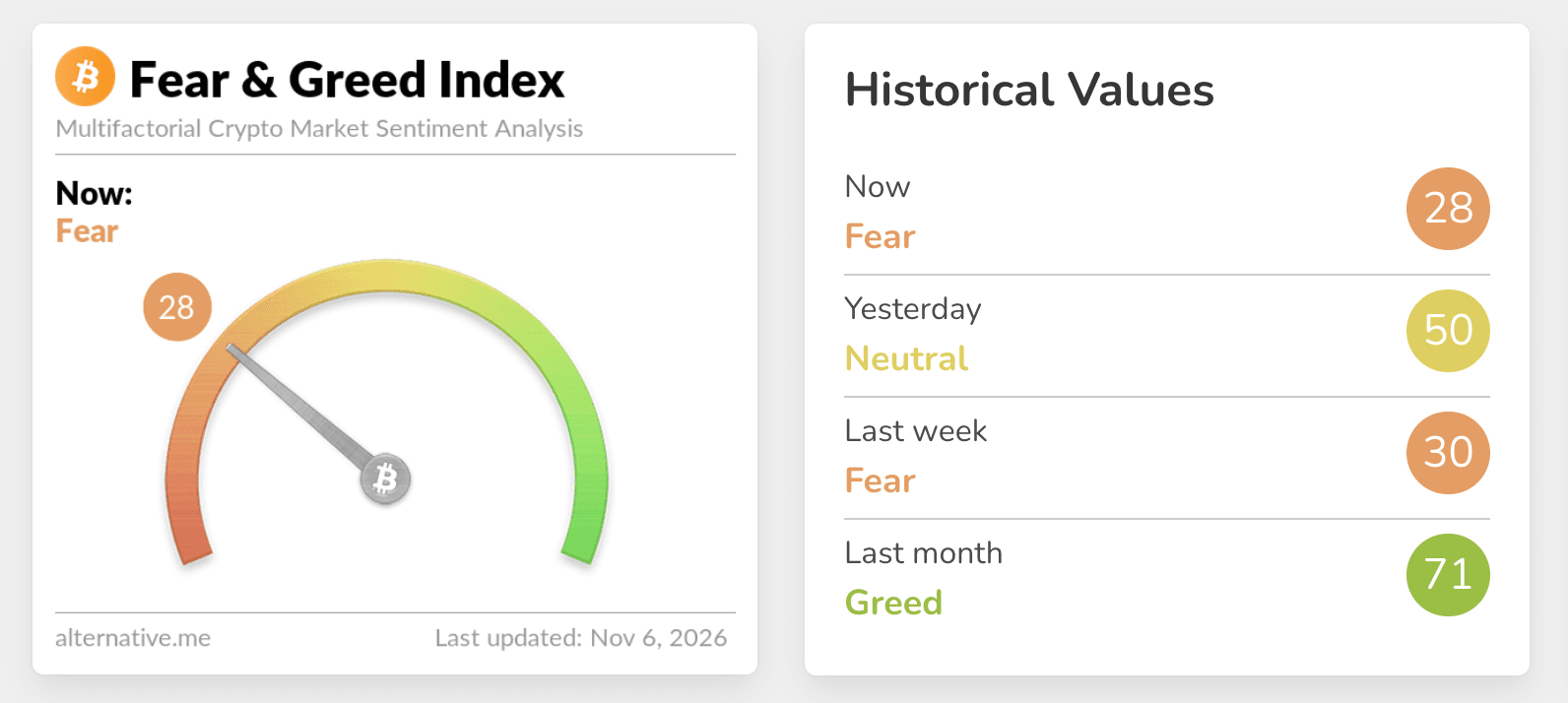
Source: Alternative
Key News Highlights:
Bitcoin Developer Proposes Quantum Landmines to Raise the Cost of Quantum BTC Theft
Bitcoin Core developer Cory Fields has proposed a conceptual security mechanism known as "Quantum Landmines" to increase the financial cost of stealing Bitcoin if future advances in quantum computing threaten private key security. Fields is involved in Bitcoin development at MIT's Digital Currency Initiative and outlined the proposal on the bitcoin-dev mailing list. The central concern is that sufficiently powerful quantum computers could potentially derive private keys from exposed public keys. This could put certain early Bitcoin holdings and addresses with previously exposed public keys at risk. Under the proposed mechanism, an attacker attempting to transfer 1 BTC from a vulnerable address would need to provide an additional 1 BTC as collateral. Both the targeted funds and the collateral would then be locked for a specified period, such as 30 days. Before quantum attacks become feasible, legitimate holders could establish a quantum-safe mechanism containing hidden proof of ownership. This would allow them to demonstrate their ownership if an unauthorized transfer were attempted. If an attacker tried to move the funds, the original holder could reveal the previously established proof during the waiting period. The holder would then be able to reclaim the original BTC and seize the attacker's collateral as a penalty. Because attackers would have no way of knowing which addresses were protected in advance, any theft attempt could put their own BTC at risk. However, the mechanism has several practical limitations. Legitimate holders might also be required to provide matching collateral when transferring their own assets. Addresses with permanently lost private keys would be unable to complete the ownership verification process. Fields also discussed the possibility of using auctions and cryptographic commitments to protect long-dormant Bitcoin holdings whose owners cannot establish such safeguards. The proposal remains a technical thought experiment rather than a formal Bitcoin protocol upgrade. No implementation timeline has been established.
US AI Stock Selloff Sends BTC Below $76K and Triggers Over USD 1 Billion in Liquidations
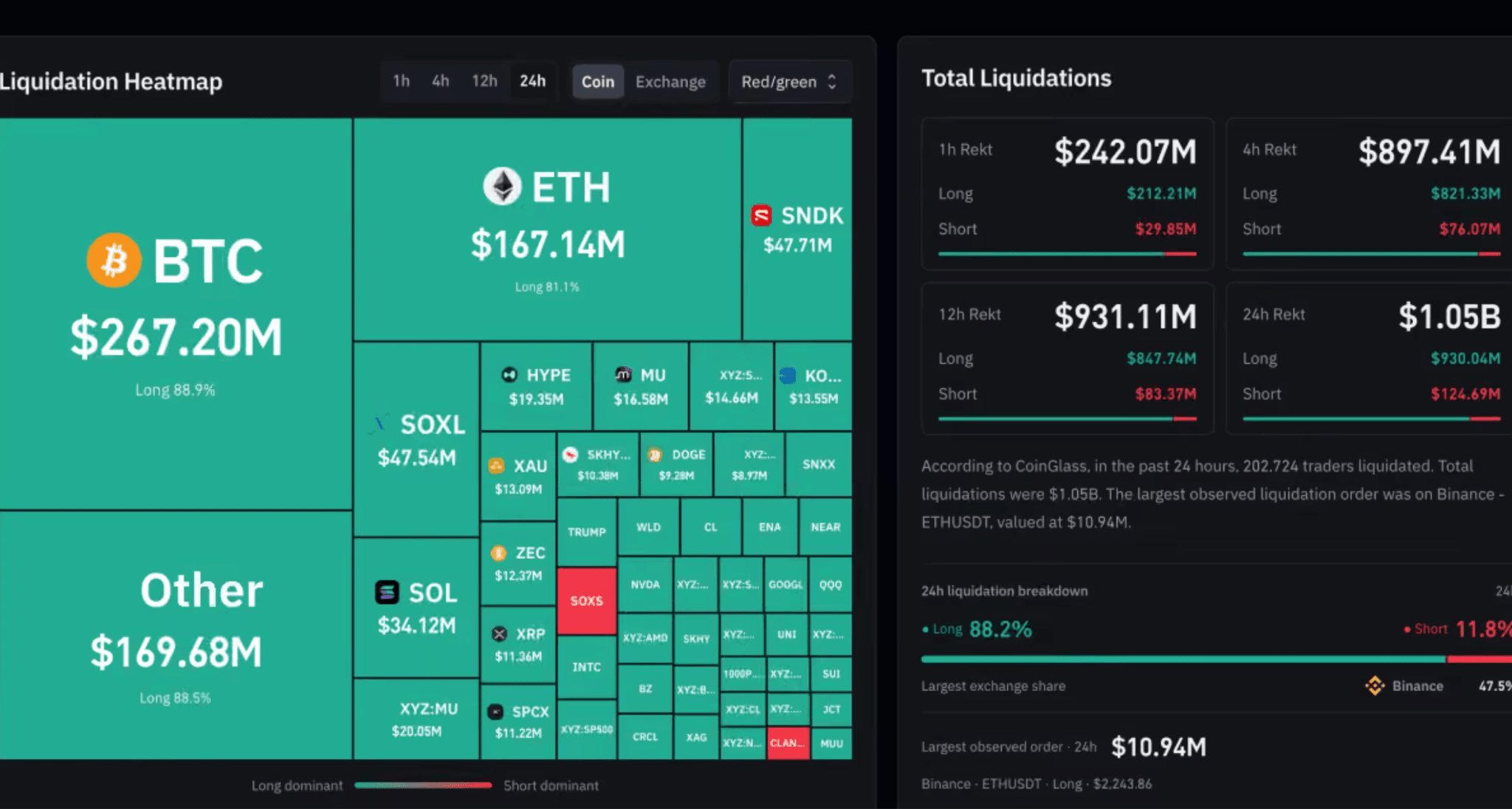
US stock markets experienced a sharp selloff in technology shares, with AI chipmakers, data center operators, and related infrastructure companies among the hardest hit. Bitcoin and other major cryptocurrencies declined alongside the broader market. According to Reuters, the Nasdaq Composite fell approximately 5.5%, the S&P 500 dropped 4.3%, and the Dow Jones Industrial Average lost 3.4%. The Philadelphia Semiconductor Index plunged nearly 12%, marking one of its worst single-day performances since March 2020. The selloff followed the US midterm elections, which saw Democrats gain control of both chambers of Congress. The election results brought renewed attention to data center development, energy consumption, and potential regulatory changes affecting the technology sector. Some market participants expressed concerns that the new Congress could increase scrutiny of large-scale AI infrastructure projects. Such measures could affect approval processes for data center expansion and future capital spending plans. Investors were also reassessing the returns on substantial AI investments made by major technology companies and whether demand for chips and computing infrastructure could justify existing valuations. As US equities declined, Bitcoin quickly retreated from above $80K in the previous session to below $76K. Ether also fell to around $2,230 as volatility across global risk assets spread into the cryptocurrency market. Market data showed that more than USD 1 billion in crypto derivatives positions were liquidated over the past 24 hours. Most liquidations involved long positions, indicating that many leveraged traders expecting further price gains were forced to close their positions after failing to meet margin requirements. Total open interest in Bitcoin futures and perpetual contracts also declined from approximately USD 28 billion earlier in the session to below USD 26 billion. This reflected the liquidation or voluntary closure of leveraged positions. Although BTC and ETH recorded smaller percentage declines than some AI-related stocks that suffered double-digit losses, the crypto derivatives market still underwent a substantial wave of deleveraging. The event renewed market attention on the relationship between technology sector capital spending, cross-market liquidity, and leveraged cryptocurrency trading.
Zcash Activates NU7 Upgrade With 25-Second Block Time and Revised Fee Distribution
Privacy-focused cryptocurrency Zcash has officially activated its seventh major network upgrade, NU7, at block height 3,543,405. The mainnet activation marks a significant technical update to the network's transaction processing efficiency and economic mechanisms. According to the Zcash Foundation and blockchain tracking data, one of the upgrade's primary changes is a reduction in the target block time from 75 seconds to 25 seconds. This cuts the average time between newly produced blocks by approximately two-thirds. As the network produces more blocks each day, Zcash has also adjusted the ZEC reward issued per block. The adjustment prevents faster block production from increasing daily token issuance and preserves the existing maximum supply of 21 million ZEC. The upgrade also introduces new limits on shielded transaction activity within individual blocks. These restrictions are designed to prevent excessive zero-knowledge proof processing from placing additional strain on network nodes and wallets. Another major change is the introduction of the Network Sustainability Mechanism (NSM). Under this mechanism, 60% of transaction fees are reserved within the network to supplement future mining rewards, while the remaining 40% goes to miners. The mechanism addresses the gradual reduction in block rewards caused by Zcash's halving schedule. By reserving a portion of current transaction fees, the network aims to support future security expenditures as newly issued mining rewards decline. NU7 also disables the legacy v4 transaction format, effectively retiring Zcash's original Sprout shielded pool. ZEC held in the legacy pool can no longer be transferred using the previous transaction format. On-chain data indicated that approximately 12,224 ZEC remained in the Sprout pool when the upgrade was activated. These assets have not been directly destroyed. However, they will remain unspendable unless a future protocol change provides a way to recover or transfer them. For regular users, the most immediate effects of NU7 involve transaction confirmation times and software compatibility for wallets and network nodes. Service providers must use software versions that support the updated consensus rules. The NU7 upgrade also establishes a technical foundation for Zcash's future development. Research into further network scaling and post-quantum privacy remains ongoing.
US Democrats Consider New Crypto Legislation After Midterms as CLARITY Act and Regulatory Oversight Return to Focus
Following the US midterm elections, Democrats secured control of both chambers of Congress. The results have brought cryptocurrency market regulation and congressional oversight of President Trump's crypto-related business activities back into focus in Washington. House Democrats are reportedly considering a new crypto market structure bill that could incorporate investor and consumer protection provisions previously proposed by Representative Maxine Waters. The discussions address which federal agencies should oversee different categories of digital assets and what investor protection requirements should apply to trading platforms, custodians, and other market participants. One proposal under consideration involves expanding the authority of the US Securities and Exchange Commission (SEC) over cryptocurrency markets. Lawmakers are also reviewing the division of regulatory responsibilities between the SEC and the Commodity Futures Trading Commission (CFTC) across different types of digital asset transactions. The Republican-backed CLARITY Act previously sought to establish a legal framework for digital asset market structure. However, the legislation failed to secure sufficient support during a procedural vote in the Senate in September 2026. With Democrats regaining control of Congress, some industry representatives and policy analysts believe the original legislation could face substantial revisions. Potential changes include stricter provisions on conflicts of interest, disclosure requirements, and consumer protection. Congressional Democrats have also indicated plans to intensify investigations into business activities involving Trump and his family. These efforts could include scrutiny of cryptocurrency ventures and potential conflicts of interest. The investigations and legislative discussions remain at the political planning stage. They do not mean that new legislation has been enacted or that any of the business activities under review have been found unlawful. Although the new Congress could alter the direction of crypto legislation, the existing regulatory responsibilities of the SEC and CFTC will not automatically change because of the election results. The composition of congressional committees, publication of formal bill texts, and progress in bipartisan negotiations will be important developments to monitor as the US cryptocurrency regulatory framework continues to evolve.
Disclaimer: The information provided in this section is for informational purposes only and doesn't represent any investment advice or FameEX's official view.