G (Gravity) Token Price & Latest Live Chart
2026-03-19 11:04:11
What is G (Gravity)?
Gravity is a high-performance Layer 1 smart contract platform built for omnichain abstraction and large-scale application usage. Its core purpose is to address one of the deepest structural problems in Web3, which is fragmentation. In a traditional multi-chain environment, users are often trapped by isolated liquidity pools, disconnected execution environments, and complicated bridge logic. Gravity approaches this problem by building a unified omnichain settlement layer that coordinates assets and user intents across multiple blockchains, then finalizes those outcomes onchain. This makes Gravity more than just another execution environment. It is designed as infrastructure for secure cross-chain coordination. By combining zero-knowledge proof systems with an advanced consensus architecture, Gravity provides a base layer that is optimized for both security and transaction efficiency. This also allows developers to move mission-critical business logic away from opaque private backends and into an open onchain environment where execution is transparent and code becomes the source of truth. As the technical foundation of the Galxe ecosystem, Gravity launched with immediate access to large-scale user activity, credential data, and onchain interaction demand. Its design target was shaped around processing more than 60 million transactions per month, a throughput profile that places it among the more application-oriented and practically deployed Layer 1 networks in the market.
From the perspective of blockchain architecture, Gravity reflects a broader shift away from monolithic chain design and toward modular systems that are built for cross-chain compatibility. Through full-chain abstraction, Gravity separates the technical complexity of the backend from the user experience at the frontend. Users do not need to think about which chain pays gas, how long a bridge takes to settle, or how account models differ across networks. That abstraction layer matters because it changes what blockchain infrastructure is trying to become. Instead of remaining a collection of experimental financial rails, Web3 infrastructure starts to function more like a high-performance general computing environment. Gravity’s integration of the Reth execution layer and its own parallel EVM design allows the network to maintain low latency and high reliability even under heavy data throughput and high-frequency application demand. This architecture is not only suitable for migrating existing use cases such as decentralized identity and loyalty systems. It also provides a standardized foundation for omnichain smart savings, automated yield aggregation, and cross-chain asset clearing. By early 2026, Gravity had already positioned itself as a meaningful economic bridge between Ethereum, Bitcoin, and other major ecosystems. Through its embedded cross-chain settlement protocol, it pushes Web3 closer to a model where chain boundaries become less visible and asset movement becomes more fluid.
How does G (Gravity) work?
Gravity operates through a combination of extreme parallelization and pipeline-based system design. At the center of this model is Grevm, Gravity’s parallel execution environment, which ranks among the strongest open-source EVM implementations in performance terms. Gravity is an EVM-compatible Proof-of-Stake Layer 1 blockchain built to support real-world scale and an interconnected omnichain future. By integrating Grevm, which is a parallel execution runtime developed on top of Revm, the network materially improves smart contract execution speed and processing efficiency. This gives Gravity a throughput target of 1 gigagas per second and sub-second finality, which is intended to support complex and resource-intensive applications without sacrificing execution speed. Since the launch of the Alpha Mainnet, the network has accumulated 25.2 million unique wallet addresses and recorded an average daily transaction volume of 799,000. It also processed 16.5 million transactions over an earlier operating period and at one stage ranked eighth among Validum and Optimium-class systems. These figures show that Gravity’s high-concurrency architecture was not designed only for theory or benchmarks. It was built to remain stable under real usage pressure. To support that speed, Gravity uses a five-stage pipeline that separates transaction dissemination, block metadata ordering, execution, state commitment, and persistent storage. While one block is being executed, the consensus layer is already moving forward with ordering and distributing the next one. That concurrency model sharply improves hardware utilization and helps the chain avoid the bottlenecks that slow down more sequential systems.
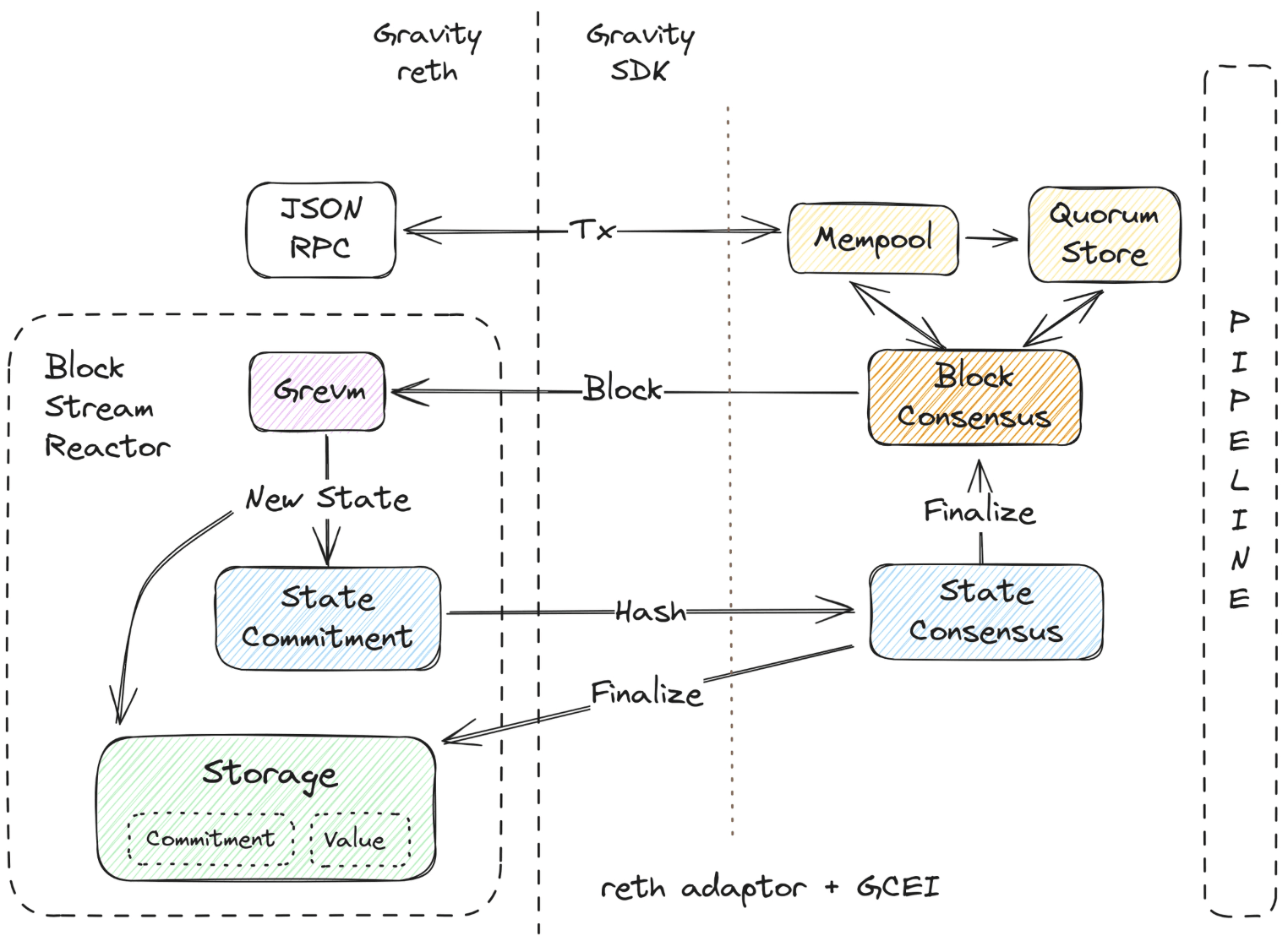
Gravity Chain Architecture, Source: https://docs.gravity.xyz/research/litepaper
On the security side, Gravity introduces a model described as restaking-powered Proof of Stake. This is designed to solve a common weakness of new public blockchains, which is limited economic security in their early stages. Under this model, validators do not rely only on staking the native G token. Gravity also integrates external security sources through protocols such as EigenLayer and Babylon, which extend economic trust from Ethereum and Bitcoin into Gravity’s validator design. This gives the network a broader security base than a newly launched chain could typically achieve on its own. Gravity also incorporates the Jolteon consensus algorithm, an advanced Byzantine Fault Tolerant design that reduces consensus latency by optimizing both block propagation and vote paths. The result is a dual-layer security structure that strengthens settlement integrity and data consistency, even during periods of high market stress or network volatility.
At the user interaction layer, Gravity is intentionally designed around an intent-centric model. Through account abstraction and chain abstraction, it reduces the operational burden that normally comes with multi-chain usage. The network supports secp256r1 through precompiled contracts, which allows users to authenticate with hardware-backed methods such as passkeys, Face ID, or fingerprint verification instead of relying only on fragile seed phrase management. When a user initiates a cross-chain action such as buying an asset on Ethereum, Gravity’s intent settlement system can determine the optimal routing path, coordinate liquidity, and handle gas conversion or sponsorship in the background. The user only needs to sign a single intent confirmation. This operating model hides much of the backend complexity that usually defines blockchain usage. It gives decentralized applications a much smoother interaction profile and brings them closer to the usability standards of centralized products. That is one of the most important technical paths behind Gravity’s omnichain vision.
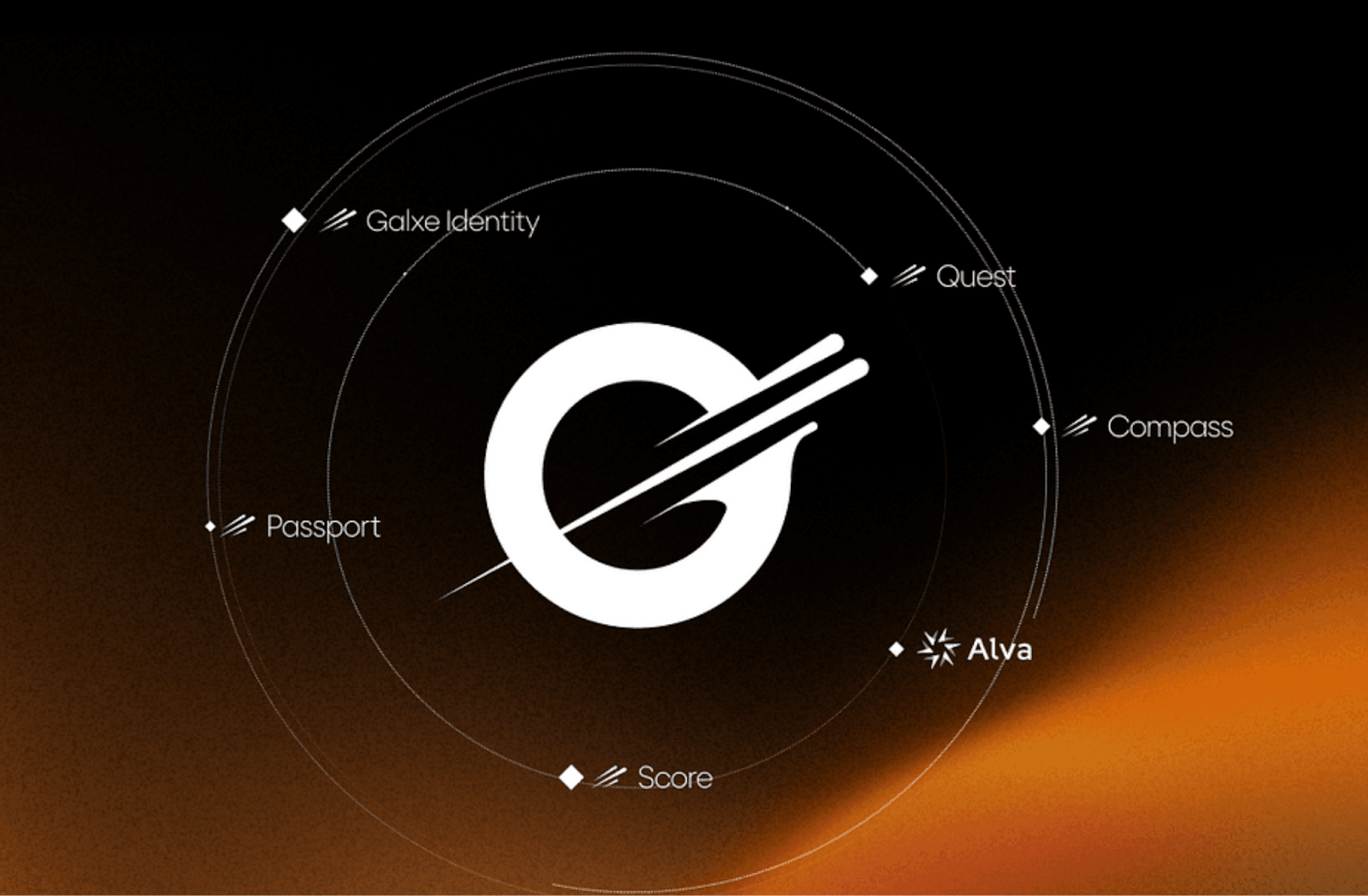
Through deep integration with existing Galxe products such as Quest, Compass, and Passport, Gravity turns massive volumes of onchain credentials into programmable assets. That creates a wider data base for decentralized social applications, onchain credit systems, and precision targeting in Web3 growth systems. Developers who build on Gravity are not simply using high-performance compute resources. They are entering an ecosystem with a sticky user base and an already developed framework for data ownership and identity-linked participation. This combination of infrastructure, data assets, and user flow gives Gravity a moat that is difficult to reproduce in the highly competitive Layer 1 market.
G (Gravity) market price & tokenomics
G is the native utility token of the Gravity network and the core economic asset of the broader ecosystem. Within the Gravity architecture, G is primarily used to pay network gas fees, which creates direct and recurring transactional demand. Because Gravity is positioned as a high-performance settlement layer, the token is tied to a wide range of onchain activity, including loyalty points, credential issuance, and cross-chain intent settlement across the Galxe ecosystem. That means G is not only exposed to generic speculative trading. It is also tied to the operational flow of applications that rely on Gravity as infrastructure. G also plays a central role in network security. Token holders can stake G to participate in the Proof-of-Stake system and receive network rewards as well as portions of protocol-level value flow. This aligns long-term token holding with network security and system stability, which is a more structural role than simple utility-only token models.
From a market positioning perspective, G goes beyond the scope of a standard Layer 1 token because its role extends into omnichain liquidity coordination. As a settlement-layer asset, its value support does not come only from speculative expectation. It also comes from its position inside the movement and execution of cross-chain value. Gravity’s 50 million dollar Ecosystem VC Alliance was created to attract developers building DeFi protocols, payment tools, and onchain games. If those applications use Gravity as their settlement or execution layer, every additional layer of value exchange strengthens the token’s functional relevance. Compared with Layer 1 projects that still depend heavily on narrative without comparable usage foundations, G has a stronger connection to an existing user base and a more concrete application environment within Web3.
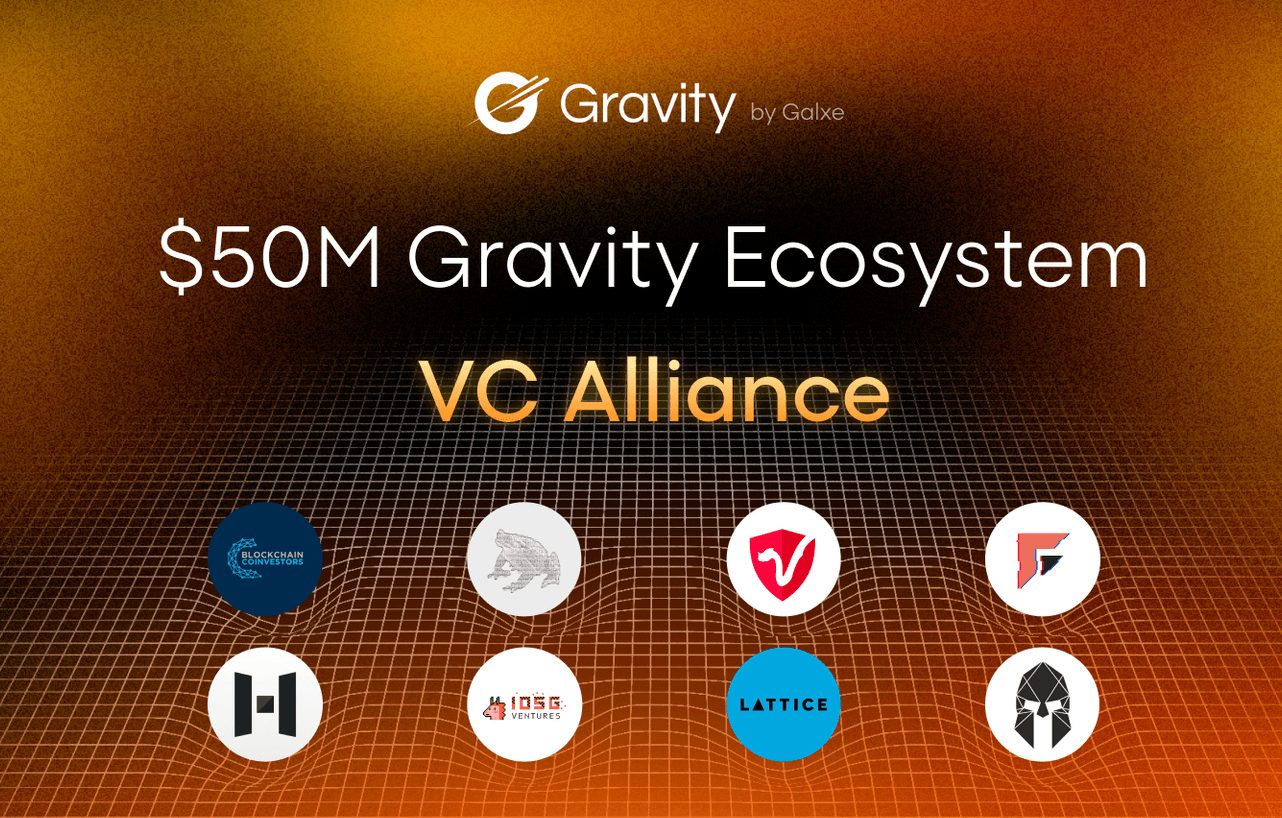
$50M Gravity Ecosystem VC Alliance, Source: https://docs.gravity.xyz/overview/ecosystem-vc-alliance
The issuance and distribution structure of G is designed to support long-term ecosystem growth and decentralized governance. Token holders do not only gain economic exposure. They also participate in governance over key protocol parameters, network upgrades, and ecosystem treasury allocation. This governance role becomes more significant in a cross-chain environment because Gravity’s rules can affect asset flow, application design, and settlement efficiency across multiple integrated systems. Through its coordination with Ethereum- and Bitcoin-linked restaking mechanisms, G is positioned not only as the native security asset of Gravity itself, but also as a central asset in a broader cross-chain security-sharing model.
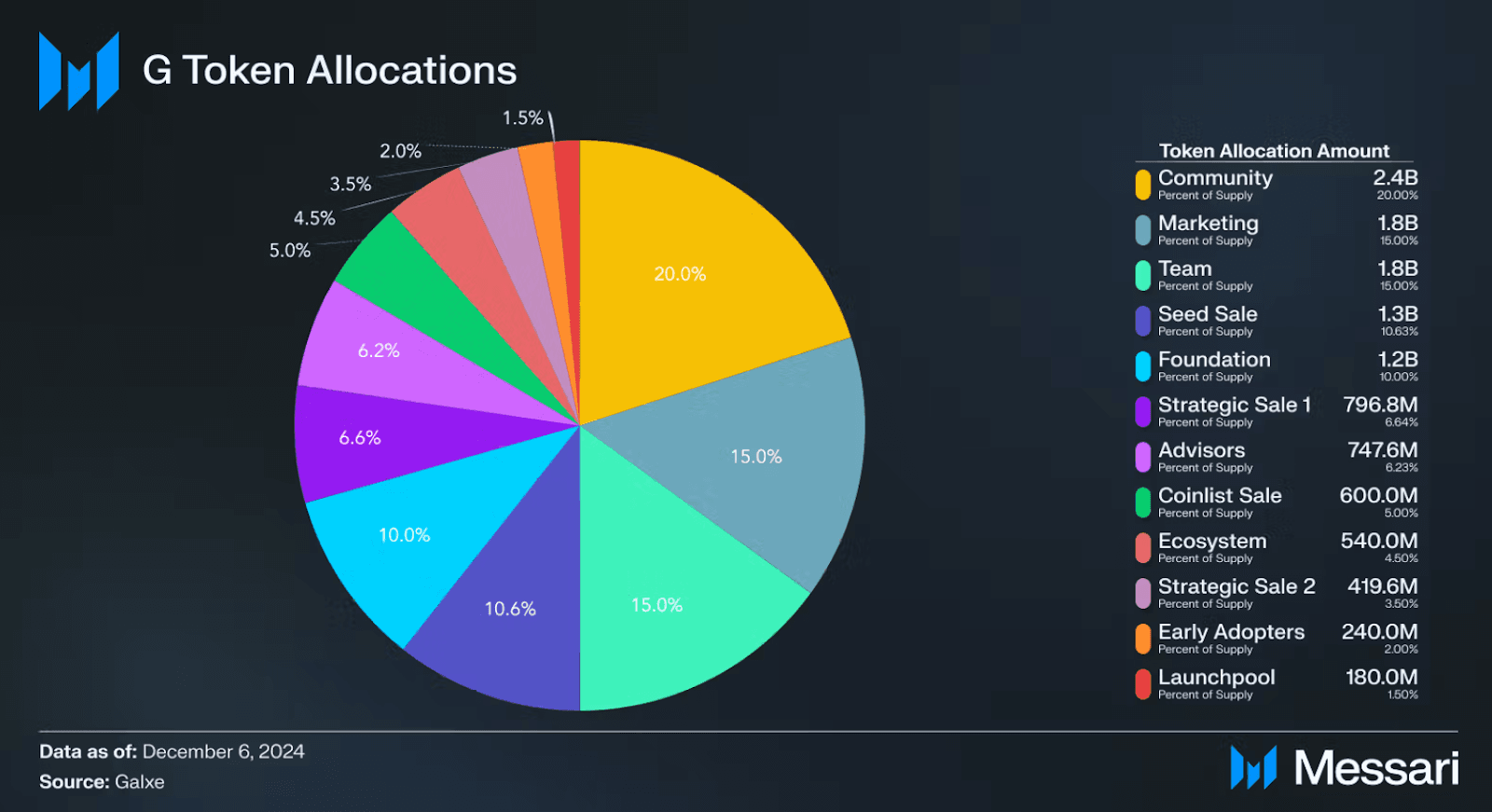
G Token Allocations, Source: https://messari.io/report/understanding-galxe-and-gravity-a-comprehensive-overview
Why do you invest in G (Gravity)?
Gravity’s long-term value comes from how directly it addresses blockchain usability. In earlier technology cycles, users had to manage private keys, understand gas differences across chains, and move assets through separate bridges and execution environments. Those frictions limited the emergence of truly large-scale applications. Gravity uses omnichain abstraction to push that complexity into the infrastructure layer so that Web3 products can offer a smoother experience that feels closer to Web2. Once users no longer need to think about which chain they are on, decentralized systems become much more capable of reaching broader markets. That shift from protocol-centered design to user experience-centered infrastructure gives Gravity a distinctive position in the next phase of blockchain competition.
Another factor behind its long-term value is the scale and authenticity of its data layer. The Galxe protocol has generated a very large body of loyalty points, onchain credentials, and identity-linked labels such as Passport. By moving these systems onto Gravity, the project is not simply migrating data. It is turning one of the largest onchain behavioral datasets in Web3 into programmable infrastructure. For developers and enterprises, Gravity offers an environment where identity, participation history, and user reputation can be used inside a system that preserves data ownership. That kind of network effect is hard to reproduce. It gives Gravity an advantage in the Layer 1 market because the project is not only offering technology. It is also offering a business-backed application layer with actual usage history and data depth.
Gravity’s modular and extensible design also strengthens its long-range strategic value. Through Gravity SDK, other projects can launch their own Layer 1 or Layer 2 systems while sharing Gravity’s performance-oriented consensus design and security model. This gives Gravity the potential to grow beyond a single chain and become the foundation for a wider family of networks, similar in ambition to blockchain framework ecosystems such as Cosmos or Polkadot. As Web3 continues to move toward a world that is both more fragmented and more interconnected, a protocol that can offer stable settlement, high-performance execution, and strong economic security becomes increasingly important. That is the deeper strategic reason Gravity exists.
Is G (Gravity) a good investment?
By early 2026, G no longer depended only on the visibility of Galxe’s task platform. It had become the asset that powers a broader system of decentralized applications and infrastructure operations. That changes the token’s value capture model in a fundamental way. Instead of being tied mainly to one application surface, G is connected to transaction fees, validator staking demand, governance rights, and cross-chain settlement utility across the wider Gravity and Galxe ecosystem. After the Gravity mainnet moved from staged rollout into live operation during 2025, actual gas consumption and validator lockup demand became more important than pure narrative. That gives G a more usage-based economic foundation than many speculative tokens that still rely mostly on market sentiment.
The long-term holding case is also reinforced by Gravity’s role in Web3 data ownership and identity-linked infrastructure. The Galxe ecosystem has accumulated more than 25 million real users with onchain behavioral histories, and the settlement demand generated by those users is increasingly concentrated on Gravity. This makes G the core access asset to a large digital trust and credential environment. In a market that is moving toward application expansion, high-performance chains with strong user stickiness and deep data layers remain rare. Through its restaking design, G also benefits from a multi-layer value model. It is exposed not only to the growth of Gravity itself, but also to the economics of shared security across multiple chain environments. That gives the token a more diversified value capture path than simpler gas-only or governance-only assets.
That said, blockchain infrastructure remains an intensely competitive sector, and any serious assessment has to account for both execution risk and ecosystem risk. Gravity showed strong throughput and user-scale indicators by early 2026, but the Layer 1 landscape changes quickly and technical leadership is never permanent. New execution designs or alternative scaling approaches could challenge Gravity’s performance edge over time. The token is also closely tied to the health of the Galxe ecosystem. If developer adoption slows or if the ecosystem fails to produce durable flagship applications, token demand may grow more slowly than expected. For that reason, the right way to assess G is not to treat it as a short-cycle narrative trade. The real question is whether Gravity can turn its omnichain abstraction thesis into a widely used settlement layer for Web3 as a whole, rather than remaining mostly an internal infrastructure layer for one ecosystem. That is the key issue that will determine whether its value can continue to compound over the next three to five years.
Explore the latest G (Gravity) price and live chart, trade G on FameEX, and access real-time market data! Get started now with a seamless trading experience!
Disclaimer: The information provided in this article is intended only for educational and reference purposes and should not be considered investment advice. Conduct your own research and seek advice from a professional financial advisor before making any investment decisions. FameEX is not liable for any direct or indirect losses incurred from the use of or reliance on the information in this article.