FameEX Today’s Crypto News Recap | August 27, 2026
2026-08-27 06:50:22
US July PCE topped forecasts, 77% view retirement crypto as risky, and SEC custody rules reached the White House. Today’s BTC price is around $78.8K in Greed sentiment. Following a rapid recent rebound, the cryptocurrency market has shifted into range consolidation. Bitcoin currently trades near $78.8K, retreating slightly from around $79K the previous day. Ether trades near $2,486, likewise experiencing short-term consolidation after yesterday's gains. BTC briefly broke above $80K earlier. It pulled back toward $78K following the release of the latest US inflation data. The market is still digesting position adjustment pressures from the recent surge. ETH fluctuates around $2,500. Price volatility and derivatives leverage distribution have risen concurrently. According to liquidation data, a breakout above $82,386 for BTC would trigger cumulative short liquidation intensity reaching USD 1,477 million on major CEXs. A drop below $74,916 would trigger cumulative long liquidation intensity reaching USD 1,412 million. This indicates that both long and short leverage are concentrated on either side of the current price range. For ETH, if prices fall below $2,370, cumulative long liquidation intensity on major CEXs will reach USD 1,092 million. If prices break above $2,615, cumulative short liquidation intensity will reach USD 613 million. Total network liquidations over the past 24 hours reached approximately USD 260 million. Long liquidations accounted for about USD 124 million, and short liquidations accounted for about USD 135 million. The scale of long and short liquidations remains relatively close, reflecting how recent market volatility has impacted leveraged positions on both sides.
Regarding market sentiment, the Crypto Fear and Greed Index has risen to 71, placing it in the "Greed" zone. This is higher than yesterday's 65, last week's 62, and the reading of 29 in the "Fear" zone a month ago. It shows that the recent price rebound has noticeably improved market risk appetite. On the other hand, gold and Bitcoin ETFs recorded a combined inflow of approximately USD 7 billion over the past five trading days. This indicates a concurrent rise in market focus on scarce assets and macro hedging narratives. Overall, both BTC and ETH entered a high-level consolidation phase following their earlier rapid rebounds. Macro inflation data, ETF fund flows, and dense leverage liquidation zones are jointly shaping the primary characteristics of the current market trading structure.
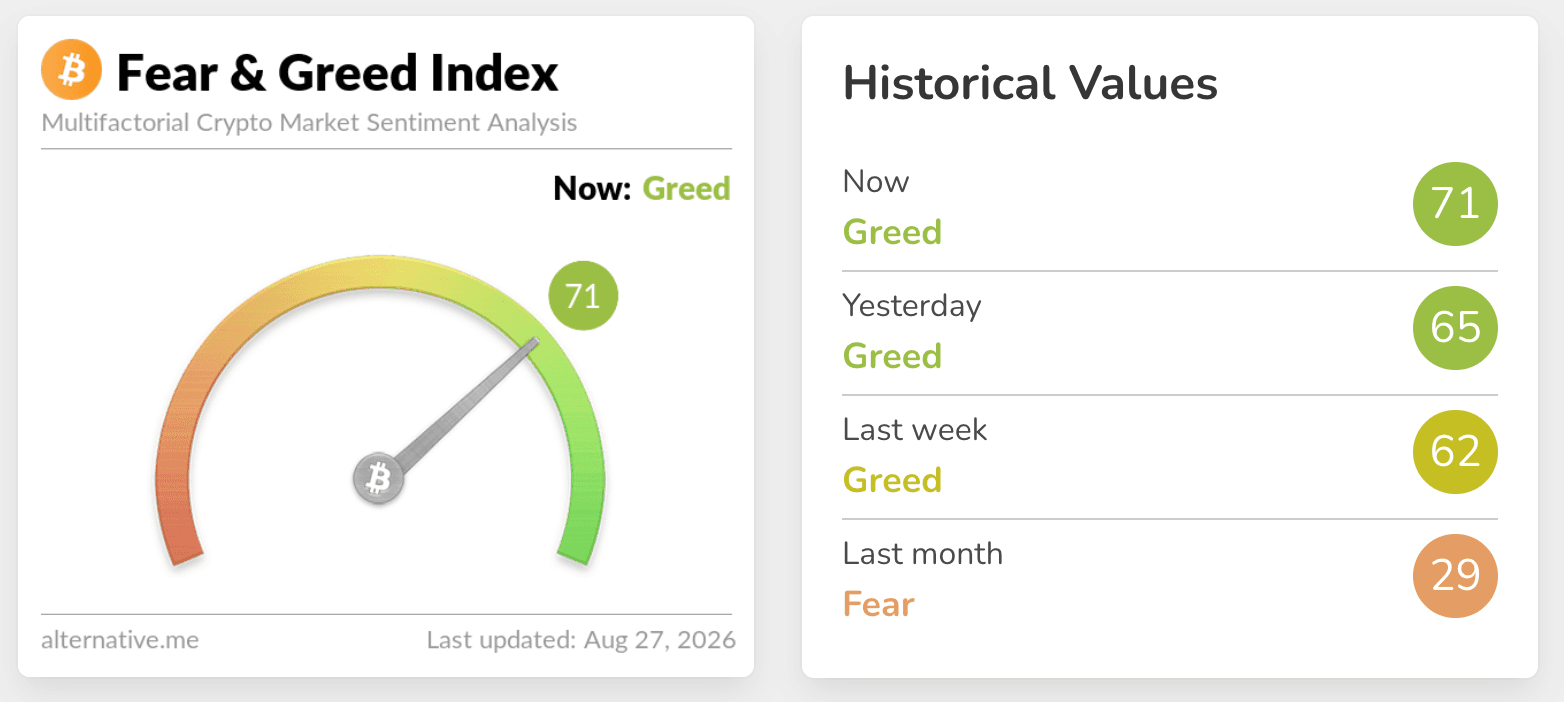
Source: Alternative
Key News Highlights:
US July PCE Inflation Exceeds Expectations as Bitcoin Dips Below $78K and Risk Assets Face Pressure
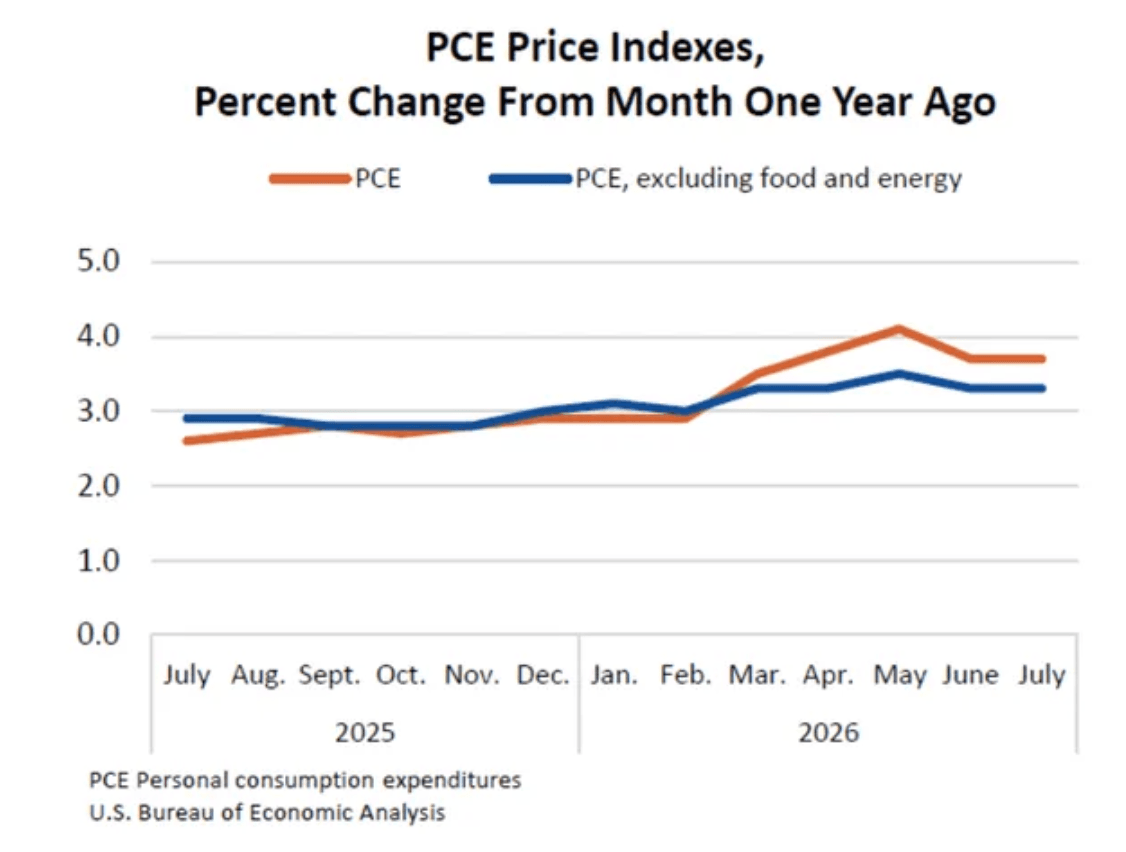
Following the release of the latest US inflation data, Bitcoin briefly dipped below $78K during the August 26 Wall Street trading session. Major risk and safe-haven assets, including stocks and gold, also experienced simultaneous price fluctuations. Data released by the US Bureau of Economic Analysis showed that the July Personal Consumption Expenditures (PCE) price index increased by 3.7% year-on-year, coming in above the market expectation of 3.6%. Compared to the preceding month, the July PCE price index rose by 0.2%. Core PCE, excluding food and energy, also increased by 0.2% month-on-month. The market paid close attention to this data because the PCE serves as one of the key gauges used by the Federal Reserve to evaluate US inflation trends. Following the data release, Bitcoin dropped by about 1% intraday, pulling back from near $80K to below $78K. At the same time, US stock markets opened weaker, and gold broke below $4,600 per ounce. This indicated that multiple major asset markets underwent repricing after the inflation data came out. This data arrived following an unexpected decline in the June PCE monthly growth rate, which intensified market attention on whether US inflation is continuing to cool down. Besides the PCE data, the market is also awaiting quarterly earnings from tech giant Nvidia, along with new policy signals from the Jackson Hole Economic Symposium. Bitcoin had recorded a noticeable rebound over the prior week, briefly reclaiming $80K. Therefore, this dip below $78K has become a notable market development following the recent rapid price upside. With macroeconomic data, corporate earnings, and monetary policy messages arriving concurrently, short-term volatility in major risk assets has increased significantly.
US Retirement Security Anxiety Mounts as 77% of Survey Respondents View Crypto in Retirement Plans as Risky
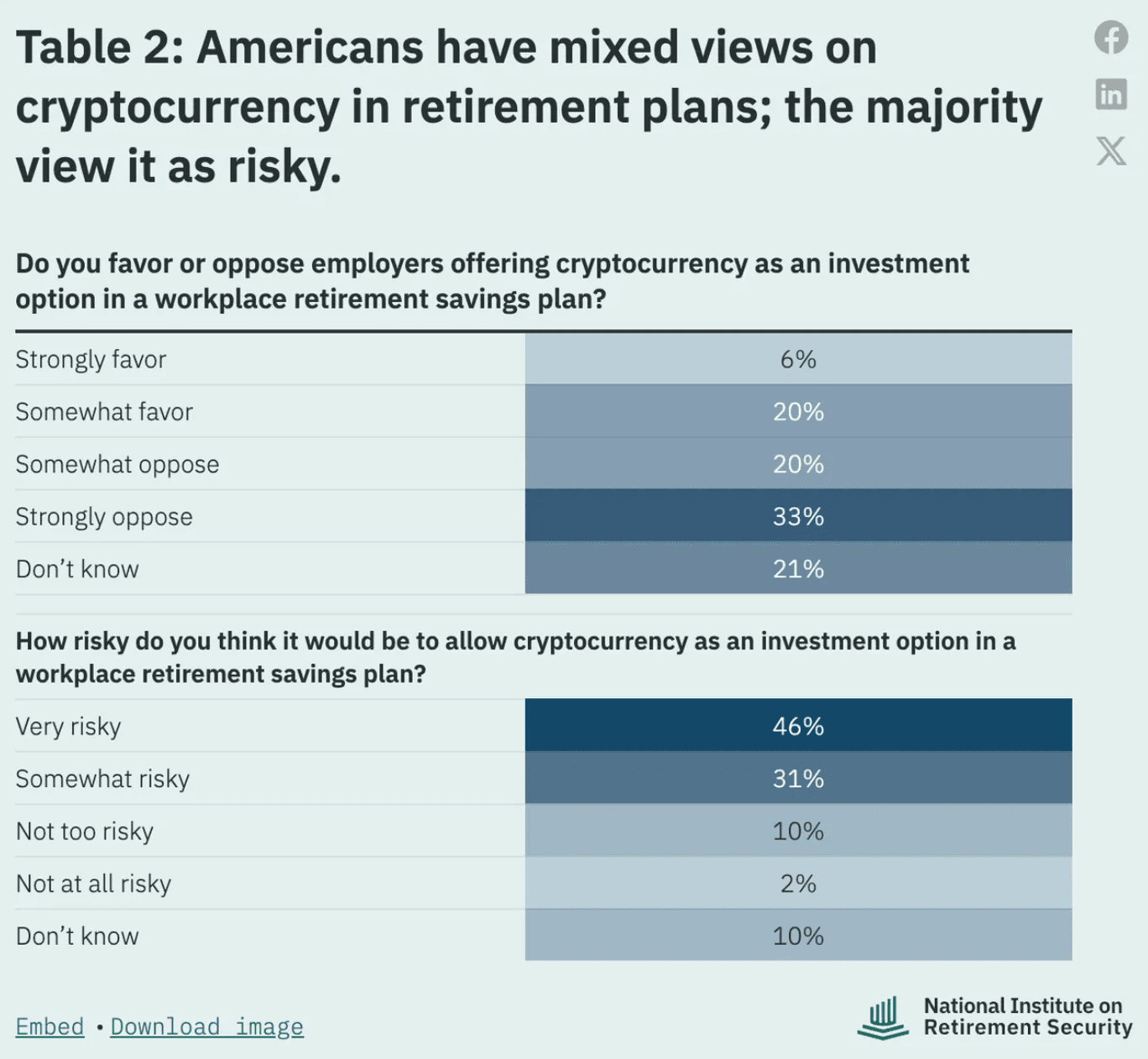
A recent US survey shows that most Americans remain cautious about introducing crypto into workplace retirement plans. This comes as policymakers continue discussing ways to expand investment scopes for retirement accounts. Survey results released by the National Institute on Retirement Security indicate that 77% of US respondents consider allocating crypto in workplace retirement plans to be risky. Among them, 46% further rated it as "very risky," showing that the volatile nature of crypto assets remains a major concern for retirement savers. Another 53% of respondents oppose employers offering cryptocurrency as an investment option in retirement plans. The survey also showed that public anxiety over the overall retirement security system is rising. Eighty percent of respondents believe the US is facing a retirement crisis, up from 67% in 2020. In addition, 61% of respondents expressed concern about achieving sufficient financial security in retirement, and 68% said preparing for retirement is becoming more difficult. Debt has similarly become a major limiting factor for retirement savings, with 77% of respondents stating that debt prevents them from accumulating adequate funds for retirement. Greenwald Research conducted this survey between October 24 and November 14, 2025. It included 1,203 US adults aged 25 and older, with results weighted by age, gender, and income. At the time of the survey release, the US government and regulatory agencies were gradually adjusting their regulatory stance on alternative assets in retirement plans like 401(k)s, which also involves investment vehicles holding digital assets. The US Department of Labor previously rescinded guidance urging plan fiduciaries to exercise "extreme care" when considering crypto assets, returning instead to a more neutral regulatory principle. Consequently, whether cryptocurrency is suitable as a retirement savings allocation option has become a key topic in discussions surrounding US retirement security and digital asset policy.
SEC Advances Crypto Custody Rule Overhaul, Submitting Proposal to White House for Review Focusing on Institutional Digital Asset Custody Framework
The US Securities and Exchange Commission is advancing an asset custody rule overhaul for investment advisers and investment companies. The new system could further clarify how regulated entities can hold crypto assets for clients. US federal regulatory records show that a proposed rule titled Amendments to the Custody Rules was submitted on August 25 to the Office of Information and Regulatory Affairs within the White House Office of Management and Budget for review. This means the rule has entered the administrative review process, though it remains in the proposed rule stage and has not yet been officially published or enacted. According to the SEC's regulatory agenda, the agency is considering modifying existing rules or establishing new custody rules under the Investment Advisers Act and the Investment Company Act. The reforms primarily involve how investment advisers and funds safeguard client assets, explicitly covering crypto assets and related digital asset holding methods. Existing regulatory frameworks were built primarily around traditional financial assets. Digital assets possess distinct technical characteristics in private key management, asset control, and third-party custody, prompting regulators to study how to incorporate them into established systems. The complete rule text has not yet been made public, and the White House can still request modifications from the SEC during the review period. Following administrative review, the proposal will return to the SEC, and the commission will then decide whether to officially release the rule and open it for public comment. This custody system reform is also part of the SEC's recent digital asset policy adjustments, with regulatory focus gradually shifting from individual enforcement actions toward market systems and formal rulemaking. Meanwhile, the US Congress is still discussing bills related to crypto market structure, making asset custody, market structure, and institutional participation rules prominent topics in current US digital asset regulatory reforms. If the proposal officially enters the public comment process, investment advisers, funds, custodians, and other market participants will gain further insight into the specific scope of application and compliance requirements.
Disclaimer: The information provided in this section is for informational purposes only and doesn't represent any investment advice or FameEX's official view.