FameEX Today’s Crypto News Recap | August 28, 2026
2026-08-28 07:05:41

Abu Dhabi deepens World Liberty ties as Grayscale highlights Zcash privacy and the UK advances stablecoin rules; BTC briefly reclaimed $80K in Greed sentiment. BTC recently reclaimed $80K after a rapid recovery from around $64K over the past week. The rally was mainly supported by improving expectations for U.S. liquidity, sustained inflows into spot Bitcoin ETFs, and concentrated short covering. The U.S. Treasury recently expanded its long-term Treasury buyback program. The market viewed the move as a signal that could help ease pressure on long-term yields and improve financial market liquidity. This supported renewed demand for risk assets and helped BTC break out of a trading range that had held for several weeks. Capital flows also provided support. U.S. spot Bitcoin ETFs have recorded net inflows for several consecutive trading days, with the latest streak attracting more than USD 2.8 billion. This indicates renewed institutional and spot-market demand. At the same time, Bitcoin futures open interest declined during the rally. This suggests that the move was not primarily driven by new leveraged long positions. Instead, a large number of short positions were covered or liquidated, creating a clear short squeeze. Billions of dollars in short positions were forced to close after BTC broke through key price levels, which further accelerated the rally. Recent ETF inflows, spot buying, and short covering have therefore worked together to push BTC rapidly back toward $80K. However, options markets continue to show demand for downside protection. This indicates that traders have not shifted entirely toward a one-sided bullish outlook after the sharp rebound. The market remains in a phase where price recovery and elevated volatility coexist.
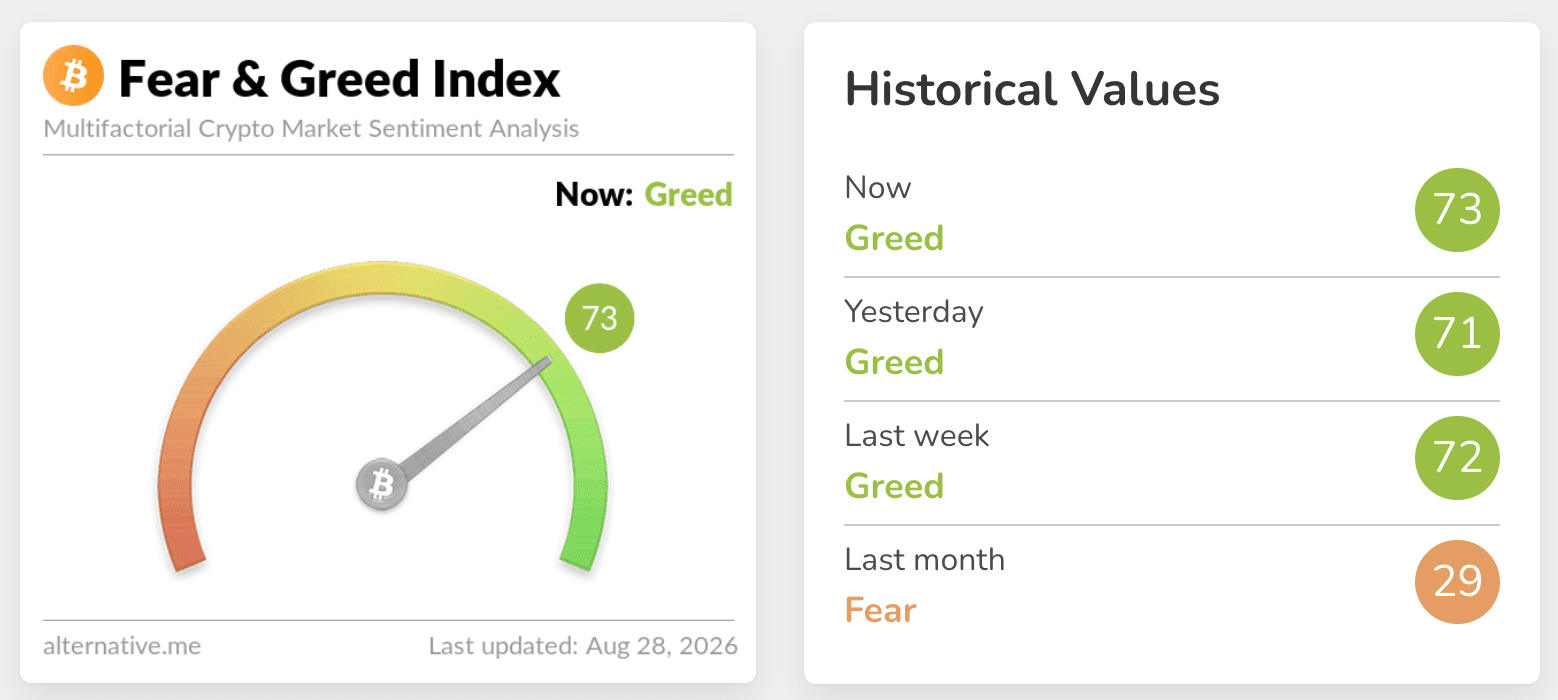
Source: Alternative
Key News Highlights:
Abu Dhabi Royal-Linked Investors Reportedly Hold 49% Stake in World Liberty’s Proposed Trust Bank Holding Company
According to The Wall Street Journal, an investment group linked to Abu Dhabi royal Sheikh Tahnoon bin Zayed Al Nahyan is reportedly behind StringZ Holding RSC. StringZ owns a 49% stake in WLTC Holdings, the holding company behind World Liberty Financial’s proposed U.S. trust bank. The report cited people familiar with the matter who said an entity affiliated with U.S. President Donald Trump’s family owns another 38% of WLTC Holdings. The banking initiative is being developed through World Liberty Trust Company. It aims to operate as a U.S. national trust bank after receiving full regulatory approval. The Office of the Comptroller of the Currency granted preliminary conditional approval to its charter application on August 14. However, the company cannot begin operations until it satisfies the regulator’s pre-opening requirements and receives final approval. If approved, the bank is expected to handle the issuance, redemption, and custody of World Liberty’s USD1 stablecoin. Documents published by the OCC confirm that StringZ is an investor in WLTC Holdings. Relevant shareholders also signed commitments stating that they would not control or influence the bank’s operations. However, the regulatory documents do not identify Sheikh Tahnoon as the financial backer of StringZ or disclose his specific ownership arrangement. The Wall Street Journal report has drawn further attention to the ownership structure by linking StringZ to Sheikh Tahnoon’s investment network. Investors associated with Sheikh Tahnoon previously participated in a USD 500 million equity transaction involving World Liberty Financial. Some U.S. senators later called for hearings into the deal and its potential conflicts of interest.
Grayscale Sees Growing Privacy Demand Strengthening Zcash’s Network Effects
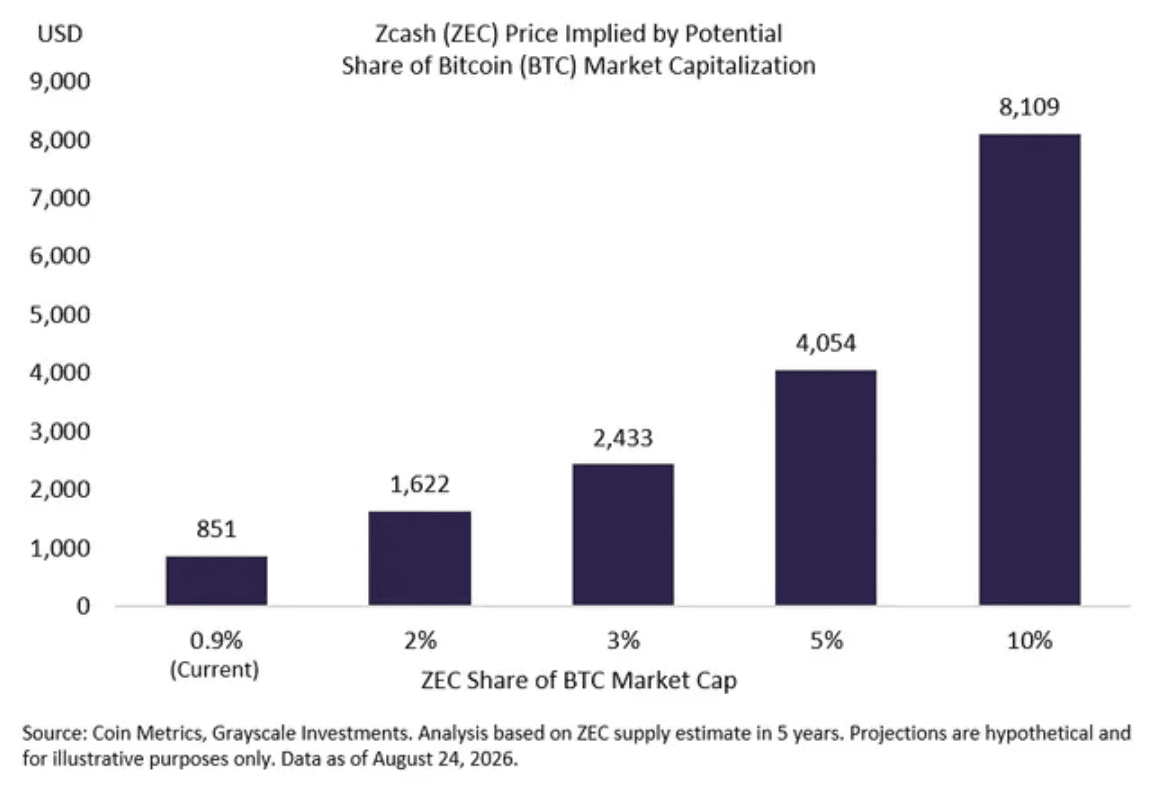
Grayscale said in a recent research report that financial privacy could become increasingly important as artificial intelligence improves the ability to analyze financial activity at scale. This trend has brought greater attention to Zcash and its privacy-focused transaction features. Grayscale Head of Research Zach Pandl described Zcash as a digital asset with certain “second-mover advantages.” He argued that its design differs from Bitcoin in several important ways, with transaction privacy being one of the report’s central themes. Zcash allows users to shield certain transaction information through its privacy technology. Grayscale believes this feature could become more valuable as AI-powered data analysis and digital surveillance capabilities continue to advance. ZEC has risen roughly 19-fold over the past year, yet its total market capitalization remains below 1% of Bitcoin’s. The report also noted that Bitcoin continues to benefit from deep liquidity, a broad user base, and network effects built over many years. These advantages remain significant barriers for competing digital assets. Grayscale also classified Zcash as a high-risk asset and warned that its price could remain highly volatile. The market-cap gap should therefore not be treated as an indication of future price performance. In one scenario, the report estimated that ZEC could trade above $4,000 if Zcash reached 5% of Bitcoin’s market capitalization. However, this was presented only as a valuation scenario based on market-cap assumptions. Institutional participation in the Zcash ecosystem has also increased recently. Publicly listed privacy technology company Cypherpunk Technologies acquired a Zcash mining fleet through a USD 33.33 million equity transaction. The fleet is now operating across several U.S. facilities and produces around 4.2 GSol/s of hashrate. This represents approximately 18% of the total Zcash network hashrate. Cypherpunk said the acquisition made its mining operation the largest active fleet on the network.
UK Plans to Expand Bank of England Innovation Mandate to Include Stablecoin Payments
The UK government has announced plans to give the Bank of England a new secondary objective related to payment innovation. The central bank would be expected to support the development of payment systems and emerging forms of digital money while continuing to prioritize financial stability. HM Treasury said the new responsibility would apply to the regulation of payment systems that use digital settlement assets, including stablecoins. Under the proposed framework, maintaining UK financial stability would remain the Bank of England’s primary objective. Supporting innovation would remain secondary and could not weaken existing financial stability requirements. The government wants the change to help the payment regulatory framework respond more effectively to developments in tokenization, distributed ledger technology, and new digital payment tools. The Bank of England already has a similar secondary innovation objective in its oversight of central counterparties and central securities depositories. The new proposal would extend the same principle to systemic payment systems. HM Treasury also said the Bank of England would be required to report annually to Parliament on its progress toward the innovation objective. This would provide greater transparency around implementation. The measure also builds on the UK’s broader work to establish a regulatory framework for digital settlement assets. Existing rules already allow HM Treasury to bring qualifying stablecoin payment systems and related service providers within the regulatory perimeter. The government plans to implement the new responsibilities through amendments to the Financial Services and Markets Bill. The legislation is expected to continue its consideration in the House of Lords in September. The government said the objective is to create a clearer regulatory environment for stablecoins, tokenized payments, and other emerging digital financial infrastructure without lowering financial stability standards.
Public Citizen Report Estimates Trump-Linked Crypto Investors Are at Least USD 4.7 Billion Underwater
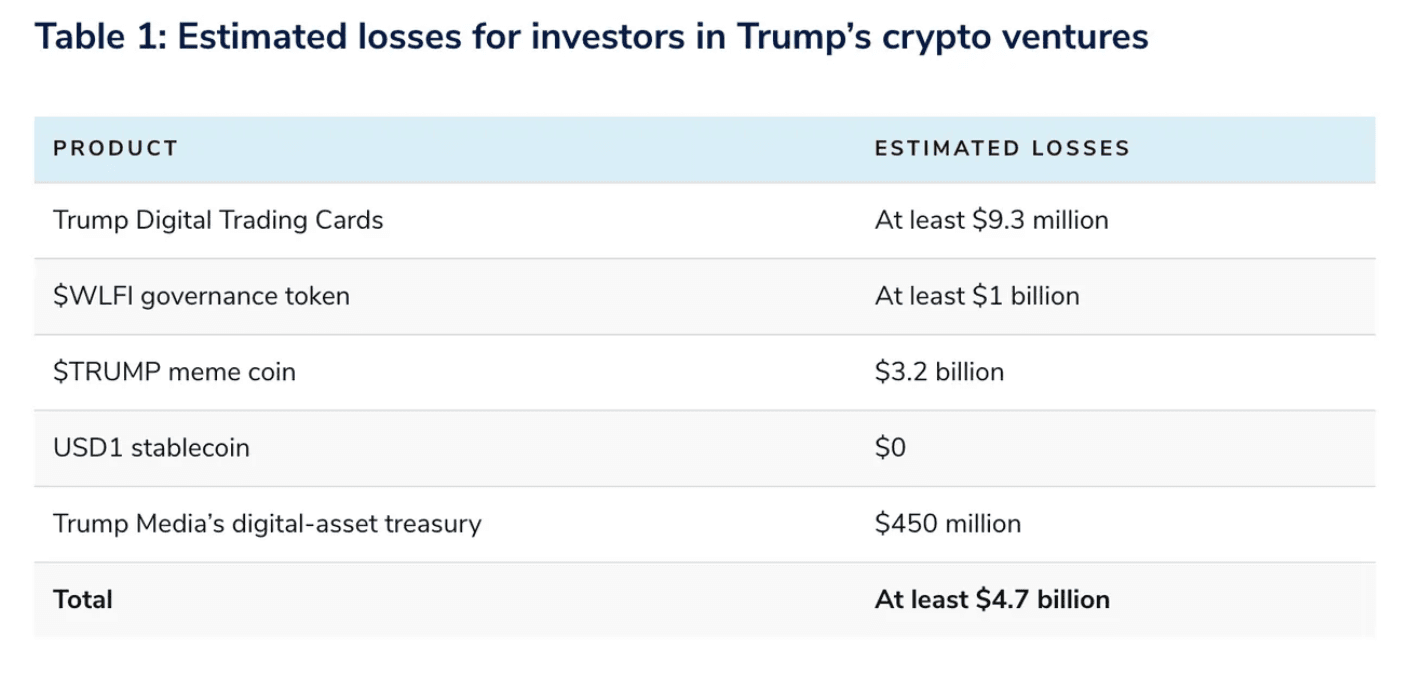
U.S. nonprofit consumer advocacy group Public Citizen reported that investors in digital asset ventures linked to Donald Trump and his family have accumulated at least an estimated USD 4.7 billion in losses since 2022. The report covers Trump Digital Trading Cards, World Liberty Financial’s WLFI governance token, the TRUMP memecoin, the USD1 stablecoin, and Trump Media’s digital asset treasury. Public Citizen said most of the estimated losses are unrealized paper losses. This means the figures do not represent amounts that all investors have already realized through asset sales. According to the organization’s estimates, investors in the TRUMP memecoin account for approximately USD 3.2 billion of the total losses. This represents the largest share of the estimated amount. Losses associated with WLFI were estimated at at least USD 1 billion. Trump Media’s digital asset treasury was estimated to be down by around USD 450 million, while losses related to Trump Digital Trading Cards were estimated at at least USD 9.3 million. Public Citizen said holders of the USD1 stablecoin have not suffered major losses, so the report assigned no estimated losses to the stablecoin itself. The organization also cited Trump’s latest financial disclosures, which showed at least USD 1.4 billion in crypto-related income in 2025. However, the report noted that this income and investor paper losses should not be treated as directly corresponding transfers of funds. Following the report, Public Citizen renewed its call for Congress to include clearer conflict-of-interest and asset-holding provisions for government officials in crypto market structure legislation. The CLARITY Act is currently expected to face a procedural vote on September 15. At least 60 senators will need to support the measure for it to advance. The White House has repeatedly maintained that the president and his family have no conflicts of interest.
Disclaimer: The information provided in this section is for informational purposes only and doesn't represent any investment advice or FameEX's official view.