FameEX Today’s Crypto News Recap | September 3, 2026
2026-09-03 07:20:09

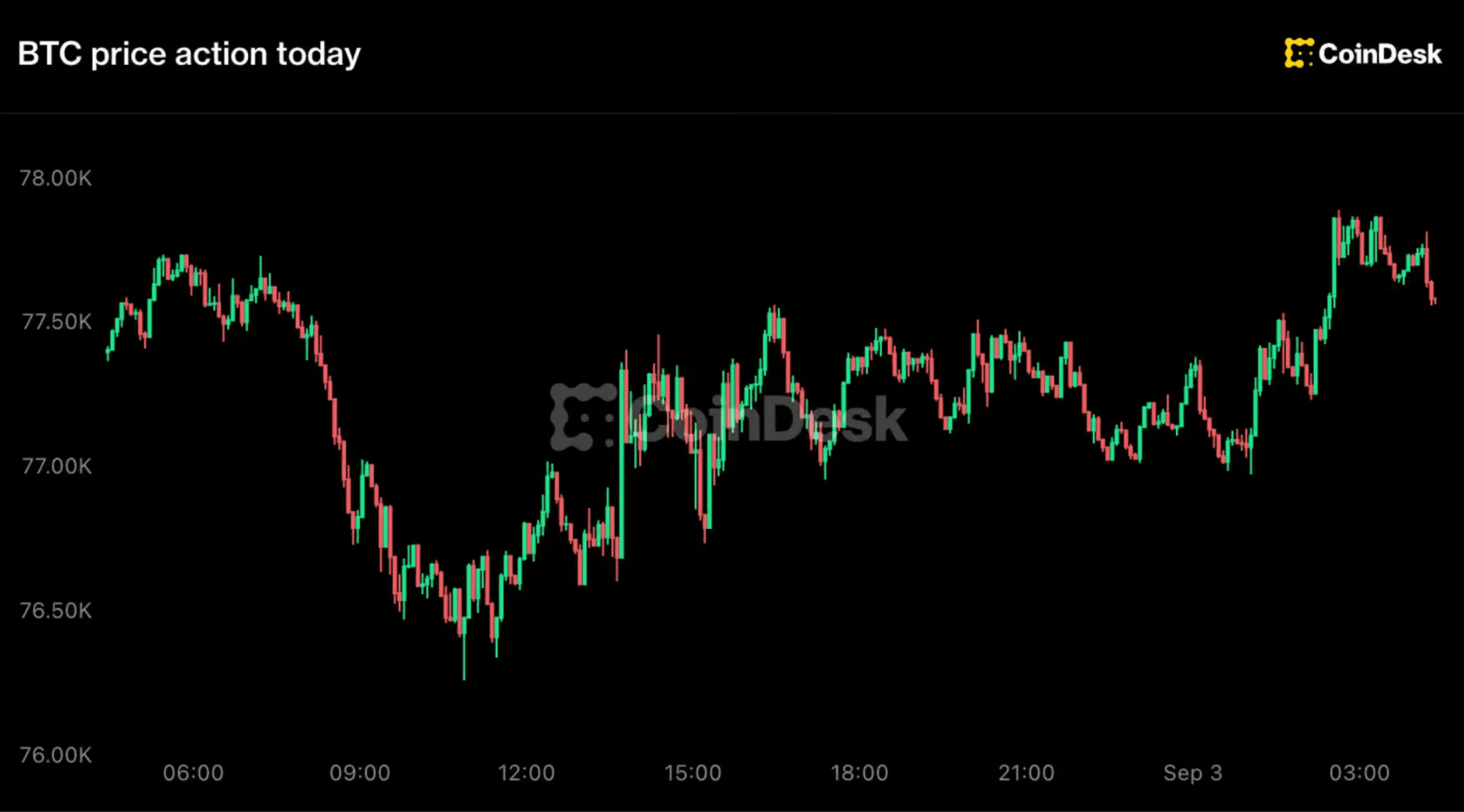
U.S. DOJ seizes Hamas-related crypto as Thailand tightens Travel Rule wallet checks and authorities disrupt Sality; today’s BTC trades near $77.5K in Greed sentiment. Bitcoin has returned to around $77.5K and briefly climbed to about $77.6K. The move suggests that the market is entering a short-term rebalancing phase after the recent pullback from higher levels. Ether is holding near $2,400 and has fallen nearly 4% over the past week. Its overall performance remains weaker than Bitcoin and several other major crypto assets. On-chain data shows that Bitcoin has declined about 5.82% from its local high of $81,474 on August 28. During the same period, whale cohorts accumulated around 6,765 BTC worth approximately USD 521 million. This suggests that some large holders continued to add to their positions during the price correction. Meanwhile, the $76,350 area is viewed as an important average cost basis for active investors. Buying activity emerged as Bitcoin approached this level, making it a key area to watch in the current short-term market structure. On the fund-flow side, spot Bitcoin ETFs recorded approximately USD 101 million in net inflows in the latest session. Spot Ether ETFs posted USD 48.0764 million in net outflows and ended a 12-session streak of net inflows. This points to some divergence in institutional flows between the two largest crypto assets. In the derivatives market, total liquidations reached about USD 287 million over the past 24 hours. Long liquidations totaled approximately USD 163 million, compared with USD 124 million in short liquidations. Leveraged long positions therefore faced greater deleveraging pressure during the latest bout of volatility. The Crypto Fear and Greed Index currently stands at 65 in the Greed zone. It has eased from 71 last week, suggesting that sentiment remains positive but has become more sensitive to short-term volatility. Liquidation positioning also shows concentrated leverage below $73,237 and above $80,757 for BTC. For ETH, notable liquidation clusters have formed around $2,264 and $2,497. Liquidity on both sides of the market has therefore become an important part of the near-term trading structure. On the macro side, attention is shifting toward the U.S. August nonfarm payrolls report and the CPI data that will follow. Both releases could further shape expectations for the Federal Reserve's September policy meeting and influence the near-term pricing environment for risk assets.
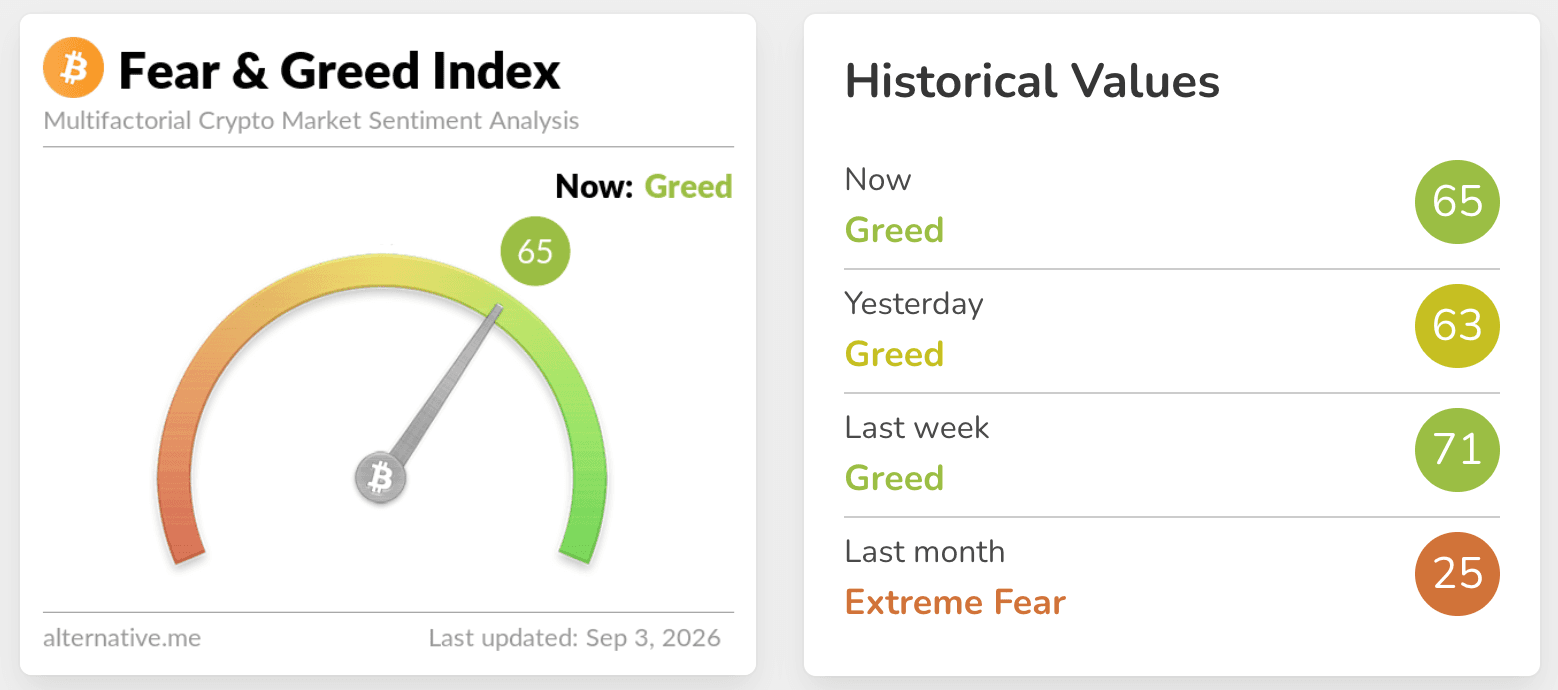
Source: Alternative
Key News Highlights:
Bitcoin Returns to $77.5K as Markets Focus on U.S. Jobs Data and Fed Rate Expectations
Bitcoin has returned to around $77.5K and briefly climbed to approximately $77.6K. The move marked a recovery from the previous day's low of $76.4K. The rebound came after the market tested the roughly $76,350 average cost basis of active investors. Buyers stepped in near that level and helped Bitcoin hold within its recent trading range. Major crypto assets also moved higher during the same period. XRP gained nearly 3%, while BNB and SOL rose about 2%. ETH remained near $2,400 and continued to lag. Over the past seven days, ETH is still down nearly 4%. TRX and XRP have each fallen about 3%, while BTC is down around 1%. This shows that the latest daily rebound has not yet erased the broader weekly losses across major assets. Analysts noted that the $76,350 level represents the average cost basis of active on-chain investors. Some holders who entered the market earlier may therefore be adjusting positions near their breakeven levels. In broader markets, recent geopolitical tensions have pushed crude oil prices higher. The U.S. 10-year Treasury yield also moved above 4.8%, while the U.S. Dollar Index approached 100. These developments have prompted markets to reassess the outlook for inflation and interest rates. CME FedWatch showed that the probability of a 25-basis-point Federal Reserve rate hike in September fell from just above 67% a day earlier to slightly above 62%. Expectations remain sensitive to incoming economic data. The upcoming U.S. nonfarm payrolls report is now a major focus, while CPI data scheduled for September 11 will provide another update on inflation conditions. Options markets have also increased downside protection ahead of these macro releases. Some of that protection is concentrated between $68K and $75K as market participants prepare for potential volatility around the data releases.
U.S. DOJ Seizes Over USD 560,000 in Crypto and Takes Control of Hamas-Linked Online Infrastructure
The U.S. Department of Justice announced that law enforcement authorities have seized more than USD 560,000 in cryptocurrency allegedly intended for Hamas. Authorities also took control of domains and servers linked to fundraising and recruitment activities. The DOJ said the operation involved several court-authorized cryptocurrency seizure warrants as well as enforcement actions targeting related online infrastructure. Public filings show that three crypto seizure warrants were issued in March, June and October 2025. Together, they covered approximately USD 560,000 in cryptocurrency. Investigators used several sources of information to track cryptocurrency addresses that were repeatedly changed and shared through encrypted group chats and fundraising websites. These efforts helped authorities identify the movement of related funds. The DOJ had previously said that one operation recovered about USD 201,400. Wallets and accounts connected to the same system had processed more than USD 1.5 million since October 2024. Beyond the asset seizures, the Federal Bureau of Investigation also took control of domains and servers that included AlQassam.ps. The move was intended to prevent the infrastructure from continuing to receive cryptocurrency donations. According to the DOJ, the takeover also provided authorities with information on thousands of people who had contacted the platforms and attempted to make donations through cryptocurrency or traditional payment methods. The information will be used in further counterterrorism and financial investigations. Law enforcement agencies said they will continue tracking illicit funding activities involving digital assets and online platforms.
Thailand Introduces Crypto Travel Rule With Ownership Checks for Self-Custodial Wallets
Thailand's Securities and Exchange Commission has formally introduced a Travel Rule for digital asset transactions. The framework strengthens anti-money laundering requirements and the management of information related to crypto transfers. Under the new rules, digital asset operators must establish risk management policies for incoming and outgoing transfers. They must also collect required information about the originator and beneficiary of each transaction. When a transfer involves another virtual asset service provider, operators are required to conduct appropriate due diligence on the counterparty and any relevant intermediary service providers. Additional requirements apply to self-custodial wallets where users directly control their private keys. Digital asset operators must verify ownership or effective control when customers send assets to or receive assets from these wallets. The framework also requires the originating operator to transmit required information about the sender and beneficiary along with the transfer instruction to the receiving service provider. This is intended to improve the traceability of digital asset flows. Operators must retain information associated with each transaction for at least five years. Records must also remain readily available for regulatory inspection. Thailand's SEC said the rules are designed to reduce the risk of digital asset services being used for money laundering, terrorist financing and technology-related crime. The framework also brings Thailand's regulatory approach further in line with standards set by the Financial Action Task Force. The rules followed public consultations on both the policy principles and draft regulations in March and June this year. Thai regulators said most respondents supported the overall direction of the proposals. The Travel Rule will take effect on February 27, 2027. This gives local digital asset operators nearly six months to develop systems for transmitting, receiving, verifying, and monitoring transaction information.
U.S. and International Authorities Disrupt Sality Botnet Used in Long-Running Crypto Theft Campaigns
U.S. law enforcement agencies joined government authorities and cybersecurity organizations from several countries to disrupt the Sality malware network and its peer-to-peer botnet infrastructure. The U.S. Department of Justice said the international operation involved authorities in the United States, Bulgaria, Hungary and Romania. Law enforcement agencies also worked with private-sector partners including CrowdStrike and the Shadowserver Foundation. Sality has been used to install malicious software on compromised devices since 2003. The network has supported cryptocurrency theft and other forms of cybercrime. CrowdStrike data shows that the botnet was capable of deploying malware to more than 15,000 infected devices worldwide. Device owners were often unaware that their computers had become nodes within the network. Over the past eight years, operators behind Sality primarily used a clipboard-hijacking tool known as EggJagger. The tool continuously monitored cryptocurrency wallet addresses copied on infected devices. When a victim copied a Bitcoin or Ethereum address before making a transfer, the malware could silently replace it with an address controlled by the attacker. Funds would then be redirected to another wallet. CrowdStrike estimated that the tool stole at least 12.1 million rubles in cryptocurrency, equivalent to about USD 150,000 based on the figures cited in the investigation. The value of digital assets that remained unspent later reached a higher market value in January 2025. The latest operation used peer-to-peer sinkholing techniques to cut communication between infected devices and the criminal network. This prevented the original operators from continuing to issue commands through the botnet. Authorities also seized several domains associated with Sality. Government agencies are now working with internet service providers and cybersecurity response teams to identify remaining infected devices and support user notification and remediation.
Disclaimer: The information provided in this section is for informational purposes only and doesn't represent any investment advice or FameEX's official view.