FameEX Today’s Crypto News Recap | September 7, 2026
2026-09-07 07:13:47

U.S. and Iran tensions lift oil, Liquid Network halts after a $320M exploit and Harmony plans an Ethereum migration; today’s BTC price is near $79.8K in Greed sentiment. Bitcoin is trading near $79.8K with little overall change over the past 24 hours. However, the price fell nearly 1% intraday as U.S.-Iran tensions escalated and oil prices moved higher. The move shows that macro developments continue to influence short-term pricing across risk assets. Ethereum is trading at around $2,488, up approximately 1.4% over the past 24 hours. Its short-term performance remains stronger than BTC. Market sentiment also remains elevated. The latest Crypto Fear and Greed Index stands at 71 and remains in the Greed range, suggesting that intraday volatility has not materially weakened overall sentiment. On the fund flow side, U.S. spot Bitcoin ETFs recorded USD 987 million in net inflows last week, while spot Ethereum ETFs attracted USD 218 million. Both have now posted weekly net inflows for three consecutive weeks. In the derivatives market, total crypto liquidations reached approximately USD 235 million over the past 24 hours. Long liquidations accounted for USD 83.3915 million, while short liquidations reached USD 151 million. Liquidation intensity data shows that if BTC falls below $76,211, cumulative long liquidation intensity across major CEXs could reach USD 1.037 billion. If BTC rises above $83,521, cumulative short liquidation intensity could reach USD 1.003 billion. ETH also has significant liquidation concentrations on both sides of the current price. A drop below $2,372 could bring cumulative long liquidation intensity to USD 829 million, while a move above $2,621 could lift cumulative short liquidation intensity to around USD 606 million. Overall, spot ETF inflows remain positive as BTC trades around the $80K level. At the same time, leveraged long and short positions remain concentrated around key price zones. Near-term trading activity continues to reflect the combined effects of macro developments, energy prices, and adjustments in leveraged positioning.
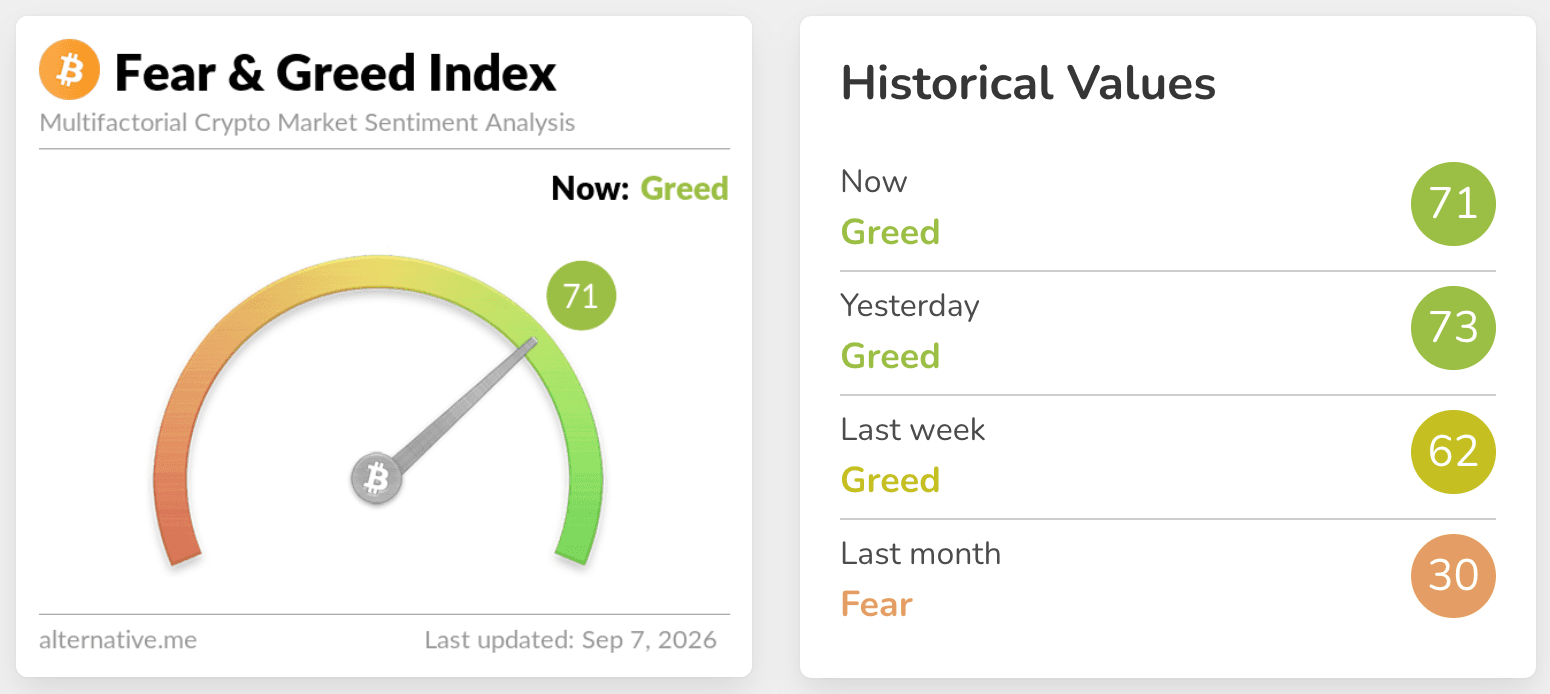
Source: Alternative
Key News Highlights:
U.S.-Iran Tensions Push Oil Higher as Bitcoin Pulls Back Toward $79.7K
Bitcoin fell nearly 1% intraday and briefly traded near $79,700 as international oil prices rose amid another escalation in tensions between the United States and Iran. U.S. Central Command confirmed that U.S. forces struck three Iranian oil tankers on Saturday. The vessels were located near Kharg Island, Jask, and the Gulf of Oman. U.S. authorities also released updated figures on maritime enforcement against Iran. Since operations resumed on July 14, U.S. forces have redirected 92 merchant vessels, disabled three ships, and boarded two others. Oil prices rose by around 1% on both sides of the Atlantic as regional tensions remained elevated. WTI crude climbed to $92.72 per barrel. WTI has gained more than 6% during the first seven days of September, extending its recovery from a July low near $70. The renewed rise in energy prices has also brought greater attention to their potential impact on global inflation and interest rate policy at major central banks. Meanwhile, the latest U.S. August employment data came in stronger than expected and prompted markets to reassess the Federal Reserve's policy path. U.S. President Donald Trump again publicly called for lower interest rates. Against this backdrop of overlapping macro developments, Bitcoin moved repeatedly around $80,000 over the weekend before retreating toward $79,700 during Monday's Asian session. The move came as markets tracked higher oil prices, shifting rate expectations, and geopolitical developments in the Middle East.
Liquid Network Halts Transactions After About USD 320 Million in Bitcoin Is Moved
Bitcoin sidechain and settlement network Liquid Network suffered a major security incident after approximately 4,000 BTC was moved from its federation wallet. The assets were worth around USD 320 million at the time of the incident. The federation wallet had previously held about 4,200 BTC, which means the transfer involved most of its Bitcoin reserves. Liquid Network later halted new transaction processing and said federation members were working to resolve the issue and restore normal operations. Blockstream launched Liquid in 2018. The network works by locking Bitcoin in reserve and issuing corresponding L-BTC to support faster processing for selected trading and settlement use cases. Following the incident, the teams involved said the transfer did not result from the theft of passwords, private keys, or hardware security modules. Preliminary information instead pointed to a node-level vulnerability in the transaction software used by Liquid. Some of the affected Bitcoin may also have been created abnormally because of a software flaw in Elements. The transferred assets then moved through an authorized trading platform that was operating normally. At the time, the platform could not distinguish assets created through the software issue from legitimate Bitcoin. The operators behind the addresses involved described themselves as white-hat hackers. However, Liquid has not confirmed whether the transferred Bitcoin will be returned. The network has also not announced a full reopening schedule, and new Liquid transactions remain affected while the incident is being addressed.
600 BTC Moves After More Than 16 Years With No Known Link to Satoshi Nakamoto
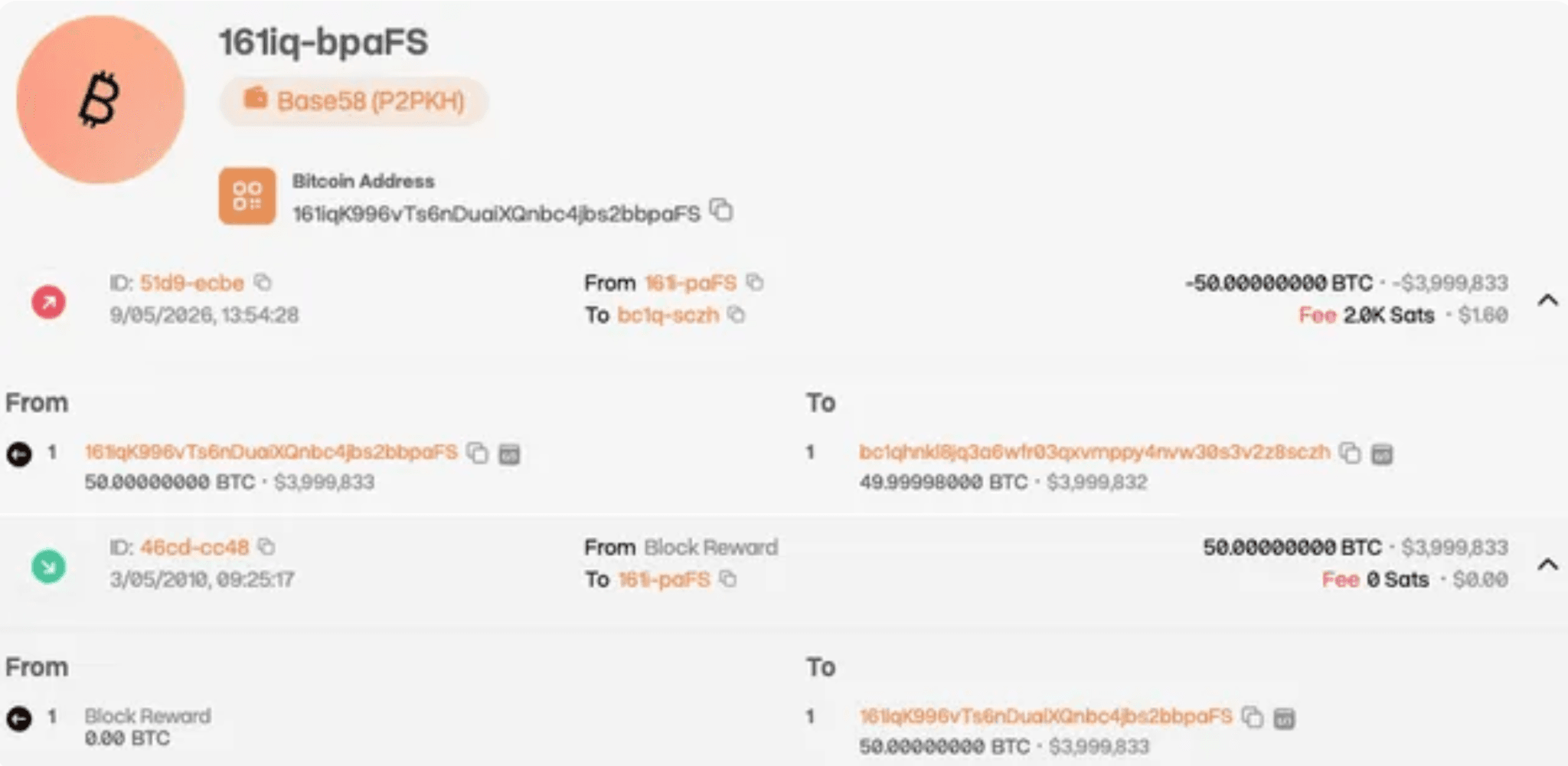
A group of Bitcoin mined in 2010 moved on-chain after remaining dormant for more than 16 years. Twelve addresses transferred a combined 600 BTC, worth approximately USD 48 million at the time of the transfers. All of the BTC came from Bitcoin block rewards mined in March 2010, when the mining subsidy stood at 50 BTC per block. Each of the 12 block rewards contained 50 BTC, bringing the total amount moved to 600 BTC. The transfers quickly drew attention because the coins were mined during the period when Satoshi Nakamoto was still actively involved in Bitcoin development and community communications. Onchain tracking platform Whale Alert analyzed the relevant blocks and said there is currently no evidence linking any of the 12 blocks to Nakamoto. Another on-chain data platform had earlier identified seven miner addresses that moved a combined 350 BTC. The tracking was later expanded to include all 12 addresses. Whale Alert also noted that one 50 BTC block reward moved several blocks before most of the other transfers. The sequence was consistent with a test transaction taking place before the remaining funds were moved. Nakamoto was still involved with Bitcoin during 2010 before gradually withdrawing from the project. The last known public communication from Nakamoto dates back to April 2011. The latest transfers therefore represent renewed activity from early Bitcoin miners, while available on-chain research does not support claims that the 600 BTC belonged to Satoshi Nakamoto.
Harmony Proposes Shutting Down Its Layer 1 and Migrating ONE to Ethereum
Harmony has proposed ending operations of its independent Layer 1 blockchain and migrating its native ONE token to Ethereum as an ERC-20 asset. Under the proposal, Harmony would take a final snapshot of ONE balances at the network's last block. The snapshot would cover user wallets, staking delegations, validator rewards, smart contracts, and balances held on centralized platforms. New ONE tokens would then be airdropped to the same addresses on Ethereum based on the snapshot. Regular token holders would not need to submit a separate claim. Delegated stakes and unclaimed validator rewards would also be included in the migration process. However, multisig wallets, liquidity pools, and existing on-chain applications cannot be transferred directly to the new environment. Harmony has therefore asked users with assets held in smart contracts to exit those contracts before September 10. Validators may also begin shutting down their nodes from that date. The team plans to establish a one-time compensation pool of approximately USD 1.372 million for eligible validators and participants who stop their nodes as scheduled, retain their stakes, and transition into new governance roles. The proposal comes less than a month after a major Harmony exploit in August. During that incident, an attacker used a cross-shard transaction validation issue to create a large amount of unauthorized ONE. The network later considered a blockchain rollback to address affected transactions. Harmony has also proposed shifting project resources toward an AI video initiative, with some existing validators potentially moving into governance or operational roles in the new project. The proposal remains non-binding at this stage. The final shutdown date, governance process, and full migration arrangements will depend on subsequent formal decisions.
Disclaimer: The information provided in this section is for informational purposes only and doesn't represent any investment advice or FameEX's official view.