SIGN (EthSign) Token Price & Latest Live Chart
2026-03-16 10:39:33
What is SIGN (EthSign)?
SIGN Protocol is an omni-chain attestation infrastructure designed to resolve fragmented trust verification in the digital world. It allows any piece of information to be transformed into verifiable, immutable, and cross-chain compatible structured evidence on the blockchain. In traditional networks, trust relies on centralized endorsements. For instance, electronic signatures require providers like DocuSign to store data. If these providers collapse or data is tampered with, the validity of the proof vanishes. SIGN Protocol establishes a decentralized "fact layer" that functions as sovereign-grade digital infrastructure. This allows individuals, enterprises, and governments to conduct digital certification for fund flows, identity attributes, and contract signings without needing permission. These facts can flow seamlessly between different blockchain networks and real-world legal systems. As application scenarios expand, the underlying capabilities originally serving document signing have been abstracted into Sign Protocol, forming a shared infrastructure for evidence and attestation.
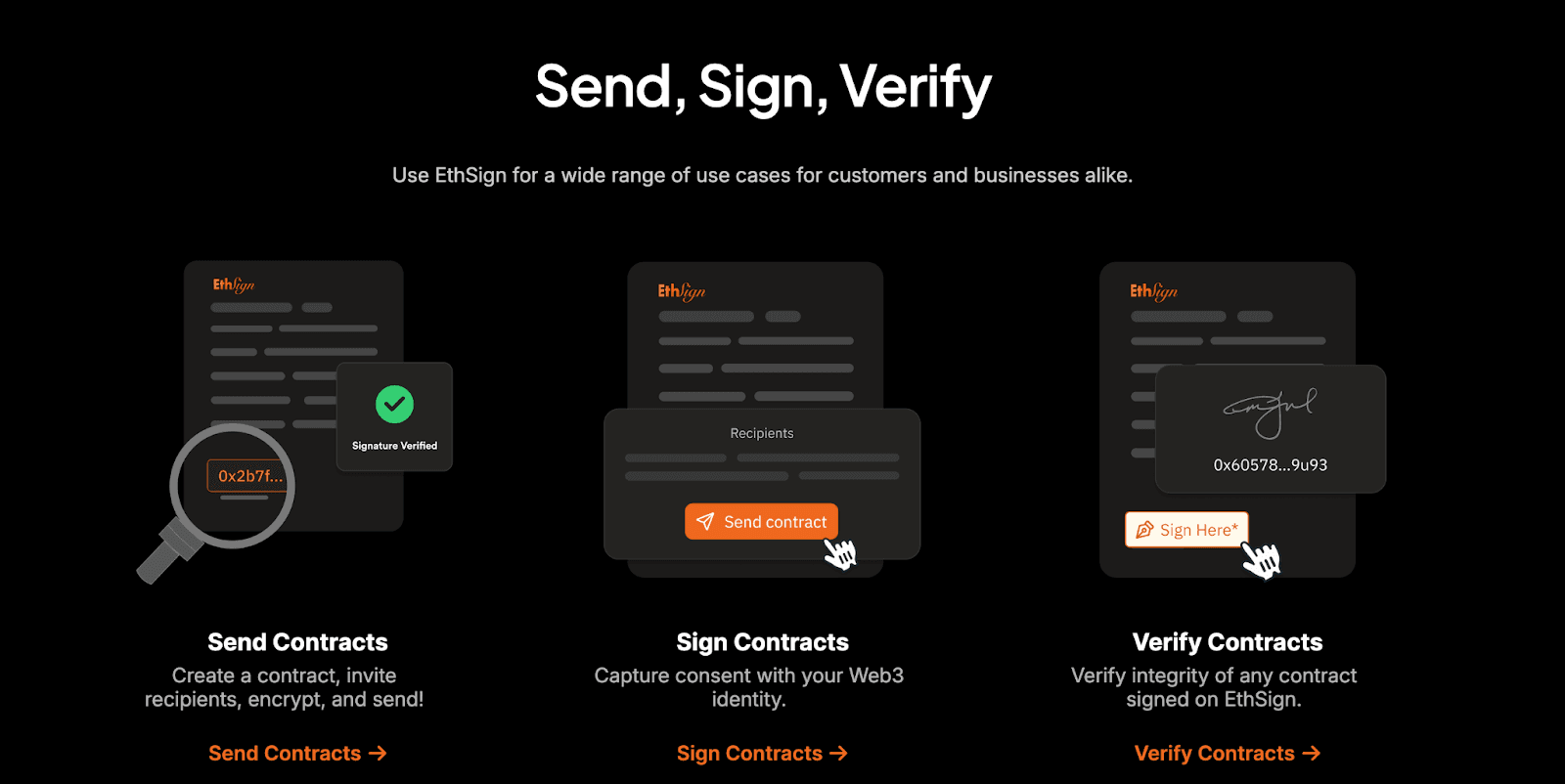
Early versions focused on bringing document signing on-chain to ensure legal contract hashes were permanently recorded and signed via private keys. This gave electronic documents a level of security equivalent to or higher than traditional handwritten signatures. Subsequent evolution extended this logic to all forms of data verification, including token distribution, on-chain identity claims, and cross-chain data interaction. The relationship between EthSign and Sign Protocol represents a division of labor between the application and infrastructure layers. EthSign handles intuitive, high-frequency agreement needs like document creation, signing, verification, and maintaining full state records. Sign Protocol addresses the fundamental issues of how a fact should be represented, signed, retrieved, verified, and referenced across different chains. This architecture ensures that a signed contract is no longer just a status change on an interface but a piece of structured data verifiable by cryptography. This data extends beyond agreements to identity verification, authorization records, and institutional permissions. Furthermore, it breaks down "information silos" by allowing attestations generated on Ethereum to be verified on non-EVM chains like Solana or TON, constructing a global digital trust network.
- Decentralized Identity and Private Key Signing: Users replace traditional credentials with private keys from encrypted wallets like MetaMask. This mechanism binds signing actions directly to a unique wallet address, solving forgery and identity theft risks at the technical level and ensuring every document is traceable to the true signer.
- Omni-chain Attestation and Public Verification: SIGN Protocol establishes a cross-chain verification standard no longer limited to a single blockchain. All records, hashes, and timestamps are precisely logged on the blockchain ledger. This removes reliance on centralized institutions for legal validity, as anyone can perform public verification via on-chain data.
- Distributed Storage and Data Sovereignty: Documents and contract contents are stored using decentralized solutions like IPFS or Arweave rather than centralized servers. This ensures data privacy and achieves "permanent storage," allowing users to maintain full control and access rights even if the EthSign platform stops operating.
- Smart Contract Integration and Automated Execution: This technology allows signed content to interact with smart contracts. Once all parties sign, the system can automatically trigger on-chain workflows like token disbursements or asset transfers. This bridges contract signing and business logic to significantly enhance collaborative efficiency.
How does SIGN (EthSign) work?
The core of SIGN Protocol is the "Omni-chain Attestation Framework." The first step involves converting any data or statement into a unique hash. In the EthSign document signing, the system does not write lengthy PDF content directly to the blockchain. Instead, it captures a document's fingerprint, which the signer approves via an encrypted signature using their private key. This design ensures privacy and storage efficiency. Sensitive original files can be stored on decentralized networks like Arweave, while the blockchain acts as a verification layer to record who approved what content at what time. This model supports cross-chain digital certification without sacrificing decentralization in order to allow the generation and verification of proof data to occur in parallel across different chain environments.
To ensure standardization and interoperability, the protocol introduces the Schema Registry, which serves as a "blueprint center" for digital attestations. When an institution needs to issue academic certificates or perform KYC, they first define a standardized data structure (Schema) in the registry. All subsequent attestations must conform to this template. This mechanism allows developers to build composable applications. For example, a DeFi protocol can automatically recognize and accept credit attestations conforming to a specific Schema without manual integration for every provider. Additionally, the protocol utilizes Trusted Execution Environments (TEE) and Zero-Knowledge Proofs (ZKP). This allows sensitive data to be verified without revealing specific details, such as proving one’s identity on a known platform without submitting ID photos to a new one.
Data placement is a critical part of the SIGN architecture. The system does not require all content to be written in full on-chain, as real-world documents and compliance data often involve privacy and cost boundaries. SIGN adopts a flexible data logic that separates verifiable parts from public parts. Verification capability is maintained through on-chain anchoring, signatures, indexing, and structured referencing. Actual content can be stored off-chain, in decentralized storage, or in hybrid architectures based on need. Large amounts of auxiliary evidence are stored on the Arweave network. This ensures that users can independently retrieve, decrypt, and verify their contracts through open-source tools even if the EthSign platform ceases to exist. Furthermore, the protocol reduces RPC node latency through an optimized backend model to solve common blockchain issues like transaction failures. This architecture balances on-chain security with off-chain fluidity to support large-scale enterprise needs.
SIGN (EthSign) market price & tokenomics
The $SIGN token is the core fuel and governance asset in the Sign ecosystem, which is designed to support a sovereign-grade digital attestation and asset distribution network. The total supply is constant at 10,000,000,000 tokens to ensure long-term scarcity and value stability. During the Token Generation Event (TGE) in April 2025, approximately 12% of tokens entered initial circulation. The remainder unlocks according to a strict release schedule. This supply structure balances early market liquidity with the long-term health of the ecosystem. Cross-chain deployment across Ethereum, BNB Chain, Base, Solana, and TON ensures global users can participate in building this digital trust network.
The allocation plan reflects their community-first strategy with 40% of tokens dedicated to community rewards. This fund includes the 10% airdrop at the 2025 TGE along with long-term staking incentives, community grants, and usage rewards for the Sign SuperApp. The goal is to attract tens of millions of users to on-chain attestation activities. Other allocations include investors (20%) and the core team (10%), both subject to long-term lockups and linear release periods to align contributors with the protocol's success. Additionally, 20% of tokens are allocated to the Foundation for R&D and public governance, while 10% drive ecological cooperation with governments and enterprises to strengthen real-world adoption.
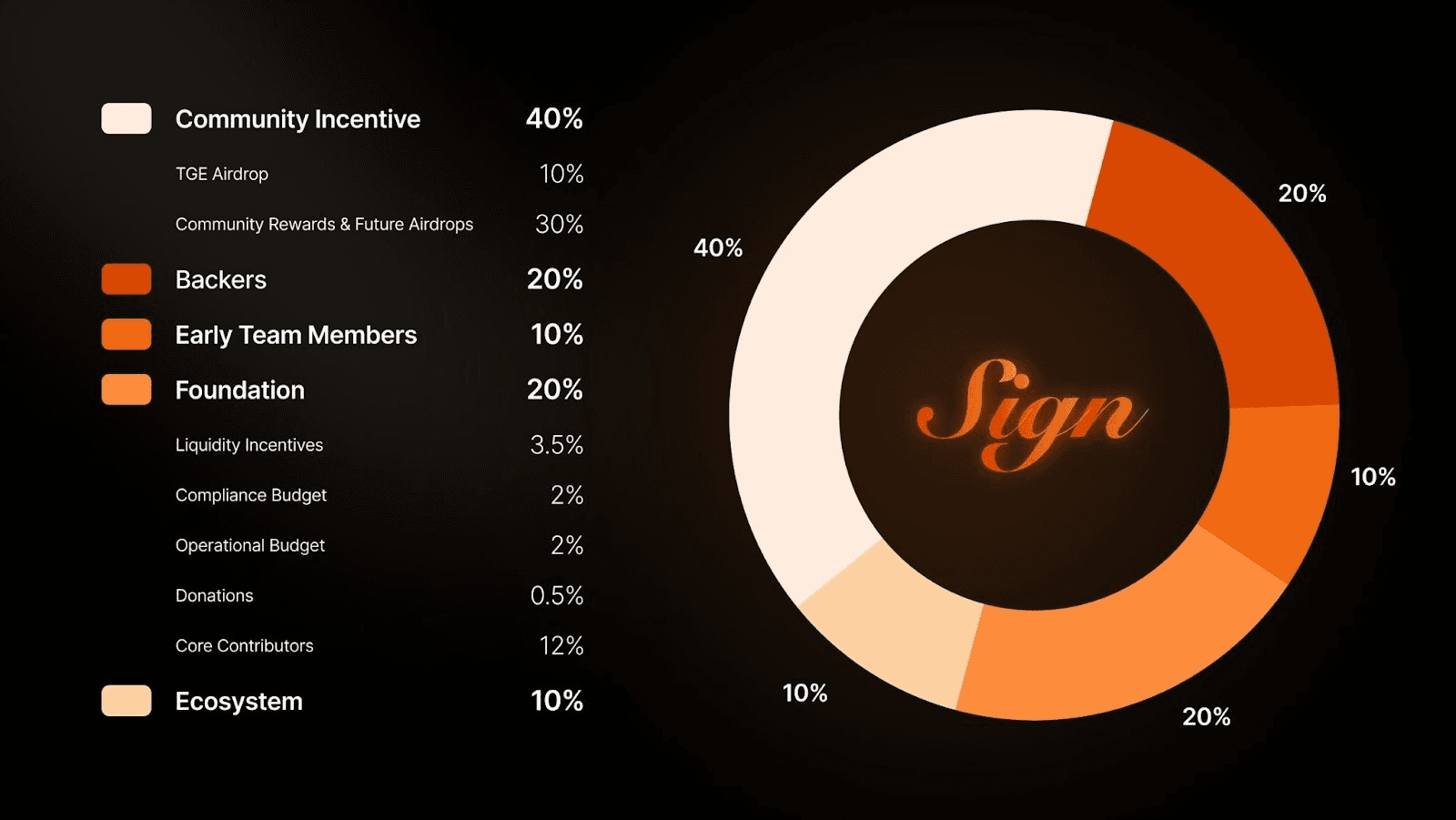
Token distribution, Source: https://sign.global/sign
$SIGN tokens play multiple key roles as the premium fuel driving Sign Protocol, TokenTable, and SignPass. Users must use $SIGN to pay service fees when signing contracts, claiming airdrop rewards, creating custom verification schemas, or performing identity authentication. Beyond its utility, the token possesses strong governance attributes. Holders can vote on protocol parameters, technical upgrade paths, and treasury fund allocations. This deep mechanism creates a positive feedback loop between token value and ecosystem activity. As more countries and institutions shift identity systems and capital distribution to Sign infrastructure through 2026, demand for the token will expand, making it a core economic pillar of the digital sovereignty era.
Why do you invest in SIGN (EthSign)?
The core concept for investing in SIGN Protocol is its resolution of the "trust layer" problem that has long been missing in the Web3 ecosystem. In the flourishing digital asset market of 2026, it is clear that simple transactions and storage are not enough to constitute a complete digital society. There must be attestation mechanisms with legal effect and cross-chain compatibility. SIGN Protocol is more than an electronic signature tool. It integrates scattered identity, asset, and contract data across various blockchains by building an omni-chain attestation framework. For investors seeking long-term value, this project offers a rare example of combining real-world legal systems with decentralized networks. As the scale of assets processed by its products exceeds $130 million in 2025, value growth no longer depends on emotional market fluctuations but on the actual adoption rate of digital infrastructure.
From a technical evolution perspective, investing in this project means participating in the construction of future sovereign-grade digital infrastructure. SIGN Protocol has the capacity to handle national-level money, identity, and capital systems. This potential for penetration from commercial applications to government levels is something ordinary financial projects lack. Its unique omni-chain architecture ensures that SIGN exists as a fundamental component whether the market shifts toward Solana, TON, or the Bitcoin ecosystem. Throughout the 2025 to 2026 development cycle, the protocol has expanded its Schema Registry and attracted numerous third-party developers to form a powerful platform effect. When an ecosystem becomes the de facto certification standard for the industry, the utility and scarcity of its token will grow exponentially with network node expansion.
Is SIGN (EthSign) a good investment?
The advantage of this project lies in its extremely high migration costs and standardization benefits. Once large institutions and DeFi protocols adopt its attestation model, it becomes very difficult to switch. Operating data from 2025 shows that while maintaining decentralization, the protocol solved traditional blockchain latency and RPC failure issues. This makes it highly competitive for enterprise-level clients. SIGN Protocol may actually see more compliance demand during market downturns because liquidations, debt restructurings, and legal arbitrations all require the immutable proof it provides.
However, as a frontier technology investment, investors must also watch competition dynamics in the decentralized verification track and the evolution of the compliance environment. Although SIGN Protocol established a significant lead by 2026, its value ultimately depends on user recognition of decentralized proof. The project's hybrid storage solution is technically leading, but large-scale promotion must still overcome the cognitive barriers traditional legal systems have regarding blockchain evidence. Fortunately, the team has invested massive resources into the depth of technology-neutral legal compliance to ensure a legal standing in major global markets. For investors focused on fundamentals and Web3 infrastructure implementation with long-term patience, SIGN Protocol demonstrates a steady growth path and clear value capture. It is a strategic asset with high certainty in the wave of digital transformation.
Explore the latest SIGN (EthSign) price and live chart, trade SIGN on FameEX, and access real-time market data! Get started now with a seamless trading experience!
Disclaimer: The information provided in this article is intended only for educational and reference purposes and should not be considered investment advice. Conduct your own research and seek advice from a professional financial advisor before making any investment decisions. FameEX is not liable for any direct or indirect losses incurred from the use of or reliance on the information in this article.