FameEX Today’s Crypto News Recap | May 4, 2026
2026-05-04 06:55:49

As Bitcoin tests its highest weekly close of the year, reports on an Iranian exchange probe and Linux flaws draw attention, while BTC subsequently surged past $80K to trigger a massive short squeeze. Today’s crypto market showed notable volatility as Bitcoin broke strongly above the $80K threshold. Market sentiment shifted quickly after Bitcoin returned to this psychological level for the first time in three months. Total liquidations across the network exceeded USD 106 million within nearly one hour, with short liquidations accounting for the vast majority. This reflected a clear short squeeze as the market broke through a key resistance zone. According to the latest funding rate data, Bitcoin’s 8-hour average funding rate across the network remained slightly negative at -0.0019%, which suggests that the arbitrage balance remained present during the rally. Ethereum’s funding rate stayed flat at 0%. On the macro side, the probability that the Federal Reserve will keep interest rates unchanged in June reached 92.8%. Market expectations for near-term rate cuts continued to cool, while a modestly higher open in the three major US stock index futures provided some support for risk assets. Current Bitcoin and Ethereum open interest increased by 5.09% and 7.01%, respectively, with total open interest reaching USD 60.314 billion and USD 32.944 billion. This shows that institutional participants and leveraged traders increased their activity during the period of sharp price movement.
Crypto Markets Overview
The current Crypto Fear & Greed Index stands at 40, which remains in the “Fear” zone. This indicates that investor confidence has not fully recovered during the early stage of the price rebound, while market participants generally maintained a cautious wait-and-see stance. Bitcoin rose strongly by 2.32% over the past 24 hours and held at $80,076.1. This move directly triggered large-scale short liquidations across the network. Total liquidations reached USD 159 million over 24 hours, including around USD 96.9722 million in short liquidations and around USD 61.7866 million in long liquidations. From an open interest perspective, positions on major CEXs increased significantly, which shows that traders are actively building new positions around current price levels to prepare for further volatility. Liquidation data shows that if Bitcoin falls below $74,944, major CEXs may face up to USD 1.119 billion in long liquidation pressure. Conversely, if Bitcoin breaks above $82,168, short liquidation intensity could reach USD 928 million. On the corporate treasury side, the market value of Strategy’s 818,334 BTC holdings has returned above USD 65 billion, with unrealized gains approaching USD 3.926 billion. Although founder Michael Saylor announced a pause in this week’s purchase plan, the market continues to pay close attention to the company’s holding scale and unrealized profit position.
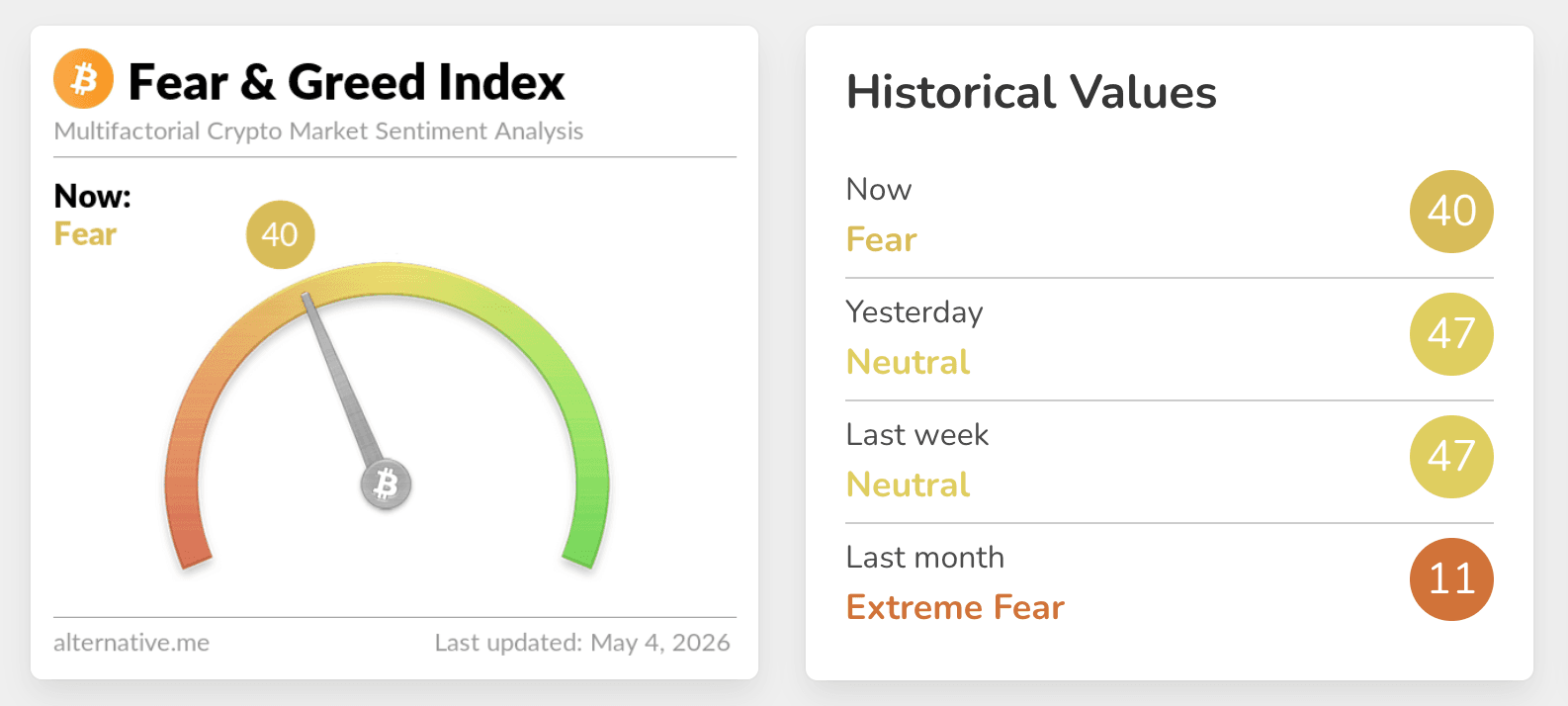
Source: Alternative
Key News Highlights:
Bitcoin Challenges Highest Weekly Close Since January
Bitcoin showed strong recovery momentum ahead of the weekly close. It erased earlier losses from the start of the week and successfully challenged the area near $80K, which could mark its highest weekly closing level since late January. Market analysts noted that geopolitical factors, including volatility around the US-Iran conflict, have created intermittent pressure on risk assets. Even so, Bitcoin’s buying strength remained relatively stable, especially with support from strong spot ETF inflow data. Trading sentiment has also started to improve. If Bitcoin can break through the key resistance area around $80K, some analysts have identified the $86K to $88K range as the next major zone to watch, while stronger resistance may sit above $92K. However, several experienced traders warned that the current market still carries liquidity trap risks. Long contracts opened aggressively at higher levels could become targets during large-player liquidity sweeps. They also noted that concentrated zones on liquidation heatmaps deserve close attention, as prices may reverse sharply after touching high-liquidity areas. Overall, although the macro environment remains uncertain, Bitcoin’s technical structure is moving toward a more constructive setup, and its weekly-level performance will remain an important indicator for assessing the medium-term trend.
Founder Background Behind Iran’s Largest Crypto Trading Platform Revealed
A new investigative report showed that Iran’s largest crypto trading platform was founded by two brothers with close links to the country’s supreme leadership network. The two founders reportedly used the alias “Aghamir” for an extended period to conceal their real identities and obscure the power ties between their family and senior government figures. The platform currently dominates Iran’s crypto market, serving more than 11 million users. It also continued to operate during international sanctions and domestic internet shutdowns, which points to strong technical resilience and a politically sensitive operating background. The report stated that the platform processed more than USD 100 million in transactions during wartime, with notable funds flowing overseas. This raised concerns among international regulators about its potential role in bypassing financial restrictions. Although the platform firmly denied any government affiliation and said illicit transactions made up only a small portion of its overall business, on-chain analytics data showed that wallets linked to Iran’s central bank and sanctioned entities had transferred crypto assets worth hundreds of millions of dollars to the platform. US authorities have recently expanded enforcement actions against Iran-linked financial activity and reportedly seized nearly USD 500 million in related crypto assets. This reflects a continued rise in cross-border regulatory scrutiny over transparency at trading platforms in specific regions.
US CISA Adds Major Linux “Copy Fail” Flaw To Watch List
The US Cybersecurity and Infrastructure Security Agency officially added the Linux kernel vulnerability known as “Copy Fail” to its Known Exploited Vulnerabilities catalog. The agency warned that the flaw poses significant risks to enterprise-level systems. The vulnerability affects most major open-source Linux distributions released since 2017. Attackers with basic system access may be able to gain root privileges on Linux systems through simple code execution. Security researchers said the barrier to exploit is extremely low. In some cases, a privilege escalation attack could be executed with fewer than 10 lines of Python code. This creates a serious potential threat for crypto trading platforms, blockchain nodes, and asset custodians that rely heavily on Linux environments. The Linux development team released patches in early April, and affected organizations have been urged to update their systems immediately to reduce the risk of malicious exploitation. The discovery came as major technology companies and security organizations launched Project Glasswing, an initiative designed to strengthen the defense of critical software through artificial intelligence. The project aims to address increasingly complex coding vulnerabilities and cyberattack challenges while helping protect the security and stability of global digital infrastructure.
Trending Tokens:
- $PIEVERSE (Pieverse)
As the Agent Economy continues to gain traction, security frameworks have become a central focus for market participants, which has positioned Pieverse as a standout infrastructure layer within this narrative. As an onchain payment protocol that leverages the x402b standard to enable auditable and gasless payments, Pieverse addresses the core trust requirements of decentralized financial interactions between autonomous agents. The recent integration of the CertiK Skill Scanner into its Skill Store represents a significant upgrade, as it enhances ecosystem security through the detection of malicious code and vulnerability patterns. This development introduces a critical review layer for both users and agents, strengthening confidence during interaction across the asset lifecycle. Market attention is also directed toward its ability to attach timestamps to value through onchain invoices, receipts, and checks, while maintaining a balance between privacy and operational efficiency. The protocol’s emphasis on embedding security across every layer of the agent economy reinforces its positioning as a foundational component within the evolving DeFi and AI agent narrative.
- $SOSO (SoSoValue)
SoSoValue, as a leading AI-driven investment research platform, continues to demonstrate strong market traction by bridging the efficiency of CeFi with the transparency of DeFi. The project has recently completed its twelfth consecutive week of SoPoints distribution, using a structured tier system to strengthen user retention and ecosystem loyalty. This ongoing incentive mechanism provides a verifiable record of user activity, effectively converting behavioral engagement into measurable ecosystem value. With over USD 19 million in funding from top tier investors such as Sequoia China and Mirana Ventures, the platform addresses key challenges in the crypto sector, including information overload and cross chain asset management. Market participants are particularly focused on its integrated data analytics and AI tools, which simplify complex market dynamics for both retail and professional investors. By maintaining a consistent distribution cadence alongside continuous feature development, SOSO reinforces its narrative as a data-centric gateway for cryptocurrency research.
- $GENIUS (Genius)
Genius has captured broad market attention following its debut on the Rocket Launch platform as the first Aster Code partner. This strategic launch marks a significant milestone for the Aster ecosystem and has driven strong trading activity and user participation from the outset. During the initial campaign period, the project facilitated more than USD 236 million in single sided perpetual trading volume, with peak daily volume reaching USD 69 million. As an onchain trading terminal that supports more than ten blockchains, including BNB and Solana, Genius aims to redefine decentralized trading through privacy preserving execution and cross chain interoperability. The platform provides a unified interface for swaps, copy trading, and leveraged trading, without requiring zero-knowledge proofs for private transactions. This technical architecture, combined with the dual reward pool mechanism on Aster DEX, has effectively incentivized liquidity and attracted professional DeFi users seeking high performance execution. Recent performance metrics further highlight strong market demand for institutional level trading infrastructure that extends beyond the memecoin cycle.

Disclaimer: The information provided in this section is for informational purposes only and doesn't represent any investment advice or FameEX's official view.