FameEX Today’s Crypto News Recap | July 23, 2026
2026-07-23 07:03:53

Crypto PAC spending expands in U.S. elections as Samsung adds stablecoin support and S&P launches a protocol-revenue index. Today, the BTC price remains volatile. The cryptocurrency market has remained volatile as macroeconomic data and geopolitical developments continue to shape trading conditions. Bitcoin and Ethereum are now moving within key zones where long and short positions are heavily concentrated. According to Coinglass data, if Bitcoin breaks above the critical level of $68,827, cumulative short liquidation intensity across major CEXs could reach USD 1.157 billion. If the price falls below $62,911, cumulative long liquidation intensity could reach USD 1.145 billion. Ethereum shows a similarly concentrated leverage structure. A drop below the $1,834 support level could expose up to USD 966 million in cumulative long liquidation intensity across major CEXs. A move above $2,014 could place around USD 905 million in short positions at risk of liquidation. These figures indicate that leveraged positions are heavily clustered on both sides of the market. In terms of capital flows and market sentiment, both Bitcoin and Ethereum spot ETFs have continued to record steady net inflows. Bitcoin spot ETFs have posted net inflows for seven consecutive trading days, while Ethereum spot ETFs have maintained net inflows for four consecutive days. This suggests that institutional investors are continuing to allocate capital during periods of market volatility. However, broader sentiment remains cautious. The Crypto Fear and Greed Index currently stands at 31, which places the market in the Fear zone. The probability that the Federal Reserve will keep interest rates unchanged in July has reached 65.3%, while expectations of a September rate hike have increased. Investors are also monitoring a new round of U.S. military strikes against Iran and Tesla’s weak after-hours performance. Together, these macroeconomic and geopolitical uncertainties have encouraged market participants to remain highly cautious.
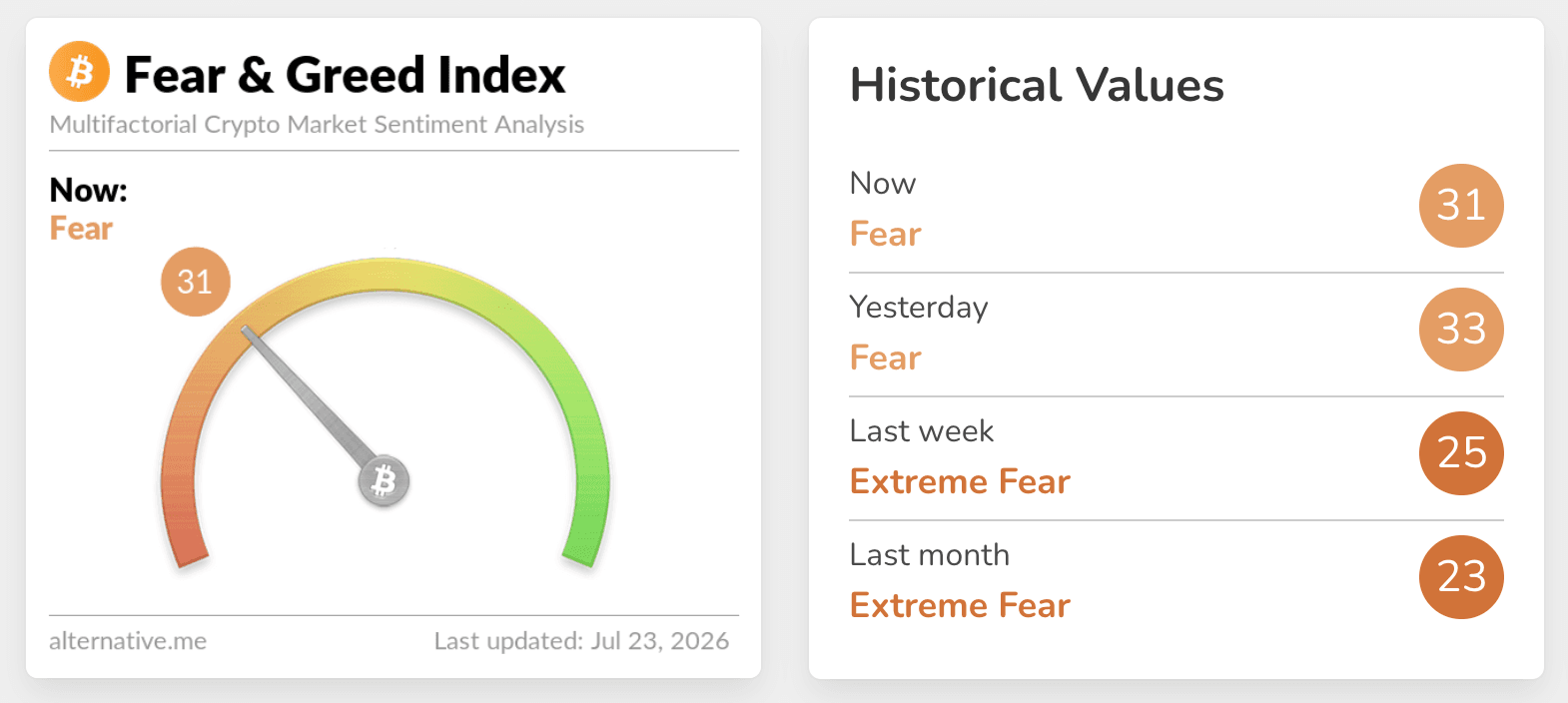
Source: Alternative
Key News Highlights:
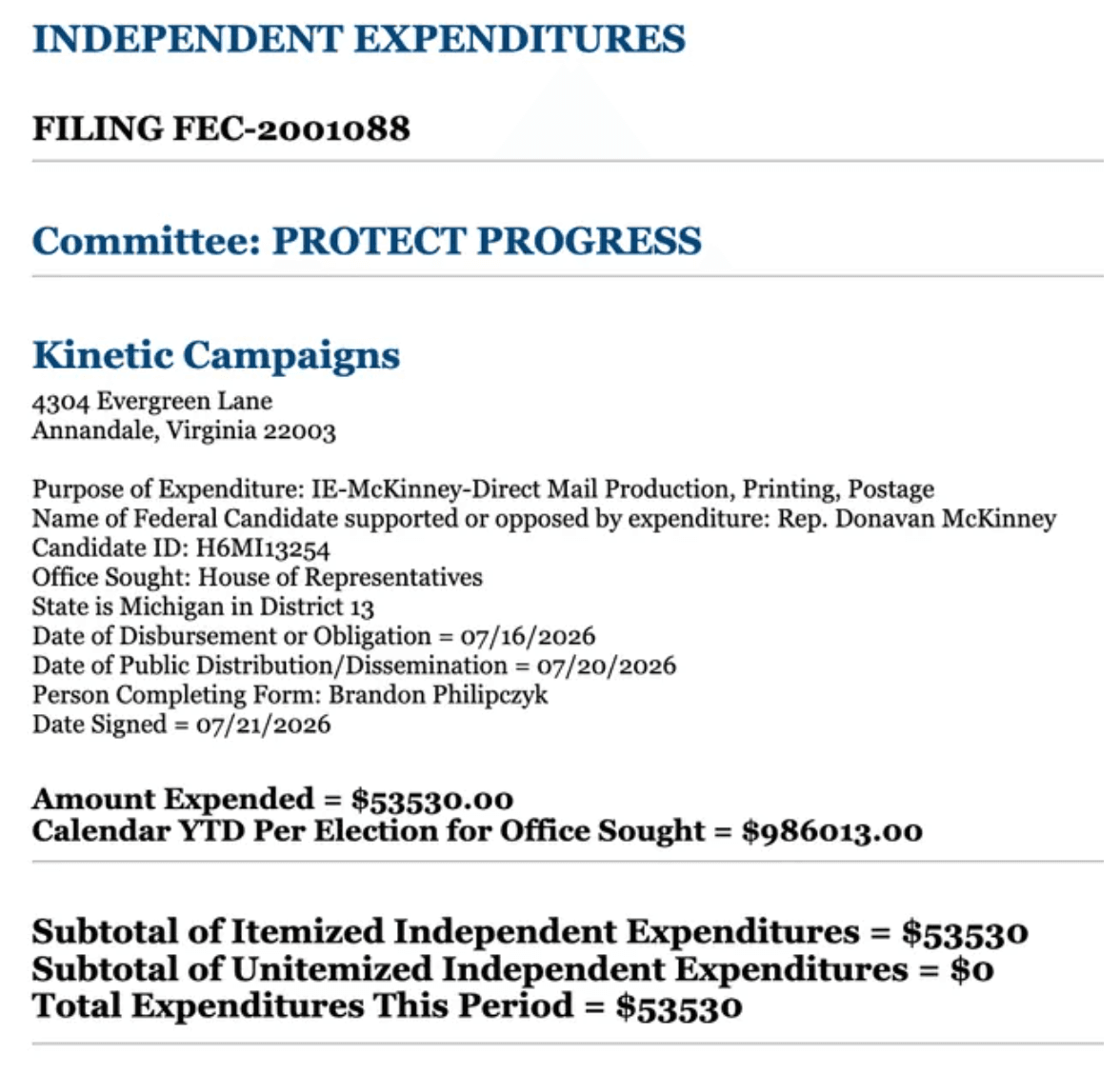
Crypto PAC Spends Nearly USD 1 Million in Michigan Democratic Primary
Protect Progress, a political action committee aligned with the cryptocurrency industry, has spent more than USD 986,000 on advertising in the Democratic primary for Michigan’s 13th congressional district. According to filings published by the U.S. Federal Election Commission as of Tuesday, the advertisements mainly support incumbent Representative Shri Thanedar and oppose his primary challenger, Donavan McKinney. The spending came around two weeks before the August 4 primary. The winner will represent the Democratic Party in the November congressional election. Protect Progress is affiliated with Fairshake, a crypto-focused political action committee that also spent around USD 1 million supporting Thanedar in 2024. Thanedar has voted in favor of several cryptocurrency-related bills in the House of Representatives. These include the CLARITY Act, the GENIUS Act, and the Promoting Innovation in Blockchain Development Act. McKinney has publicly criticized the large amount of outside political spending in the local primary. He also linked the campaign support to Thanedar’s voting record on crypto legislation. Fairshake and its affiliates currently report holding around USD 191 million in available funds, which could be deployed in other competitive races. Outside Michigan, Protect Progress has spent more than USD 100,000 to support Representative Greg Stanton’s reelection campaign in Arizona. Another affiliated political action committee, Defend American Jobs, has spent more than USD 65,000 in Washington’s 4th congressional district. The funding supports Republican candidate Amanda McKinney, who has previously expressed a crypto-friendly position.
Intel and AMD Seek Long-Term Server CPU Deals With Chinese Customers
Intel and AMD are seeking longer-term purchasing commitments from Chinese server customers for data center processors. The discussions come as demand for artificial intelligence infrastructure grows rapidly and server CPU prices continue to rise. According to people familiar with the talks, the proposed agreements generally lock in purchase volumes without fixing final prices. Most agreements cover around one year of supply. Some customers are also discussing commitments lasting two years or longer with the two chipmakers. AI data centers require large numbers of GPUs for model training and computation. They also rely on CPUs for server management, data storage, networking, and inference workloads. As data center construction expands, supply pressure is spreading beyond AI accelerators and memory chips. Mainstream server processors and networking equipment are now also facing tighter availability. Sources said prices for some server CPUs in China have risen by more than 40% since the beginning of the year. Certain products have also recorded monthly price increases of more than 10%. Intel previously informed Chinese customers that delivery times for some server CPUs could extend to six months. Longer lead times and higher costs could affect equipment procurement for Chinese cloud providers and internet companies expanding their AI services. Intel CEO Lip-Bu Tan previously said demand for Xeon server processors continued to exceed supply. AMD has also raised its forecast for the server CPU market to more than USD 120 billion by 2030.
Samsung Wallet Plans Native Support for Stablecoins and Digital Value Services
Samsung Electronics has outlined the next stage of development for Samsung Wallet. The company plans to support stablecoins and other new forms of digital value directly within the wallet platform. During Galaxy Unpacked 2026, Samsung said the service would expand beyond its existing payment and savings functions into the digital asset sector. The company aims to provide native stablecoin support for Galaxy device users. This would enable faster and more reliable transfers of digital value. Samsung Wallet currently supports payment services and can also store digital keys, identification documents, boarding passes, and other everyday information. Samsung said the planned expansion would bring payments, rewards, and digital assets into a single user experience. It also intends to position Samsung Wallet as a central platform connecting Galaxy devices with financial services. During the event, Samsung introduced the Samsung Galaxy Card, its first financial product built around Samsung Wallet. The card will be issued by Barclays and will operate through the Visa network. It will initially launch in the United States. Users will be able to apply for the card, manage their accounts, review spending, and redeem rewards directly through Samsung Wallet. Samsung also said Samsung Knox would protect sensitive wallet information through end-to-end encryption. This security framework will support the company’s broader integrated financial services. Samsung has not yet disclosed which stablecoins will receive initial support. It has also not announced an official launch date or the first markets where the feature will become available.
S&P and Pantera Launch Digital Asset Index Based on Protocol Revenue
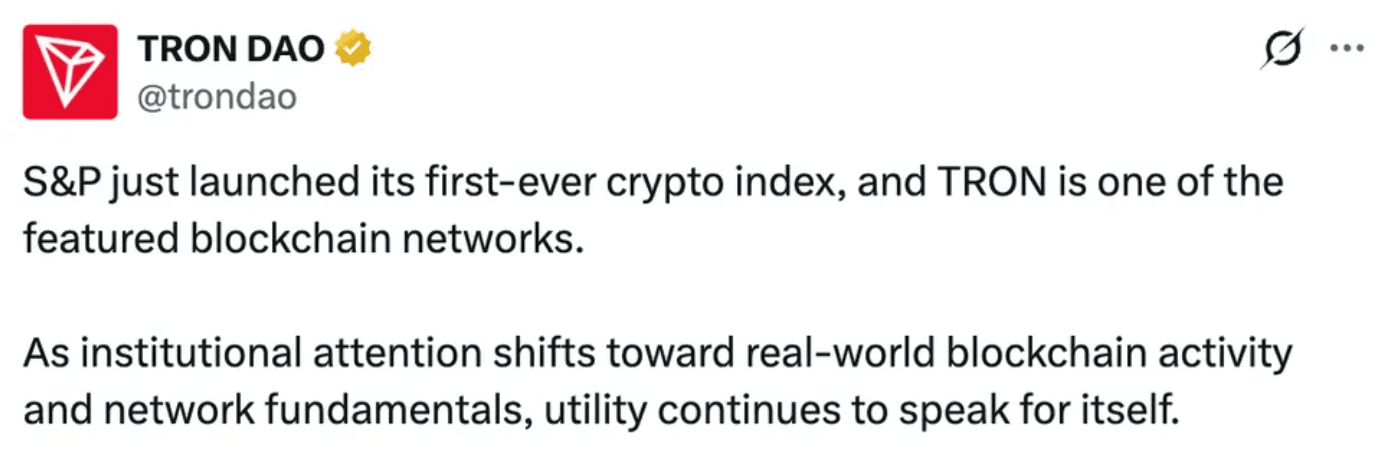
S&P Dow Jones Indices and Pantera Capital have launched the S&P Pantera Digital Asset Index. The new benchmark evaluates the fundamental performance of digital assets and blockchain networks by examining protocol revenue. Unlike traditional cryptocurrency indexes that assign weight mainly according to token prices or market capitalization, the new index also considers actual network usage and revenue generation. Candidate assets must first meet minimum requirements for protocol revenue, market capitalization, and market liquidity. Only assets that satisfy these thresholds are eligible for inclusion. Qualified blockchain networks are ranked according to their total protocol revenue over the previous two quarters. Their final weightings are then determined using adjusted market capitalization. The largest single holding is capped at 35%, while other major constituents are generally limited to 20%. The index is rebalanced every quarter. It initially includes 18 digital assets. Major constituents include ETH, SOL, TRX, HYPE, and other blockchain assets that generate protocol revenue. BTC and XRP were not included in the initial selection. This reflects the index’s focus on protocol revenue rather than market capitalization or general market recognition. S&P said the rules-based framework is designed to distinguish blockchain networks with established economic activity from assets that mainly depend on trading demand. The index is primarily intended for institutional investors. It may serve as a benchmark for digital asset investment products, actively managed portfolios, and performance comparisons.
Disclaimer: The information provided in this section is for informational purposes only and doesn't represent any investment advice or FameEX's official view.