FameEX Today’s Crypto News Recap | August 7, 2026
2026-08-07 06:59:19
Coldcard exploit revives Bitcoin ETF custody debate as Russia signs crypto rules and Robinhood Chain DEX volume drops; today’s BTC price stays fluctuating under Fear sentiment. Overall crypto market sentiment has remained in the Fear zone recently, while Bitcoin and Ethereum continue to trade within a volatile range amid a mix of macroeconomic and geopolitical factors. The Crypto Fear & Greed Index currently stands at 29, placing the market in the Fear zone and reflecting a cautious assessment of the broader macro environment. In terms of capital flows, data from the U.S. trading session showed that spot Bitcoin ETFs recorded daily net inflows of USD 129 million. This suggests that institutional demand for Bitcoin exposure remains present despite continued market volatility. Spot Ethereum ETFs also recorded total net inflows of USD 92.1509 million, extending their recent inflow streak. In the derivatives market, exchange data shows significant leverage concentrated around several key ETH price levels. If Ethereum rises above $1,990, cumulative short liquidation intensity across major CEXs could reach USD 774 million. If ETH falls below $1,816, cumulative long liquidation intensity could reach USD 722 million. On the macroeconomic and industry front, reports from the Middle East indicate that a temporary framework has been reached regarding the Strait of Hormuz. The proposed arrangement could help reopen shipping routes and create conditions for renewed talks between the United States and Iran. Meanwhile, research firm TrendForce has raised its forecast for global AI server shipment growth in 2026 to nearly 31%. Capital expenditure among major global cloud service providers is also projected to increase by around 90% year over year. In the digital asset sector, Japanese Bitcoin treasury company Remixpoint disclosed data on its Bitcoin lending principal and staking operations, providing another example of institutional asset management practices within an evolving compliance framework. Overall, the crypto market remains in a highly dynamic adjustment phase as capital flows, derivatives positioning, and external macroeconomic developments continue to evolve.
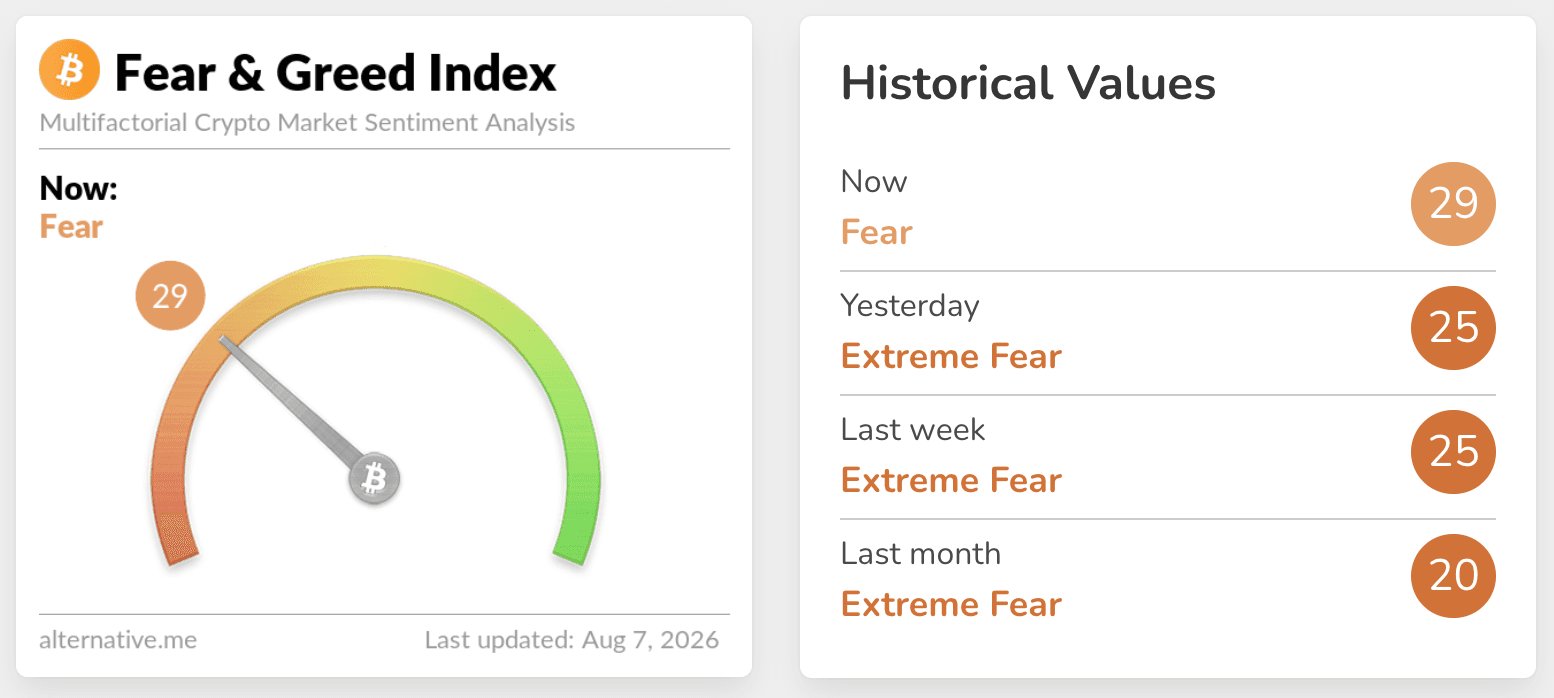
Source: Alternative
Key News Highlights:
Bitcoin ETF inflows rise after Coldcard hardware wallet exploit, but analysts say the link remains unclear
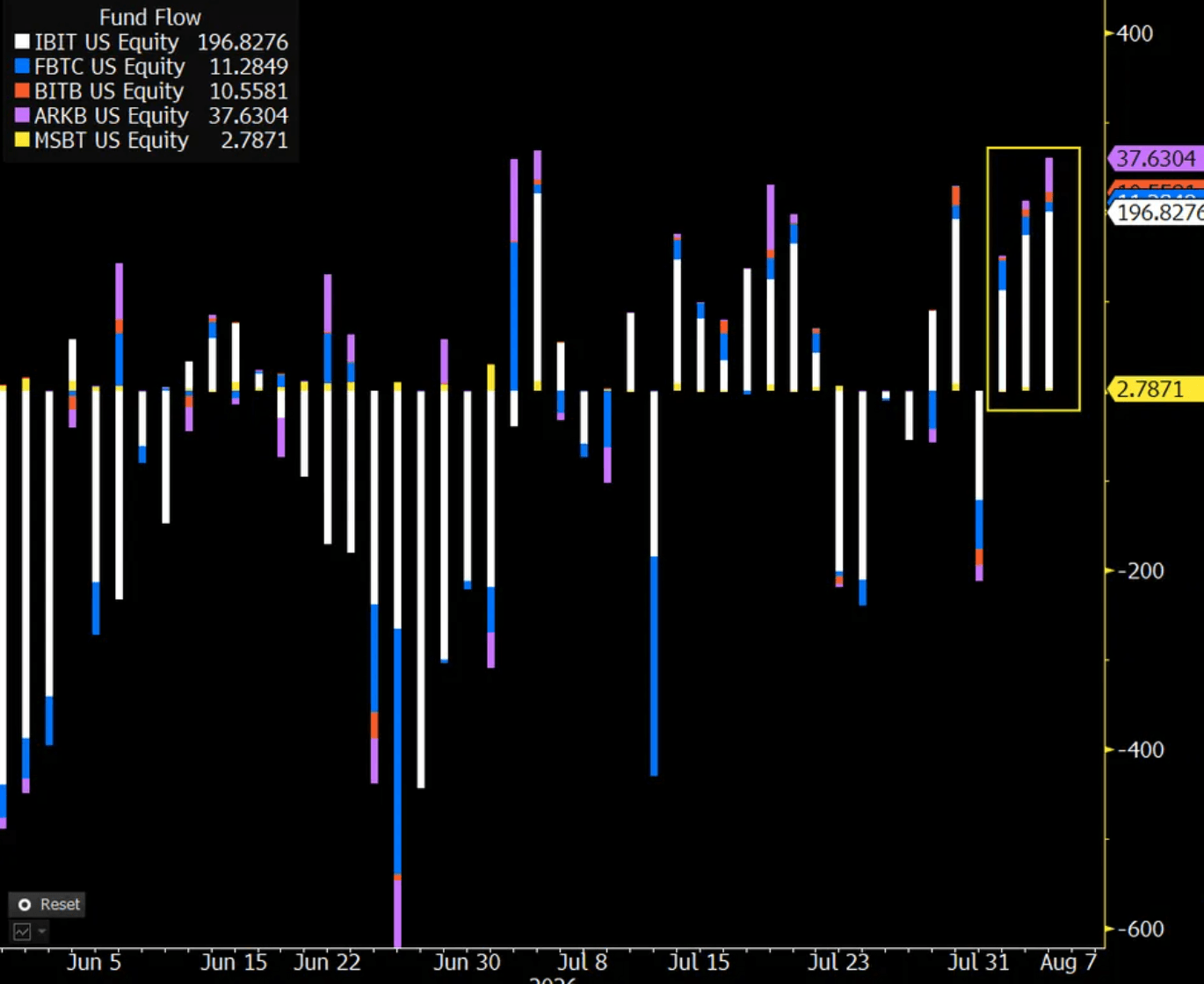
U.S. spot Bitcoin ETFs have recently seen a sustained period of inflows that coincided with the Coldcard hardware wallet exploit. The timing has sparked broader discussion over whether some investors are reassessing the security risks associated with self-custody. According to Bloomberg senior ETF analyst Eric Balchunas, several major U.S. spot Bitcoin ETFs have recorded net inflows on every trading day since the weekend exploit. Their combined inflows reached roughly USD 620 million. Blockchain intelligence firm TRM Labs reported that the Coldcard exploit resulted in losses of more than USD 116 million in Bitcoin across over 5,200 wallet addresses. Analysts have remained cautious about drawing a direct connection between the two developments. Balchunas noted that there is currently no evidence proving that the security incident directly caused the ETF inflows. However, he suggested that security concerns could lead some users to move toward regulated investment channels over the longer term. The incident has once again highlighted how hardware wallet users can still face risks related to firmware flaws and software vulnerabilities. It has also renewed discussion about the trade-offs between directly holding digital assets and gaining Bitcoin exposure through regulated investment products where custody and security are handled by institutional providers. Cybersecurity risks are also becoming more complex as artificial intelligence makes automated attacks increasingly sophisticated. Bitcoin swap service Boltz recently suspended its non-custodial bridge after reporting an increase in automated vulnerability exploits. Overall, the overlap between the hardware wallet security incident and ETF inflows has brought renewed attention to the evolving choices surrounding asset custody, security protection, and regulated access to Bitcoin.
Russian president signs cryptocurrency regulation law, with core rules set to take effect in 2026
Russian President Vladimir Putin has formally signed a new law establishing a regulated framework for the country's cryptocurrency market. The move marks another major step in Russia's effort to define the legal status and operating rules for digital assets. According to official records from the State Duma, Russia's lower house of parliament, Putin signed bill No. 1194918-8 titled "On Digital Currencies and Digital Rights." The legislation establishes operating requirements for cryptocurrency market participants, including exchanges, brokers, custodians, and other crypto service providers. Crypto exchange operators will be required to meet regulatory standards and join a financial market self-regulatory organization. The law also introduces separate rules for retail and qualified investors. Retail investors will only be permitted to purchase approved crypto assets through intermediaries. Their purchases will be capped at 300,000 rubles, or about USD 3,700, per intermediary each year. Qualified investors will be allowed to purchase cryptocurrencies without the same restrictions. The core provisions of the legislation are scheduled to take effect on September 1, 2026. Certain measures covering non-resident digital depositories will take effect on July 1, 2027. The law also maintains Russia's existing ban on using crypto assets to pay for goods and services within the country. Following final approval by the State Duma in late July, the Bank of Russia will oversee the regulated crypto market. It will also issue implementation rules and determine which crypto assets licensed intermediaries may offer. The legislation provides Russia's cryptocurrency market with a clearer legal and regulatory framework while setting formal requirements for market participation and financial risk controls.
Tokenized asset platform Ondo Finance faces control dispute after founder's death as estate files lawsuit
Tokenized asset company Ondo Finance has become involved in a legal dispute over corporate control following the death of its founder Nathan Allman earlier this year. According to reports, Allman's estate has filed a lawsuit in the Delaware Court of Chancery against former president and current CEO Ian De Bode. The estate alleges that De Bode improperly attempted to take control of the company while the probate process remained incomplete and the company's controlling voting rights were temporarily unavailable. Three court filings ask the judge to determine who legally controls Ondo Finance. They also seek to prevent the company from taking major operational or strategic actions until the governance dispute is resolved. According to the filings, Nathan Allman was Ondo's CEO, sole director, and controlling shareholder at the time of his death. His voting rights could not be exercised until his mother, Kathleen Allman, was formally appointed as the estate representative through Hawaii probate proceedings on June 26. The estate alleges that before those voting rights became available, De Bode claimed that the company's bylaws automatically made him CEO and that he had appointed himself sole director. It further alleges that he took a number of corporate actions during this period, including hiring advisers and approving performance-based equity grants. After gaining control of the voting rights, Kathleen Allman voted at a July 24 board meeting to remove De Bode from all of his positions. She then appointed herself chair and interim CEO. De Bode responded by saying that the lawsuit was regrettable and that the estate's claims lacked merit. He also said the company continues to receive support from major investors, the Ondo Foundation, and other key stakeholders. The court has not yet issued a final ruling on the allegations. At this stage, the filings primarily represent the estate's claims and legal position. The dispute has also drawn attention to succession planning and corporate governance structures within high-profile crypto and tokenization companies when control changes unexpectedly.
Robinhood Chain DEX volume drops sharply while transactions and deposits reach record highs
Decentralized exchange activity on Robinhood Chain has declined sharply since reaching a peak in mid-July, even as several other major on-chain metrics have continued to set new records. Data from DeFiLlama and industry researchers show that daily DEX volume fell from a peak of USD 878 million on July 11 to USD 241 million on August 1. This represents a decline of 72.5%. The network's seven-day average trading volume also fell significantly during the same period. However, the decline in DEX volume has moved in the opposite direction from several other network indicators. Total transactions, total value locked, and stablecoin supply have all continued to increase and reached record levels. The chain processed a record 13.3 million transactions on August 5. Total value locked reached USD 433 million on August 6, while stablecoin supply climbed to USD 597 million. A closer look at the transaction structure shows that average DEX volume per transaction fell by as much as 74%. This suggests that the network is processing a larger number of smaller transactions rather than maintaining the same average trade size seen during its earlier activity peak. The pattern is closely linked to Robinhood Chain's incentive structure, where most network rewards are currently directed toward depositors instead of trading liquidity providers. Some of the largest programs reward users for depositing stablecoins and collateral through the Morpho protocol. Memecoin activity has also played an important role in the network's trading patterns. CASHCAT, for example, has shown a notable positive correlation with changes in the chain's DEX volume. Uniswap continues to account for the majority of DEX activity on the network. Within that activity, Uniswap v4 volume increased substantially after the launch of a related token-launch platform and later surpassed v3 volume. Overall, Robinhood Chain's post-launch activity shows a change in the on-chain structure. Trading volume has cooled from its initial speculative peak, while deposit growth and a larger number of smaller transactions continue to support broader network activity.
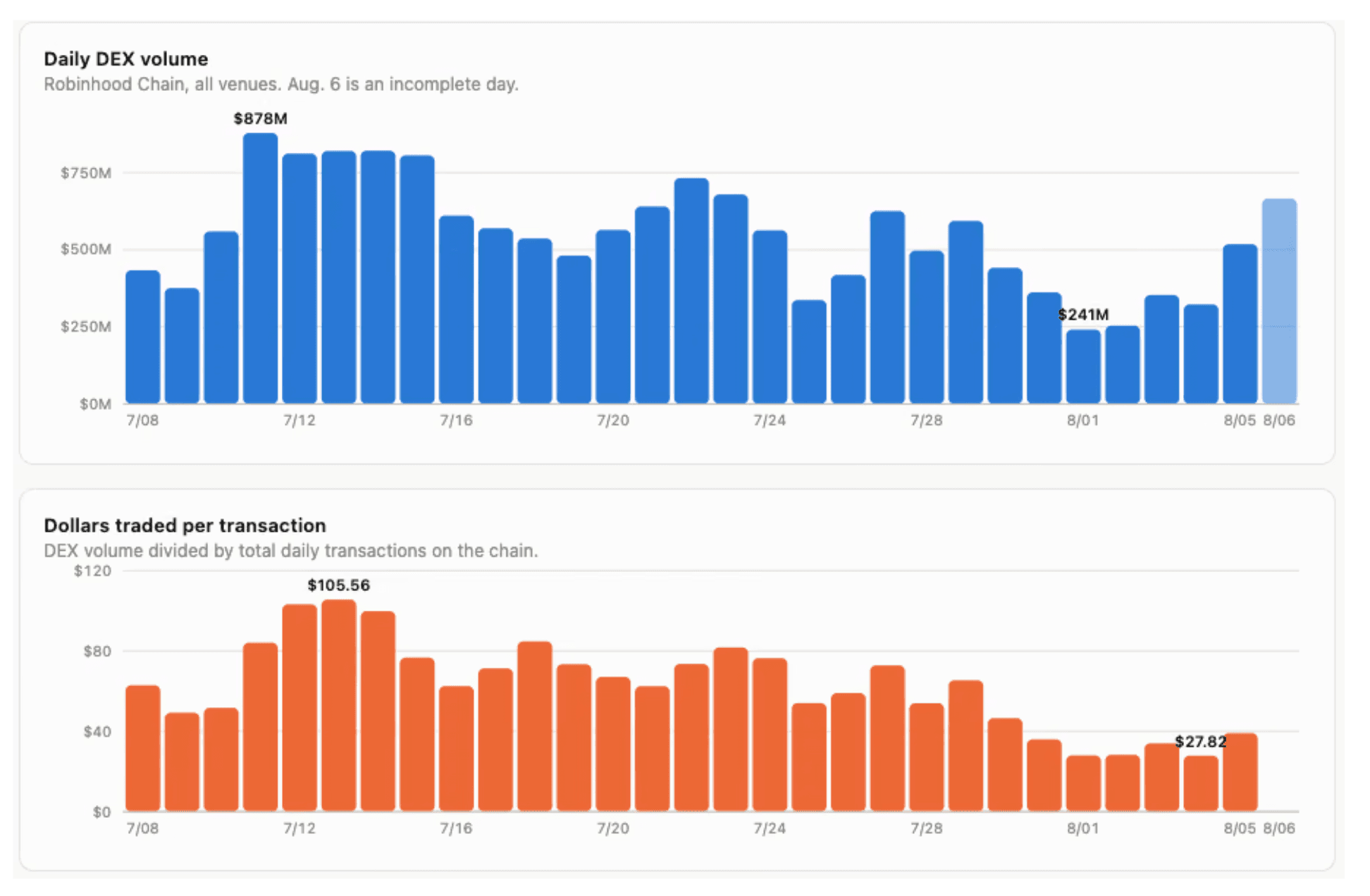
RH Chain DEX Volume and Trading Value. Source: DeFiLlama
Disclaimer: The information provided in this section is for informational purposes only and doesn't represent any investment advice or FameEX's official view.