FameEX Today’s Crypto News Recap | August 13, 2026
2026-08-13 07:01:35

El Salvador’s Bitcoin experiment turns 5 years as reported, Goldman expands crypto ETFs and U.S. states tighten ATM rules; today’s BTC trades near $64K in Fear sentiment. Bitcoin is currently trading at around $64,051, down roughly 1% from yesterday’s level of about $64,564. The price continues to consolidate within the $63K–$64K range. Ether is trading near $1,880 and has changed little from yesterday’s level of around $1,883. It remains below $1,900 in the short term. Bitcoin has continued to face resistance near the cost basis of short-term holders. The realized price for holders who have owned BTC for less than three months is currently around $67,900. Since late June, several rebounds toward this level have failed to produce a sustained breakout. Glassnode data also shows that Bitcoin is trading between the median realized price of roughly $63K and the short-term holder cost basis of about $68.7K. Spot trading volume has meanwhile fallen to relatively low levels not seen since 2019, indicating that active demand in the spot market remains limited. Market sentiment has improved slightly. The Crypto Fear and Greed Index currently stands at 29, up from 27 yesterday, but it remains in the Fear zone and suggests that overall risk appetite has yet to recover meaningfully. ETF flows were mixed. U.S. spot Bitcoin ETFs recorded total net outflows of USD 61.1637 million yesterday. FBTC saw USD 46.8221 million in net outflows, while IBIT recorded USD 14.3416 million in net outflows. Spot Ether ETFs posted USD 7.3791 million in net inflows. Across the crypto market, approximately USD 177 million in positions were liquidated over the past 24 hours. Long liquidations totaled USD 82.9367 million, while short liquidations reached USD 93.6 million. This shows that recent price swings have continued to clear leveraged positions on both sides of the market. Liquidation data also shows significant concentrations near key price levels. If BTC rises above $66,745, cumulative short liquidation intensity across major CEXs could reach around USD 1.388 billion. If BTC falls below $60,739, cumulative long liquidation intensity could reach roughly USD 1.229 billion. For ETH, a move above $1,980 could expose around USD 859 million in short liquidation intensity. A drop below $1,798 could put roughly USD 669 million in long liquidation intensity at risk. Overall, the market continues to show weak spot demand, contracting trading volume, and relatively elevated derivatives leverage. Prices remain in a fluctuating range, while trading activity and spot capital flows have yet to show a clear simultaneous expansion. Going forward, spot volume, ETF flows, the short-term holder cost basis, and major liquidation clusters remain key indicators for assessing changes in market participation.
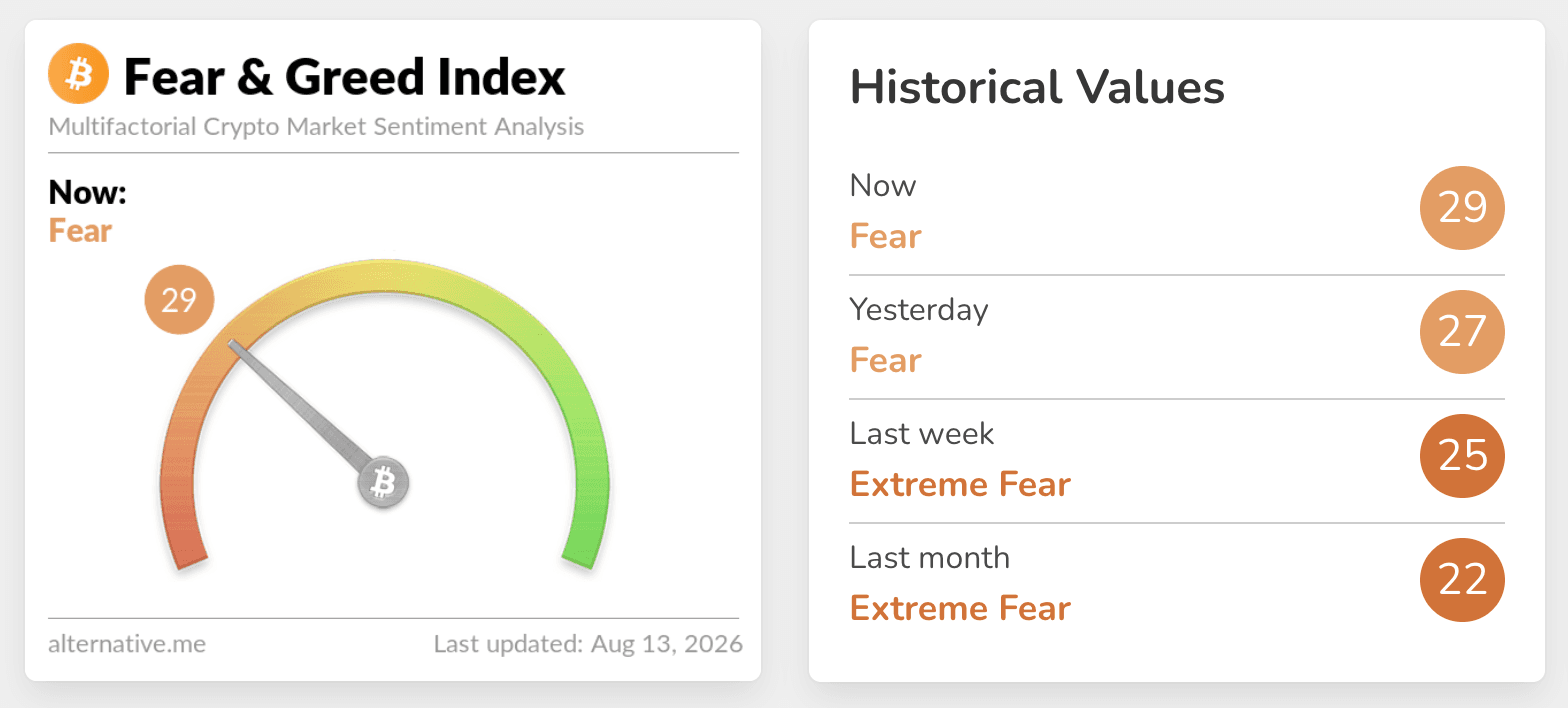
Source: Alternative
Key News Highlights:
El Salvador’s Bitcoin Experiment Turns Five as Domestic Adoption and Global Impact Diverge
Five years have passed since El Salvador became the first country in the world to adopt Bitcoin as legal tender. President Nayib Bukele introduced the policy in 2021 with goals that included expanding financial inclusion, lowering cross-border remittance costs, and attracting foreign investment. Research assessing the results after five years shows that Bitcoin did not achieve the level of everyday payment adoption originally envisioned. Actual users have been concentrated among younger, urban, and more highly educated groups. Many were also already part of the formal banking system. The Salvadoran government initially encouraged adoption of its Chivo Bitcoin wallet by offering users $30 worth of Bitcoin. However, research found that more than 60% of early users did not make another transaction after spending the free BTC. Bitcoin and crypto wallets also remained a minor part of cross-border remittances. By 2024, crypto wallets accounted for only about 1% of total remittances and had not become a mainstream transfer method. El Salvador later adjusted its Bitcoin policy after reaching a financing agreement with the International Monetary Fund. In 2025, the government amended its Bitcoin law to make acceptance voluntary for businesses. Taxes were required to be paid in U.S. dollars, while public-sector involvement in Bitcoin-related activities was reduced. Bitcoin can still be used voluntarily by individuals and businesses. Some communities also continue to maintain local Bitcoin economies, with Bitcoin Beach in El Zonte remaining one of the most visible examples. At the same time, El Salvador transformed sovereign Bitcoin adoption from a theoretical concept into a real-world national policy. This brought government Bitcoin holdings, payment applications, and Bitcoin regulation into broader global policy discussions. Researchers have questioned the results of the original goals around payments, financial inclusion, and remittances. Even so, El Salvador gained much greater visibility within the global Bitcoin industry and attracted Bitcoin-focused individuals and projects to the country. The five-year experiment therefore presents two different outcomes. Bitcoin adoption in everyday financial activity remains limited among local residents, while El Salvador’s role as the first national Bitcoin policy case has had a clear impact on global digital asset discussions.
Goldman Sachs Plans $2.25 Billion NEOS Acquisition to Expand ETF Business With Crypto Exposure
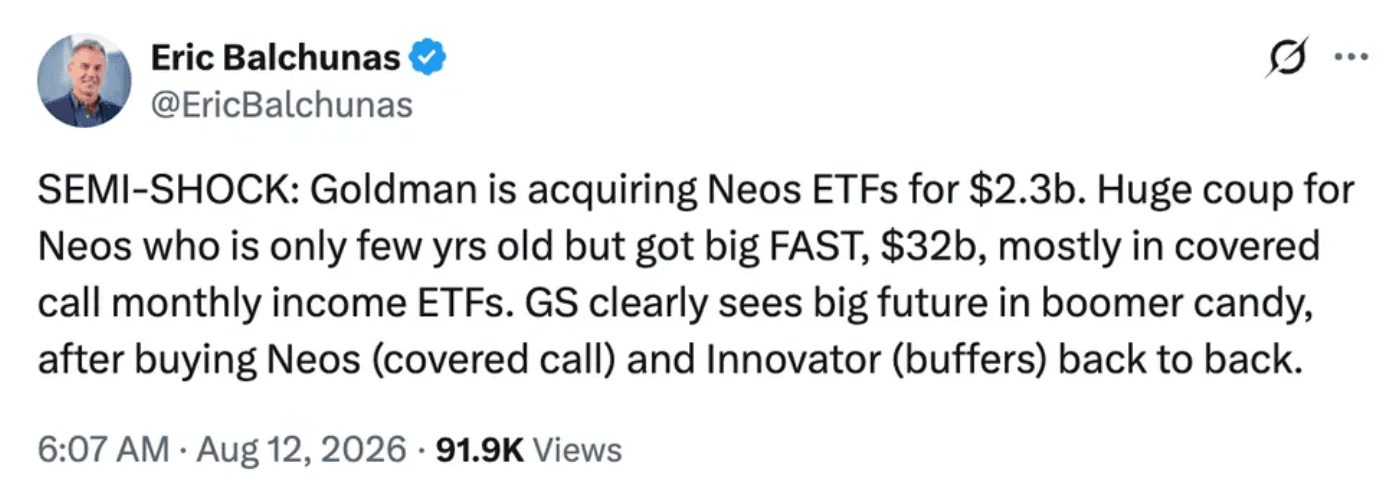
Goldman Sachs has agreed to acquire ETF asset manager NEOS Investments for up to USD 2.25 billion. Once the deal is completed, NEOS funds linked to Bitcoin and Ether will become part of Goldman Sachs Asset Management’s product lineup. NEOS currently manages around USD 30 billion across 19 options-based income ETFs. These products use options strategies to generate recurring income while maintaining exposure to underlying assets. Its crypto-related offerings include the Bitcoin High Income ETF, Boosted Bitcoin High Income ETF, and Ethereum High Income ETF. These funds provide exposure to Bitcoin or Ether alongside income-focused strategies. The acquisition is expected to close in the first quarter of 2027, subject to regulatory approval. The final completion date will therefore depend on the review process. NEOS co-founders Troy Cates and Garrett Paolella are expected to join Goldman Sachs Asset Management after the deal closes, along with the broader NEOS team. The company’s ETF business will also be integrated into Goldman Sachs’ asset management platform. Goldman Sachs said the combined effect of acquiring NEOS and its recent purchase of Innovator Capital Management would bring assets across its global ETF platform to around USD 130 billion. At that scale, Goldman Sachs is expected to become the eighth-largest active ETF manager globally. The expansion would also broaden its presence in options-based income strategies and active ETFs. Because the transaction includes products with existing Bitcoin and Ether exposure, the acquisition will bring established digital asset investment products directly into the portfolio of a major traditional asset manager. Goldman Sachs had adjusted some of its disclosed crypto ETF holdings during the first quarter of this year. Even so, it still reported more than USD 700 million in Bitcoin ETF holdings at the end of the quarter. The NEOS acquisition represents a separate expansion at the asset management and ETF platform level.
Hawaii to Fully Ban Crypto ATMs in October, Becoming the Fourth U.S. State With a Total Prohibition
Hawaii will impose a full ban on cryptocurrency ATMs and digital asset transaction kiosks beginning October 1, 2026. It will become the fourth U.S. state to completely prohibit this type of equipment. The measure comes from House Bill 1642, which was passed by the Hawaii legislature in May. Governor Josh Green signed the bill into law in July. Under the new rules, no person in Hawaii will be allowed to own, operate, or manage a transaction kiosk that accepts U.S. currency from customers in exchange for digital financial assets. The restriction covers common crypto ATMs and self-service cryptocurrency purchasing terminals. The legislation cited data from the FBI’s Internet Crime Complaint Center as part of the rationale for tighter oversight. Americans lost more than USD 11 billion to digital asset-related scams in 2025. Hawaii residents filed 826 crypto-related complaints during the same year. Losses involving digital assets reached approximately USD 80 million and included transactions conducted through ATMs and kiosks. Once the law takes effect, Hawaii will join Minnesota, Tennessee, and Indiana as states that have fully banned digital asset transaction kiosks. Other states have taken different regulatory approaches. Some are still considering similar bans, while South Dakota and Wyoming have allowed the machines to remain in operation under stricter rules. CoinATMRadar data showed that around 57 crypto ATMs and related kiosks were still operating across four of Hawaii’s main islands before the ban takes effect. Operators will therefore need to adjust or discontinue local services before October. The legislation is focused on physical digital asset transaction kiosks rather than a broader ban on holding or trading cryptocurrencies. Its main target is the use of cash-based self-service terminals for digital asset transactions.
Arizona Crypto ATM Law Helps 35 Scam Victims Recover More Than $171K
The Arizona Attorney General’s Office said that 35 eligible crypto ATM scam victims have received full refunds since the state’s new law took effect in September 2025. Total reimbursements have reached USD 171,332. The refund mechanism was established under House Bill 2387. The law requires digital asset kiosk operators to reimburse new customers for transactions that were fraudulently induced under qualifying circumstances. Refunds include both the transaction amount and associated fees. Under the law, a new customer is defined as someone who has used the same operator for fewer than 10 days. The protection is therefore primarily aimed at people who have only recently started using crypto ATM services. Eligible victims must contact both the kiosk operator and the Arizona Attorney General’s Office or another law enforcement agency within 30 days of the transaction. They must also provide the operator with an official report confirming that the transaction was made as a result of fraud. This allows the operator to process the reimbursement under the required legal procedure. The law also sets different transaction limits based on customer status. New customers can transact up to $2,000 per day through these kiosks, while existing customers have a daily limit of $10,500. Arizona Attorney General Kris Mayes has urged residents who believe they have fallen victim to a crypto ATM scam to report the case as soon as possible. Delays beyond the 30-day deadline could make victims ineligible for reimbursement under the law. The state released the figures for the 35 successful refunds to show how the system has been applied in actual fraud cases since taking effect. Unlike states that have chosen to ban crypto ATMs entirely, Arizona has adopted a regulatory framework built around transaction limits, mandatory refunds, reporting deadlines, and clear procedures for both operators and users.
Disclaimer: The information provided in this section is for informational purposes only and doesn't represent any investment advice or FameEX's official view.