FameEX Today’s Crypto News Recap | October 13, 2026
2026-10-13 07:01:40

Papertrade ranks third in protocol revenue while Blur plans its NFT website shutdown and Aptos launches encrypted mempool. Today’s BTC is near $83.3K amid Greed sentiment. Cryptocurrency markets remained volatile as Bitcoin briefly fell below $81K before rebounding to around $83.3K. Ether also recovered from recent lows and traded near $2,520. Despite the rebound in both cryptocurrencies, market conditions remained sensitive to U.S. inflation expectations, declining Asian technology stocks, and shifts in institutional capital flows. South Korean equities suffered sharp intraday losses, with semiconductor stocks facing significant selling pressure. U.S. technology stock futures also declined as volatility persisted across global risk assets. Investors are now focused on the upcoming U.S. September Consumer Price Index (CPI) report. Rising energy prices and a stronger U.S. dollar have added uncertainty to the interest rate outlook. The Crypto Fear & Greed Index currently stands at 57, down significantly from 69 yesterday. Although the index remains in Greed territory, the decline indicates a moderation in bullish sentiment. Institutional fund flows also showed signs of weakness. According to SoSoValue, U.S. spot Bitcoin ETFs recorded net outflows of USD 65.401 million on October 12 (ET), while spot Ether ETFs saw net outflows of USD 85.3954 million. The latter marked their tenth consecutive trading day of net outflows. From a market structure perspective, Bitcoin's recovery above $83K following its decline below $81K reflects a period of intense selling pressure followed by renewed buying activity. However, a single-day rebound is insufficient to establish a clear medium-term market direction. Ether has also regained the $2,500 level, although persistent spot ETF outflows and leveraged derivatives trading remain important factors in assessing price stability. Overall, the cryptocurrency market is undergoing an adjustment period ahead of major U.S. economic data releases. Short-term price movements and institutional capital allocation trends remain key areas of market attention.
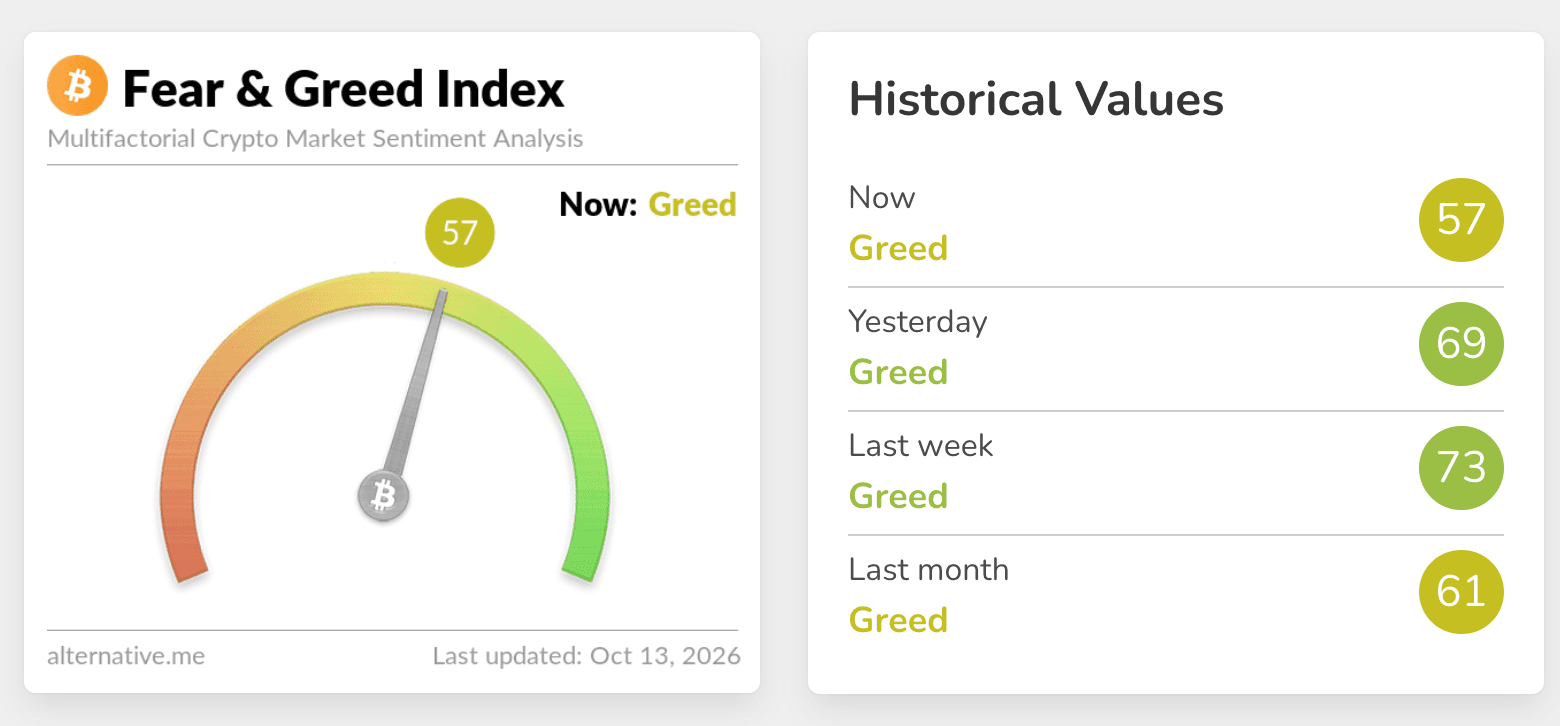
Source: Alternative
Key News Highlights:
Papertrade Introduces New Perpetual Futures Liquidity Pool Model as Daily Protocol Revenue Climbs to Top Ranks
Papertrade, a synthetic perpetual futures protocol built on HyperEVM, has recently attracted market attention through its combination of high-leverage trading, a protocol-owned liquidity pool, and PAPER token incentives. Its operating model introduces an alternative approach to capital allocation in decentralized derivatives trading. According to a DefiLlama data snapshot from October 13, Papertrade generated approximately USD 4.02 million in protocol revenue over the preceding 24 hours. This placed it third among all protocols in the revenue rankings at the time. Papertrade officially launched perpetual futures trading on October 10 and supports Bitcoin and Ether contracts with leverage of up to 1,000x. Unlike traditional order book systems that match buyers and sellers, Papertrade uses a protocol-managed liquidity pool as the counterparty to traders' synthetic positions. The pool starts with a zero balance and does not require external liquidity providers to deposit capital. Instead, it accumulates funds through realized trading losses and uses those funds to pay profitable traders. If the pool lacks sufficient capital to cover trading profits, unpaid amounts are placed in a repayment queue. These obligations are settled on a first-in, first-out (FIFO) basis as additional funds become available. The protocol's native PAPER token is tied to realized trading losses. When the pool balance falls below USD 2 million, eligible traders can receive 100 PAPER tokens for every USD 1 in realized losses. The token issuance rate gradually adjusts according to the pool's accumulated performance and the protocol's issuance schedule. Papertrade also establishes a USD 5 million liquidity pool threshold. Distributable earnings above this level and a portion of protocol fees are allocated to PAPER stakers under the protocol's reward rules. Instead of charging conventional fees based on notional trading volume or periodic funding payments, Papertrade collects fees on profitable settlements and applies a profit deduction mechanism to determine traders' final payouts. However, the platform also experienced price reference manipulation shortly after launch. On-chain records showed that an address generated approximately USD 1.28 million in net profits on Papertrade by influencing Ether prices in the reference market. Papertrade subsequently announced tighter open interest limits and adjustments to its risk parameters. These developments have brought greater attention to the protocol's revenue growth, liquidity pool solvency, and trading risk controls.
Blur to Shut Down NFT Marketplace Website in November After Trading Volume Drops Over 99% From Peak
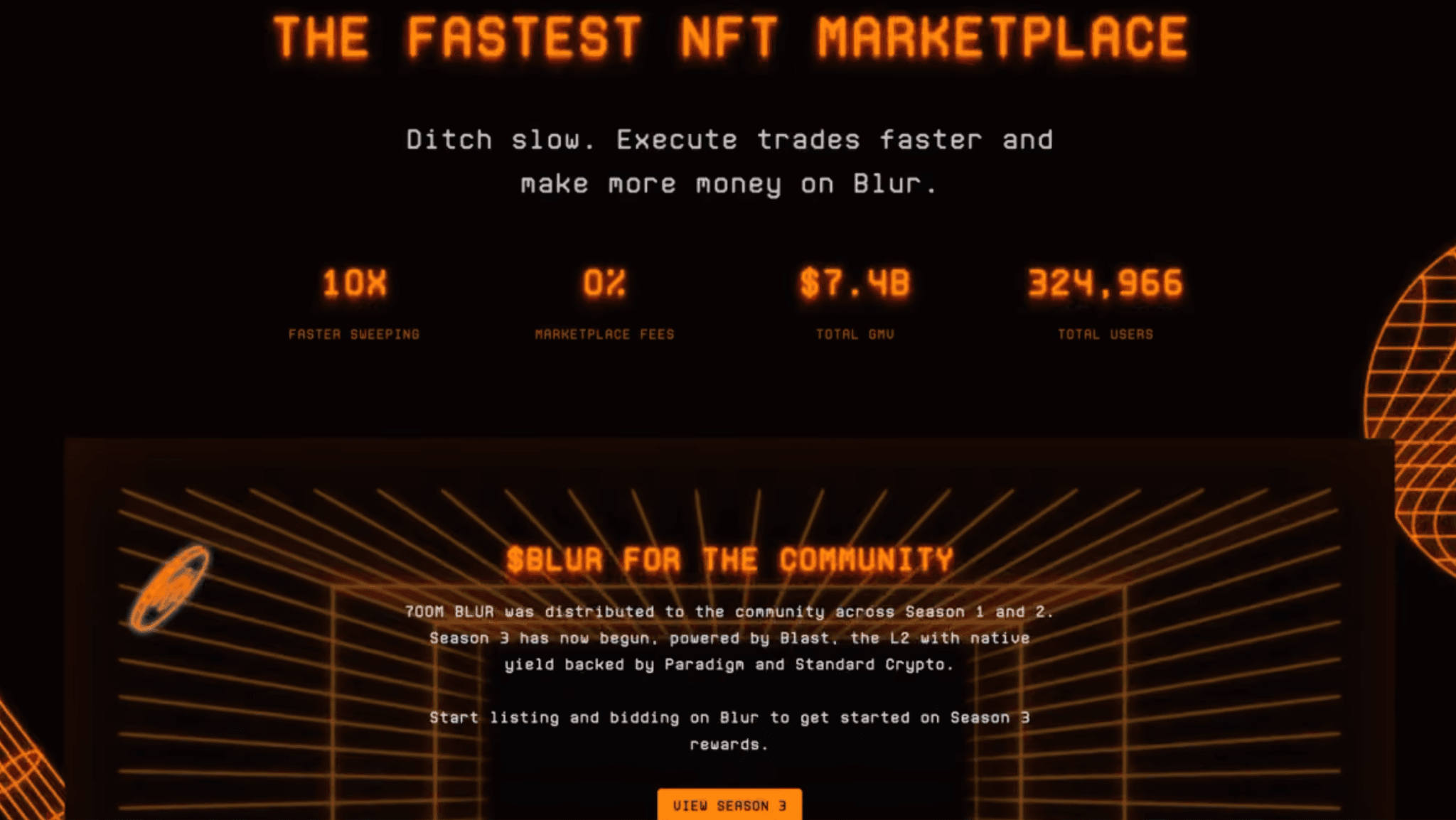
Ethereum-based NFT marketplace Blur has announced plans to discontinue its official website interface on November 12, 2026. The platform will also modify the operations of its NFT lending protocol, Blend. According to Blur's October 12 announcement, the shutdown primarily affects the website interface. The NFT marketplace smart contracts deployed on Ethereum will remain operational, meaning the underlying on-chain trading protocol will not immediately cease functioning. BLUR tokenholders will also retain governance rights over the protocol's fee switch. This mechanism allows tokenholders to determine whether marketplace trading fees should be activated. Meanwhile, Blend will stop facilitating new NFT-backed loans on November 12. Existing borrowers must address their outstanding loans before the deadline or risk entering the default process under the protocol's rules. Blur stated that a separate web-based tool will remain available after the deadline to help Blend users withdraw their assets. Launched in 2022, Blur quickly attracted NFT traders through low transaction fees, professional trading tools, and token incentive programs. The platform subsequently established a leading position in Ethereum NFT trading. Historical market data shows that Blur's monthly trading volume reached approximately USD 1.43 billion in March 2023, accounting for more than 70% of Ethereum NFT trading activity at the time. By March 2026, monthly trading volume had fallen below USD 7 million. This represented a decline of more than 99.5% from its peak. The announcement also followed an earlier shutdown decision by Blast, an Ethereum scaling network developed by the same founding team. Blast previously attracted more than USD 2 billion in assets before experiencing a substantial decline in its asset base. The BLUR token fell sharply following the announcement. For existing users, the distinction between the website shutdown, changes to lending services, and the continued operation of on-chain smart contracts remains an important part of understanding the platform's transition.
Bitcoin Rebounds Above $83K After Falling Below $81K as Asian Tech Stocks Decline Ahead of U.S. CPI
Bitcoin experienced significant price volatility during Asian trading hours on October 13. The cryptocurrency briefly fell below $81K before recovering above $83K, showing a different short-term trajectory from Asian technology stocks and U.S. technology stock futures. Ether also rebounded from near a five-day low, while several other major cryptocurrencies recorded varying degrees of recovery. In traditional financial markets, South Korea's KOSPI index plunged more than 6% intraday. The index briefly fell below 6,000 points and reached its lowest level since late July. Shares of major South Korean semiconductor companies also declined as investors became increasingly concerned about artificial intelligence valuations, competition in the chip industry, and the recent performance of technology stocks. Nasdaq futures weakened during Asian trading hours as well, indicating that selling pressure across technology equities extended beyond a single market. In energy markets, geopolitical tensions in the Middle East and potential supply disruptions along key shipping routes remained major concerns. International oil prices stayed relatively elevated and brought renewed attention to inflation risks and energy supply uncertainty. The U.S. Dollar Index also remained strong, adding another layer of macroeconomic uncertainty for dollar-denominated risk assets. Market attention has now shifted toward the U.S. September CPI report scheduled for October 15. The data will provide important insight into inflation trends and the potential direction of future Federal Reserve interest rate policy. Although Bitcoin recovered above $83K in the short term, its divergence from technology stocks over a single trading session does not necessarily indicate a lasting change in their long-term correlation. As the inflation report approaches, market participants continue to monitor cryptocurrency spot prices, derivatives hedging activity, and developments across global risk assets.
Aptos Launches Encrypted Mempool on Mainnet to Reduce Frontrunning and MEV Attacks
Layer 1 blockchain Aptos has officially launched its Encrypted Mempool feature on mainnet. The new functionality aims to reduce frontrunning, sandwich attacks, and other forms of harmful maximal extractable value (MEV) activity by concealing certain transaction details until transaction ordering is finalized. On conventional public blockchains, pending transactions typically enter a mempool before execution. Trading bots can monitor these pending transactions and examine information such as transaction instructions, asset amounts, and smart contract interactions. This visibility can allow bots to insert transactions ahead of or around users' orders to extract profits. Aptos addresses this issue by allowing users to encrypt transaction contents through compatible wallets or applications before submitting them to the network. According to the project's official documentation, the sender's wallet address and gas fees remain visible. However, transaction function calls and related parameters remain encrypted until validators finalize the transaction order and collectively decrypt the contents. The feature uses threshold encryption technology and relies on Aptos' existing validators to manage the decryption process. It does not require a separate decryption committee, and no individual validator can independently decrypt a pending transaction before its ordering is finalized. Aptos stated that Encrypted Mempool has been integrated into its existing consensus mechanism and uses batched encryption to limit the impact on network performance. In tests involving 50 nodes, the feature added approximately 20 milliseconds of processing time per block. This figure reflects the project's testing results rather than a fixed delay applicable to every mainnet transaction. Petra wallet has already introduced support for the feature, allowing users to enable transaction encryption during the signing process. Decibel, a perpetual futures application in the Aptos ecosystem, also plans to integrate the mechanism. Aptos has provided updated TypeScript SDK functionality to support developer integration. Existing Move smart contracts do not require modifications to work with supported encrypted transaction flows. Since transaction details are still recorded on-chain after execution, Encrypted Mempool primarily protects information before transaction execution rather than providing permanent anonymity or complete transaction privacy.
Disclaimer: The information provided in this section is for informational purposes only and doesn't represent any investment advice or FameEX's official view.