FameEX Today’s Crypto News Recap | October 22, 2026
2026-10-22 06:48:28

Trump cites $1B in frozen scam crypto overseas as Tether backs Peso’s USDT payments and Bitcoin ETFs draw $1.08B in 3 days. Today’s BTC is near $82.7K amid Greed sentiment. The cryptocurrency market remained volatile as Bitcoin briefly broke above $84,000 and approached $84,800 in the previous trading session. The rally lost momentum, and BTC subsequently retreated to around $82,600. During today's Asian trading session, Bitcoin traded near $82.7K as prices continued to fluctuate within a broad range. Ethereum also recorded a modest pullback after briefly falling below $2,450. ETH was trading near $2,440, broadly tracking short-term movements in Bitcoin and other major risk assets. Market sentiment showed some improvement as the Crypto Fear & Greed Index rose from 63 yesterday to 68, remaining in the Greed area. However, the stronger sentiment reading has not been fully reflected in the price performance of main and trending cryptocurrencies. According to CoinGlass, total crypto futures liquidations reached approximately USD 269 million over the past 24 hours. Short liquidations accounted for around USD 189 million, while long liquidations totaled USD 79.6912 million. The figures indicate that rapid price increases forced a substantial number of leveraged short positions to close. Bitcoin's cost-basis concentration near $83,000 has also attracted attention. Market analyst Murphy estimated that approximately 921,000 BTC had accumulated around this price level. Liquidation data indicates that BTC's estimated cumulative long liquidation exposure below $80,005 stands at approximately USD 2.511 billion. The corresponding short liquidation exposure above $88,282 is estimated at USD 1.696 billion. These figures highlight differences in potential leveraged liquidation risks across price levels. For Ethereum, the key liquidation thresholds are concentrated near $2,336 and $2,565, with estimated cumulative long and short liquidation exposure of USD 657 million and USD 796 million, respectively. Meanwhile, U.S. spot Bitcoin ETFs have recently resumed recording net inflows. However, technology sector earnings, artificial intelligence capital spending and fluctuations in U.S. stock index futures continue to influence broader risk sentiment. The market currently reflects a combination of improving capital flows and persistent short-term price volatility.
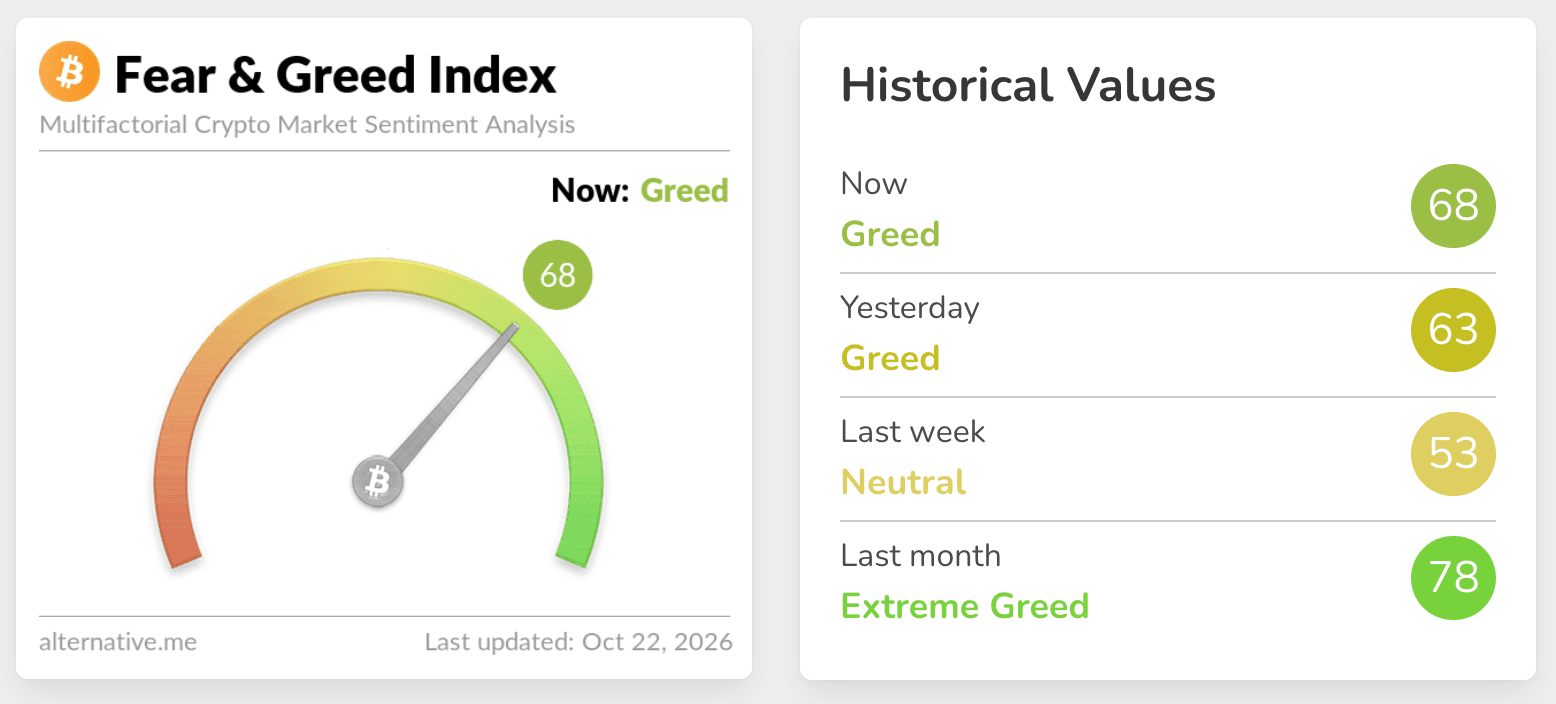
Source: Alternative
Key News Highlights:
Trump Announces White House Cybercrime Crackdown As Authorities Freeze Over USD 1 Billion In Crypto Assets
U.S. President Donald Trump hosted a cybercrime roundtable at the White House on October 21 alongside officials from the Department of Justice, the Department of Homeland Security and other federal law enforcement agencies. The meeting focused on cross-border fraud, ransomware attacks and crimes involving digital assets. Trump also outlined the administration's recent enforcement efforts against overseas criminal networks. During the discussion, he stated that Americans lost more than USD 20 billion to cybercrime in 2025 through impersonation schemes, ransomware attacks, international scam operations and other fraudulent activities. He also reported that federal authorities had frozen approximately USD 1 billion in crypto assets linked to overseas scammers. Investigations and fraud prevention measures reportedly prevented at least USD 1.6 billion in additional losses. FBI Director Kash Patel said law enforcement agencies had taken action against 20 scam centers worldwide and issued warnings to more than 10,000 Americans who were potential targets of fraud. One notable aspect of the discussion was Trump's use of the term "cybercurrency" rather than the more commonly used terms "cryptocurrency" or "digital assets." The terminology drew attention from cryptocurrency industry media covering the event. According to FBI statistics, fraud involving digital assets resulted in approximately USD 11 billion in losses during 2025. These cases included fraudulent investment platforms, cryptocurrency ATMs and other channels used to transfer assets. The roundtable followed earlier government efforts to prioritize cybercrime investigations and strengthen cooperation among federal agencies. Key enforcement priorities included identifying overseas criminal organizations, tracing illicit funds and preventing the movement of proceeds from fraudulent activities. Separately, Trump's family involvement in digital asset businesses continues to face scrutiny from some lawmakers, media organizations and public interest groups over potential conflicts of interest. These concerns remain distinct from the administration's enforcement actions against cybercrime.
Tether Invests In Bolivian Fintech Peso To Expand USDT Payments Across Food Delivery And Banking Services
Stablecoin issuer Tether announced on October 21 that it had led a pre-seed funding round for Bolivian fintech company Peso. The investment aims to expand the use of USDT across retail payments, e-commerce and traditional banking services in Latin America through financial support and technology cooperation. According to Tether, Peso currently provides USDT-based digital accounts and payment services that allow users to store funds, transfer money, make everyday purchases and conduct cross-border payments through a single platform. These services also connect users with local fiat currency payment channels. Peso has integrated USDT payments into Yango's food delivery service in Bolivia, allowing customers to pay for meal orders directly through the application using the stablecoin. This integration extends stablecoin payments into everyday consumer transactions beyond conventional cryptocurrency trading activities. For merchants and financial service users, Peso also provides QR code payments, point-of-sale solutions and virtual accounts connected to Bolivia's local banking network through Automated Clearing House (ACH) transfers. The investment will support Peso's expansion across Bolivia, Brazil, Colombia and Argentina. It will also help the company develop channels for converting funds between USDT and local fiat currencies in these four markets. Tether did not disclose the size of the funding round but stated that the investment would support the expansion of merchant payment networks, virtual account infrastructure and related financial services. Bolivia has faced persistent U.S. dollar shortages and inflationary pressures in recent years. These conditions have encouraged some businesses and consumers to use dollar-denominated stablecoins for payments, savings and commercial transactions. Since 2025, the Bolivian government has also been gradually exploring arrangements to integrate digital asset services into the formal financial system. As local fintech providers strengthen connections between stablecoins and banking settlement networks, USDT is increasingly being used for merchant payments, food delivery purchases and cross-border transfers rather than primarily for cryptocurrency trading.

U.S. Spot Bitcoin ETFs Attract USD 1.08 Billion In Three Days As Inflows Trail Previous Bullish Periods
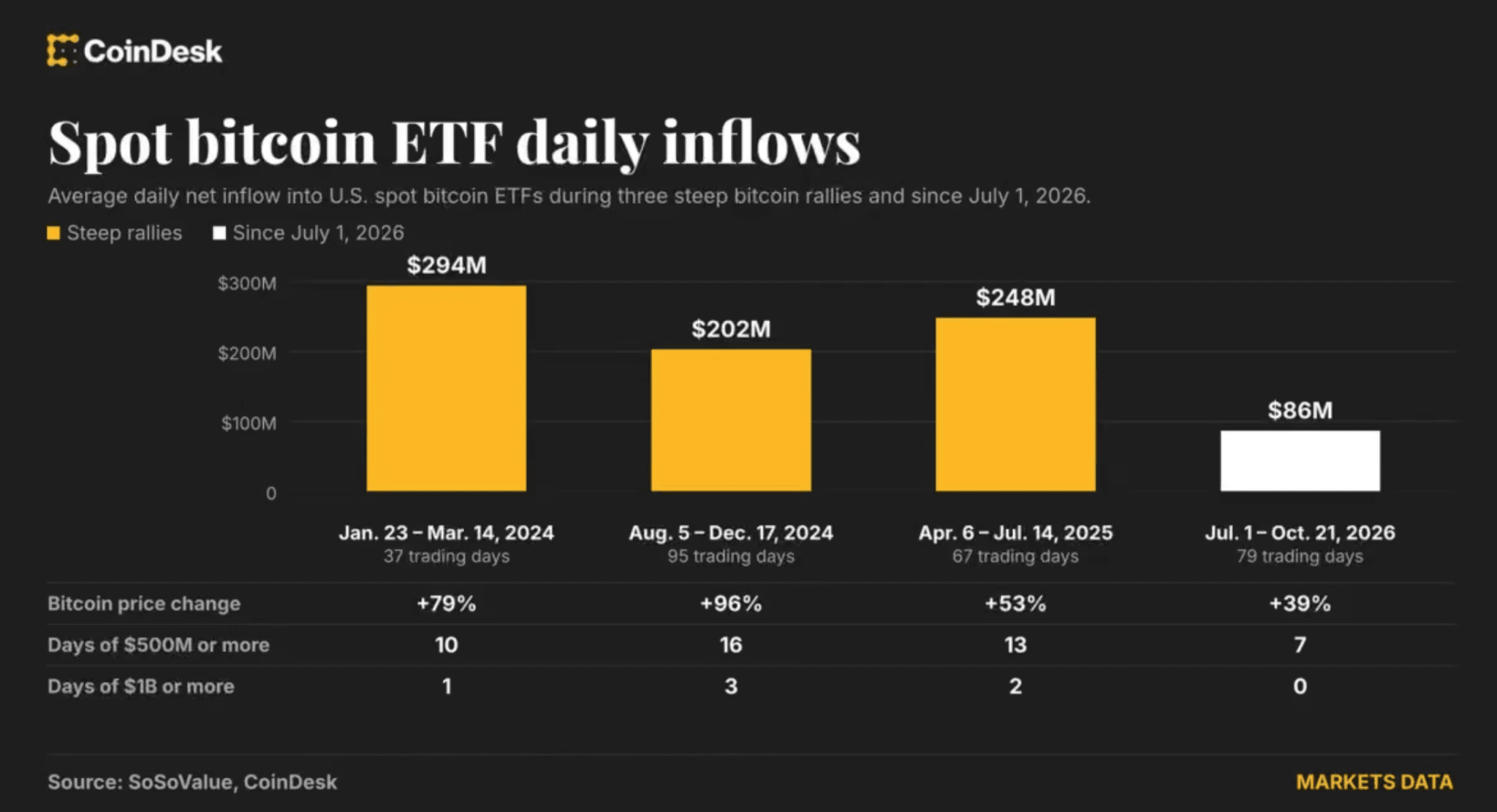
According to SoSoValue data, U.S.-listed spot Bitcoin ETFs attracted approximately USD 1.08 billion in cumulative net inflows over the past three trading days. The figures indicate renewed demand for Bitcoin exposure through institutional investment channels. These ETFs allow investors to gain exposure to Bitcoin prices through traditional brokerage accounts. Their daily net inflows and outflows are therefore widely monitored as indicators of capital allocation through regulated financial products. Since U.S. spot Bitcoin ETFs launched in January 2024, Bitcoin has experienced three major upward periods with cumulative gains exceeding 50%. During those periods, average daily ETF net inflows reached approximately USD 294 million, USD 202 million and USD 248 million, respectively. Across the combined 199 trading days, the funds attracted approximately USD 46.7 billion in net inflows. Average daily inflows reached around USD 235 million, with 39 trading days recording at least USD 500 million in net inflows. In comparison, average daily ETF net inflows since July 1, 2026 have stood at approximately USD 86 million. This figure remains substantially below the averages recorded during the previous strong upward periods. Over the same period, only seven trading days recorded net inflows of at least USD 500 million. That represents approximately one occurrence every 11 trading days, compared with roughly one in five during the earlier periods. Recent daily figures also show differences in fund-level capital flows. On October 19, U.S. spot Bitcoin ETFs recorded approximately USD 527 million in net inflows. However, most of the capital was concentrated in a small number of large funds, while other products experienced varying levels of outflows. These differences indicate that subscription and redemption activity remains uneven across individual ETFs. CoinDesk's historical comparison primarily highlights changes in the scale and consistency of ETF demand across different market periods. Investors can also participate in Bitcoin markets through direct spot purchases, derivatives trading and corporate treasury allocations. As a result, ETF flows represent only one component of overall capital activity in the cryptocurrency market.
Bitcoin Retreats After Failed Push Toward $85,000 As Tech Earnings And AI Spending Concerns Weigh On Risk Assets
Bitcoin briefly climbed above $84,000 during U.S. evening trading and approached $84,800 before reversing sharply. Within approximately six hours, BTC declined by more than $2,000 and returned to the $82,600 to $82,800 range. The price reversal coincided with the release of quarterly earnings from major U.S. technology companies. Investors were also evaluating the financial performance and artificial intelligence spending plans of Tesla, Meta and semiconductor-related businesses. Tesla shares fell approximately 3% in after-hours trading following its earnings announcement. The company also lowered its full-year capital expenditure forecast, prompting investors to reassess its future investment plans and business growth outlook. Meanwhile, Meta shares gained around 2% in after-hours trading. However, the company's plans to increase artificial intelligence spending kept attention focused on the scale of capital investment across major technology firms. U.S. stock index futures subsequently weakened. Nasdaq 100 futures declined approximately 1.1%, while S&P 500 futures fell around 0.5%. These movements reflected the close relationship between technology stock performance and broader risk asset sentiment. Asian equity markets also came under pressure. South Korea's Kospi index declined approximately 2.2%, while China's CSI 300 index fell around 1.7%. Several semiconductor and major technology stocks recorded losses during the same period. Within the cryptocurrency market, individual assets showed mixed performance. ZEC gained nearly 3%, and XRP posted a modest increase. In contrast, DOGE, SOL and HYPE recorded varying declines, while ETH and several other major tokens edged lower. Overall, Bitcoin's rapid price increase was followed by a sharp pullback as technology stocks, equity index futures and other risk assets experienced renewed volatility. The simultaneous market movements reflected a trading environment shaped by macroeconomic developments, corporate earnings and adjustments in leveraged derivatives positions.
Disclaimer: The information provided in this section is for informational purposes only and doesn't represent any investment advice or FameEX's official view.