FameEX Today’s Crypto News Recap | October 16, 2026
2026-10-16 07:07:33

Mastercard launches Global Money Platform as Sweden revisits the digital krona and U.S. PPI hits 6.3%. Today’s BTC is near $82K amid Greed sentiment. The cryptocurrency market experienced sharp volatility after U.S. inflation data came in above expectations. Bitcoin briefly fell below $80,000 before recovering to nearly $82,000 during Asian trading hours. Ethereum (ETH) also rebounded from the previous day's low and traded near $2,440. The recovery indicated renewed buying interest in major cryptocurrencies following an initial wave of selling pressure. The U.S. Producer Price Index (PPI) rose 6.3% year over year in September, exceeding market expectations of 5.3%. The monthly increase reached 1.3%, marking the largest advance since March 2022 and prompting investors to reassess inflation risks and the Federal Reserve's monetary policy outlook. Despite the sharp price declines, the Crypto Fear & Greed Index climbed from 53 to 63, shifting market sentiment from Neutral to Greed. This divergence highlighted the difference between broader sentiment readings and short-term price movements. Institutional capital flows also showed contrasting trends. On October 15, U.S. spot Bitcoin ETFs recorded net inflows of USD 5.0551 million, while spot Ethereum ETFs posted net outflows of USD 60.2222 million. In the derivatives market, Coinglass liquidation data identified significant concentrations of potential long liquidations below $78,166 for Bitcoin and $2,316 for Ethereum. These leveraged positions could amplify price volatility if the market moves into those ranges. Meanwhile, on-chain data indicated that recent Bitcoin transfers to exchanges were primarily driven by short-term holders. Long-term holders maintained relatively limited exchange inflows, reflecting differences in trading behavior across investor groups during the market downturn. Overall, the cryptocurrency market continues to face a combination of macroeconomic pressure, diverging spot capital flows and derivatives-related leverage risks. Although major cryptocurrencies have rebounded from their intraday lows, their price structures remain influenced by recent trading ranges and changes in market liquidity.
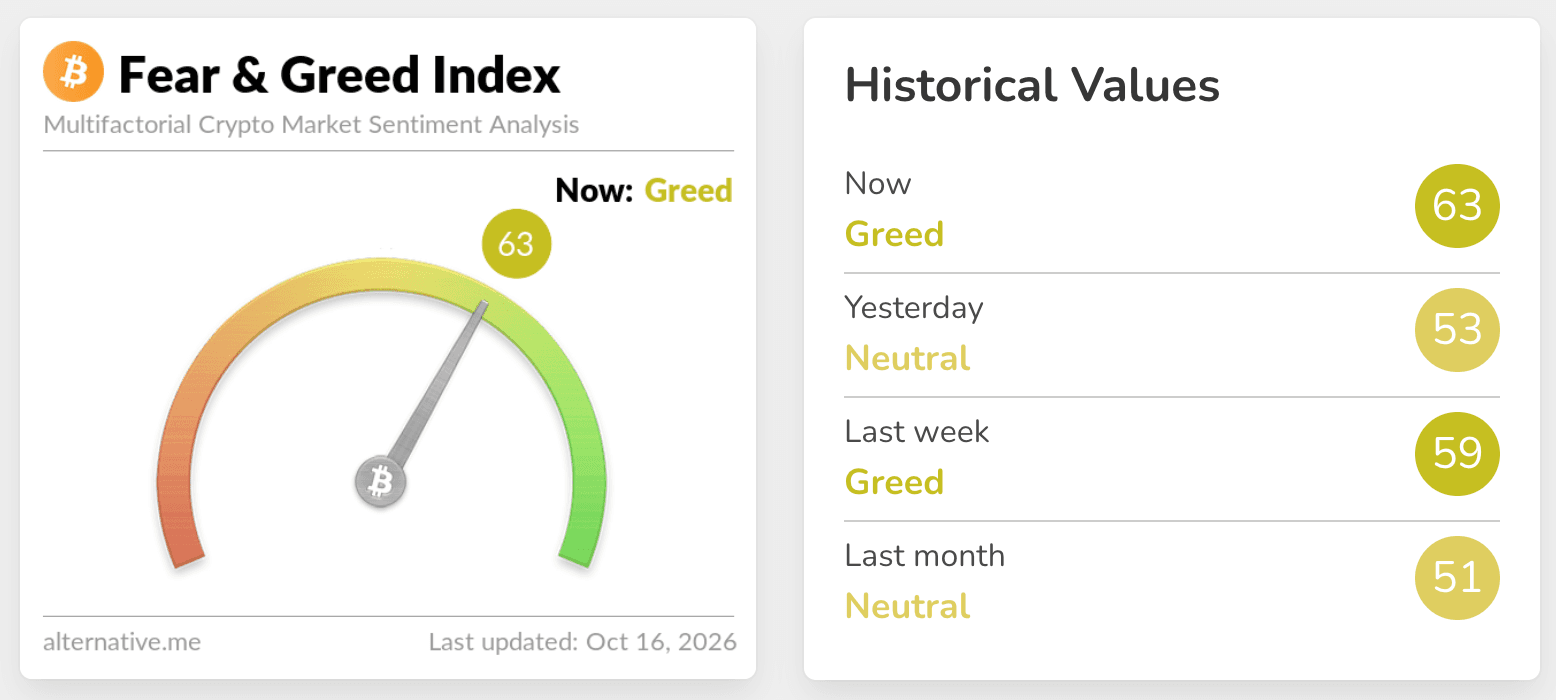
Source: Alternative
Key News Highlights:
Mastercard Launches Global Money Platform to Integrate Stablecoins With Traditional Banking and Card Payments
Global payments company Mastercard announced the launch of Mastercard Global Money Platform on October 15. The new service integrates stablecoins and traditional fiat currencies into a unified payment infrastructure. It enables financial institutions, fintech companies and businesses to offer digital asset services through a single technical interface. The platform marks Mastercard's first major product integration with BVNK following its acquisition of the stablecoin infrastructure provider in August 2026. Its capabilities include multicurrency accounts, currency conversion, stablecoin-linked payment cards and local bank transfers. According to Mastercard's announcement, businesses can hold and manage both fiat currency and stablecoin balances through the platform. They can also convert funds according to their payment requirements without building their own blockchain payment infrastructure. The platform connects with Mastercard Move, the company's global money transfer network. This integration allows businesses to convert stablecoin funds and send payments directly to recipients' local bank accounts or other supported payment destinations. For card payments, the service enables businesses to issue payment cards linked to stablecoin balances. Customers can then use their digital asset holdings for purchases through Mastercard's existing merchant payment network. Initial integration partners include global payment services provider Nuvei, card-issuing technology company Marqeta and fintech firms such as Ontop, Beem and Almond Fintech. Mastercard stated that Global Money Platform uses a modular architecture. Financial institutions and businesses can integrate selected capabilities based on their product requirements and offer payment services under their own brands. BVNK provides the underlying stablecoin and on-chain fund processing technology that connects digital assets with traditional financial payment networks. The launch extends stablecoin applications beyond standalone digital asset transfers into corporate account management, cross-border payments and everyday card purchases. It also represents a significant product integration milestone following Mastercard's acquisition of BVNK.
U.S. September PPI Rises 6.3% Year Over Year as Bitcoin Briefly Falls Below the Support Level
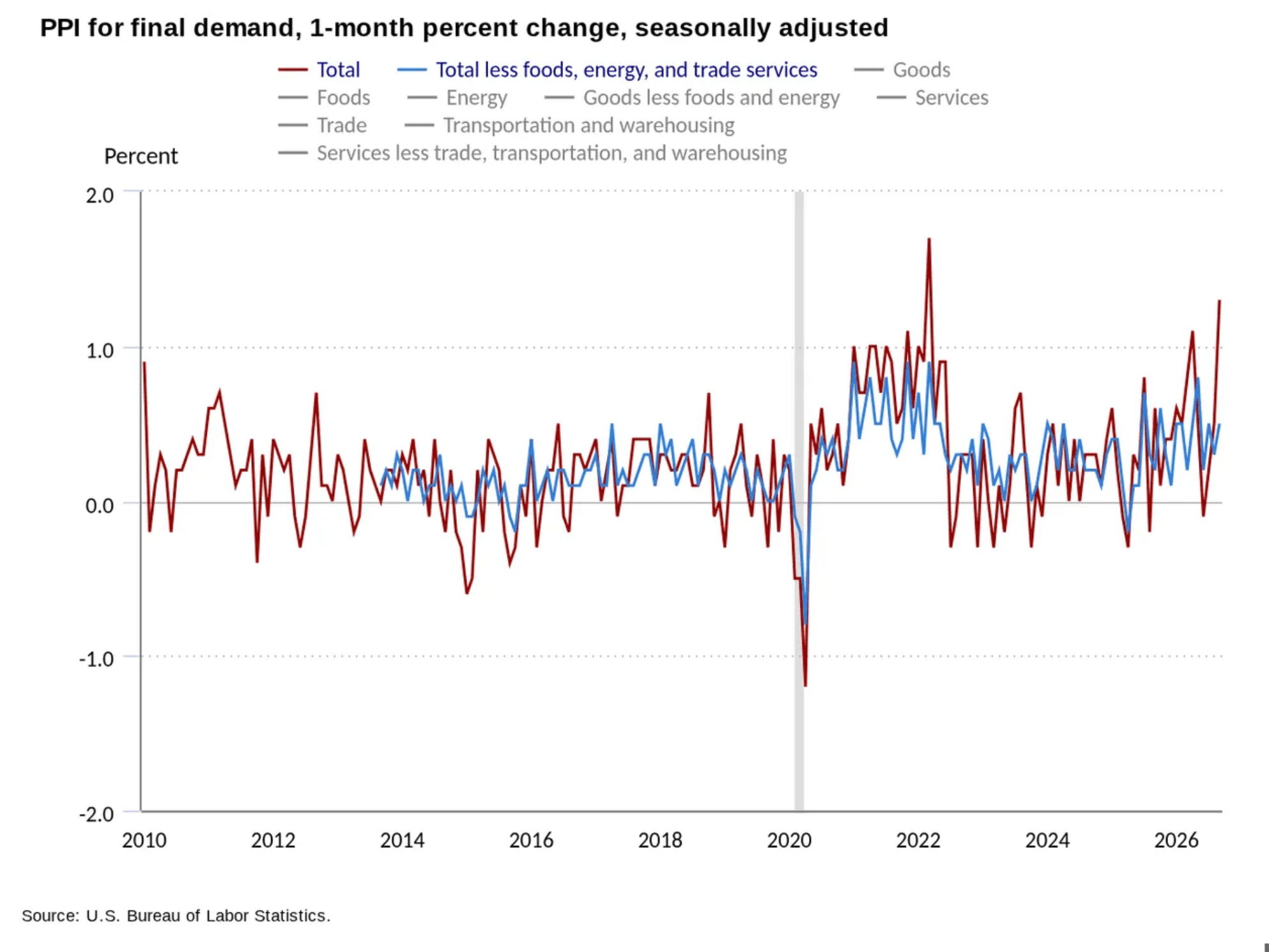
The U.S. Bureau of Labor Statistics released its latest Producer Price Index (PPI) report on October 15. The data showed that the PPI for final demand rose 1.3% month over month in September, marking the largest monthly increase since March 2022. The annual rate reached 6.3%, exceeding market expectations of 5.3%. The PPI measures changes in prices received by domestic producers for goods and services. Financial markets closely monitor the index to assess inflationary pressures at the production level. September's data showed that prices for final demand goods increased 2.6% month over month. Energy prices rose 10.8%, while gasoline prices climbed 20.3%. These increases were major contributors to higher production costs. Prices for final demand services also advanced 0.8% during the month. Meanwhile, the PPI excluding food, energy and trade services rose 5.0% year over year. This indicated that price pressures extended beyond individual commodity categories. The Consumer Price Index (CPI) released the previous day had also exceeded market expectations. Together, the two major inflation reports showed that price pressures remained elevated across the U.S. economy. Cryptocurrency prices declined following the PPI release. Bitcoin briefly dropped below $80,000 and approached $79,800, reaching one of its lowest levels since mid-September. Market data showed that Bitcoin's intraday decline reached approximately 1.8% before prices recovered toward $81,000. The movement reflected heightened volatility surrounding the inflation report. U.S. Treasury markets, however, showed a different response from what some investors had anticipated. The 10-year Treasury yield did not rise alongside the stronger-than-expected inflation figures. This suggested that bond market movements were also being influenced by broader capital flows and fiscal policy concerns. The latest PPI report brought U.S. inflation, monetary policy expectations and risk asset performance back into focus across global financial markets.
Sweden's Central Bank Reconsiders Digital Krona and Calls for Early Legislative Preparations
Sweden's central bank, the Riksbank, has renewed discussions about introducing a digital krona (e-krona) and recommended that lawmakers begin preparing the necessary legal framework. The proposal comes as the European Central Bank (ECB) advances its digital euro initiative and foreign-currency stablecoins gain a larger role in the evolving payments landscape. According to a letter submitted on October 7 and published on October 15, the Riksbank believes that the payment environment has changed significantly over the past three years. These developments have prompted the central bank to reassess the institutional requirements for a potential central bank digital currency (CBDC). A Swedish government inquiry conducted in 2023 previously concluded that there was insufficient demand to justify launching a digital krona at that time. However, it left open the possibility of reconsidering the proposal as payment markets evolved. The ECB is planning a digital euro pilot in 2027 and is considering a potential public launch as early as 2029, subject to the establishment of the necessary legal framework. These developments have increased the Riksbank's focus on the competitiveness and interoperability of national currencies in a future digital payments environment. The central bank warned that widespread adoption of a digital public payment instrument in the euro area could affect the domestic use of the Swedish krona if Sweden lacks a comparable digital payment option. The letter also highlighted the growing role of stablecoins denominated in foreign currencies, particularly the U.S. dollar. Although the Riksbank considers their immediate impact on Sweden's domestic payment system limited, it believes these assets could influence how households and businesses use different currencies over the longer term. Unlike privately issued stablecoins that generally maintain a fixed value relative to fiat currencies, a digital krona would be issued directly by the Riksbank and represent a liability of the central bank. The Riksbank estimates that developing and deploying a digital krona would take at least five years after a formal decision to proceed. This estimate does not include the additional time required for legislative changes. The recommendation therefore does not mean that Sweden has approved the launch of a digital krona. Instead, the central bank is seeking to establish a legal and institutional foundation that would allow future policymakers to decide whether to proceed based on developments in the payments market.
Bitcoin Rebounds Sharply After Falling Below $80,000 as Asian Tech Stocks Recover
Bitcoin briefly fell below $80,000 during U.S. trading hours on October 15 and reached an intraday low of approximately $79,800. Buying activity subsequently emerged and pushed the price back toward $82,500 within roughly two hours. The rapid recovery marked a sharp reversal from the previous session's decline as Asian markets began trading. Bitcoin gained approximately 1.3% during early Asian trading and returned to nearly $82,000. It also remained above $81,000 following the rebound. The earlier decline had pushed Bitcoin below the $80,400 area, where buyers had previously provided support on two occasions. Renewed buying interest at lower price levels helped the cryptocurrency recover a substantial portion of its losses. Other major cryptocurrencies also recorded gains of varying magnitudes. ZEC rose approximately 8% to nearly $1,190, making it one of the strongest performers among major digital assets during the period. SOL, ETH, XRP and TRX each gained around 1%, while BNB remained relatively unchanged. These differences showed that the recovery was not equally distributed across major cryptocurrencies. Traditional financial markets experienced a similar rebound. The MSCI Asia Pacific Index advanced approximately 1.3%, with rising stocks outnumbering declining stocks by roughly three to one. This reflected a broader recovery in Asian equities following the previous session's sharp losses. South Korean technology stocks were among the notable gainers. Samsung Electronics and SK Hynix both climbed more than 2%, while South Korea's KOSPI Index rebounded nearly 3% after a substantial decline in the preceding session. Taiwan Semiconductor Manufacturing Company (TSMC), however, did not participate in the broader recovery among major Asian semiconductor stocks. Investors remained focused on capital expenditure related to artificial intelligence and the associated risks facing the technology sector. In the bond market, U.S. Treasury prices declined after the previous session's gains. The 10-year Treasury yield increased by approximately one basis point to 5.07%, reflecting continued adjustments in capital allocation across asset classes. Global markets were also monitoring remarks from Federal Reserve Chair Kevin Warsh at meetings of the International Monetary Fund and World Bank. His comments were closely watched for further indications of the monetary policy discussion following the release of the latest U.S. inflation data.
Disclaimer: The information provided in this section is for informational purposes only and doesn't represent any investment advice or FameEX's official view.