FameEX Today’s Crypto News Recap | October 14, 2026
2026-10-14 07:07:17

SEC revises quorum rules while tokenized stocks trade mostly after hours and Solana targets 150ms finality via Alpenglow. Today’s BTC is near $83.5K amid Greed sentiment. Cryptocurrency markets continued to fluctuate following their recent rebound. Bitcoin climbed to nearly $83,900 during early Asian trading before retreating toward $83.5K. ETH also recovered from its previous lows and gained approximately 2% to approach $2,520. The latest available market snapshot placed ETH near $2,500. The Crypto Fear & Greed Index rose from 57 yesterday to 62 and remained in the Greed zone. On the macroeconomic front, New York Federal Reserve President John Williams said another interest rate increase could still be necessary this year. However, he currently sees no need for further rate hikes in 2027. His remarks were followed by a weaker U.S. dollar and gains across Asian equities and cryptocurrency markets. Meanwhile, rising U.S. energy prices and persistent inflation concerns remain key market considerations. Investors continue to monitor the Federal Reserve's policy outlook and upcoming U.S. inflation data for their potential effects on risk assets.
The latest rebound in Bitcoin and ETH largely reflects shifting interest rate expectations and renewed buying following earlier price declines. Nevertheless, both assets continue to trade within relatively defined ranges. Bitcoin has attracted buying interest near $81K on several occasions and subsequently recovered above $83K. However, selling pressure remains evident as prices approach $84K. This suggests that the market has yet to establish a sustained directional uptrend. According to liquidation distribution data cited from Coinglass, a Bitcoin breakout above $87,510 could expose an estimated USD 1.721 billion in cumulative short liquidation intensity across major centralized exchanges. Conversely, a decline below $79,589 could expose approximately USD 1.65 billion in cumulative long liquidation intensity. These figures represent model-based estimates under specific price scenarios rather than actual liquidations. For ETH, the provided order book data indicates that buy-side liquidity exceeds sell-side liquidity in certain perpetual futures markets. However, liquidity conditions vary across trading venues and may influence how large orders affect short-term price movements. Coinglass liquidation data also indicates that ETH could face different forms of leveraged position adjustments near $2,636 and $2,388. Regarding fund flows, reports citing SoSoValue data show that U.S. spot Bitcoin ETFs recorded approximately USD 176 million in net inflows during the latest completed U.S. trading session. Spot ETH ETFs recorded approximately USD 24.8394 million in net inflows over the same period. Both categories therefore registered positive net flows for the day. Overall, market participants are reassessing interest rate expectations and capital flows. Short-term price movements remain sensitive to liquidity distribution, leveraged positioning, and broader macroeconomic developments.
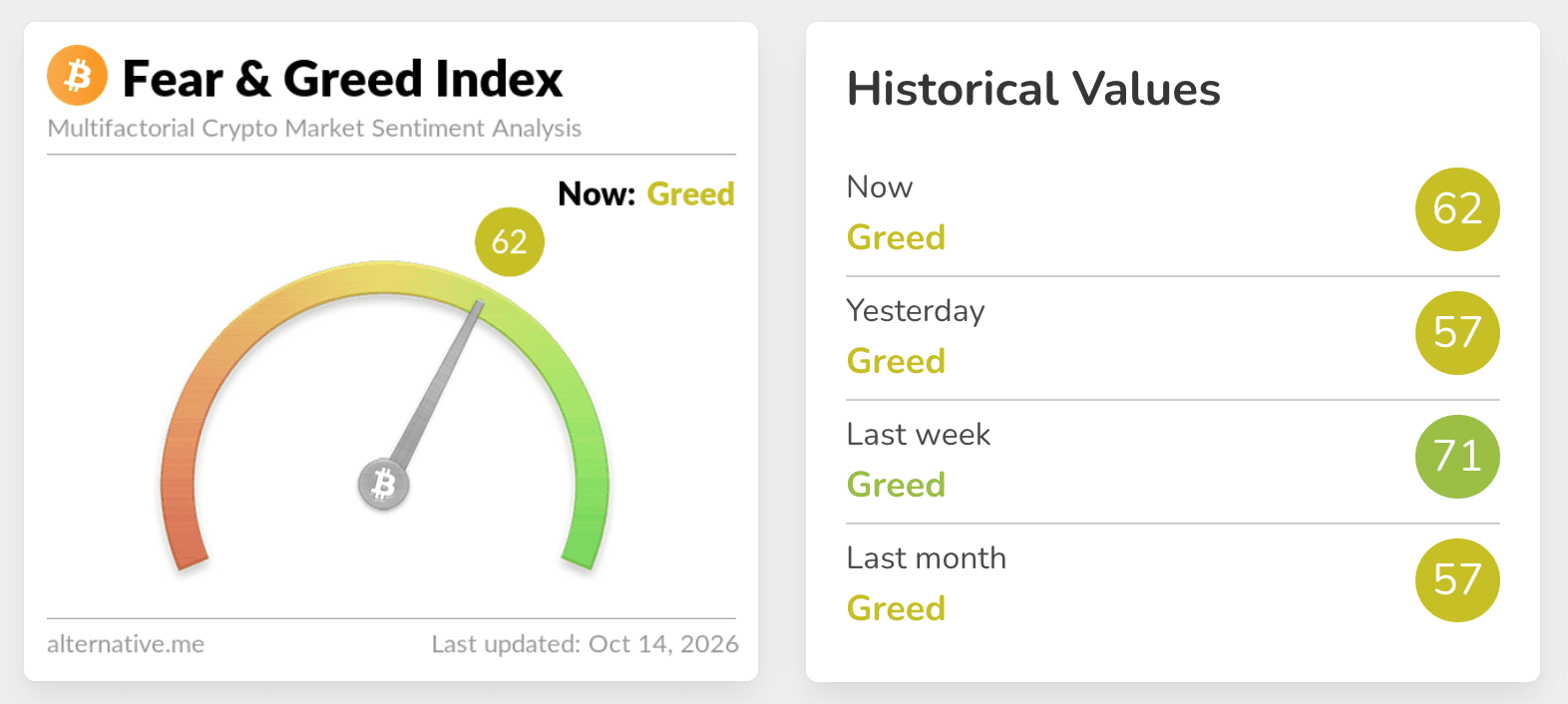
Source: Alternative
Key News Highlights:
SEC Revises Quorum Rules As Crypto Regulatory Decision-Making Draws Scrutiny
The U.S. Securities and Exchange Commission (SEC) recently revised its quorum requirements to allow the agency to continue formal proceedings under certain conditions when commissioner seats are vacant or individual commissioners cannot participate in decisions. According to the final rule published on September 30, the amendments took effect on October 2 and aim to provide greater operational flexibility when the agency faces unusual staffing circumstances. Under the revised framework, the SEC generally continues to require three commissioners to establish a quorum. However, when fewer than three commissioners are serving or recusals leave only one or two commissioners eligible to participate in a particular matter, the remaining qualified commissioners may constitute a quorum under the applicable conditions. The SEC currently has only two serving commissioners: Chair Paul Atkins and Commissioner Mark Uyeda. The Commodity Futures Trading Commission (CFTC) is also facing leadership vacancies. Both agencies are structured to have five commissioners under their full membership arrangements. With Congress yet to finalize comprehensive digital asset market structure legislation, the SEC and CFTC are advancing cryptocurrency regulations through their existing statutory authorities. The SEC has proposed regulatory measures addressing the treatment of tokens as investment contracts and potential safe harbor provisions. The CFTC has also begun developing rules applicable to cryptocurrency trading markets. The revised quorum requirements have prompted discussion about regulatory procedures and the concentration of decision-making authority. Some legal and financial market observers have questioned whether a smaller number of commissioners could affect the review and deliberation of proposed rules. Commissioner Uyeda has defended the amendments and emphasized that they clarify procedures involving recusals and other exceptional circumstances. He also maintained that the changes allow the agency to continue fulfilling its statutory responsibilities. Meanwhile, the Digital Asset Market Clarity (CLARITY) Act remains under consideration in Congress. The SEC's and CFTC's forthcoming cryptocurrency regulations and their underlying legal authorities continue to draw attention within the broader U.S. digital asset policy debate.
Tokenized Stock Trading Concentrates Outside U.S. Market Hours As Onchain Market Nears USD 3.3 Billion
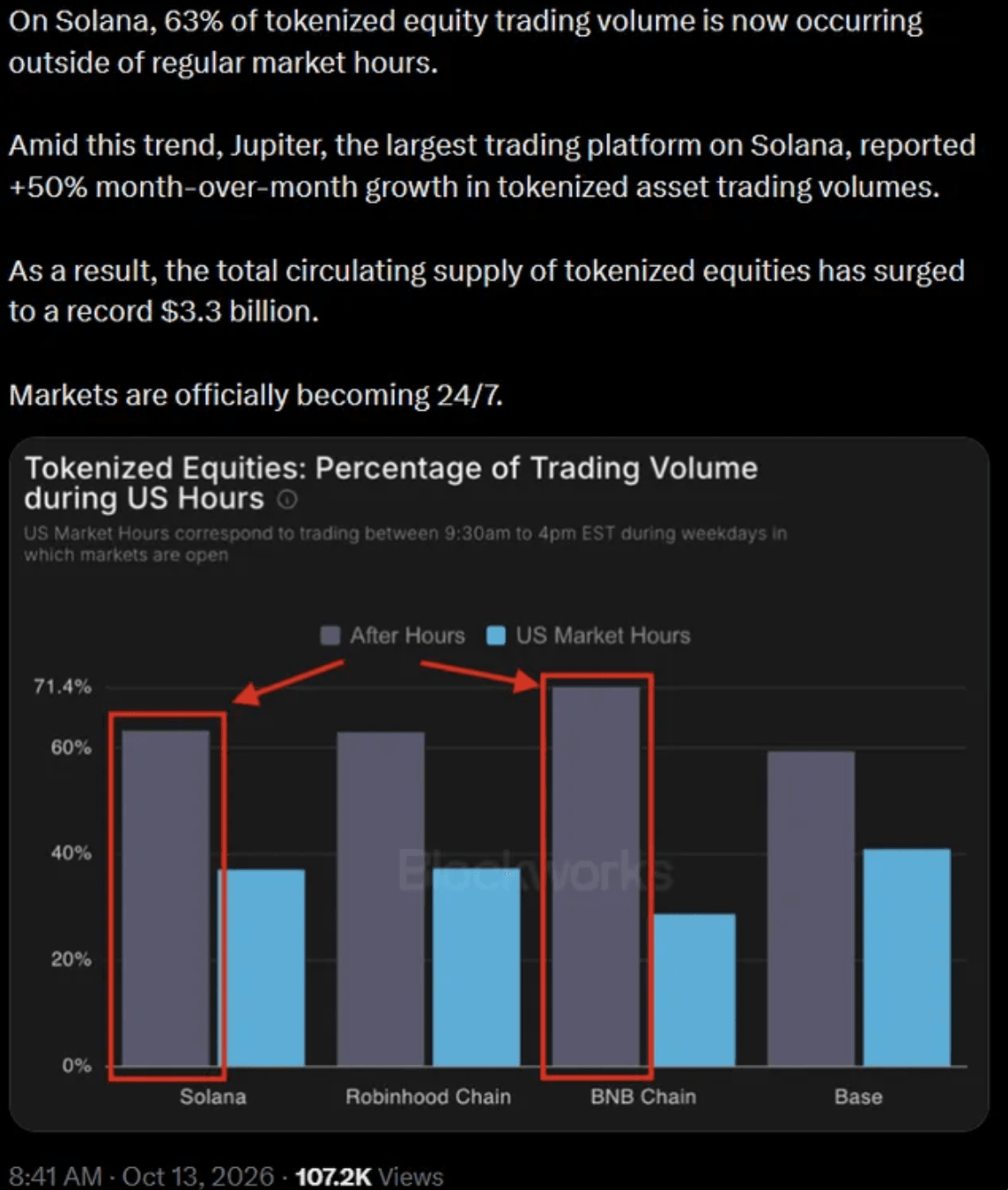
Recent on-chain trading data shows that most tokenized stock trading activity across blockchain networks such as Solana, BNB Chain, and Base takes place outside regular U.S. stock market hours. According to Blockworks data cited by The Kobeissi Letter, more than 70% of tokenized stock trading volume on BNB Chain occurs outside the traditional U.S. trading session from 9:30 a.m. to 4:00 p.m. Eastern Time. The corresponding share reaches approximately 63% on Solana and nearly 60% on Base. Tokenized stocks are financial products that represent stock-related rights or price exposure through blockchain-based tokens. The shareholder rights and legal arrangements associated with these products may differ depending on their issuance structures. Unlike traditional stock markets with fixed trading hours, certain blockchain trading platforms allow users to trade tokenized equities after U.S. exchanges have closed. This provides additional trading opportunities for participants operating across different time zones. Jupiter, a trading platform within the Solana ecosystem, recently reported a 50% month-over-month increase in tokenized asset trading volume. The growth reflects continued expansion in on-chain financial product activity. According to the latest RWA.xyz data, the distributed asset value of tokenized stocks has reached approximately USD 3.28 billion. Major issuers and platforms in this market include Ondo Global Markets, xStocks, and bStocks. Although these products are linked to equities, they differ in their issuance mechanisms, underlying blockchain networks, and investor rights. They therefore cannot necessarily be treated as direct substitutes for traditional shares. The SEC has also begun establishing a regulatory framework through specific exemptions that permit qualifying venues to trade tokenized U.S.-listed equities. Participating platforms must continue to meet applicable disclosure requirements and safeguards for shareholder rights. As on-chain equity trading expands, after-hours trading activity, asset issuance structures, and regulatory requirements are becoming increasingly important considerations in the development of tokenized securities markets.
Fed's Williams Sees No Need For Further Rate Hikes In 2027 As Bitcoin Rebounds Toward $84K
New York Federal Reserve President John Williams recently told Bloomberg that he currently sees no need for additional U.S. interest rate increases in 2027 based on available economic information. However, he emphasized that future decisions would remain dependent on incoming inflation and economic data. Williams also reiterated that another rate hike could still be necessary in 2026 to ensure inflation gradually returns to the Federal Reserve's 2% target. The Federal Reserve raised its benchmark federal funds rate target range to 3.75%–4.00% in September. Recent comments from policymakers indicate that officials remain cautious about the timing of further monetary tightening. As interest rate expectations shifted and the U.S. dollar weakened, Bitcoin gained approximately 1.5% during early Asian trading and recovered to nearly $83,900. The move brought BTC back toward the $84K level. Other major cryptocurrencies also posted gains. Zcash's ZEC rose nearly 7%, while Solana's SOL and DOGE each advanced approximately 2.5%. ETH gained around 2% and approached $2,520. Asian equity markets also recovered during the same period. Samsung Electronics and SK Hynix ended their previous five-session losing streaks, while the MSCI Asia Pacific Index rose approximately 0.7%. Nevertheless, energy markets continued to face supply uncertainty linked to geopolitical tensions in the Middle East. Brent crude oil prices climbed to around $106 per barrel and remained an important factor shaping inflation expectations. Williams stated that the U.S. economy is not experiencing broad-based overheating. He attributed some of the current price pressures to specific factors such as energy costs, tariffs, and investment in the technology sector. With the latest U.S. Consumer Price Index report approaching, market participants are closely monitoring headline and core inflation readings. These figures will provide additional context for evaluating the Federal Reserve's monetary policy path over the remainder of the year.
Solana Schedules Alpenglow Upgrade For October 21 With 150-Millisecond Finality Target
The Solana Foundation has officially announced the deployment schedule for its Alpenglow consensus protocol upgrade. The network plans to activate the new consensus mechanism on October 21, with the goal of reducing transaction finality time from approximately 12.8 seconds to around 150 milliseconds. According to official documentation, the upgrade is scheduled to begin at mainnet epoch 1064. The estimated start time is approximately 15:00 UTC on October 21, although the actual deployment schedule may vary depending on block production and network conditions. Alpenglow will replace TowerBFT, the consensus mechanism Solana has used since 2020. The upgrade will change how validators reach agreement on transactions and blocks. Under the existing system, validators submit on-chain voting transactions to establish consensus. The new mechanism will allow validators to exchange voting messages directly and aggregate the results into verifiable certificates. This approach is intended to enable blocks to achieve finality after one or two voting rounds. For ordinary users, a transaction appearing successful on the interface is different from receiving final confirmation that the transaction cannot be reversed. Alpenglow primarily aims to reduce the time required for the latter. The upgrade will also remove validator votes from regular on-chain transaction records. As a result, Solana's reported transaction counts could change significantly after activation even if actual user trading and payment activity remains stable. Validator operators must complete the necessary software updates before the migration. The initial transition will require compatible Agave 4.3 software, while operators using other validator clients that do not yet support the upgrade will need to temporarily adjust their configurations. The foundation will also replace the existing validator voting fee structure with an admission fee of 0.8 SOL per epoch to support the new consensus process. Under the current deployment plan, Alpenglow will initially introduce the Votor voting protocol. The Rotor network data propagation mechanism will follow in a later phase. The proposed 150-millisecond finality time remains a technical performance target rather than a confirmed mainnet result. Actual performance will need to be evaluated after the upgrade is completed.
Disclaimer: The information provided in this section is for informational purposes only and doesn't represent any investment advice or FameEX's official view.