FameEX Today’s Crypto News Recap | November 9, 2026
2026-11-09 06:55:42

The cryptocurrency market extended its recent decline as Bitcoin (BTC) and Ethereum (ETH) continued trading lower after concentrated selling pressure over the weekend. According to intraday data from CoinGecko, BTC traded at approximately $74.4K, down around 1.8% over the past 24 hours after briefly falling below $74K. ETH traded near $2,130 with a 24-hour decline of approximately 4.6%, underperforming BTC. The derivatives market also experienced significant leveraged liquidations. According to CoinGlass, approximately USD 803 million in positions were liquidated within a four-hour period. Long positions accounted for more than 90% of the total as leveraged traders faced forced liquidations during the rapid market decline. Market sentiment remained weak, with the Crypto Fear and Greed Index at 29 today, indicating the Fear zone. This marked a slight increase from yesterday's reading of 28 but remained below last week's level of 37. Recent developments in US cryptocurrency regulation following the midterm elections and the aftermath of a major trading platform security incident continued to attract market attention. Meanwhile, the tBTC Bitcoin bridge partially resumed on-chain operations after a nine-day suspension, although restrictions remained in place within the related DeFi lending market. Ethereum co-founder Vitalik Buterin renewed his emphasis on ETH as a store of value. A recent Grayscale research report also highlighted Ethereum's role as financial infrastructure for stablecoins and asset tokenization. In addition, California regulators took enforcement action against a cryptocurrency ATM operator and ordered compensation for scam victims.
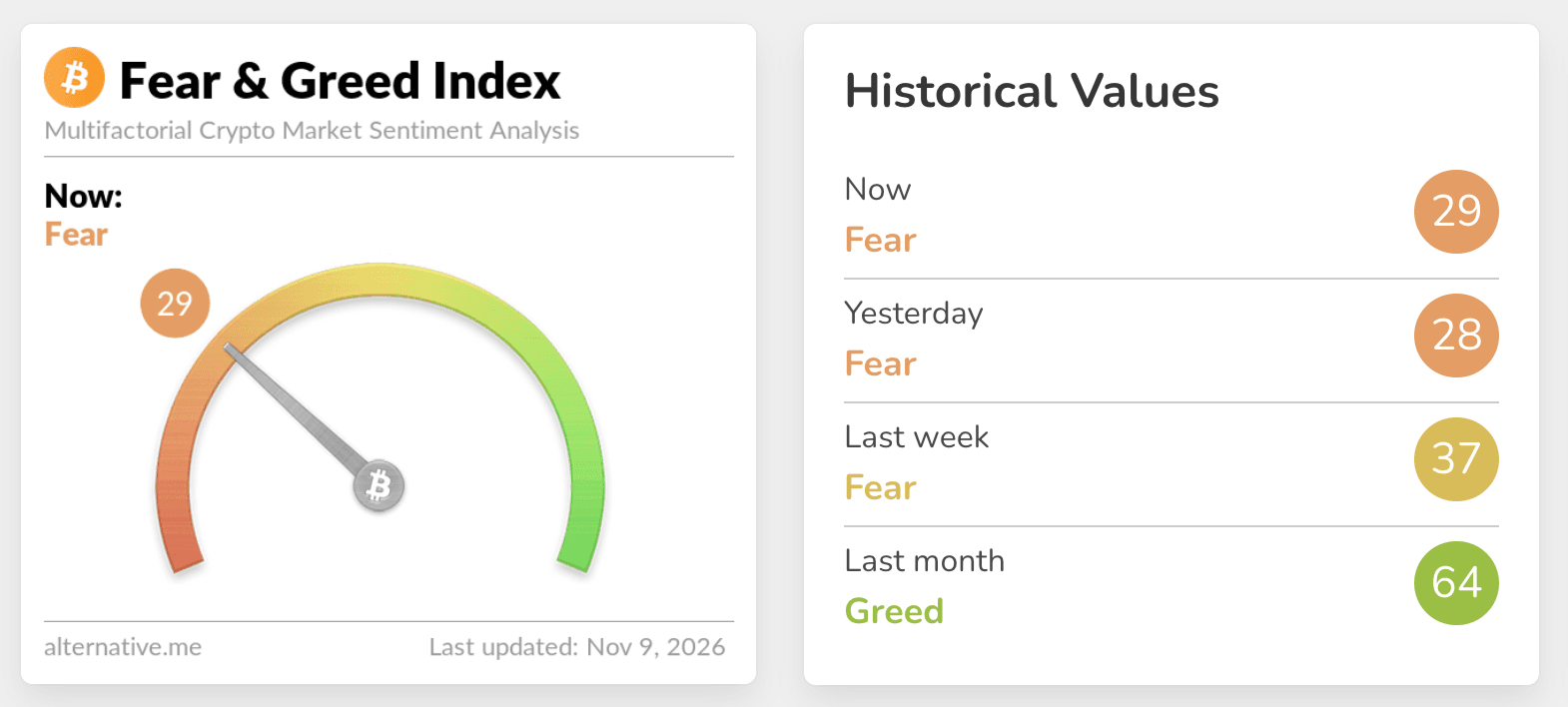
Source: Alternative
Key News Highlights:
tBTC Bridge Partially Resumes Operations as USD 120 Million Aave Reserve Remains Restricted
Threshold Network announced that its tBTC bridge has begun resuming underlying on-chain operations after a nine-day suspension, although some user-facing functions remain unavailable. The suspension began on October 30 as node operators worked to address a critical Linux kernel vulnerability that could potentially allow remote attackers to execute code on affected servers. Threshold explained that operators who completed the necessary security patches have gradually begun reconnecting to the network. These operators are progressively restoring their ability to collectively authorize Bitcoin transfers and process cross-chain transactions. As more nodes return online, the network will prioritize requests submitted before the suspension. However, the application continues to restrict new BTC deposits, tBTC minting, and BTC redemptions. Threshold has not announced a specific date for the full restoration of services and has reported no evidence that the vulnerability had been exploited. According to the project's disclosed asset data, bridge wallets currently hold approximately 4,320 BTC against around 4,185 tBTC in circulation. No unauthorized Bitcoin transfers or token minting activities have been detected. Meanwhile, DeFi lending protocol Aave introduced restrictions on its tBTC reserve in the Ethereum Core market on October 31. The affected reserve holds approximately USD 120 million in assets. These restrictions prevent new tBTC deposits and prohibit users from increasing their borrowing power through tBTC collateral. Existing users can still withdraw assets and repay loans under the applicable market rules. Aave risk service provider LlamaRisk stated that it would propose lifting the restrictions once Threshold's cross-chain operations fully return to normal. Although the underlying tBTC network has begun restarting, the restoration of application functions and the removal of Aave's reserve restrictions remain separate processes that have yet to be completed.
Vitalik Highlights ETH as a Store of Value as Grayscale Reports Nearly USD 140 Billion in Stablecoins on Ethereum
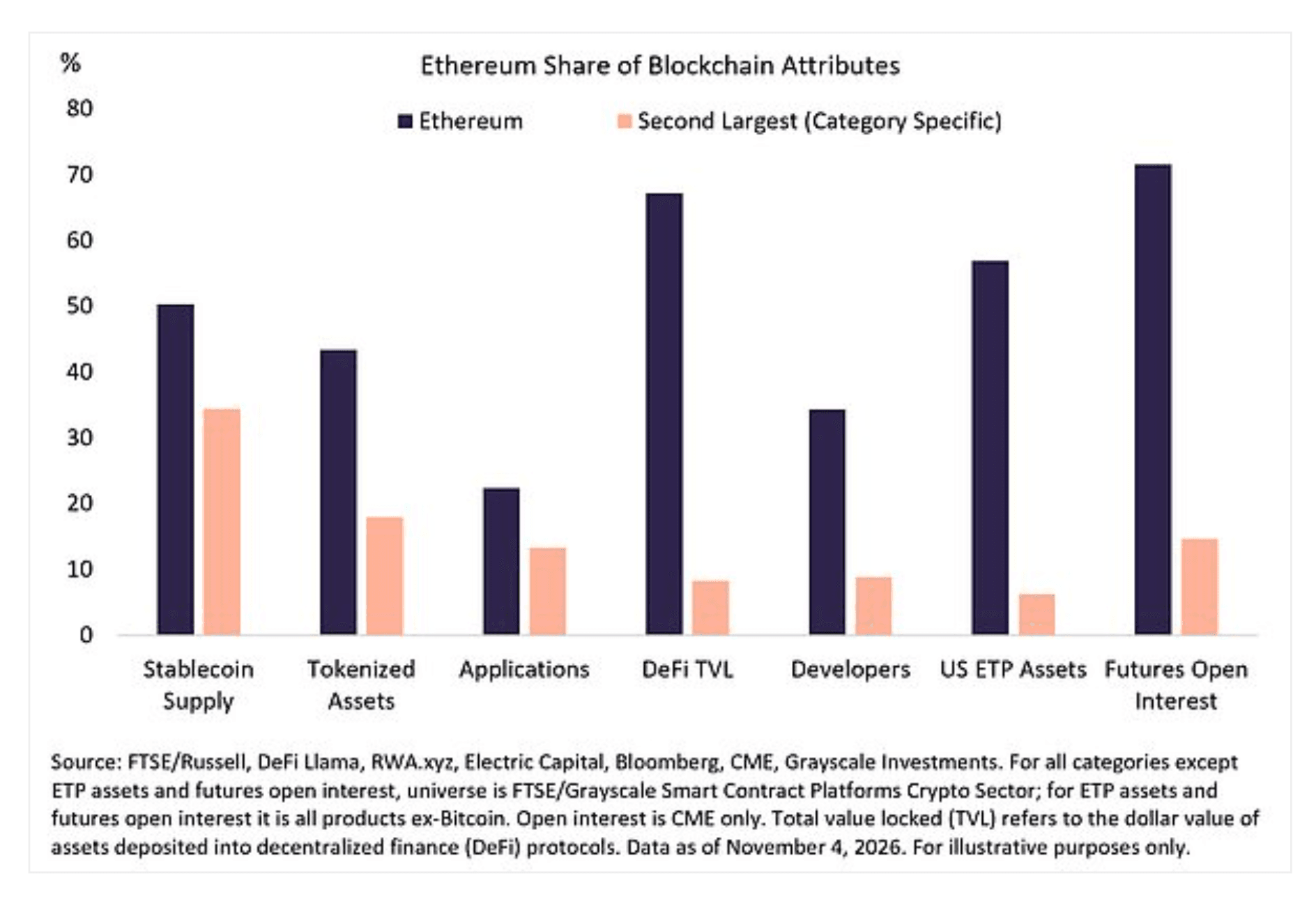
Ethereum co-founder Vitalik Buterin recently renewed his emphasis on ETH as a store of value. He argued that Ethereum's long-term value should not depend heavily on transaction fee burns but should instead reflect network security, decentralization, and its practical role in financial infrastructure. On November 8, Buterin explained that the market had previously linked ETH's value closely to the amount of tokens burned through transaction fees. However, he questioned whether this economic narrative was as sustainable as initially believed. Since the implementation of the EIP-1559 upgrade in 2021, Ethereum has burned a portion of its base transaction fees to influence ETH's supply dynamics. As network transaction costs have declined and the Layer 2 ecosystem has expanded, the volume of ETH burned has fallen significantly from previous peaks. Buterin argued that deliberately increasing transaction fees to encourage more ETH burns could raise network usage costs and conflict with principles such as decentralization, censorship resistance, and privacy. He also stressed that Ethereum should retain its existing fee-burning mechanism without treating it as the primary measure of ETH's long-term value. Instead, greater emphasis should be placed on the network's security, stability, and resistance to centralized control. Meanwhile, digital asset manager Grayscale published a research report identifying Ethereum as a major blockchain infrastructure platform for stablecoins and asset tokenization. According to Grayscale, approximately half of all stablecoins worldwide are deployed on Ethereum, representing nearly USD 140 billion in assets. Ethereum also accounts for around 40% of tokenized assets, more than twice the amount recorded on the second-largest blockchain. Participating institutions include BlackRock, WisdomTree, and Invesco. In terms of its application ecosystem, Ethereum's mainnet supports more than 2,000 applications, while its Layer 2 networks host approximately 6,000 additional applications across decentralized finance, asset management, and other digital services. Within traditional financial markets, US-listed ETH exchange-traded products hold more than USD 13 billion in assets, while open interest in CME ETH futures exceeds USD 3 billion. Grayscale described Ethereum as an operating system that supports a broad range of financial applications. Its functionality has expanded beyond cryptocurrency transfers to include stablecoin issuance, asset tokenization, and financial services infrastructure. Buterin's comments focused on ETH's store-of-value properties and network security, while Grayscale's research highlighted Ethereum's existing adoption across on-chain financial markets. Together, these developments present two perspectives on Ethereum's evolving role in the digital asset ecosystem through protocol design and real-world financial applications.
California Orders CoinFlip to Pay Over USD 4.8 Million to Scam Victims Following Crypto ATM Compliance Failures
The California Department of Financial Protection and Innovation (DFPI) issued an enforcement order on November 4 requiring cryptocurrency ATM operator CoinFlip to pay more than USD 4.8 million in compensation to local scam victims. The company was also ordered to pay more than USD 350,000 in improperly collected fees to the regulator. CoinFlip operates approximately 500 cryptocurrency ATMs across California. These machines are primarily located in public places such as convenience stores, gas stations, and supermarkets, allowing customers to purchase digital assets such as Bitcoin using cash. A DFPI investigation found that CoinFlip had failed to adequately verify the identities of certain customers since 2021. The company also failed to effectively detect, prevent, report, and mitigate suspicious transactions conducted through its services. Regulators identified transactions that exceeded California's daily customer limit of USD 1,000. Additional violations included excessive transaction fees, inadequate written disclosures before purchases, and incomplete receipt information. The investigation also documented common methods used by scammers to transfer funds through cryptocurrency ATMs. Fraudsters frequently impersonated government agencies, financial service representatives, or other trusted organizations. They would falsely claim that victims' bank accounts or computers had security problems and instruct them to withdraw cash. Victims were then directed to nearby cryptocurrency ATMs and asked to scan wallet QR codes provided by the scammers to complete their purchases. The purchased cryptocurrencies were transferred directly to addresses controlled by the fraudsters. Because confirmed blockchain transactions generally cannot be reversed, victims often faced significant difficulties recovering their funds through conventional transaction reversal procedures. The DFPI specifically noted that older adults were particularly vulnerable to these types of scams. Under the enforcement order, CoinFlip must cease the unlawful and unfair business practices identified by regulators. The company must also fulfill its obligations to compensate victims and return improperly collected fees. The enforcement action involved California's Digital Financial Assets Law, Consumer Financial Protection Law, and federal anti-money laundering requirements. It highlighted regulatory expectations for customer identity verification, transaction disclosures, and fraud prevention controls across physical cryptocurrency transaction services.
Nvidia Investigation and Stalled US-Iran Talks Fuel Market Volatility as BTC Falls Below $74K and Liquidations Exceed USD 1 Billion
The cryptocurrency market experienced sharp volatility following reports of an investigation involving Nvidia CEO Jensen Huang and stalled negotiations between the United States and Iran. BTC briefly fell to $73,761, its lowest level since August 2026, before rebounding above $75K. ETH also experienced a rapid decline and dropped below $2,100 before recovering to approximately $2,144. Liquidation data showed that ETH accounted for USD 448 million in forced liquidations, significantly exceeding BTC's USD 272 million. The largest single liquidation involved an ETH position worth approximately USD 48 million. The market turbulence coincided with two major developments that attracted attention across financial markets. Nvidia's board announced an independent investigation following reports that CEO Jensen Huang may have been targeted by a foreign intelligence operation. The investigation is being overseen by independent directors with support from external legal counsel. Huang acknowledged an extramarital affair and apologized to employees. However, Nvidia emphasized that it had no reason to believe national security or confidential company information had been compromised. The allegations remain subject to investigation. Following the news, NVDAX, a tokenized version of Nvidia shares, declined 3.55% over 24 hours to $180.42. This was below Nvidia's closing share price of $186.64 on Nasdaq the previous Friday. Meanwhile, US Secretary of State Marco Rubio stated that Iran had presented unacceptable demands during negotiations and that the two sides had failed to make meaningful progress. The lack of progress kept geopolitical uncertainty in the Middle East in focus. With traditional equity markets closed over the weekend, cryptocurrencies became one of the primary markets where participants could immediately react to these developments. Although BTC recovered above $75K after its initial decline, the rebound subsequently lost momentum. Market participants continued to monitor the Nvidia investigation, developments in US-Iran negotiations, and the potential response of US equity markets when trading resumed on Monday.
Disclaimer: The information provided in this section is for informational purposes only and doesn't represent any investment advice or FameEX's official view.