FameEX Today’s Crypto News Recap | June 16, 2026
2026-06-16 06:43:52

Trump's USD1 stablecoin adopted by UFC, Bitcoin technical indicators face whale sell-pressure, AI regulatory restrictions fuel decentralized AI development, and Mexico's fintech regulatory bill makes progress. The crypto market has recently been under pressure from macroeconomic volatility. Bitcoin continues to fluctuate near $66K, while Ethereum briefly broke above the $1,700 mark during the session. However, the Crypto Fear and Greed Index remains at 23, which still falls within the Extreme Fear range. This shows that investor confidence has not fully recovered. As the Bank of Japan reiterated that it will continue to adjust policy rates based on domestic economic activity, price movements, and financial conditions, global capital markets are seeing a clear shift in liquidity expectations. This macro policy uncertainty has directly amplified price volatility across digital assets. On-chain data shows that total liquidations across the market reached USD 518 million over the past 24 hours, with short liquidations accounting for a significant share. This suggests that the market remains highly fragile when facing frequent macro headlines and technical resistance. At the same time, capital flows in spot Bitcoin ETFs and spot Ethereum ETFs have shown a clear divergence. Institutional investors are dynamically adjusting their allocation logic across different underlying assets as market structure continues to evolve. Overall, the market is now in a sensitive phase as it searches for key support levels and absorbs selling pressure. Investors should closely monitor liquidation intensity near major technical levels, as well as the potential chain reaction caused by macroeconomic policy changes.
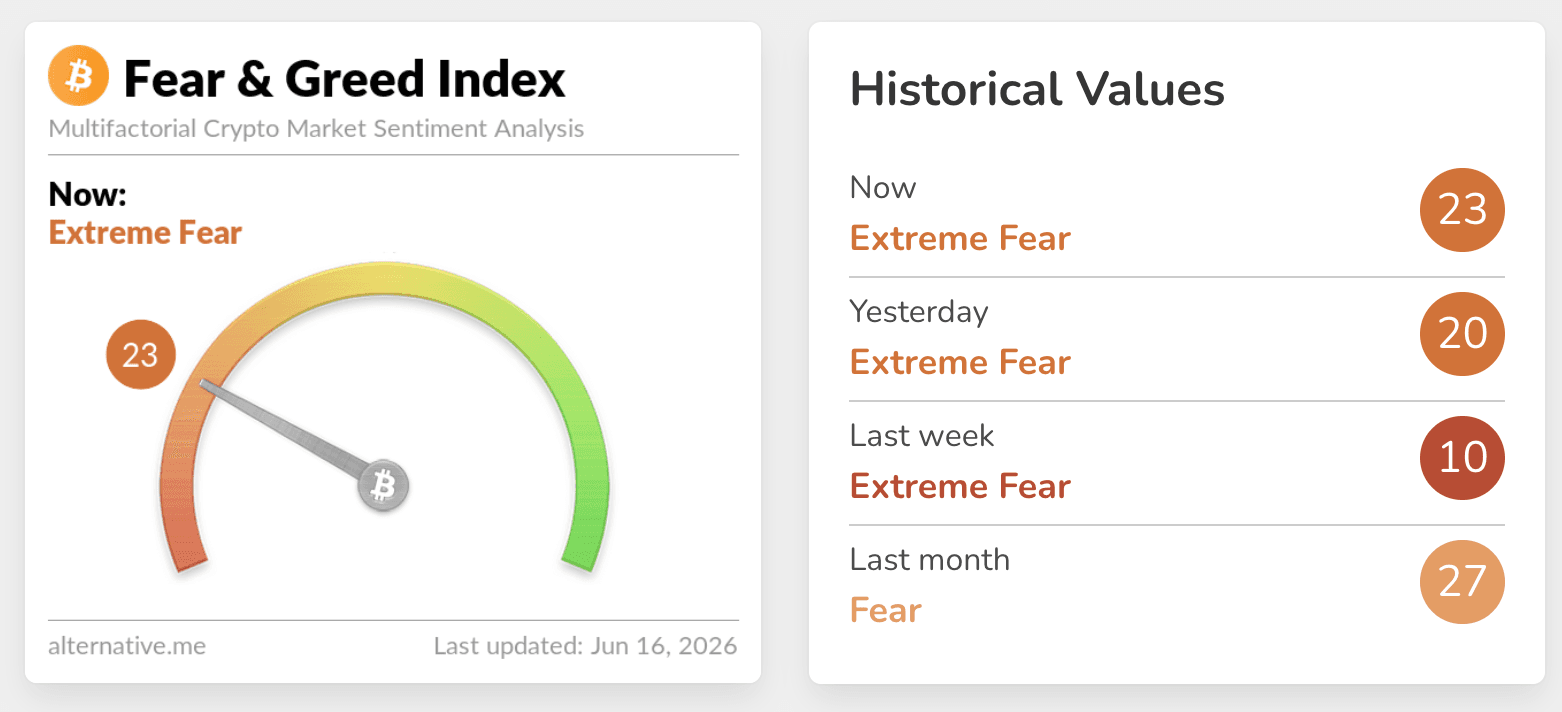
Source: Alternative
Key News Highlights:
Trump Family-Linked Stablecoin USD1 Expands Into UFC Event Bonus Payments
A crypto project linked to World Liberty Financial, a company associated with the family of former U.S. President Donald Trump, has seen new market developments. Its U.S. dollar-pegged stablecoin USD1 has been officially announced as one of the payment tools for UFC event bonuses. This has triggered broad discussion over the potential conflict between political power and private commercial interests. Although the move has drawn many questions from outside observers, relevant parties confirmed that fighter bonuses for the event could reach up to USD 250,000. The initiative is intended to promote the real-world use of the stablecoin in mainstream sports events. Market data shows that USD1 has remained above the $1 mark since June 12. Its trading volume surged by more than 93% over the past 24 hours to reach USD 2.38 billion. This suggests that liquidity increased sharply after the event-related announcement. In addition to the project itself, sponsors of the event also included prediction market platform Polymarket and a U.S. crypto exchange. However, the stablecoin project has faced strict political and regulatory scrutiny since its launch. These concerns include potential legal issues related to digital assets and questions around financial disclosures. The company also previously faced legal accusations from the founder of Tron. For now, the market remains cautious about the stablecoin’s compliance profile and long-term liquidity in mainstream use cases. Its broader impact on the digital asset payments sector still requires further validation through actual transaction data.
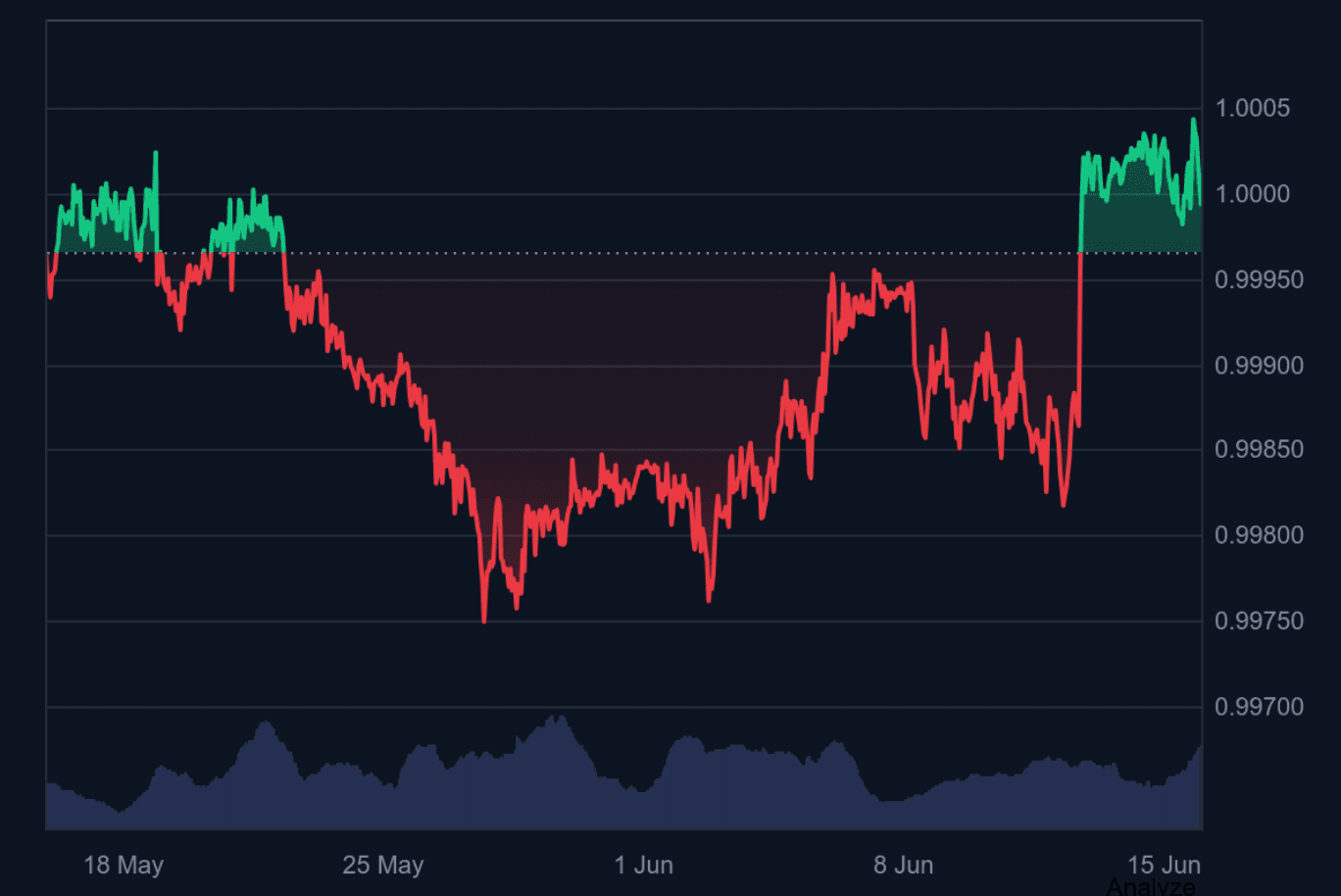
World Liberty Financial’s USD1 traded below $1 for most of the past month.
Bitcoin Technical Structure And On-Chain Fund Flow Risk Signals
Bitcoin’s current technical chart shows a complex battle between a double-bottom reversal setup and a bear flag structure. Analysts noted that if BTC can continue to hold the key $60,000 support zone, the market may have room for further recovery during the summer. The weekly Relative Strength Index, or RSI, has also shown a clear bullish divergence. This suggests that selling momentum has weakened significantly during the downward move. The technical pattern appears somewhat similar to the formation seen near the 2022 bear market bottom. Bitcoin is now testing a key resistance zone near $66,700. This level is formed by the upper trendline of the bear flag and a short-term moving average. If BTC can break above this resistance with convincing volume, it would help confirm the start of a rebound structure and build momentum for a potential move toward the $100,000 level. However, on-chain monitoring data is also flashing risk signals. Recent Bitcoin inflows from large whale accounts to major CEXs have increased significantly. The average daily inflow over the past month has surged from 1,200 BTC to 3,200 BTC. This clearly indicates that large holders are showing stronger willingness to sell, which adds heavy downside pressure to the short-term market. Investors should closely watch whether Bitcoin can establish a successful base above $60,000. If the market fails to break the upper resistance zone and falls below this support area, the risk of another leg lower should be treated with caution.
Decentralized AI Solutions Gain Market Attention Due To Regulatory Factors
The U.S. government’s recent strict access restrictions on Anthropic’s artificial intelligence models have unexpectedly become a catalyst for rising market attention toward decentralized AI solutions. The event also triggered notable price moves in related crypto assets. According to research reports, the incident clearly exposed the vulnerability of centralized AI infrastructure when facing forceful policy intervention. It directly pushed investors to look faster for censorship-resistant decentralized alternatives. Bittensor and its native token TAO became one of the most discussed examples. TAO rose by as much as 30% within 12 hours after the news was released and reached its highest level in nearly three weeks. Projects in this category aim to build a global resource allocation network based on decentralized principles and economic incentives. The market often describes them as the Bitcoin of artificial intelligence. Their core goal is to address geopolitical and censorship risks caused by core technology resources being monopolized by a few large laboratories. As governments around the world continue to strengthen oversight of large AI models, the risks of major technology companies relying on this kind of rented intelligence infrastructure are becoming more visible. A mainstream market view is that this regulatory uncertainty could benefit decentralized networks over the long term. These networks offer a more censorship-resistant and structurally resilient technical foundation. Investors and technology companies are now closely assessing the deeper impact of these policy changes on the future global computing market and AI ecosystem.
Mexico Fintech Regulatory Reform And Crypto Asset Legal Framework Discussions
Following recent leadership changes at Mexico’s financial regulator CNBV, the local fintech industry is actively pushing for a Fintech 2.0 bill designed to upgrade the existing regulatory framework. The proposed update would cover Open Finance, crypto assets, and new business models. Mexico currently has more than 1,000 fintech companies. However, the industry broadly believes that the existing law passed in 2018 can no longer keep pace with technological innovation. This has created clear bottlenecks in product development and business expansion, especially due to unclear authorization processes and proportional regulatory standards. According to industry experts, fintech companies urgently need a more flexible and coordinated framework. This is especially important for advancing Open Finance data sharing and the legalization of crypto assets. At present, these areas remain constrained by relatively conservative financial controls. Around 85% of daily transactions in Mexico are still conducted in cash, and a large share of the population remains outside the formal financial system. Because of this, the industry believes an updated fintech law could accelerate financial inclusion and promote stronger market competition. As regulators show more willingness to engage in dialogue, the industry expects future legislation to provide clearer legal status and operating space for digital financial assets. This would need to be achieved while still maintaining financial stability and protecting users. It would also help Mexico respond to the growing demand for digital financial services.
Disclaimer: The information provided in this section is for informational purposes only and doesn't represent any investment advice or FameEX's official view.