FameEX Today’s Crypto News Recap | June 19, 2026
2026-06-19 09:09:19

BlackRock drives TradFi convergence while Ether inflows spark selloff fears alongside AllUnity's MiCA stablecoin launch. BTC and ETH continued to trade with weak momentum today. BTC was last quoted at around $62,622 after briefly falling near $62,263 during the session. ETH was last quoted at around $1,695 after touching an intraday low near $1,671. Both assets suggest that major crypto markets remain in a high-volatility and defensive trading environment. In the derivatives market, BTC’s average 8-hour funding rate across the network stood at 0.0013%. This shows that leveraged sentiment is slightly positive, but overall chase-buying demand remains limited. ETH’s average 8-hour funding rate turned negative at -0.0009%, indicating a more cautious short-term leverage structure than BTC. Market sentiment also remained under pressure. The Crypto Fear and Greed Index fell to 13, staying in the Extreme Fear zone and remaining below both its 7-day and 30-day averages. This reflects that investors’ risk appetite has not yet recovered meaningfully. ETF flows also showed continued pressure. U.S. spot Bitcoin ETFs recorded net outflows of USD 90.65 million on June 18 Eastern Time, while spot Ethereum ETFs saw net outflows of USD 12.76 million. This suggests that institutional capital remains inclined to stay cautious and adjust allocations during short-term volatility. On the liquidation side, total liquidations across the crypto market reached USD 468 million over the past 24 hours. Long liquidations accounted for USD 377 million, while short liquidations reached USD 91.48 million. This indicates that the latest market move was mainly driven by the deleveraging of long positions. If BTC breaks above $65,856, cumulative short liquidation intensity across major CEXs could reach USD 1.724 billion. If BTC falls below $59,804, cumulative long liquidation intensity could reach USD 965 million. For ETH, a move above $1,781 could trigger cumulative short liquidation intensity of USD 956 million across major CEXs. A drop below $1,613 could bring cumulative long liquidation intensity to USD 538 million. This shows that both BTC and ETH are trading near important leverage liquidation zones. Short-term price action may continue to revolve around position structure.
Key News Highlights:
BlackRock Says Bitcoin ETFs Are Drawing Crypto Investors Into Traditional Financial Products
Jay Jacobs, U.S. Head of Equity ETFs at BlackRock, said the company’s spot Bitcoin ETF has not only made it easier for traditional investors to access digital assets. It has also brought many crypto investors into the ETF product ecosystem for the first time. According to Jacobs, around three-quarters of iShares Bitcoin Trust ETF investors had never owned an ETF before. This has made IBIT a two-way gateway. On one side, traditional capital is gaining exposure to Bitcoin through ETFs. On the other side, crypto users are beginning to understand and use more traditional financial products through Bitcoin ETFs. Jacobs noted that after gaining exposure to Bitcoin ETFs, some investors have moved into other themed ETFs covering the S&P 500, artificial intelligence, and gold. This shows that digital asset products are becoming a new entry point into the traditional fund market. BlackRock refers to the merging of crypto finance, decentralized finance, and traditional finance as the “Great Convergence.” The term suggests that boundaries between asset classes are becoming less defined. Jacobs also said that future market discussions may focus less on the conflict between TradFi and DeFi. Instead, they may focus more on product structures where the two systems operate together and complement each other. The recent rise of pre-IPO perpetual futures and tokenized stocks is also seen as part of this broader convergence trend. These tools allow crypto traders to gain exposure to private market valuations before companies officially go public. However, they remain derivatives or synthetic assets by nature and should not be treated as real equity.
ETH Exchange Inflows and Falling Futures Open Interest Draw Market Attention
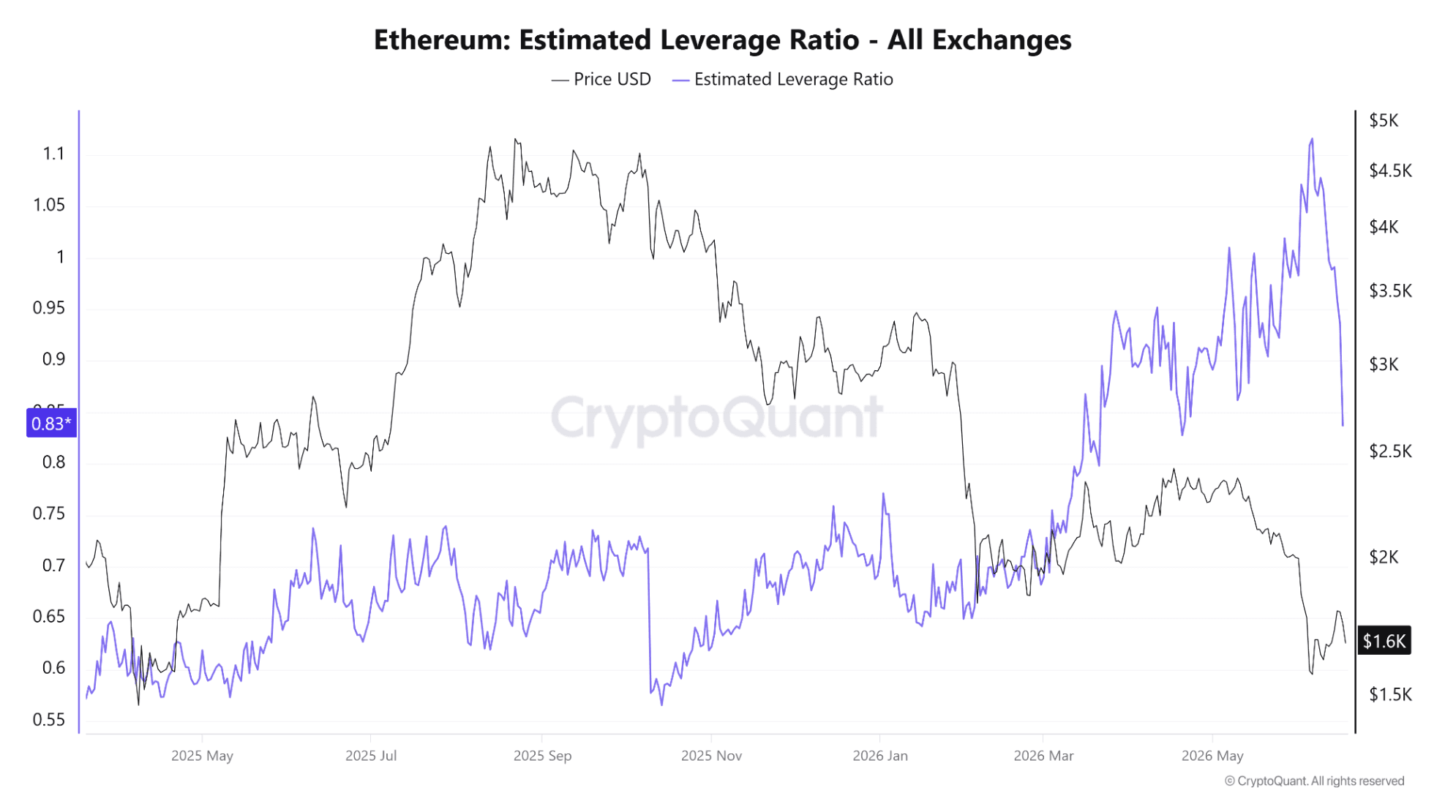
Ethereum’s recent exchange flows and derivatives data have weakened, raising market attention around potential short-term selling pressure on ETH. According to market analysis, a major CEX recently recorded net inflows of around 57,700 ETH. An increase in exchange net inflows usually means that more assets are available for potential selling. This makes it an important indicator when tracking possible sell-side pressure. At the same time, the number of new ETH deposit addresses stood at around 320. This is lower than the levels seen during previous periods of stronger demand and suggests that fresh capital participation remains limited. On the supply side, daily ETH issuance is around 2,791 ETH. This remains relatively low compared with levels before Ethereum’s EIP-1559 upgrade. Even so, the short-term market is paying closer attention to the balance between exchange inflows and weak demand. The derivatives market has also cooled. ETH futures open interest fell from USD 15 billion a month ago to USD 10.3 billion, marking a decline of about 31% and the lowest level since April 2025. The leverage position ratio has also retreated from its early June high. Lower leverage usually helps reduce sharp short-term volatility, but it also reflects weaker trader confidence in ETH’s direction. From a technical range perspective, the market is watching the $1,400 to $1,700 zone. This area is seen as a demand zone where long and short positions have recently been more concentrated.
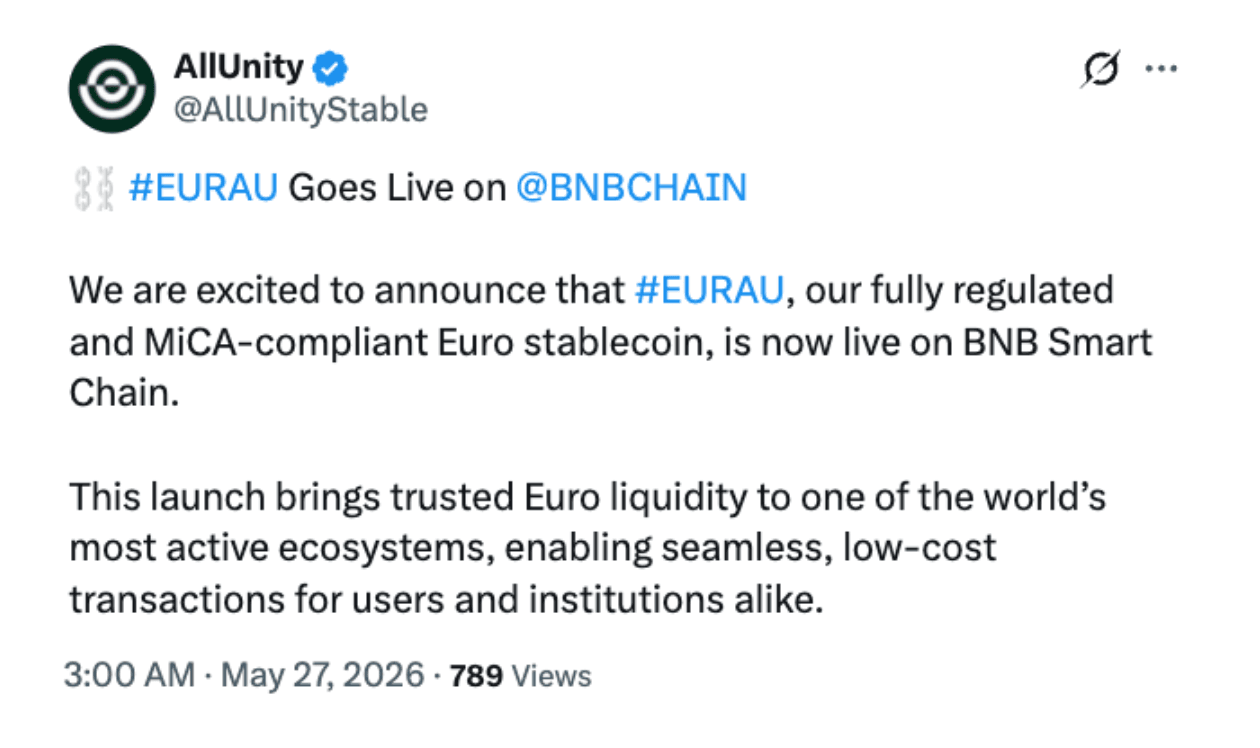
AllUnity Launches Swedish Krona Stablecoin SEKAU Under the MiCA Framework
Digital asset company AllUnity has launched SEKAU, a Swedish krona-backed stablecoin issued under the European Union’s MiCA regulatory framework. The product is classified as an e-money token. According to AllUnity, SEKAU will be backed by segregated Swedish krona reserves and is mainly designed for institutional settlement and cross-border payment use cases. The product extends AllUnity’s multi-currency stablecoin strategy. The company had previously launched stablecoins linked to the euro and the Swiss franc. SEKAU is supported by several partners. Banking Circle will be responsible for holding and managing the reserves that back the token. Sweden’s Marginalen Bank will participate in the rollout as a banking partner. Trust Anchor Group will provide digital asset infrastructure and technical integration to help expand SEKAU’s utility across the ecosystem. SEKAU will initially be deployed on five blockchain networks: Ethereum, Solana, Base, Tempo, and Polygon. This setup is intended to improve cross-chain access, liquidity, and interoperability. AllUnity said it also plans to expand SEKAU to more networks later in 2026. The company emphasized that SEKAU is the first Swedish krona-denominated stablecoin that is fully backed by Swedish krona reserves, publicly redeemable, and aligned with MiCA. It is different from Sweden’s e-krona central bank digital currency research project in terms of product structure and purpose.
Goldman Sachs Cuts Year-End Gold Target and Focuses on the Fed’s Rate Path
Goldman Sachs lowered its year-end gold price target by USD 500. The revised target now stands at $4,900 per ounce, down from its previous estimate of $5,400 per ounce. The adjustment mainly reflects Goldman Sachs’ view that the Federal Reserve will not cut interest rates this year. It also reflects the market’s repricing of the future rate path. Goldman Sachs commodity analysts said their medium- to long-term view on gold remains structurally constructive. However, their short-term view has become more cautious due to near-term downside risks. Medium-term support may still come from asset allocation demand. If U.S. rate cuts are delayed until 2027, the cost of holding non-yielding assets will rise on a relative basis. Gold and other risk assets may therefore be affected by changes in funding costs. For the crypto market, the interest rate environment is also an important backdrop. Lower rates usually help improve liquidity and risk appetite, while higher rates or a longer period of elevated rates may suppress leverage demand. Recent Middle East geopolitical risks, inflation data, and U.S. dollar movements are also shaping how the market allocates to gold, Bitcoin, and other assets. Market participants noted that overall risk appetite is more likely to recover meaningfully only after inflation falls, rate cuts become more realistic, liquidity improves, and capital costs decline. CME FedWatch data also shows that the market is still assessing the possibility of unchanged rates or further rate hikes during the rest of 2026.
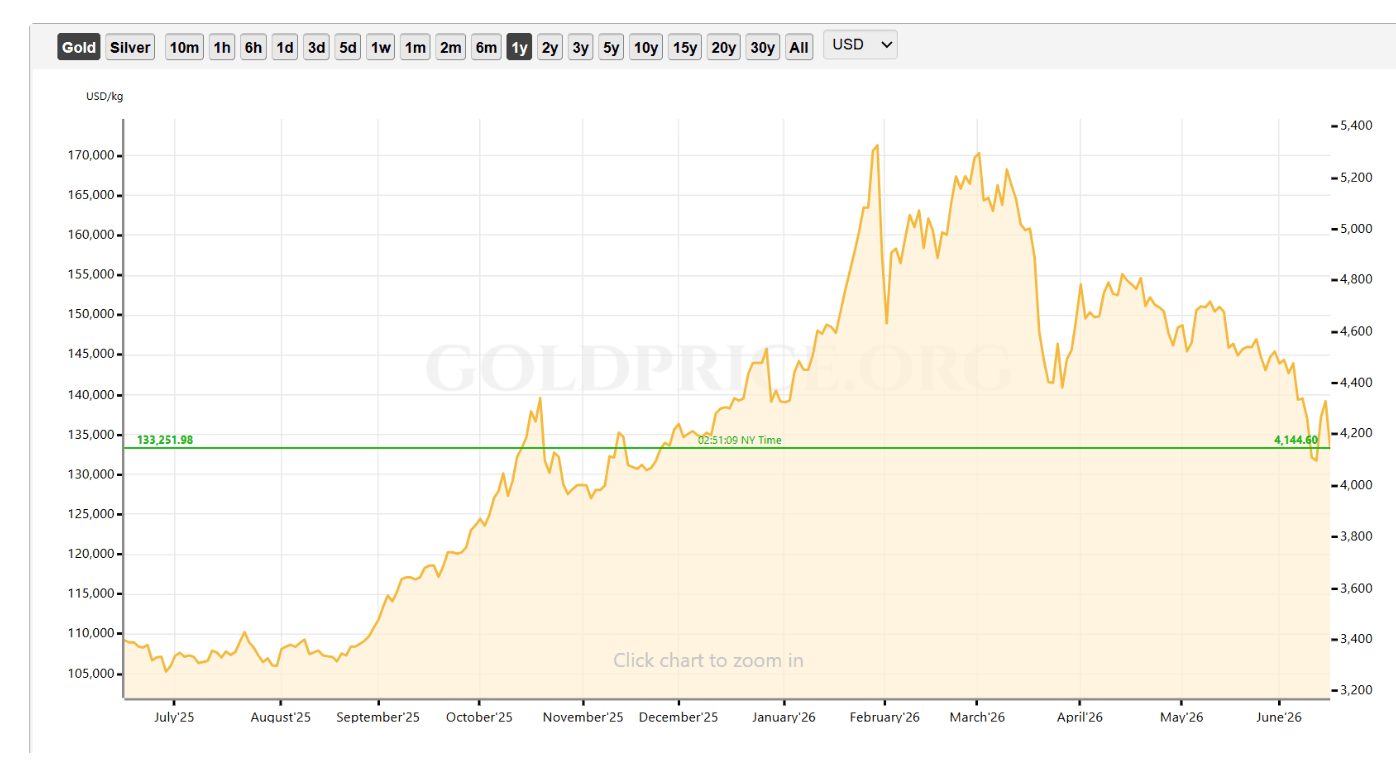
Gold One-Year Performance Chart
Disclaimer: The information provided in this section is for informational purposes only and doesn't represent any investment advice or FameEX's official view.