FameEX Today’s Crypto News Recap | August 14, 2026
2026-08-14 07:00:31
As Baltimore sues prediction markets, Tether completes its first full audit and CFTC pushes crypto oversight; today’s BTC trades near $63K in Fear sentiment. The crypto market remains cautious as investors continue to wait for clearer direction. The Crypto Fear & Greed Index remains at 29 in the "Fear" zone, reflecting continued concerns over the macro environment and capital flows. Spot ETF flows show a clear divergence between Bitcoin and Ethereum. Bitcoin spot ETFs recorded net outflows of USD 131 million in a single day. ARKB, managed by Ark Invest and 21Shares, led the outflows with USD 58.8155 million, while the Grayscale Bitcoin Mini Trust bucked the trend with net inflows of USD 38.9268 million. In contrast, Ethereum spot ETFs showed greater resilience and recorded net inflows of USD 6.7169 million. The Grayscale Ethereum Mini Trust ETF led the group with USD 6.4748 million in net inflows. Liquidation data also shows a high concentration of leveraged positions across major CEXs. If BTC rises above $66,499, cumulative short liquidation intensity could reach USD 1.273 billion. If BTC falls below $60,389, cumulative long liquidation intensity could reach USD 1.033 billion. For ETH, a move above $1,975 could expose around USD 788 million in short liquidation intensity. A decline below $1,791 could put around USD 697 million in long positions at risk of liquidation. Each sector performance was mixed across the market. DeFi led with a 1.04% gain, supported by a 1.74% rise in Hyperliquid (HYPE) and a 2.42% increase in Chainlink (LINK). The Meme sector rose 0.7%, while Layer1 gained 0.2%. Cosmos Hub (ATOM) stood out with an 8.71% increase. Layer2 moved in the opposite direction and declined 0.97%. On the macro front, a former senior Japanese foreign exchange official warned that excessive yen weakness could trigger another coordinated intervention by Japan and the United States. He also expects the Bank of Japan to raise interest rates as early as September. These developments add another source of uncertainty to global liquidity conditions for risk assets.
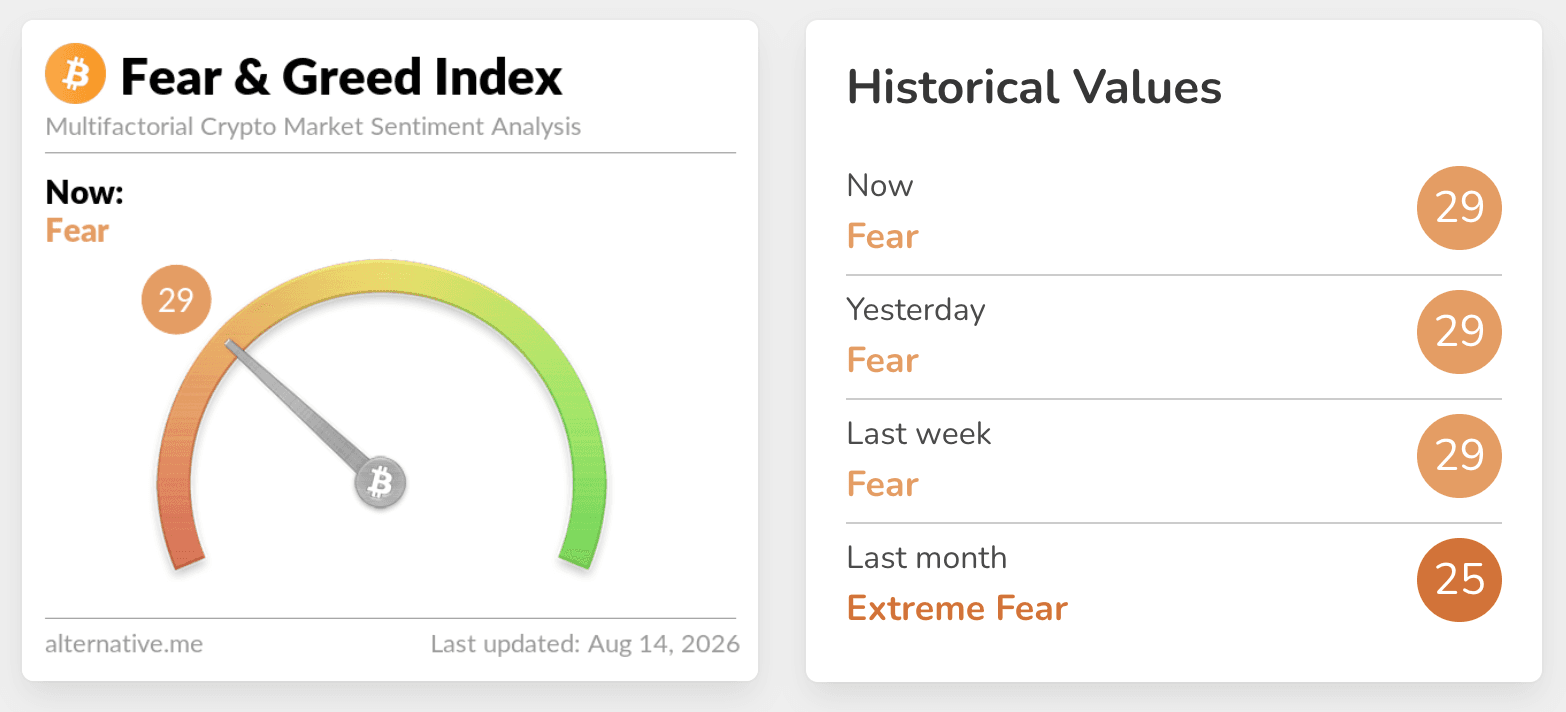
Source: Alternative
Key News Highlights:
Baltimore Sues Two Major Prediction Market Platforms as Sports Contract Regulation Faces Renewed Scrutiny
The City of Baltimore and Mayor Brandon Scott have filed lawsuits against Kalshi and Polymarket. The cases focus on whether sports event contracts offered by the two prediction market platforms violate local gambling laws. Baltimore alleges that the companies are offering products with the characteristics of sports betting without the required local gambling licenses. The city also argues that some product marketing may mislead users about the legal and regulatory status of these contracts. While the platforms describe the products as tradable event contracts, Baltimore argues that contracts whose outcomes depend directly on sporting events may qualify as gambling under state law. The case against Kalshi also involves several platforms that provide access to or partner with the prediction market. These include a major CEX and other financial trading platforms. Baltimore argues that the promotion of these contracts to local consumers raises similar questions over product legality. The legal action has renewed a long-running debate over federal and local authority in the U.S. prediction market sector. The CFTC and industry participants have previously argued that event contracts fall within the federal commodities and derivatives regulatory framework. Some state and local authorities take a different view. They argue that sports-related event contracts may function as gambling products and should therefore comply with local licensing and consumer protection requirements. Polymarket has stated that prediction markets operating under the CFTC framework should be governed by federal law rather than separate regulatory regimes established by individual states and cities. As more jurisdictions take legal action against prediction markets, the distinction between derivatives and gambling products remains a central issue in U.S. regulatory disputes.
Tether Completes First Full Annual Financial Audit as KPMG Issues Unqualified Opinion
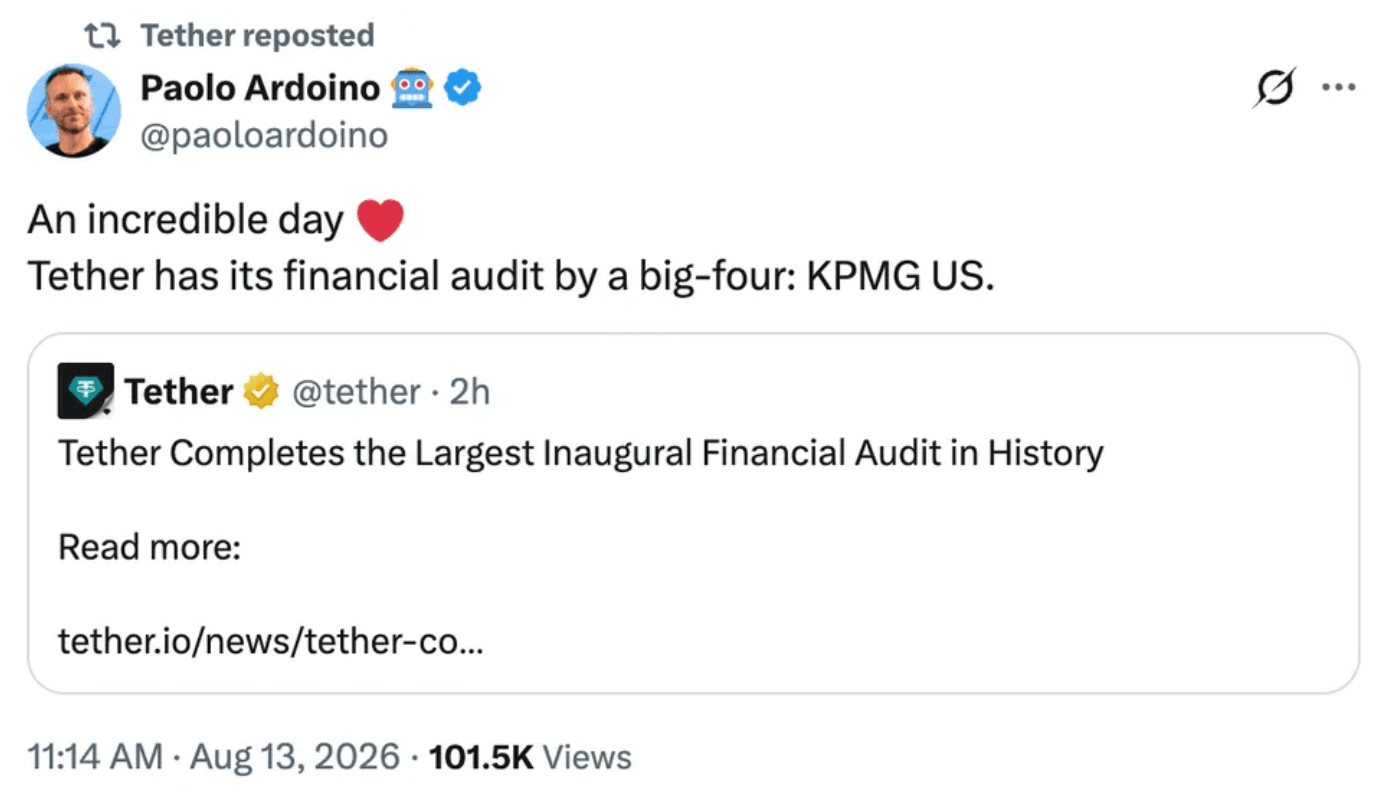
Tether has completed its first full independent audit of its annual financial statements. KPMG U.S. conducted a comprehensive review of the company's financial information for the year ended December 31, 2025, and issued an unqualified opinion. The audit covered Tether's balance sheet, income statement, cash flows and other annual financial information. It also examined the assets backing its issued tokens and the corresponding liabilities. According to the audited financial statements, Tether's reserve assets exceeded its liabilities by USD 6.814 billion at the end of 2025. The full financial audit went beyond the company's regular reserve attestations. In addition to verifying assets and liabilities at a specific point in time, KPMG reviewed transaction records, internal systems, asset ownership records, valuation methods and counterparties that support the financial statements. The audit also covered Tether's physical gold holdings. KPMG auditors physically inspected the relevant gold bars and verified their identifying information instead of relying only on third-party custodian records. KPMG said the financial statements fairly presented Tether's financial position, operating results and cash flows in all material respects under U.S. generally accepted accounting principles. Since launching USDT in 2014, Tether has regularly published third-party reserve attestations to provide information on the assets and liabilities associated with its stablecoin. This marks the first time that the company has subjected its complete annual financial statements and a broader range of underlying financial evidence to an independent audit. The milestone expands Tether's financial disclosure framework beyond reserve attestations to the company-wide financial statement level.
CFTC to Hold Innovation Advisory Committee Meeting With Crypto Regulation on the Agenda
The U.S. Commodity Futures Trading Commission will hold an Innovation Advisory Committee meeting on August 20. The agenda will cover emerging financial and technology issues such as crypto assets, artificial intelligence and prediction markets. According to the CFTC, crypto regulation will be one of the meeting's main topics. Discussions will include how regulators can address digital asset policy issues within the existing legal framework. The committee is also expected to examine how regulatory action could complement future crypto market structure legislation passed by Congress. U.S. lawmakers have yet to complete legislation establishing a comprehensive digital asset market structure. The relevant bill did not advance further in the Senate before the August recess. This has renewed attention on what regulatory agencies can do under their existing authority. The U.S. Securities and Exchange Commission has also scheduled discussions on a new regulatory framework for certain investment contracts involving crypto assets. The SEC has said it supports congressional efforts to establish market structure legislation. At the same time, it plans to continue advancing relevant rules within its existing statutory authority. In recent years, the CFTC has increasingly incorporated digital assets, blockchain, AI and prediction markets into its financial innovation agenda. The agency has used advisory committees to gather feedback from industry participants and other market stakeholders. CFTC Chair Michael Selig and agency staff are expected to participate in the meeting. The agency has not yet returned to a full five-member bipartisan commission, and the remaining leadership vacancies have also drawn attention from some U.S. lawmakers. In addition to crypto markets, the August 20 meeting will cover the use of artificial intelligence in financial markets and regulatory issues surrounding prediction markets. The CFTC has confirmed that the meeting will be livestreamed for the public, with the agenda and participation details already available.
Robinhood Chain Nears USD 1 Billion in TVL as Uniswap Drives Liquidity and UNI Burns
According to a recent Standard Chartered research report, Robinhood's newly launched Layer 2 blockchain, Robinhood Chain, has rapidly approached USD 1 billion in total value locked. The report describes it as one of the fastest-growing new blockchains in crypto history by TVL. Standard Chartered analyst Geoffrey Kendrick said Robinhood Chain relies almost entirely on deep integrations with Uniswap V2, V3 and V4 to meet its liquidity needs. The partnership gives Robinhood direct access to established decentralized finance infrastructure as it expands its blockchain ecosystem. This reduces the need to build liquidity from scratch and helps accelerate the movement of users and assets onto the network. The integration has also had a notable impact on Uniswap's token economics. Since a Robinhood-related fee switch was activated on July 27, protocol fees generated through Robinhood have become the largest source of UNI token burns. Data cited in the report shows that UNI's annualized burn rate has doubled to around USD 90 million. At a UNI price of approximately $3.50, this would equal around 25 million UNI burned each year. That represents more than 4% of the token's circulating supply. Robinhood Chain launched on July 1 with a focus on bringing real-world assets onchain. Daily active users exceeded 19,400 during its first week, while more than USD 70 million in ETH was bridged to the network. Wall Street investment bank Bernstein recently raised its price target for Robinhood (HOOD) to $160 and identified tokenization and prediction markets as key long-term growth drivers.
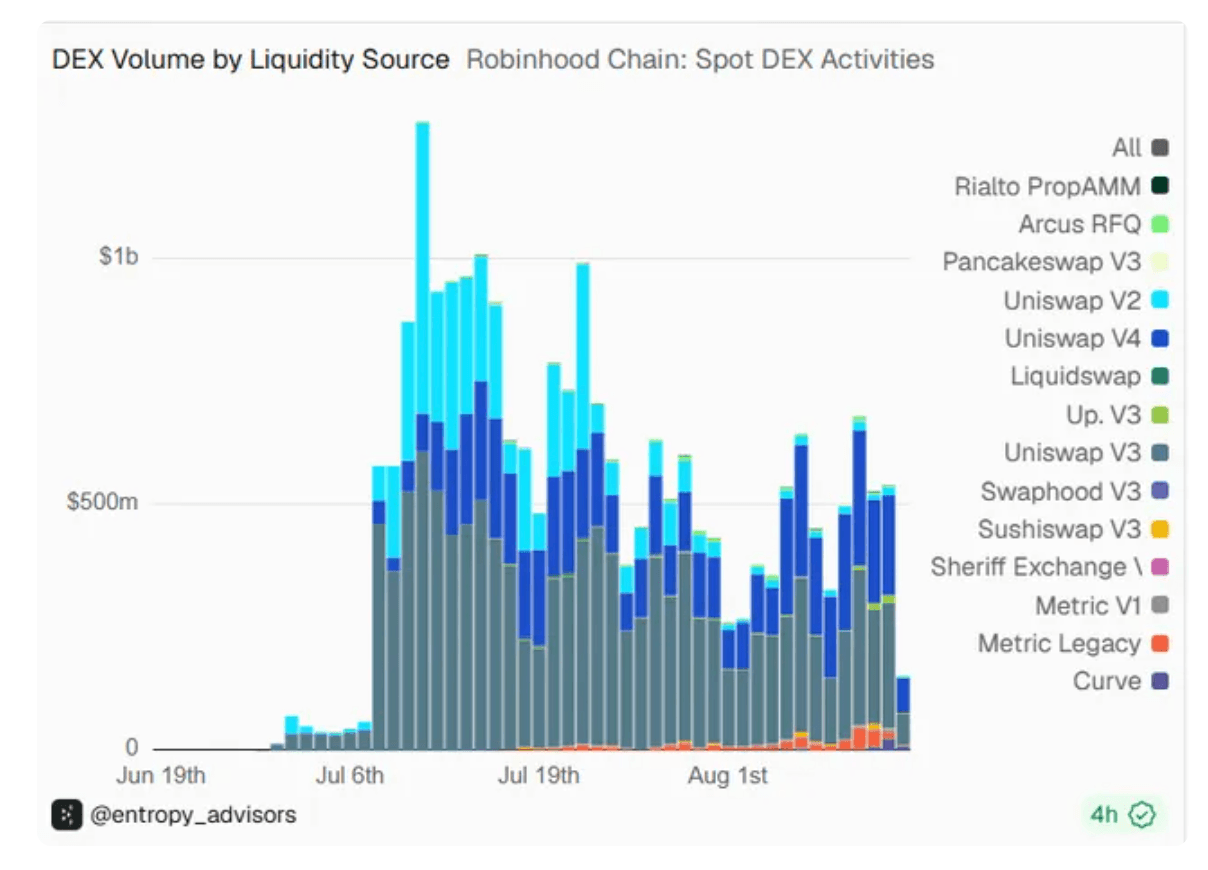
Robinhood Chain Liquidity Sources. Source: Standard Chartered.
Disclaimer: The information provided in this section is for informational purposes only and doesn't represent any investment advice or FameEX's official view.