FameEX Today’s Crypto News Recap | November 20, 2026
2026-11-20 07:09:37

US institutions' BTC ETF holdings hit a record as MoonPay seeks a bank charter and tech slips after Anthropic's IPO; today’sBTC price is near $61.8K amid Extreme Fear. The cryptocurrency market extended its recent decline, with BTC falling approximately 2.6% over the past 24 hours to around $61.8K and ETH dropping about 3.7% to $1,734. Bitcoin briefly approached $61.3K as US technology stocks came under pressure and reached its lowest level in nearly four months. Ethereum and other major cryptocurrencies also declined. Market volatility remained focused on technology stock valuations, institutional capital allocation and changes in leveraged positions across derivatives markets. US spot Bitcoin ETFs recorded USD 582.3 million in daily net outflows, including USD 541.1 million from BlackRock's IBIT. Spot Ethereum ETFs also saw USD 131.2 million in net outflows on the same day. These figures highlighted continued pressure on ETF capital flows for both major cryptocurrencies. Meanwhile, Galaxy Research's latest institutional holdings report showed that US investment managers had significantly increased their Bitcoin ETF positions during the third quarter. The findings revealed a notable contrast between institutional allocations across different reporting periods. In broader financial markets, Anthropic made its Nasdaq debut on November 19. Although its shares closed above the IPO price, technology stocks continued to face selling pressure. Market sentiment remained weak as the Fear and Greed Index rose slightly from yesterday's 10 to 12 and stayed in the Extreme Fear zone. The cryptocurrency market continues to face pressure from spot ETF outflows, leveraged position adjustments and volatility across global risk assets. These conditions have contributed to heightened uncertainty in short-term trading activity.
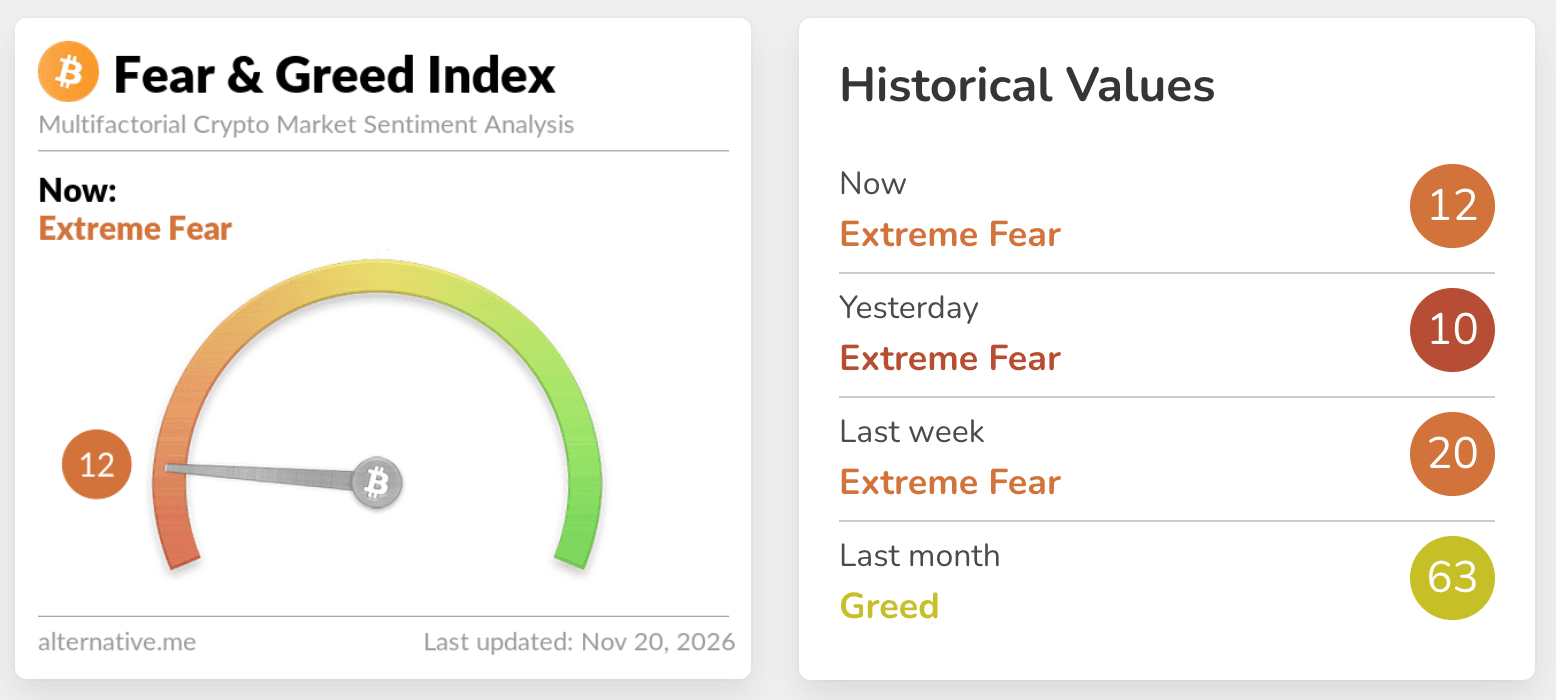
Source: Alternative
Key News Highlights:
US Institutional Bitcoin ETF Holdings Hit Record High After Strong Q3 Accumulation
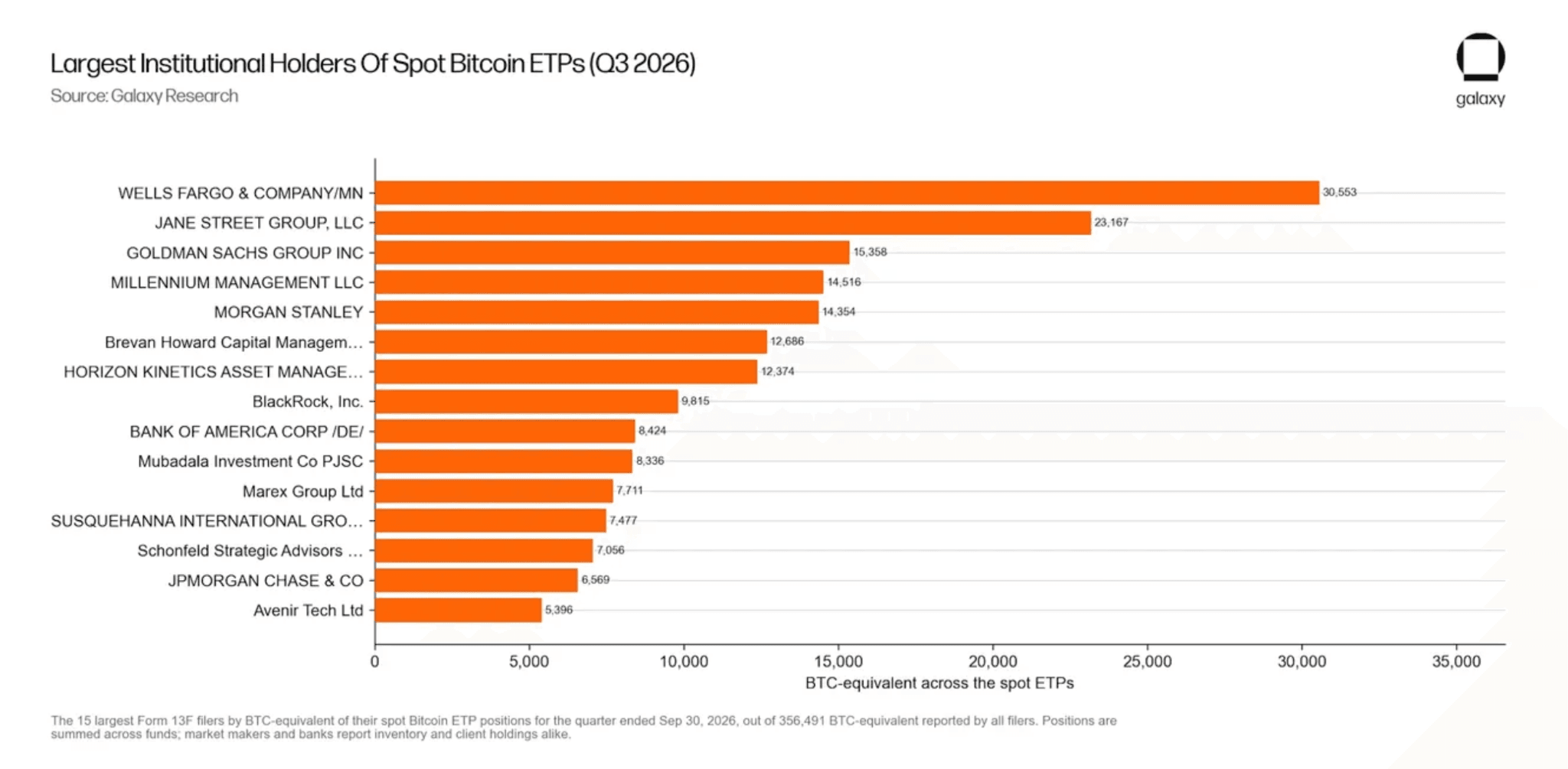
Galaxy Research released its latest findings based on regulatory 13F filings submitted by US institutional investment managers. The report showed that institutions increased their spot Bitcoin ETF holdings in the third quarter of 2026 and reversed three consecutive quarters of net selling. According to the research, reporting institutions added ETF shares equivalent to 49,229 BTC during the quarter. This exceeded the combined reduction of 47,054 BTC over the previous three quarters. As of September 30, their reported Bitcoin ETF holdings reached an all-time high of 356,491 BTC. Galaxy Research Head of Firmwide Research Alex Thorn noted that the third-quarter accumulation was largely driven by several dozen major institutions. Investment advisors and wealth management platforms accounted for approximately half of the net increase. Wells Fargo was among the largest buyers during the quarter and added positions equivalent to 14,636 BTC. Its total holdings reached 30,553 BTC by the end of the reporting period. Other major institutions that increased their positions included Brevan Howard, Bank of America, Millennium Management and Jane Street. The number of investment managers reporting spot Bitcoin ETF holdings also rose by 191 to 2,166. This marked the first increase after two consecutive quarters of declines. In terms of fund distribution, BlackRock's IBIT continued to account for the largest share of institutional holdings. Reporting institutions held the equivalent of 232,453 BTC through IBIT. Together, IBIT and Fidelity's FBTC represented approximately 77% of all Bitcoin ETF holdings reported by these institutions. The figures showed that institutional exposure remained concentrated in the largest ETF products.
MoonPay Applies for US National Trust Bank Charter to Expand Stablecoin and Digital Asset Custody Services
Crypto payments company MoonPay has attracted market attention after applying for a US national trust bank charter. Regulatory documents showed that the company formally submitted its application to the Office of the Comptroller of the Currency (OCC) on November 17. Under the proposal, MoonPay plans to establish MoonPay National Trust Bank in Miami Beach, Florida. The proposed institution would operate as a non-depository trust bank and focus on digital assets and related financial infrastructure services. It would neither accept traditional bank deposits nor provide conventional commercial loans. Its planned services include stablecoin issuance and redemption, reserve management and digital asset custody. MoonPay already provides stablecoin issuance infrastructure to businesses and supports the creation and management of branded digital dollar products. If approved, the charter would allow the company to offer these services through its banking subsidiary under US federal supervision. The application comes as the United States prepares to implement the GENIUS Act on January 18, 2027. The legislation will establish federal requirements for stablecoin issuers, including reserve backing and redemption standards. Several other crypto payments and fintech companies have recently applied for similar federal trust bank charters. This reflects continued efforts by digital asset companies to operate within regulated financial services frameworks. However, these applications have also faced opposition from some traditional community banking groups. The main concerns involve the permitted activities of non-depository trust banks and the scope of federal regulatory authority. MoonPay's application remains under regulatory review, and the final approval decision and permitted business activities have yet to be determined.
Bitcoin Falls to Four-Month Low as Tech Stocks Face Pressure After Anthropic IPO
Artificial intelligence company Anthropic made its Nasdaq debut under the ticker ANT. Its first-day trading performance and the broader volatility in technology stocks became major areas of focus across financial markets. Anthropic priced its initial public offering at $83 per share. The stock opened at $111.50 before retreating to a closing price of $97.17, representing a 17.07% gain over its IPO price. The public offering raised approximately USD 81.3 billion and became one of the largest IPOs in US capital market history at the time. Although Anthropic shares closed above their offering price, the stock gave up much of its intraday gains as technology stocks faced broader selling pressure. Bitcoin briefly fell to nearly $61.3K during the later hours of US trading and reached its lowest level since early July. Other major cryptocurrencies, including ETH, SOL and XRP, also declined during the same period. More than USD 600 million in crypto futures positions were liquidated over the preceding 24 hours. Nearly half of those liquidations occurred during the final 12 hours. In the US equity market, the Nasdaq index fell approximately 2.4% on November 19. Nasdaq futures subsequently dropped below their 200-day moving average. Some market observers viewed the declines in technology stocks and cryptocurrencies as parallel movements during a period of reduced risk appetite. Attention also remained focused on AI industry valuations and changes in institutional capital allocation. The developments highlighted how a major technology IPO, stock market volatility and adjustments in leveraged crypto positions unfolded during the same trading session.
Ethereum's Glamsterdam Upgrade Delayed Until 2027 Over Smart Contract Compatibility Issues
Ethereum core developers discussed the latest progress of the Glamsterdam upgrade during their regular coordination meeting. They confirmed that the major network update originally planned for late 2026 had been postponed until 2027 due to smart contract compatibility issues. Glamsterdam is one of Ethereum's major technical upgrades and aims to improve mainnet processing capacity and execution efficiency. The upgrade is designed to support greater network activity across on-chain trading platforms and other decentralized applications. The delay primarily involves gas fee adjustments proposed under EIP-8037 and EIP-8038. These changes could affect the resources required for existing smart contracts to execute certain operations. Under the proposed rules, the base gas cost for deploying a new smart contract would increase from 32,000 to 183,600. Separate charges would also apply to code storage. As a result, some applications built around the previous fee structure could encounter transaction failures. The Ethereum Foundation and external security researchers have contacted more than 50 potentially affected companies and development teams to help identify compatibility issues in existing smart contracts. According to discussions during the developer meeting, most affected teams expect to complete the necessary fixes by mid-January 2027. Some medium-priority issues have a target resolution date of January 10. Developers currently favor maintaining the proposed specifications while addressing compatibility problems. If testing proceeds successfully, the mainnet upgrade could take place in late January or early February 2027. However, further changes to the technical specifications could push the timeline back to April or May 2027. The next upgrade rehearsal on the Hoodi testnet is tentatively scheduled for the week of December 14. Developers are expected to decide whether to proceed with that schedule at their November 26 meeting. Glamsterdam does not yet have a confirmed mainnet activation date. Ethereum development teams will continue working on smart contract compatibility, testing arrangements and network security ahead of the upgrade.
Disclaimer: The information provided in this section is for informational purposes only and doesn't represent any investment advice or FameEX's official view.