FameEX Today’s Crypto News Recap | November 23, 2026
2026-11-23 07:15:19

Trump urges Nvidia to rehire Jensen Huang as Dec Fed 50-bp hike bets hit zero and Four Pillars examines BTC valuation; today’s BTC is near $61.4K amid Extreme Fear. The cryptocurrency market rebounded after last week's sharp sell-off. Both Bitcoin (BTC) and Ethereum (ETH) recovered, although overall market sentiment remained in Extreme Fear territory. According to CoinGlass data, BTC was trading at $61,383.2, up 4.11% over the past 24 hours, with prices ranging from $58,746.1 to $61,945.5. ETH also recovered to $1,750.92, up 5.34% over 24 hours. BTC fell to a new cycle low of about $55,111 over the weekend before climbing back above $60K. The derivatives market also saw significant liquidations. Data released at 9:31 a.m. showed that total crypto liquidations reached approximately USD 252 million over the past 24 hours. Short liquidations accounted for USD 176 million, while long liquidations totaled USD 76.5906 million. These figures reflected substantial adjustments in leveraged positions during the rebound. However, the Fear and Greed Index remained at 11, indicating Extreme Fear despite the recovery in prices. In traditional financial markets, Nasdaq 100 futures rebounded nearly 3% during Monday's Asian trading session following last week's sharp sell-off in US technology stocks. S&P 500 futures also gained approximately 2%, although some Asian technology stocks remained under selling pressure. Meanwhile, traders continued to monitor the Federal Reserve's December interest rate decision. Growing volatility across global equity markets had already eliminated expectations of a 50-basis-point rate hike at a single meeting. Despite the recovery in cryptocurrency prices, leveraged liquidations, technology stock volatility, and uncertainty surrounding monetary policy remained key factors shaping market conditions.
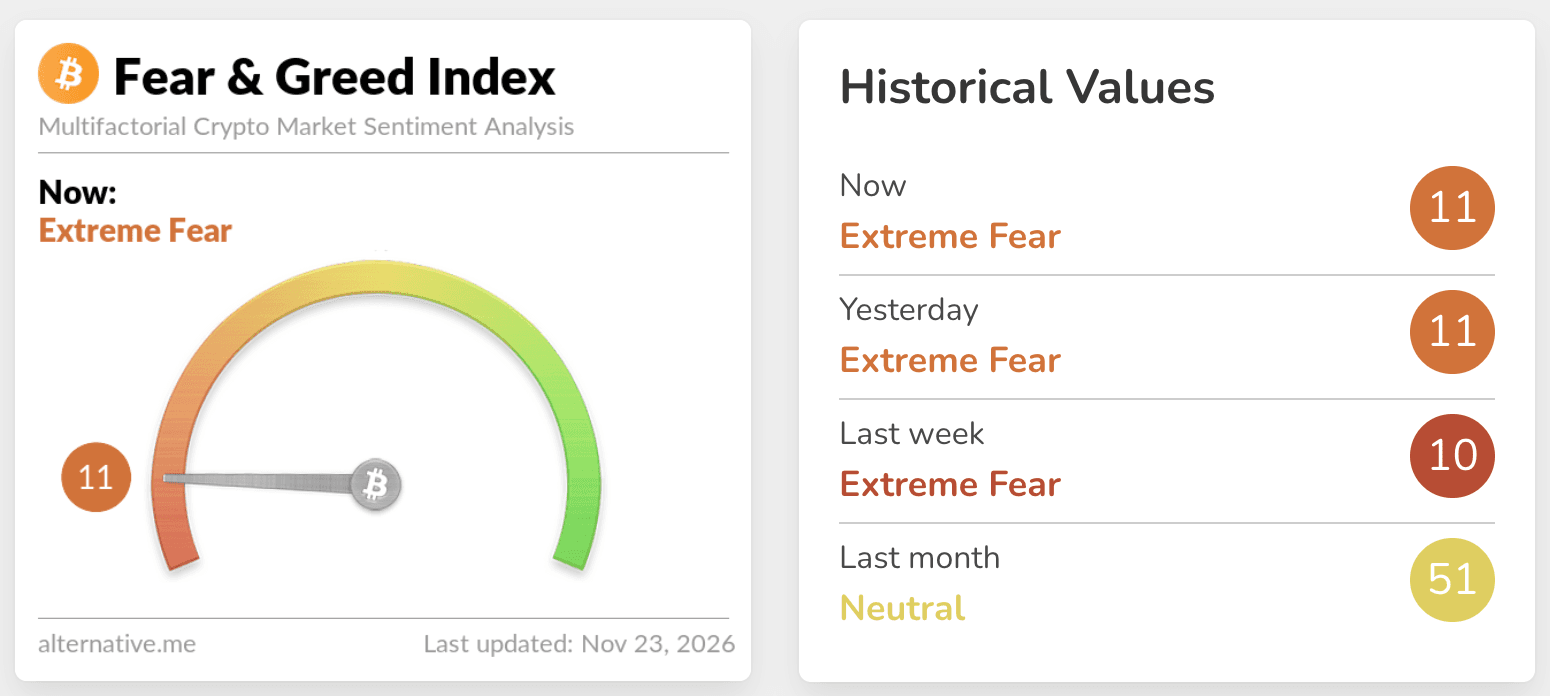
Source: Alternative
Key News Highlights:
Bitcoin Rebounds 11% From $55,111 as Wallet Security and Blockchain Upgrades Draw Attention
BTC staged a strong rebound after reaching a new cycle low of approximately $55,111 over the weekend. The price briefly climbed to $61,034, marking a recovery of around 11%. The rebound followed a sharp sell-off across global financial markets. US technology stocks and AI-related companies had faced significant selling pressure, with the Nasdaq falling another 5.3% on Friday and the S&P 500 losing 8.6% over the week. Beyond the volatility in major cryptocurrencies, the weekly report highlighted an unusual trading incident on a major CEX. BTC briefly dropped to approximately $17K in the platform's Canadian dollar market, creating a substantial price gap compared with its US dollar market. The exchange stated that all trades had been executed according to its system rules and that its security team had found no evidence of compromised accounts or a security breach. In wallet security news, hardware wallet manufacturer Ledger was investigating reports of physically tampered devices in Berlin, Germany, and Dubai, United Arab Emirates. Two customers in Dubai reported cryptocurrency losses totaling approximately USD 604,000. Ledger indicated that the incidents may have involved third-party interference within its distribution channels and offered physical device inspections to affected customers. Separately, wallets linked to a previous hack involving a major CEX transferred nearly USD 600 million worth of ETH over two days. Some of the funds moved through cross-chain protocols such as THORChain and Chainflip. On the regulatory front, the International Organization of Securities Commissions (IOSCO) warned that adopting quantum-resistant cryptography could increase blockchain transaction data sizes and affect network efficiency and transaction fees. The US Senate also advanced legislation to restrict prediction market contracts tied to death, war, and terrorism. These developments highlighted the range of issues currently facing the cryptocurrency industry, from market volatility and asset security to blockchain technology and regulatory policy.
Trump Renews Call for Nvidia to Rehire Jensen Huang as CEO
US President Donald Trump has renewed his public call for Nvidia's board to rehire co-founder Jensen Huang as CEO. His latest remarks followed a period of sharp volatility across global technology stocks and the artificial intelligence sector. In a post on Truth Social, Trump expressed his hope that Nvidia's board would bring Huang back to lead the company. He argued that Huang's return would benefit both Nvidia and the United States. This marked the second time Trump had publicly expressed the same position in recent days. During a media interview after returning from his Asia trip last Friday, he had also called for Huang to apologize and return to the company. Nvidia's board had previously stated that it had no plans to reinstate Huang as CEO, bringing renewed attention to the company's leadership arrangements. US Treasury Secretary Scott Bessent had also commented on Nvidia's management issues and previously called for a major leadership shake-up. He had suggested that the board consider candidates from outside the company. However, Bessent did not directly endorse Huang's return when questioned on Sunday. Instead, he emphasized the need to establish accountability for potential violations of US export control regulations. The prediction market Polymarket showed that traders assigned approximately a 37% probability to Huang returning to Nvidia by December 31, 2027. The leadership controversy emerged as investors continued to reassess the artificial intelligence sector. Sharp swings in technology stocks and concerns over capital spending on AI data centers remained major market topics. At the time of reporting, Nvidia had not announced a new CEO appointment decision, and Huang's potential return remained unconfirmed.
December Fed Rate Hike Bets Shift After Global Market Sell-Off
According to the latest CME FedWatch data, traders have ruled out the possibility of a 50-basis-point interest rate hike by the Federal Reserve at its December policy meeting. Expectations for a larger rate increase declined sharply following the recent sell-off in global equity markets. About ten days earlier, federal funds futures had indicated a 10% to 15% probability of a 50-basis-point hike. That probability fell to 0% after last week's market downturn. The latest data showed a 93.2% probability of a 25-basis-point rate hike in December and a 6.8% probability of no change. A quarter-point increase therefore remained the market's primary expectation. The shift followed a turbulent week for US equities. The Nasdaq fell approximately 10.4%, marking its largest weekly decline since the market turmoil of March 2020. The VIX, a widely followed measure of expected US stock market volatility, surged approximately 86% over the same period. Gold, copper, and several commodity-linked currencies also recorded significant declines. The cryptocurrency market experienced similar volatility. BTC lost more than 6% over the week and briefly fell below $55,500 before recovering above $60K. Although traders no longer expected a 50-basis-point hike in December, federal funds futures continued to reflect expectations of further monetary tightening. The implied probability of a cumulative 50-basis-point increase by January stood at approximately 59.9%. Attention now turns to this week's release of the US Personal Consumption Expenditures (PCE) Price Index, one of the Federal Reserve's key inflation indicators. Analysts at the Royal Bank of Canada projected that both headline and core PCE inflation would rise 0.3% month over month in October. Their forecasts placed the respective annual inflation rates at 3.8% and 3.3%. These estimates reflected continued market attention to inflationary pressures. Expectations reflected in interest rate futures may shift again following the release of new inflation data. The current probabilities represent market pricing rather than confirmed Federal Reserve policy decisions.
Four Pillars Research Points to Bitcoin Valuation Near Historical Lows Amid Cycle and Liquidity Uncertainty
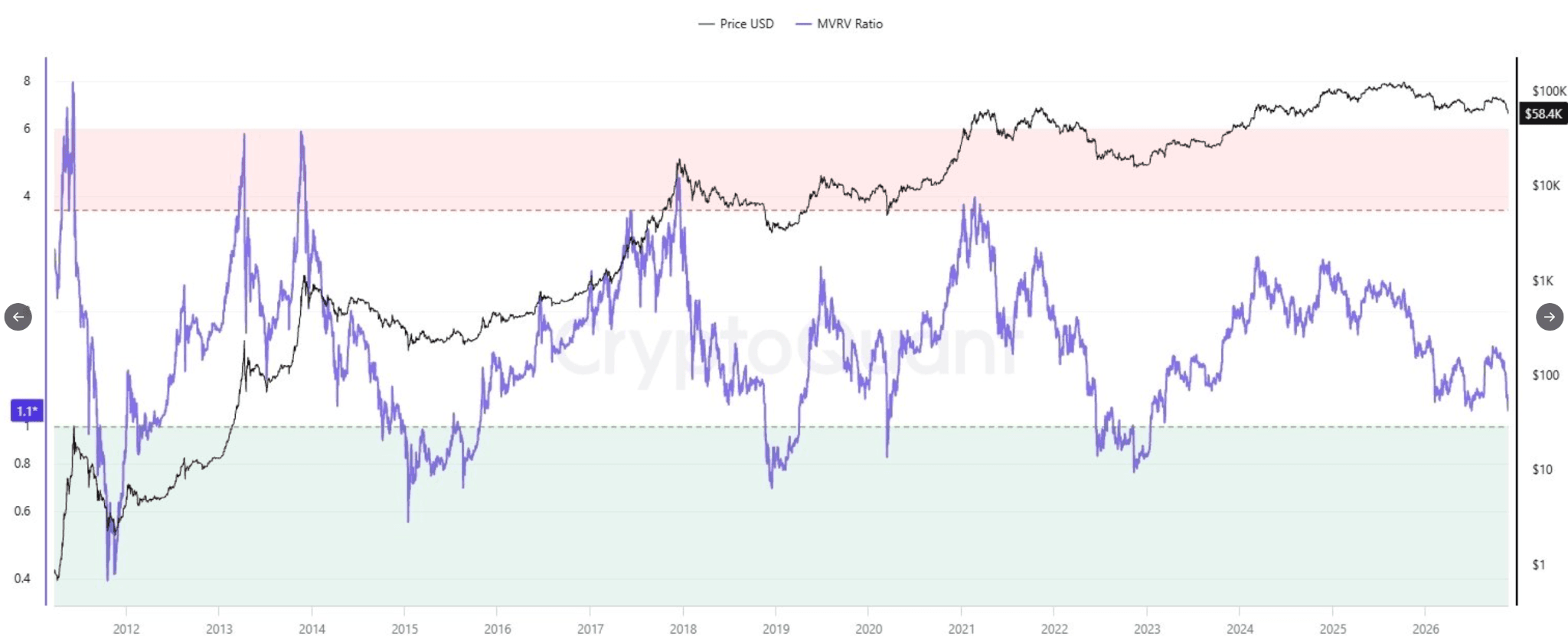
100y, head of research at Four Pillars, published a Bitcoin market research article on X examining historical cycles, on-chain valuations, mining costs, and macroeconomic liquidity. The study explored Bitcoin's position in the current market cycle following its recent decline to approximately $55K. According to the article, BTC had fallen below both its 200-week and 300-week moving averages, two technical indicators widely followed across previous market cycles. The 350-week moving average was estimated at approximately $52K, providing another historical reference point for the research. From an on-chain valuation perspective, the author noted that Bitcoin's Market Value to Realized Value (MVRV) ratio was approaching 1. This metric compares Bitcoin's current market capitalization with its realized capitalization, which values coins based on their most recent on-chain transfer prices. In previous market cycles, an MVRV ratio below 1 had sometimes coincided with periods of relatively low market valuations. However, the author emphasized that historical patterns do not guarantee similar price movements in the future. Regarding mining costs, CryptoQuant estimated that the cost of producing one BTC was approximately $62,900 as of the third quarter of 2026, based on financial data from publicly listed mining companies. Bitcoin's recent price had briefly fallen below this estimated production cost. The article also examined Bitcoin's historical four-year cycle, which had typically featured an upward phase lasting approximately 1,061 to 1,068 days followed by a decline of around 363 days. The current downturn had already extended beyond some of these historical time frames, raising questions about whether previous cycle models remain applicable. On the macroeconomic side, US M2 money supply continued to expand throughout 2026, while Bitcoin prices failed to rise alongside it. The historical correlation between Bitcoin and monetary liquidity had therefore weakened. The research also discussed capital expenditures in the artificial intelligence sector, financing requirements for data centers, and changing technology stock valuations. These factors could influence how capital is allocated across financial markets. Beyond price movements and macroeconomic conditions, the author highlighted the growing practical adoption of stablecoins, real-world asset tokenization (RWA), perpetual futures, and prediction markets. These developments suggest that the cryptocurrency industry's broader growth is not entirely dependent on Bitcoin's short-term price performance.
Disclaimer: The information provided in this section is for informational purposes only and doesn't represent any investment advice or FameEX's official view.